
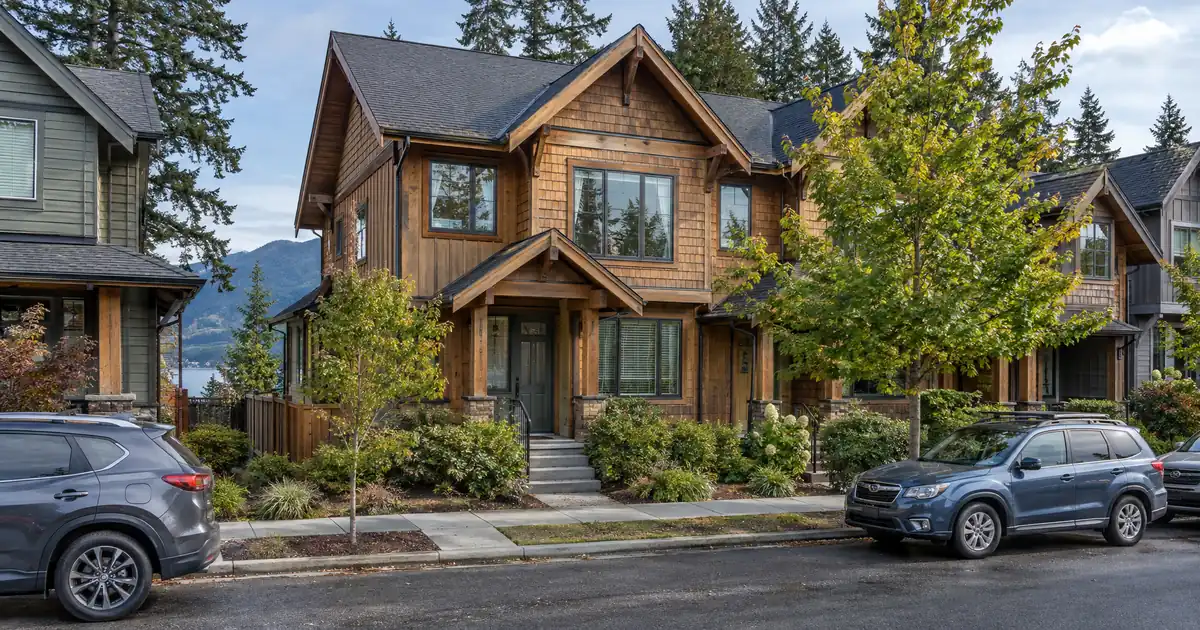
Picture an investor holding a single-family rental near the Washington Street corridor in Sequim. They bought it at $550,000, which matches the Movoto median sale price. It now shows about 2.0 percent more value, per Zillow’s home value page. They want cash out for the next deal. They pencil 75 percent LTV, see a healthy-looking number, and then the coverage ratio comes back under 1.0. That gap between a comfortable equity position and a rent that can’t carry the new loan is the core story of cash-out refinancing in Sequim. The sections below cover the math, the property types that clear it, and where the files tend to snag.
The Short Version: Cash-out refinancing a rental in Sequim, Washington suits the investor holding a duplex or triplex, or a single-family with real equity and modest leverage, because the file is underwritten primarily on the property’s rental income against its full monthly obligation, and proceeds are capped by the lender’s 75 percent LTV ceiling.
DSCR Cash-Out Calculator
Run the cash-out numbers in Sequim, WA
Rate source: Freddie Mac 30-yr average via FRED® — Federal Reserve Bank of St. Louis · effective Sep 24, 2026
Prefilled with starting assumptions — enter your property’s value, balance, taxes, and insurance for a more accurate picture.
Program parameters update from Lendmire’s centralized guideline source. Taxes and insurance are editable estimates.
As of Sep 24, 2026 · General Freddie Mac market benchmark, not a Lendmire loan offer. Property value, balance, taxes, and insurance are editable estimates. Maximum loan-to-value varies by lender, program, property type, and seasoning. Not a Loan Estimate, approval, or commitment to lend. Program availability and eligibility are subject to lender guidelines, credit approval, property review, and underwriting.
- Median sale price sits near $550,000 per Movoto, with days on market stretching to 53.
- Single-family rentals at 75 percent LTV model below 1.0 coverage including taxes and insurance.
- Duplexes and small multifamily carry the math, but stock is scarce.
- Cash-out typically needs about six months of ownership, measured from title recording.
Where the Equity Actually Sits
Equity in Sequim is mostly the price you paid, not appreciation you’re counting on. Published portal figures for the median sale price vary noticeably depending on the source, and the direction is flat to modestly up, as the source-by-source comparison below lays out.
Here’s how the sources line up. Movoto shows a $550,000 median sale price and 53 days on market, up from 32 a year earlier. Houzeo lands at $509,950, essentially unchanged year over year. Zillow has the average home value at $580,329, up 2.0 percent. Redfin reported a $495,000 median in a small-sample month. Different methods, different dates. This piece uses $550,000 as the working figure and treats the others as context.
Long-term appreciation in Sequim has been strong, per NeighborhoodScout. But the recent trend is the one that matters for a refinance. A two percent move won’t manufacture equity during a six-month seasoning window. Slower sales also mean thinner, older comps for the appraiser.
So the practical rule is simple: plan the cash-out on price paid plus documented improvements, not on expected appreciation. Lenders may limit value on a recent purchase to what was paid plus receipts, subject to program guidelines. Investors who bought a few years back at lower prices are in a different spot. They have real seasoned equity, and the 75 percent LTV ceiling is the constraint that bites.
The Coverage Problem
On a typical single-family rental, the debt coverage ratio is the binding constraint in Sequim, not the equity. Modeled at full PITIA, a cash-out on a $550,000 house at 75 percent LTV covers well under 1.0 at any rent the portals support. That’s the plain version.
Start with the rent. The sources disagree badly. Zumper shows an average of $2,400, though the unit mix is unknown and its own trend claims contradict each other. Zillow’s rental data runs lower, near $1,700 on an older reading. Point2Homes shows a median gross rent of $1,195, but that reflects leases already in place, not asking rents. A third portal posts averages near $1,000, and it’s skewed toward small apartments. Skip it.
Now run the numbers this way. These are modeled assumptions, not market data: a $550,000 value, 75 percent LTV, a 30-year loan at an assumed rate in the high-6s, with taxes and insurance at Washington averages. How DSCR coverage is calculated is rent divided by that full monthly obligation.
- At $2,400 rent, coverage lands around 0.7x including taxes and insurance.
- At $1,700 rent, coverage lands around 0.5x.
Getting to roughly 1.0 at $2,400 takes leverage closer to half of value. At $1,700, even a low-LTV loan struggles to clear. The rent input moves the result more than anything else, which is why the number should come from an executed lease or an appraiser’s rent schedule, not a portal average.
What happens when a file sits below 1.00? The standard DSCR benchmark is 1.00x, because rent covers the obligation at that level. Some lenders review lower-ratio scenarios, but those usually come with lower leverage, different pricing, more cash down, or stronger reserves. Options a lender might review include a sub-1.00 program, an interest-only structure, or a smaller cash-out. None of that is a promise. Eligibility turns on lender guidelines, credit, reserves, and the property review.
Duplexes Fix It (If You Can Find One)
Small multifamily is where Sequim’s rent-to-value problem eases, because price per door falls while the loan stays single. The catch is that this product is scarce.
The City’s Housing Data and Demographics report says multifamily is generally clustered near Washington Street and Highway 101, plus the Lifestyle District. That corridor is the best multi-unit and workforce-rental submarket in the city. NeighborhoodScout puts single-family detached at 47.76 percent of units and mentions only “a few” duplexes and small apartment buildings. Point2Homes shows attached options, including duplexes and townhouses, at 10.6 percent.
Here’s a modeled scenario. Say you own a duplex valued at $650,000, an assumption, not a sourced price. Two doors at a modeled $2,400 each, 75 percent LTV, full PITIA including taxes and insurance: coverage lands around 1.2x. Drop each door to $1,900 and it slips slightly under 1.0. Same building, same loan, and a $500 rent swing per unit decides whether the file clears. Underwrite to the leases.
Lendmire works with Sequim, Washington investors to place DSCR financing through wholesale lenders reaching 41 markets — 40 states plus Washington, D.C. (NMLS# 2371349). It’s a DSCR-focused mortgage broker, so the lender reviews and approves. Its place in a file like this is structuring the request around the property that actually carries the number.
The honest flip side: scarce stock means few comps. Expect appraisal risk on any two-to-four unit cash-out in a city this small. A well-built appraisal reconsideration packet, with recent nearby sales, unit-by-unit rent evidence, and documented condition, is a routine step here, not an emergency move. Plan for it.
Sunland
Sunland is the largest residential community in Sequim, with more than 900 private homes, per the Sunland North Owners Association. Sunland North includes 139 townhomes in two- and three-unit buildings.
That attached product matters for DSCR files, but the HOA drives the file. Before anyone orders an appraisal, pull the governing documents and confirm what they say about leasing. Rental restrictions, minimum lease terms, and caps on the number of rented units all show up in the HOA questionnaire. An incomplete questionnaire is one of the quieter reasons a file stalls. Condo and townhome certifications in the Dominion Court and Camden Terrace style developments the City’s report mentions raise the same documentation question: the lender wants a complete, current packet.
One more property-type note. Manufactured homes, single- or double-wide, fall outside the network’s DSCR programs, along with log homes and barndominiums. If a Sequim property is a manufactured unit on a lot, skip this program and look elsewhere.
Carlsborg, Happy Valley, and the Edges
The edges of Sequim are worth knowing by name, though none has a reliable neighborhood-level price or rent source. Here’s what’s documented.
Carlsborg sits just west of the city as an urban growth area, listed as its own policy area in the market source. Listing snippets point to new-build product there. That’s an anecdotal sign of construction, not a data point. New builds can help a cash-out because condition is clean and comps may be recent. They can hurt if the builder’s price sets a ceiling the next appraiser won’t match.
Happy Valley is the one sub-area with a value on file: Zillow shows $562,161, down 1.3 percent over the past year. A down-trending value is a flag for anyone planning a cash-out based on last year’s number.
Dungeness, Agnew, and the farmland and waterfront areas lean owner-occupant in character, and Blyn is the Tribe’s home base. For a rental play, they’re thinner. I’d call it a toss-up whether the edges beat the city core on cash-out math. The core has the multifamily clustering, but the edges may have newer construction. Without hard rent data for either, the call comes down to the individual property.
Who Rents Here (And Why the Vacancy Number Helps)
Tenant demand in Sequim is anchored by healthcare, tribal enterprises, retail, and hospitality, not by a university or a military base. The city is small, with about 8,161 residents per Point2Homes, and the City says 40 percent of occupied housing units are renter-occupied, versus 46 percent in Port Angeles and 29 percent in Port Townsend.
Employment sources are thin. Data USA shows residents working mainly in health care and social assistance (398 people), retail trade (311), and accommodation and food services (309). Olympic Medical Center is the largest employer in Clallam County with more than 1,550 people. Its main hospital is in Port Angeles, with a Sequim outpatient site, cancer center, and walk-in clinic, so that headcount is countywide, not Sequim-only. The Jamestown S’Klallam Tribe calls itself the county’s second-largest employer, with its base in Blyn just west of Sequim. No headcount was found. Clinic staff and travel nurses are a plausible tenant pool, though no source quantifies it.
Vacancy helps the case. The City’s housing report, drawing on CoStar and ACS data, puts multifamily vacancy at 0.9 percent against roughly five percent in a balanced market, and all-home vacancy at 4.8 percent versus 10.2 percent countywide. The apartment stock is small, so treat that as directional. But it supports a low vacancy haircut in an appraiser’s rent schedule.
What the Deal Desk Sees
Lendmire’s deal desk tends to see the same friction on files from small, thin-comp markets like this one. The cleaner files are the ones where the rent evidence is a signed lease or an appraiser’s schedule rather than a portal screenshot. The common friction point is a rent assumption that was fine on the purchase side and falls apart on the refinance. Another is a late-arriving HOA packet on an attached unit. Getting entity documents, lease copies, and reserves statements in one batch before submission leaves fewer preventable gaps for the lender to chase.
A few program mechanics are worth having in your head, all subject to lender guidelines. Cash-out LTV tops out at 75 percent, a hard cap that differs from purchase leverage. Seasoning typically runs about six months of ownership from title recording, which is why a settlement statement and recording evidence belong in the file early. Reserves generally run about six months of PITIA, and more on larger balances, so reserves documentation needs to be current. Standard programs reach up to $3,000,000, though smaller balances route through select lenders. Credit tiers start at a 620 floor and improve from there. The DSCR cash-out refi mechanics page covers the structure, and the refinance side covers the broader options.
Compared with a bank, the paperwork load is different. A DSCR file looks at the property’s income, not your W-2s. The conventional-vs-DSCR tradeoffs are worth reading if you’re weighing both. For state-level context, see Lendmire’s Washington DSCR loan programs.
DSCR vs. conventional financing
There are two common ways to finance an investment property in Sequim, WA, and they qualify you differently — here’s how investors weigh them.
Why investors choose it
- Qualifies on the property’s rental income — no personal tax returns, W-2s, or pay stubs needed to document income.
- No personal debt-to-income ceiling to clear, so existing mortgages and obligations don’t cap your borrowing the same way.
- Can be closed in an LLC, keeping the property inside a business entity.
- Built for scaling — not held to the limit on number of financed properties that conventional financing applies.
- Underwriting centers on the deal: generally qualifies when the rent covers the payment, a 1.00x coverage ratio being a common baseline (confirmed in underwriting).
- Designed specifically for investment property, including long-term and, where the program allows, short-term rentals.
Where it’s strong
- Often the lowest ongoing financing cost for a buyer who fully qualifies on personal income — a fit for a first property or a cost-first purchase.
Trade-offs for investors
- Requires full personal income documentation and must fit within a debt-to-income limit — salary, existing debts, and other mortgages all count.
- Typically held in your personal name rather than a business entity.
- Caps how many financed properties you can carry, which can become a ceiling as a portfolio grows.
- Evaluates you as a borrower as much as the property, which usually means more paperwork.
How investors usually choose: a first or single property often optimizes for the lowest financing cost; portfolio builders often optimize for leverage, vesting in an LLC, and scaling past conventional caps. The right answer depends on your goals, the property, and current guidelines — both paths run through select lenders in Lendmire’s wholesale network, with eligibility and terms confirmed in underwriting.
Where the Proceeds Go
The point of pulling equity out is the next acquisition, and in Sequim the question is whether to redeploy locally. A seasoned duplex that clears 1.0 and returns capital to buy another small multifamily is the cleanest loop. But with scarce stock, the loop can stall for lack of inventory. Some investors will find the better use of proceeds is outside the city, where rent-to-price runs stronger. That’s a legitimate read, and it’s the equity-extraction logic working as designed.
One caution on sizing. Equity available depends on rent used for lender review, PITIA, reserves, and the 75 percent LTV ceiling. It is never a guaranteed figure. Run the coverage first, then see what’s left. And verify current local rental rules, taxes, and insurance with qualified local professionals before you commit.
To see how a specific property pencils, talk to Lendmire or call 828-256-2183.
Frequently Asked Questions
How do you qualify for a DSCR cash-out refinance in Sequim, Washington?
Qualification centers on the property’s rent against its full monthly obligation, with a 1.00 coverage ratio as the usual benchmark. Beyond that, lenders typically review about six months of seasoning, a 75 percent LTV ceiling, credit starting at a 620 floor, and about six months of PITIA in reserves. All of it is subject to lender guidelines and property review.
What are the requirements for an investment property loan in Sequim, WA?
Expect an appraisal with a rent schedule, entity documents if the property sits in an LLC (subject to lender program eligibility), lease evidence, a reserves statement, and an insurance quote. Attached units add an HOA questionnaire. Manufactured homes are outside these programs.
Why does a single-family cash-out struggle to reach 1.0 in Sequim?
Prices sit well above what portal rents in the area typically support. At 75 percent LTV with full principal, interest, taxes, and insurance included, modeled coverage across a typical rate environment generally lands below 1.0x, even at the higher end of the rent range, and falls further at the lower end. That is under the 1.00 floor some select programs use. Lower LTV, a documented higher rent, or a duplex can improve the picture.
Does Sequim’s slow appreciation hurt a cash-out?
It limits the equity you can count on. Zillow shows about 2.0 percent annual value growth, and Movoto shows days on market rising to 53. On a recent purchase, plan around price paid plus documented improvements rather than projected gains.
How does DSCR lender review differ from a bank’s approach in Sequim?
A bank leans on traditional personal-income documentation. Lendmire is a non-QM DSCR mortgage broker that places loans across 41 markets, including Washington, D.C., and the program reviews eligibility around the property’s rental income. Cash-out files cap at 75 percent LTV.
Sequim Versus Port Angeles, Right Now
Port Angeles probably gives a cash-out borrower more tenant depth to underwrite today. It has the main hospital campus and a 46 percent renter share against Sequim’s 40 percent, per the City’s report. Sequim’s math favors the duplex owner with documented rents and the patience to wait out thin comps.
About Lendmire
Lendmire is a DSCR-focused mortgage brokerage, NMLS# 2371349, placing investor loans across 41 markets, Washington, D.C. included. Lenders generally review DSCR eligibility around a property’s rental income instead of personal income documentation, which suits LLC-held rentals, self-employed investors, and portfolios growing past conventional financed-property limits. Lendmire is a 2026 Scotsman Guide Top Workplace and a top-ranked workplace in 2025, per the 2026 industry recognition release.
Get Started
Ready to find the right loan for you?
In about 30 seconds you can review financing options available for your investment property. No commitment required.
Informational only. Not a Loan Estimate, approval, or commitment to lend. Program availability and eligibility are subject to lender guidelines, credit approval, property review, and underwriting.
References
1. Movoto Sequim Market Trends
3. Redfin
5. Zumper Sequim Rent Research
7. Point2Homes Sequim Demographics
8. Sunland North Owners Association
9. Zillow
10. Data USA, Sequim
13. a 2026 Scotsman Guide Top Workplace
14. Scotsman Guide — Top Workplaces 2025
15. EIN Presswire — Lendmire Recognized as a 2026 Top Workplace by Scotsman Guide
This article is part of Lendmire’s investment property cash-out refinance program — full qualification details, guidelines, and scenarios live on the program page.
Related reading: DSCR Cash Out Refinance in Sequim, Washington State: A 2026 DSCR Guide to Pulling Equity From Sequim Rentals · DSCR Cash Out Refinance in Port Angeles, Washington State: Equity in a Flat Market · DSCR Cash Out Refinance in Maple Valley, Washington State: Tahoma District Equity Math
Guides: Investment Property Cash-Out Refinance in Washington
Brandon Miller
Founder & CEO, Mortgage Loan Originator, Lendmire LLC
- Mortgage Loan Originator · NMLS# 1129696 · Verify on NMLS Consumer Access
- North Carolina Real Estate Broker · License# 343312 · Verify on NCREC
- North Carolina Insurance Producer · License# 19053198 · Property, Casualty, Life, Health · Verify on NAIC SBS
- Lendmire LLC · Firm NMLS# 2371349 · Verify firm licensure
Disclosure information. Lendmire is a state-licensed mortgage brokerage under NMLS# 2371349. Lendmire is not a depository institution, direct lender, or financial advisor — all loans referenced are placed through wholesale lender partners and are subject to each lender's underwriting standards. This article is provided for general informational purposes and is not a commitment to lend, nor does it constitute financial, legal, or tax advice. Loan programs, terms, rates, and qualification standards change without notice and depend on borrower profile, property type, and the state in which the subject property is located. Equal Housing Opportunity provider. NMLS Consumer Access: nmlsconsumeraccess.org.