
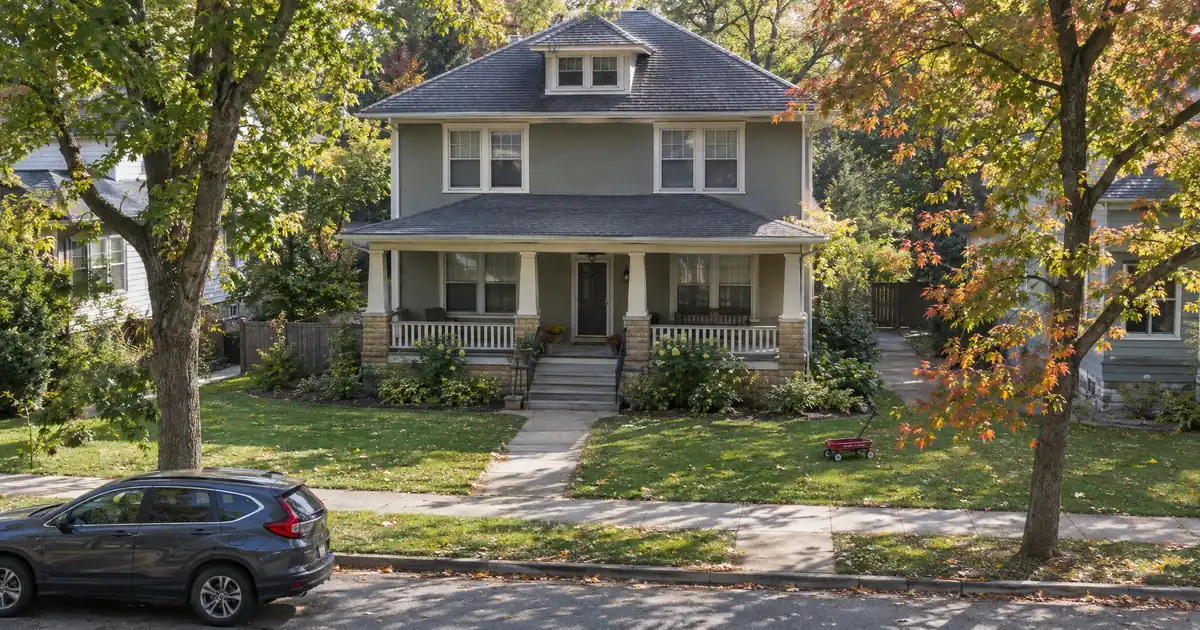
The Quick Read: A cash-out refinance fits the investor who wants to keep a rental that still earns its place and can carry a larger loan, while a sale fits the owner who wants all of the equity, a clean exit, or relief from managing the asset.
- A cash-out refinance on a standard rental typically tops out around 75% LTV (loan-to-value, meaning the loan as a share of the property’s value). It never reaches all of your equity.
- A sale reaches every dollar of equity, less selling costs and any tax owed.
- The bigger loan has to pass a rent test. DSCR (debt service coverage ratio) is monthly rent divided by PITIA (principal, interest, taxes, insurance, and any HOA dues).
- Passing that test is not the same as positive cash flow. Repairs, vacancy, management, and utilities sit outside it.
- Most programs expect about 6 months of ownership, measured from title recording, before they will cash you out.
Here is who each option is really for. Keep-and-borrow works when the rental is healthy, the rent covers a bigger payment with room to spare, and you believe in the asset. Sell works when you need more cash than a loan can reach, the rent can’t carry new debt, or you are tired of the property. Neither is the smart choice by default. The right one depends on how much cash you need and what the property does after you take it.
DSCR Cash-Out Calculator
Run the cash-out numbers in your market
Rate source: Freddie Mac 30-yr average via FRED® — Federal Reserve Bank of St. Louis · effective Oct 15, 2026
Prefilled with starting assumptions — enter your property’s value, balance, taxes, and insurance for a more accurate picture.
Program parameters update from Lendmire’s centralized guideline source. Taxes and insurance are editable estimates.
As of Oct 15, 2026 · General Freddie Mac market benchmark, not a Lendmire loan offer. Property value, balance, taxes, and insurance are editable estimates. Maximum loan-to-value varies by lender, program, property type, and seasoning. Not a Loan Estimate, approval, or commitment to lend. Program availability and eligibility are subject to lender guidelines, credit approval, property review, and underwriting.
Side-by-Side
The table below compares the two paths on structure, not price. The refinance column reflects typical guidelines from select lenders in Lendmire’s wholesale network, which are subject to lender guidelines and not a commitment to lend. The sale column reflects published industry norms.
| Factor | Cash-Out Refinance (DSCR) | Selling the Rental |
|---|---|---|
| Equity reached | Part of it; about 75% LTV cap | All of it, before costs and tax |
| Review basis | Property rent vs. PITIA, plus credit | The buyer’s financing, not yours |
| Documentation | Credit pull, appraisal, lease, reserves | Listing, contract, payoff letter |
| Property types | Standard rentals; some types not offered | Any type a buyer will purchase |
| Entity vesting | LLC title often workable | Entity signs if it holds title |
| Timeline drivers | Seasoning, appraisal, title work | Finding a buyer; exchange deadlines |
| Reserves | Commonly about 6 months of PITIA | None required of you |
| After the deal | You keep the asset and add debt | You hold cash and no property |
Loans to LLC-titled entities are possible, subject to lender program eligibility. Your mix of credit, leverage, and property type decides which program fits.
How a Cash-Out Refinance Actually Works
A cash-out refinance replaces your current loan with a new, larger one and pays you the difference. DSCR loans are designed for non-owner-occupied investment properties. Because they are business-purpose investor loans, they are reviewed differently from a standard owner-occupied mortgage.
On these files, the borrower qualifies primarily on property-level rental income covering the payment, subject to lender guidelines. Across our wholesale network, 1.00 is where many select programs start. Stronger coverage opens better leverage and pricing. A separate select-lender path takes coverage below 1.00, with leverage and terms adjusted.
The 75% ceiling matters more than most people expect. Picture a rental whose current loan sits at 55% of its value. At a 75% ceiling, the new loan can climb about 20 points of value above your old payoff. Closing costs and reserves come out of that room too. That is the whole pool of cash you can reach. (Short-term rental collateral is tighter, with cash-out typically capped at 70% against 75% for standard rentals.)
Credit shapes the file as well. A 620 score is the floor in parts of the network. Most programs want around 660, and 700 or higher unlocks the strongest leverage tiers. Standard programs run up to $3,000,000, and the programs we place files with typically ask for about 6 months of PITIA in reserves. Above $1,500,000, that commonly steps up to about 9 months.
Not every property qualifies. Manufactured homes (single- and double-wide), log homes, and barndominiums are not offered through these programs.
Then there is the coverage trap. A bigger loan means a bigger payment, so coverage drops as you pull more out. Pull cash until the number slips under 1.00 and the file narrows to a smaller set of lenders. A larger down payment on a purchase can lift the ratio, but it never erases leverage caps, credit floors, or reserve rules. The strongest files clear both tests: enough equity and enough rental coverage.
How a Sale Actually Works
A sale hands you all the equity, minus agent and closing costs. The buyer’s lender underwrites the buyer, so your rent, credit, and reserves stop mattering. If an LLC holds title, the entity signs the sale.
A sale also ends everything: the rent, the depreciation stream, the appreciation, and the headaches. Some owners value that last part more than they admit.
Tax is the part of a sale most investors underestimate. Tax treatment can depend on how the funds are used and how the property is held; investors should keep clear records and speak with a qualified tax professional before relying on any deduction.
A 1031 exchange is the usual deferral route, and it comes with strict clocks. Per the IRS Instructions for Form 8824, the IRS 45-day identification deadline starts when you transfer the property you gave up. The exchange must then finish by the 180-day outside date or the return due date, whichever is earlier. The Federation of Exchange Accommodators notes that you need a qualified intermediary (a neutral third party who holds the sale proceeds) lined up before the sale closes. After that, the window to elect an exchange is gone.
One more point: an exchange defers tax, but it does not hand you cash. Under the rules summarized by The Tax Adviser, you cannot be in actual or constructive receipt of the money during the exchange. If your goal is spendable cash, a 1031 is the wrong tool. Equity locked in a replacement property is still locked.
When a Cash-Out Refinance Is the Better Fit
A cash-out refinance is the better fit when you want to keep a rental that performs and need less cash than the property holds. These are the situations where it wins:
- The asset is healthy. Occupancy is steady, rent is at or near market, and no big capital project is looming.
- Your need is smaller than your equity. If you need a slice, not the whole pie, borrowing against 75% LTV on a standard rental usually reaches it.
- Coverage survives the bigger loan. Run the new payment against the rent. If the number stays comfortably above 1.00 after the cash comes out, the structure holds.
- You want the next deal. Many investors pull cash from one rental to fund the down payment on another. That grows the portfolio without a sale.
- You believe in the upside. Keeping the property keeps its appreciation, its depreciation schedule, and its income.
- You don’t want a tax event. Borrowing is not a sale. The tax bill on the eventual sale remains in the future, but you control when it arrives.
The cost shows up in three places. You carry more debt. You pay closing costs on the new loan. And the new loan replaces the whole old balance, not just the new cash. That matters most when your existing loan has terms you can’t replace. Always compare the old loan’s terms against the new one before deciding.
Honestly, this is where many investors talk themselves into trouble. The refinance feels free because no check goes to a tax bill. But debt is a commitment, and the property has to keep covering it in a slow year.
When Selling Is the Better Fit
Selling is the better fit when you need more cash than a loan can reach, or when the property no longer earns its keep. Consider a sale in these cases:
- You need all the equity. A 75% cap leaves a quarter of the value locked up. A sale releases it.
- The rent can’t carry new debt. If coverage is already thin, a bigger loan makes it thinner. Select lenders in the network will review coverage below 1.00 with leverage and terms adjusted, but that is a tradeoff, not a rescue.
- Big repairs are coming. A roof, a failing system, or a deferred-maintenance building can swallow the cash you pull. Selling hands that problem to the buyer.
- You’re done managing. Tenants, turns, and contractors wear on some owners. Cash and a free calendar are a valid goal.
- The market is working for you. If prices have run well ahead of what the rent justifies, selling can lock in the gain.
- You want to redeploy. A 1031 exchange can move your equity into a different property, on the clocks described above.
The tradeoffs are real. You lose the rental income and any future appreciation. You pay selling costs. And you may owe tax on the gain, as the tax sentence above notes. A sale also can’t be undone. If you sell and the market keeps climbing, no loan will get that property back.
Hybrid Paths Worth Knowing
You don’t have to pick one forever. Some investors refinance now and sell later, once the market or their plans shift. Others sell one weaker rental to fund keeping a stronger one. Both can make sense.
Sequence matters, though. Refinancing a property you are about to sell and exchange can complicate the exchange. Bring your exchange intermediary and tax professional in before you apply for any new loan on that property.
If a co-owner is part of your decision, Lendmire’s piece Cash-Out Refinance vs Selling the Rental When a Partner Wants Out covers the buyout side.
Does the Rent Carry the Bigger Loan?
Run this test before anything else. The lender divides rent used for lender review by the full monthly obligation. With a lease in place, the lender typically uses the lease or a market-rent estimate, often whichever is lower. A vacant property uses an appraiser’s market-rent figure.
Here is a modeled example, not market data. Assume a rental covers its current loan at about 1.45x. After a cash-out, the new, larger loan might put coverage near 1.15x. Pull more cash and it could slide under 1.00x. The ratio dropped without any change in rent.
Now stress it. Say the rental clears 1.25x on the new loan. A 10% rent dip takes that to roughly 1.13x. A vacancy month is worse. The lender’s number ignores vacancy, repairs, and management, so your own budget has to cover them.
Clearing 1.00 is not positive cash flow. It means rent covers the mortgage payment, taxes, and insurance. Everything else comes out of what is left.
In our experience placing these files, the borrowers who run into trouble are rarely the ones who failed the rent test. They passed it with almost nothing to spare, then hit a vacancy or a roof. A thicker cushion on paper tends to be the better decision than squeezing out the last dollar of equity.
Match the Purpose to the Path
Purpose often decides this faster than math. Here is how it tends to sort out:
| Your Purpose | Often Leans Toward |
|---|---|
| Down payment on the next rental | Cash-out refinance |
| Repairs on the same property | Cash-out refinance |
| Large cash need, equity beyond 75% LTV | Sale |
| Exit from landlording | Sale |
| Redeploying into a new property | Sale with 1031 exchange |
Treat that as a starting point. A refinance that funds repairs raises value only if the work succeeds, and an improvement may support a higher appraised value, depending on comps and underwriter review. Nothing is automatic.
Mistakes That Cost Investors
- Counting the full equity. The cash-out ceiling cuts the reachable pool. Size your need against it first.
- Ignoring seasoning. Programs typically want about 6 months of ownership from title recording. Rehab completion does not start the clock.
- Skipping reserves. Reserves come out of your liquid assets, not the loan.
- Mistaking coverage for cash flow. The ratio tests rent against the mortgage payment only.
- Missing exchange deadlines. The 45-day and 180-day windows don’t bend.
- Refinancing before an exchange. See the sequencing point above.
The Balanced Verdict
Borrow when the property is working, your need is smaller than your equity, and the rent still covers the bigger loan with room to spare. Sell when you need every dollar, the property is tired, or the debt would stretch coverage too thin.
This one really can go either way. A strong rental in a rising market argues for keeping it. A property that needs expensive work, or an owner who wants out, argues for a sale. Run both paths on paper, with costs included, before you commit. For the full picture of how these programs fit together, see Lendmire’s complete DSCR loans guide.
A quick checklist helps. Is your cash need under the reachable pool? Does coverage hold at the new loan size? Do you want to keep the asset? If all three answers are yes, lean refinance. If exactly one answer is no, don’t decide yet. Fix that one weak point first: borrow less, wait out seasoning, or test the rent again. Then rerun the checklist. If two or more answers are no, lean sale.
Frequently Asked Questions
Can a cash-out refinance get me all my equity?
No. On a standard rental, the new loan typically tops out around 75% LTV, so a quarter of the value stays locked in the property. Closing costs and reserves reduce the cash you actually receive. If you need every dollar, a sale is the only path that reaches it.
What if the rent doesn’t cover the bigger loan?
You have a few choices. Borrow less so coverage improves. Look at a select-lender path that accepts coverage below 1.00, where leverage and terms are adjusted. Or consider a sale. Each file is reviewed individually, subject to lender guidelines and credit approval.
Can I refinance a rental I just bought?
Usually not right away. Programs we place files with typically want about 6 months of ownership, measured from the date the deed was recorded. A sale has no such waiting period on your side.
Does an LLC change which option is better?
It changes the paperwork more than the decision. An LLC that holds title signs the sale, and a refinance involves entity documents. Eligibility for LLC borrowers varies by program, so confirm early.
Can I cash out on any type of rental?
No. Manufactured homes, log homes, and barndominiums are not offered through these programs. Standard single-family rentals and small multifamily are the usual fits, subject to lender guidelines.
Next Step
If you are buying or refinancing a rental property and want to see how the numbers work, Lendmire can help you compare DSCR loan options based on the property income, credit profile, leverage, and investor goals. As a mortgage broker, Lendmire arranges DSCR investor financing across 41 markets, including Washington, D.C., through select lenders in its wholesale network. Reach the team at 828-256-2183 or request a quote.
For the mechanics of pulling equity out of a rental property, see Lendmire’s guide to cash-out refinance on an investment property.
About Lendmire
Lendmire (NMLS# 2371349), a non-QM mortgage broker serving investors in 41 markets including Washington, D.C., helps structure DSCR scenarios commonly evaluated around a property’s rental income rather than personal income paperwork, subject to lender guidelines. A Scotsman Guide Top Mortgage Workplace in 2025 and 2026, Lendmire places loans through wholesale investor lenders and is not a direct lender.
Get Started
Ready to find the right loan for you?
In about 30 seconds you can review financing options available for your investment property. No commitment required.
Informational only. Not a Loan Estimate, approval, or commitment to lend. Program availability and eligibility are subject to lender guidelines, credit approval, property review, and underwriting.
References
1. IRS Instructions for Form 8824
2. Federation of Exchange Accommodators FAQ
3. The Tax Adviser (AICPA): Like-Kind Exchanges of Real Estate
This article is part of Lendmire’s investment property cash-out refinance program — full qualification details, guidelines, and scenarios live on the program page.
Related reading: Selling a Rental vs. a DSCR Cash-Out Refinance for the Next Purchase · Should You Sell a Short-Term Rental or Refinance When Bookings Drop? · How Much a DSCR Refinance Releases on a Part-Year Short-Term Rental
Brandon Miller
Founder & CEO, Mortgage Loan Originator, Lendmire LLC
- Mortgage Loan Originator · NMLS# 1129696 · Verify on NMLS Consumer Access
- North Carolina Real Estate Broker · License# 343312 · Verify on NCREC
- North Carolina Insurance Producer · License# 19053198 · Property, Casualty, Life, Health · Verify on NAIC SBS
- Lendmire LLC · Firm NMLS# 2371349 · Verify firm licensure
Required disclosures. Lendmire (NMLS# 2371349) operates as a licensed mortgage broker, not a direct lender or depository. The discussion in this article is general in nature and should not be relied upon as financial, legal, or tax advice — every investment scenario is unique and should be reviewed by a qualified professional. Any loan inquiry is subject to lender underwriting, and this article is not a commitment to lend or a guarantee of approval. Mortgage rates, loan terms, and program guidelines vary by borrower, property, and state, and may change without notice. Equal Housing Opportunity. Verify licensure at NMLS Consumer Access.