
The Quick Read: A cash-out refinance replaces your existing mortgage with a bigger one. You get the difference in cash at closing. On a rental property, most lenders cap the new loan around 75% of the appraised value. The loan is underwritten against the property’s rent, not your personal paycheck. That cash counts as loan proceeds, not income, so it isn’t taxed on the way in. Is it a smart move for you? That comes down to three things: how much equity you can actually pull, whether the rent still covers the new payment, and what you plan to do with the money once it lands in your account.
Cash-out refinance estimate
The starting figures are an example value with a balance and a cash request in proportion. Replace them with yours.
Editable benchmark: 7.40% as of October 15, 2026 · Freddie Mac 30-year average via FRED®. A conventional market reference, not a cash-out refinance quote.
Illustrative starting assumptions: a $350,000 home value, a $193,000 current balance, the agency cap on a one-unit principal residence, a thirty-year term at the current Freddie Mac benchmark, and property taxes and insurance estimated at typical national rates. Every field is editable.
Illustrative estimate only — not a Loan Estimate, approval, quote, or commitment to lend. The rate field carries the weekly Freddie Mac thirty-year conventional benchmark, a market reference and not a cash-out refinance quote; a cash-out loan is priced by the lender at lock. The cash available is the loan the program cap allows less the balances paid off, before closing costs, which are not included. The HELOC line is the program’s combined loan-to-value ceiling applied to the same value and balance. Taxes and insurance are editable estimates. Licensed in sixteen states for consumer mortgages.
That last part matters more than most people think. The math is simple. The judgment call isn’t.
What a Cash-Out Refinance Actually Does
A cash-out refinance pays off your current mortgage. It replaces that mortgage with a new, larger one. The gap between the two gets handed to you at the closing table. It’s a debt transaction — not a sale, and not income. The Consumer Financial Protection Bureau draws a similar line in its own refinance research. It describes cash-out loans as ones where the borrower ends up owing substantially more than the balance being replaced.
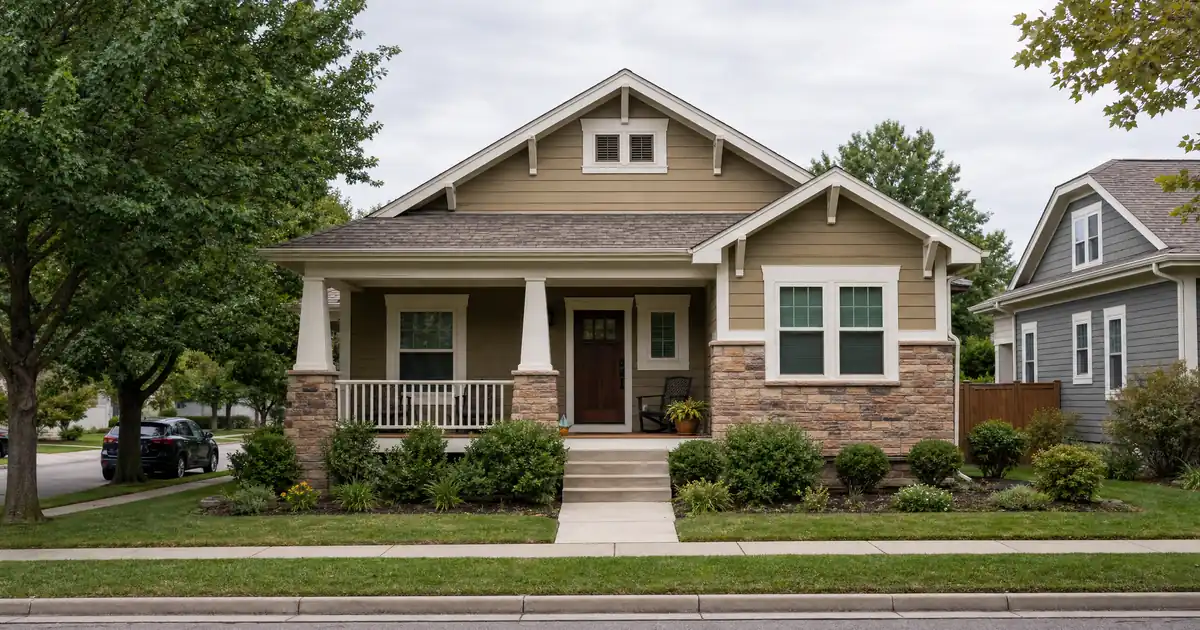
Picture a rental property with a good amount of built-up equity. Appraised value sets the ceiling. A lender capping cash-out refinances at 75% loan-to-value will only issue a new loan up to that share of value — no matter how much equity has actually built up. The gap between that 75% ceiling and what’s currently owed, minus payoff costs and any reserve requirement, is roughly what’s available to pull. Notice what’s missing from that description: no dollar figure. That’s on purpose. The real number depends entirely on your property’s specific appraisal, balance, and lender guidelines. No generic example should pretend to know it for you.
This is different from a rate-and-term refinance, sometimes called a “limited cash-out” refinance on the agency side. There, the new loan mostly just pays off the old one and maybe rolls in closing costs. Little to no cash comes back to the borrower. That distinction is the first thing any lender determines. It drives everything downstream: the leverage ceiling, whether a seasoning clock applies, and what reserves get required.
Key Terms Defined
LTV (loan-to-value): the new loan amount expressed as a percentage of the property’s appraised value. A lower LTV means more equity cushion — and usually, an easier file.
DSCR (debt service coverage ratio): monthly rent divided by the full monthly housing payment. That payment includes principal, interest, taxes, insurance, and HOA dues where applicable — known together as PITIA. A ratio above 1.00 means the rent covers the payment. Below 1.00 means it doesn’t, at least on paper.
Seasoning: the length of time a lender wants you to have owned the property before it will consider a cash-out refinance on it. Lenders measure it from the purchase closing date to the refinance closing date.
Non-QM / business-purpose loan: a loan made for a rental or investment property rather than a primary residence. It’s underwritten outside the standard agency (Fannie Mae/Freddie Mac) rulebook. DSCR loans fall into this category. That’s why they get evaluated differently than an owner-occupied mortgage.
Reserves: liquid funds a lender wants to see left over after closing. Lenders express this in months of PITIA, as a cushion against vacancy or repairs.
How the Process Actually Unfolds
The lender classifies the transaction first — cash-out or rate-and-term. That single decision sets the leverage ceiling and the seasoning requirement, if one applies. From there, the appraisal establishes both the property’s value and, for a rental, its market rent. On one-unit investment properties, appraisers commonly use a standardized rent-comparison form. The joint Fannie Mae/Freddie Mac Single-Family Comparable Rent Schedule is the industry-standard instrument for pulling that figure. Correspondent lenders confirm the same form pairing gets used broadly across the business, per Truist’s seller guide.
That rent figure then feeds the DSCR calculation — rent divided by PITIA. This is the central number in the file. A conventional lender wants to see your traditional personal-income documentation and W-2s. A DSCR lender wants to see whether the property pays for itself. The loan amount gets sized against the leverage cap. The borrower’s credit and reserves get checked. Then the file closes, with cash going to the borrower at settlement — not the other way around.
That six-step sequence looks almost identical whether the loan is agency or non-QM. What changes underneath it — leverage caps, seasoning, documentation — is where DSCR and conventional financing genuinely diverge. That’s covered in Lendmire’s complete DSCR loans guide in more depth than a single article can hold.
Cash-Out Refinance, HELOC, or Home Equity Loan?
A cash-out refinance replaces your entire first mortgage. A HELOC or home equity loan sits behind it as a second lien and leaves the original loan untouched. For a rental property specifically, cash-out refinancing is the far more available path. Second-lien products on non-owner-occupied property are much thinner across the lending market.
| Factor | Cash-Out Refinance | HELOC | Home Equity Loan |
|---|---|---|---|
| Lien position | Replaces the first mortgage | Second lien, revolving credit line | Second lien, one-time lump sum |
| Rate structure | New note; fixed-rate options common | Often variable | Usually fixed |
| Best for | Larger draws, resetting the whole loan | Ongoing or unpredictable draws | One-time need, keep the existing first mortgage |
| Availability on rentals | Broadly available through DSCR programs | Limited on non-owner-occupied property | Limited on non-owner-occupied property |
For an investor who wants to keep an existing low-cost first mortgage untouched, a second-lien product has appeal on paper. The trouble is that the rental-property market for those products is much thinner than it is on owner-occupied homes. That’s a structural gap in supply, not a reflection of investor demand. It’s why cash-out refinancing through a DSCR structure remains the workhorse tool for pulling equity out of a rental.
What Rental Investors Actually Use the Cash For
The useful filter here is simple: does what you’re spending the money on outlast the debt you’re taking on to get it? A renovation that lifts achievable rent passes that test. So does a down payment on the next acquisition, or paying off higher-cost debt. A discretionary purchase that’s gone in a year — while the new loan runs for decades — does not.
Investors are pulling this lever at scale. Redfin’s year-end market analysis found that real estate investors purchased an average of 18% of all U.S. homes in 2025. That’s flat versus 2024, but still far above where the market sat historically — up from roughly 15% in 2015 and just 7% in 2000. That’s a large and growing pool of investor-owned equity. Cash-out refinancing is exactly the mechanism built to tap it for scaling a portfolio rather than to sit idle.
The mechanism shows up in borrower behavior data too. Research on cash-out refinance outcomes found that borrowers often see an initial improvement in credit scores after refinancing. Scores then drift back down gradually — though they generally stay above pre-refinance levels. The research also found that proceeds frequently go toward paying down other debt, particularly credit cards and auto loans. For a rental property owner, the same dollars just as often go toward a down payment on the next purchase or a renovation that raises rent. Neither use triggers a taxable event on the cash itself. Tax treatment can depend on how the funds get used and how the property is held. Investors should keep clear records and speak with a qualified tax professional before relying on any deduction.
Qualifying: What Lenders Actually Check
Coverage, credit, and reserves are the three levers that decide what a rental property cash-out refinance looks like. They interact, too — a strong number on one can offset a softer number on another, within limits set by the lender.
Across DSCR programs commonly worked in Lendmire’s wholesale network, a coverage ratio at or above 1.00 is where a lot of programs start. The rent needs to at least match the new PITIA. That’s a floor for specific programs, not a universal industry standard, and stronger ratios routinely open better pricing and higher leverage. Coverage below 1.00 isn’t automatically a dead end either. A portion of the network reviews sub-1.00 files, but leverage typically pulls back and terms adjust to compensate, subject to lender guidelines. A no-ratio option is available for DSCR below 1.00 with stronger credit or higher down payment; qualification on that path rests on credit and equity rather than a rent-coverage calculation.
Credit requirements typically start around a 620 floor in parts of the network. Most programs are looking for something closer to 660, though, and a 700-plus score is usually what unlocks the strongest leverage tiers. Reserves generally run around six months of PITIA on most files. Conservative rate-and-term deals at modest leverage under $1.5 million sometimes see that requirement waived entirely. Loans above that size commonly step up to roughly nine months. None of these figures function as a hard promise. Every file gets weighed on its own credit profile, property type, and loan size, and program guidelines shift over time.
A quick worked-example checklist, drawn from a typical DSCR cash-out file:
- Ownership seasoning around six months before the refinance closes
- New loan sized to roughly 75% loan-to-value or below on the appraised value
- Coverage ratio at or near 1.00, ideally higher
- Credit profile in the 660-plus range for standard pricing tiers
- Reserves in the six-month range, more for larger loan amounts
The DSCR Path for Rental Property Owners
DSCR loans are designed for non-owner-occupied investment properties. Because they’re business-purpose loans, they get reviewed differently from a standard owner-occupied refinance. They also fall outside the consumer disclosure timelines — like the three-day rescission window — that apply on a primary residence.
Seasoning is where the biggest structural difference from conventional financing shows up. Fannie Mae’s Selling Guide sets a specific agency framework. Borrowers who bought within the past six months face extra conditions. Cash-out proceeds used to pay off an existing first mortgage generally require that mortgage to be at least twelve months old. DSCR loans are never sold to Fannie Mae or Freddie Mac, so no lender in the non-QM space is bound by that rulebook. Each lender sets its own seasoning policy instead. In Lendmire’s network, roughly six months of ownership is the common expectation on a rental cash-out file, though it varies by lender and program.
Loan sizes on standard DSCR programs commonly run up to around $3 million. Smaller balances still get handled through specific lenders in the network. The spine of the market is the 30-year fixed loan. Extended 40-year terms and interest-only periods are available through select lenders, too, for investors who want lower scheduled principal paydown. Adjustable-rate structures exist for those who prefer them.
Short-term rentals carry their own version of these numbers: purchase leverage up to around 75% LTV, cash-out and refinance around 70%, a 640-plus credit score expectation, roughly twelve months of hosting history, and the same 1.00 coverage floor as a starting point. Short-term rental rules can also vary by city, county, HOA, and property type. Investors should confirm local rules before relying on projected rental income in any DSCR file. And not every property type is eligible in this space — manufactured homes, log homes, and barndominiums fall outside what the network’s DSCR programs currently finance. These specifics are subject to lender guidelines and a full review of property, leverage, and credit.
For investors holding title in an LLC, cash-out refinances are commonly structured that way too, subject to lender program eligibility and the specific program’s documentation requirements. Anyone comparing the math on their own file first should look at how the cash-out refinance calculation actually gets run.
Risks and Reasons to Think Twice
A cash-out refinance resets your amortization clock. It also increases total interest paid over the life of the loan. That’s the trade-off for the lump sum today. If property values decline after you’ve pulled equity out, you can end up with less cushion than you started with. That matters more on a rental you might need to sell or refinance again down the road. Giving up a mortgage with favorable existing terms to access cash is also worth weighing carefully. The new loan replaces the old one entirely — terms and all.
Reserve requirements exist for a reason. Vacancy happens. Repairs happen. A file with thin reserves and a coverage ratio barely above 1.00 has very little room to absorb a bad month. An investor pulling cash-out equity to fund a purchase should stress-test the new payment against a realistic vacancy assumption, not just the appraised rent figure, before assuming the deal comfortably works. Terms vary by lender guidelines, property type, leverage, credit profile, and full file review.
Common Misconceptions
“The cash I receive counts as taxable income.” It doesn’t. Cash-out proceeds are loan proceeds. They restructure existing debt into a larger balance — they’re not earnings, and not a sale.
“DSCR cash-out refinances follow the same seasoning rules as a conventional loan.” They don’t have to. The six-month title seasoning and twelve-month note-age framework is a Fannie Mae Selling Guide construct built for agency loans. DSCR lenders set their own policy. Terms vary meaningfully across the non-QM market.
“A bigger down payment or more equity guarantees approval.” More equity strengthens a file, but it never overrides the leverage cap, the credit floor, the reserve requirement, or property eligibility. The strongest files clear both tests at once — enough equity and enough rental coverage. Exact terms depend on the lender’s guidelines, property type, leverage, and a full review of the borrower’s file.
“Clearing 1.00 DSCR means the property is cash-flow positive.” Not quite. DSCR only measures rent against PITIA. Vacancy, repairs, management fees, utilities, and capital expenses all sit outside that ratio. Clearing 1.00 means the mortgage is covered on paper — not that the property is profitable after real-world costs.
Before relying on any scenario here, keep in mind that loan approval is never guaranteed, and nothing here is a commitment to lend. Every scenario discussed is subject to lender approval and to the borrower’s, property’s, and program’s specific guidelines. This content is general information, not financial, legal, or tax advice.
Frequently Asked Questions
Is the cash from a rental property cash-out refinance taxable?
No — it’s loan proceeds, not income, so it isn’t taxed when it hits your account. Whether the interest on the new, larger balance is fully deductible is a separate question. That depends on how the funds get used, so it’s worth a conversation with a tax professional before assuming full deductibility.
How much equity can I actually pull from a rental property?
It depends on the appraised value, the current loan balance, the leverage cap (commonly around 75% LTV on a cash-out refinance in this space), reserve requirements, and the DSCR coverage the rent supports. There’s no flat percentage that applies to every file. It’s specific to the property and the lender.
Do I need to own the property for a certain amount of time before I can cash-out refinance it?
Most DSCR lenders in the wholesale market look for roughly six months of ownership before considering a cash-out refinance. The exact policy is lender-specific, though, rather than governed by a single industry-wide rule.
Will a lower credit score kill my cash-out refinance?
Not necessarily. Credit floors in parts of the DSCR network start around 620. Most programs prefer closer to 660. A lower score usually means different leverage or pricing rather than an outright decline, subject to the rest of the file.
If you’re weighing whether a cash-out refinance makes sense on a property you already own, Lendmire can help you compare DSCR loan options based on the property’s rental income, your credit profile, the leverage you’re targeting, and where the cash is headed next.
This article is provided for general informational purposes and does not constitute financial, legal, or tax advice. Program terms, leverage limits, coverage requirements, and credit guidelines described here reflect general patterns across a wholesale lending network and are subject to change without notice. Loan approval is never guaranteed; all scenarios are subject to lender approval and to borrower, property, and program-specific underwriting guidelines. Consult a licensed loan officer, CPA, or attorney regarding your specific situation.
For how equity extraction works on an investment property, see cash-out refinance on an investment property.
About Lendmire
Lendmire, NMLS# 2371349, is a mortgage broker that arranges DSCR investor financing through select lenders across a wholesale network spanning 40 states plus Washington, D.C. — 41 markets total. Investors comparing what a cash-out refinance can realistically pull from a specific rental should first understand how cash-out refinancing works for investment property before running numbers on their own file. Scotsman Guide named Lendmire a Top Mortgage Workplace in both 2025 and 2026.
Get Started
Ready to find the right loan for you?
In about 30 seconds you can review financing options available for your investment property. No commitment required.
Informational only. Not a Loan Estimate, approval, or commitment to lend. Program availability and eligibility are subject to lender guidelines, credit approval, property review, and underwriting.
References
1. Fannie Mae Selling Guide — B2-1.3-03, Cash-Out Refinance Transactions
2. Fannie Mae — Single-Family Comparable Rent Schedule (Form 1007/Freddie Mac Form 1000)
3. Truist Seller Guide — Appraisal Standard, Section 1.07
4. Redfin — 2025 Housing Market Year in Review
This article is part of Lendmire’s cash-out refinance program — full qualification details, guidelines, and scenarios live on the program page.
Related reading: When Should You Cash Out Refinance? · How Do I Do A Cash Out Refinance? · Do I Have To Pay Taxes On My Cash Out Refinance
Brandon Miller
Founder & CEO, Mortgage Loan Originator, Lendmire LLC
- Mortgage Loan Originator · NMLS# 1129696 · Verify on NMLS Consumer Access
- North Carolina Real Estate Broker · License# 343312 · Verify on NCREC
- North Carolina Insurance Producer · License# 19053198 · Property, Casualty, Life, Health · Verify on NAIC SBS
- Lendmire LLC · Firm NMLS# 2371349 · Verify firm licensure
Compliance and disclosures. Lendmire (NMLS# 2371349) is a licensed mortgage broker and is not a direct lender, depository institution, financial advisor, or tax professional. Content in this article is general market analysis and educational information — not financial, legal, or tax advice for any specific situation. Lendmire does not guarantee loan approval; every transaction is subject to underwriting by the funding lender. Mortgage pricing and loan program guidelines are subject to change at any time without notice and vary by borrower characteristics, property type, and state regulations. Lendmire complies with Equal Housing Opportunity. Licensure verification: NMLS Consumer Access.