
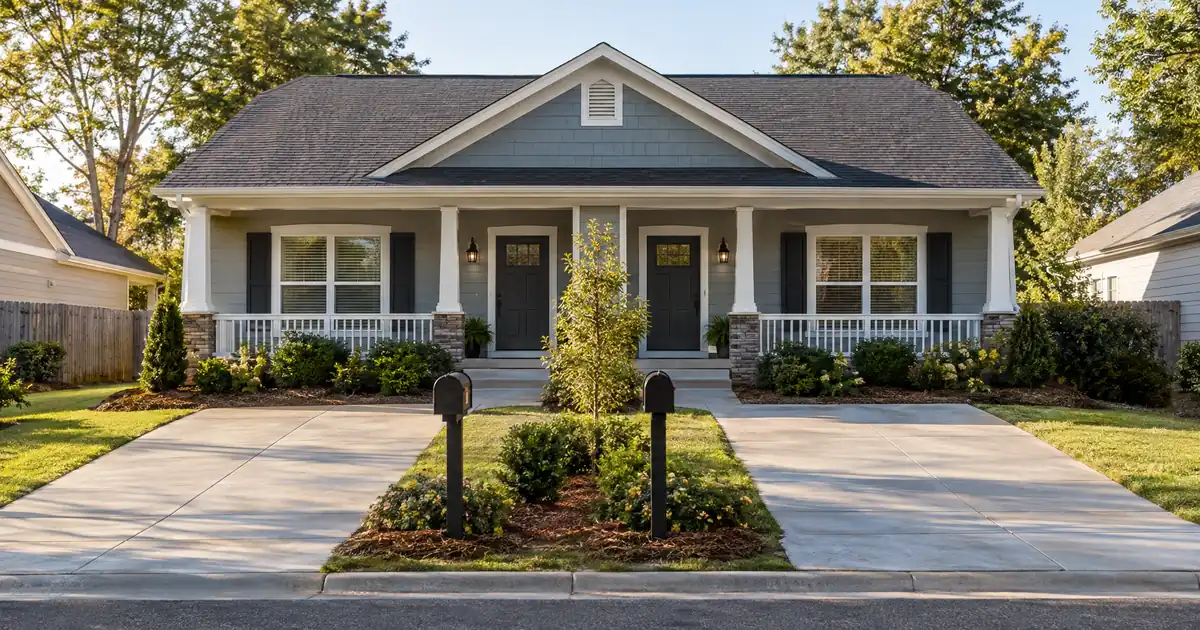
The Quick Read: Owning all three properties in one LLC does not merge them into one loan. A single note across all three requires a portfolio (blanket) DSCR loan. In that structure, the pooled rent is tested against the pooled payment, subject to lender guidelines.
- What pools: one note secured by liens on every property, with the LLC as borrower.
- What gets tested: combined rent against combined PITIA (principal, interest, taxes, insurance and any HOA dues), plus rent support for each property.
- What is shared: every property secures the whole loan. A problem on one door can reach the others.
- The weak link: the condo. Its project review and HOA dues can stall or reshape the pool.
Does One LLC Mean One Loan?
No. The LLC decides who owns the properties. The loan structure decides how they are financed. Most DSCR loans are written one property at a time, even when one entity owns all of them.
DSCR stands for debt service coverage ratio. It compares a property’s rent to its monthly payment. To get one loan across a house, a duplex and a condo, you need a portfolio loan. Portfolio DSCR loan, blanket loan and cross-collateralized loan all name the same thing here: one note secured by several rentals. (A bank’s portfolio loan, one the bank keeps on its own books, is a different use of the word.)
For a trio like yours, the relevant structure is the 30-year portfolio DSCR loan. Across our wholesale network, it typically covers 2 to 20 properties under one note. Loan sizes run roughly $300,000 to $5,000,000, with leverage up to 80% on a purchase or rate-and-term refinance. Property types include single-family, 2-4 unit, condo and townhome. Pricing, terms and eligibility are subject to lender guidelines.
There is a second structure, the rental portfolio term loan. It starts at five or more rental properties or units. It runs on fixed 3-, 5-, 7- or 10-year terms with a balloon at maturity, and leverage up to 75%. Three properties generally sit below its starting point, so it is not the fit here.
| Factor | One pooled loan | Three separate loans |
|---|---|---|
| Closings | One | Three |
| Collateral | Every property secures the note | Each secures its own loan |
| Coverage test | Pooled rent vs pooled payment | Each property alone |
| Weak property | Can be offset by a strong one | Must stand on its own |
| Selling one door | Follows release terms | Pay off that loan only |
For the full picture of how these loans work, see the complete DSCR loans guide.
Key Terms Defined
Blanket loan: one mortgage secured by more than one property.
Pooled coverage: total rent from all properties divided by their total monthly payment. The 30-year portfolio structure measures a floor of 1.00 on the pool.
Release terms: the loan-document rules for paying off one property and removing its lien. Those terms set what a partial release costs.
Warrantable condo: a condo project that meets standard project-eligibility tests. A non-warrantable project fails one or more, and lenders review it case by case.
Cross-collateralization: each property backs the whole loan, not just its own slice.
How Underwriting Treats a House, a Duplex and a Condo
Each property keeps its own file even though the loan is one. The lender wants a lease or an appraiser-supported market rent on every door. Each property also gets its own valuation, title work and insurance.
Agency appraisal forms show how the paperwork splits. DSCR is not an agency product, so treat this as a contrast. Fannie Mae’s Selling Guide lists Form 1073 for a condo unit, Form 1025 for two- to four-unit properties and Form 1007 for market rent. Wholesale lenders use their own report requirements, but the split is similar.
| Property | Rent evidence | Extra review | Common stall point |
|---|---|---|---|
| House | Lease or market rent | None beyond title | Condition or insurance |
| Duplex | Rent for both units | Two rent streams | Owner-occupied unit |
| Condo | Lease or market rent | Project and HOA review | Non-warrantable status |
The house is usually the clean file. The duplex adds a second rent stream. The condo adds a whole building you do not control. One mixed-property pool is only as smooth as its slowest file.
A Worked Example: Pooling Hides a Weak Condo
Run the numbers on three illustrative coverage ratios. These are modeled assumptions, not market data.
- House: about 1.25x.
- Duplex: about 1.15x.
- Condo: about 0.90x, because HOA dues eat into rent.
If the three payments are similar in size, the pool lands near 1.1x. That clears a 1.00 floor on the pool. The condo sits below 1.00 alone, yet it can sit in the pool, because underwriting tests the pooled coverage, the leverage and the terms rather than each door in isolation. Run alone, that same condo would face a harder test.
Pooling helps here. It also hides the weak spot. If the house is later sold, the pool loses its strongest door, and the remaining properties must still cover their debt service. That is why release terms matter as much as the ratio.
One more caution: clearing 1.00 is not positive cash flow. DSCR compares rent to PITIA only. Repairs, vacancy, management, utilities and capital expenses sit outside the calculation.
Close a House, Duplex and Condo in One LLC: The Step-by-Step Sequence
The order matters. Here is the sequence most files follow.
1. Form the LLC before the contract. On a purchase, the LLC should hold the contracts so it can take title at closing. Entity documents and good standing are needed. Many programs require a special-purpose entity, subject to lender program eligibility.
2. Align title. On a refinance, every property must be deeded into the same LLC before pooling. Properties in different entities generally are not pooled until they are in one.
3. Line up the guarantor. The LLC is the borrower. An individual typically signs a personal guarantee on recourse structures.
4. Gather per-property documents. Collect leases, insurance and entity papers for each door.
5. Start the condo review early. Request the project questionnaire and HOA documents on day one of the file, not last.
6. Order valuations and rent support. Every property needs both.
7. Review allocated amounts and release language. The lender assigns each property a slice of the loan. That slice drives any later release payment. Read it before you sign.
8. Close one note. One set of loan documents, one servicer.
For a related wrinkle, see Can a DSCR Portfolio Loan Close if One House Has a Title Problem?.
What Qualifies the Pool
The 30-year portfolio structure typically looks for a credit score of 640, with 680 or 720 on some portfolio structures. Qualification runs primarily on property-level rental income covering the payment, subject to lender guidelines. Reserves vary by lender, leverage and loan size. They commonly run around 6 months of PITIA, and about 9 months on larger balances.
Cash-out has a lower ceiling. On a portfolio loan, it never exceeds 75% of the pooled value. Newly acquired properties face a second cap. Inside the first six months, the loan is also capped at 90% of total cost (purchase price plus documented improvements). From six to twelve months, the cap is 100% of total cost. The leverage ceiling still applies, and the loan is the lower of the two. After twelve months, the appraised value alone is the basis. A rate-and-term refinance is not subject to the cost-basis cap.
Agency rules do not drive any of this. Scotsman Guide reports that DSCR programs cover single-family rentals, townhomes, two- to four-unit properties and condos, and that the agency cap of 10 financed properties does not apply to DSCR loans. Each lender still sets its own property-count and reserve rules.
What the LLC Does and Doesn’t Protect
Here is the paradox. A single LLC puts every property under one liability umbrella. A single note puts every property under one lien structure. Together, there are no walls between the three.
| Event | Separate LLCs, separate loans | One LLC, one pooled loan |
|---|---|---|
| Tenant claim | Hits that LLC only | Can reach all three |
| Default on one door | That loan only | Can reach the whole note |
| Selling one door | Pay off that loan | Follows release terms |
Tax treatment can depend on how the funds are used and how the property is held; investors should keep clear records and speak with a qualified tax professional before relying on any deduction.
One LLC is simpler and cheaper to run. Per-property LLCs cost more in paperwork but isolate risk. Pooling gives up the isolation on the lending side, so be sure the trade fits your plan.
Where the General Rule Breaks
A batch is not a blanket. Three loans closed on the same day are three notes. Only a single cross-collateralized note pools coverage and collateral.
The condo gets declined. Scotsman Guide notes that some DSCR lenders work only with warrantable condos. Others review non-warrantable units case by case. Ask up front what happens to the house and duplex if the condo is turned down. Closing the condo separately is a common fix.
Different entities. Several LLCs with the same owners usually need co-borrowing, cross-guarantees or a parent entity. Pooling across entities adds a step.
An owner-occupied unit. DSCR loans are designed for non-owner-occupied investment properties. Because they are business-purpose investor loans, they are reviewed differently from a standard owner-occupied mortgage. If you live in one duplex unit, that property is out of the pool. Owner-occupied, co-op, mixed-use and commercial property are ineligible in the pool.
Manufactured homes. Manufactured and mobile homes are not reviewable on any of these programs.
Scale. Portfolios of five or more units, including small multifamily, can go on the rental portfolio term loan.
For multi-state holdings, see How LLC-Held Rentals in Several States Close in One Cash-Out Refinance.
Purchase or Refinance?
Pooling is more common on refinances, where you already own the doors. On a purchase, you can still pool, but the contracts, the LLC and the condo review all have to line up before one closing. A purchase also puts three sellers’ timelines in play. A refinance puts only yours in play.
When to Keep the Loans Separate
Pool when you plan to hold all three together and want one payment and one servicer. Keep them separate when your exits differ. Honestly, this is a genuine toss-up for a small trio. The simplicity is real, and so is the flexibility you give up.
| Your plan | Better fit |
|---|---|
| Hold all three long term | Pooled loan |
| Sell the condo soon | Condo on its own loan |
| One door is weak on rent | Pool can help, with terms adjusted |
| Want separate liability | Separate LLCs, separate loans |
Fee savings are real but limited. Some third-party and lender fees consolidate. Each property still needs its own valuation, title work and insurance, so you do not skip steps.
Document Checklist
- Entity: operating agreement, articles of organization, good standing certificate.
- Guarantor: ID, credit authorization, proof of reserves.
- House: lease or rent support, insurance, valuation.
- Duplex: leases or rent support for both units, insurance, valuation.
- Condo: lease or rent support, project questionnaire, HOA documents.
This article is general information, not legal or tax advice. Consult a qualified professional, such as an attorney or CPA, about your own situation.
Frequently Asked Questions
Can I put all three properties in a brand-new LLC?
Usually yes, though the order matters. On a purchase, form the LLC first and have it take the contracts. On a refinance, deed each property into the LLC before pooling. Many programs require an entity that meets their special-purpose rules, subject to lender program eligibility.
Does one pooled loan skip the appraisals?
No. Each property still needs its own valuation and a lease or appraiser-supported market rent. The pool changes how coverage is tested, not whether each door is documented.
Can a strong property cover a weak one?
Often, yes. The pooled coverage test is about the whole portfolio, so stronger rents can offset a weaker property. The remaining properties must still cover their debt service if one is later released.
What happens if I sell one property?
Release terms in the loan documents govern it. The release price typically runs above that property’s allocated balance. The remaining portfolio must still cover its debt service.
Do agency caps on financed properties apply?
No. As Scotsman Guide reports, the agency limit of 10 financed properties does not apply to DSCR loans. Each lender still sets its own limits.
If you are buying or refinancing a rental property and want to see how the numbers work, Lendmire, a mortgage broker arranging DSCR financing in 41 markets including Washington, D.C., can help you compare DSCR loan options based on the property income, credit profile, leverage and investor goals. Programs vary and this is not a commitment to lend.
About Lendmire
As a non-QM mortgage broker (NMLS# 2371349), Lendmire facilitates DSCR investor loans across 41 markets, including Washington, D.C. DSCR eligibility is generally reviewed around property-level rental income instead of personal income documentation, subject to lender guidelines, serving LLC-structured portfolios and self-employed borrowers who don’t fit conventional boxes. A two-time Scotsman Guide Top Mortgage Workplace (2025, 2026).
Get Started
Ready to find the right loan for you?
See your offer in seconds. No credit pull, no obligation.
Informational only. Not a Loan Estimate, approval, or commitment to lend. Program availability and eligibility are subject to lender guidelines, credit approval, property review, and underwriting.
References
1. Fannie Mae Selling Guide B4-1.2-01
2. Scotsman Guide, “Invest in Your Future”
3. Scotsman Guide, “Get in the Game”
This article is part of Lendmire’s DSCR loan program — full qualification details, guidelines, and scenarios live on the program page.
Related reading: Should You Close a DSCR Cash-Out in an LLC or Personal Name? · Can a Business Owner Get a DSCR Loan on a Seasonal Beach House? · DSCR Loan in an LLC vs Personal Name for a First Rental
Brandon Miller
Founder & CEO, Mortgage Loan Originator, Lendmire LLC
- Mortgage Loan Originator · NMLS# 1129696 · Verify on NMLS Consumer Access
- North Carolina Real Estate Broker · License# 343312 · Verify on NCREC
- North Carolina Insurance Producer · License# 19053198 · Property, Casualty, Life, Health · Verify on NAIC SBS
- Lendmire LLC · Firm NMLS# 2371349 · Verify firm licensure
Required disclosures. Lendmire (NMLS# 2371349) operates as a licensed mortgage broker, not a direct lender or depository. The discussion in this article is general in nature and should not be relied upon as financial, legal, or tax advice — every investment scenario is unique and should be reviewed by a qualified professional. Any loan inquiry is subject to lender underwriting, and this article is not a commitment to lend or a guarantee of approval. Mortgage rates, loan terms, and program guidelines vary by borrower, property, and state, and may change without notice. Equal Housing Opportunity. Verify licensure at NMLS Consumer Access.