
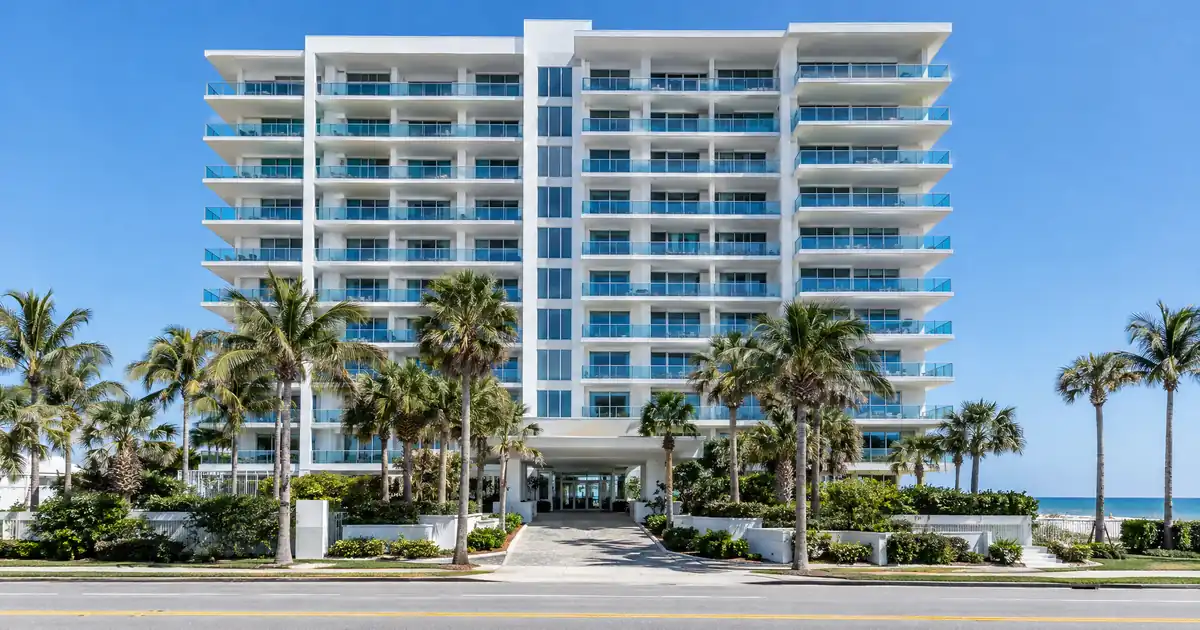
The Quick Read: An STR endorsement usually fits an owner who rents the unit part of the year, while a commercial policy usually fits a unit that runs as a full-time, hotel-style rental. Neither choice wins on its own, because the right policy is the one that matches the carrier’s use rules, the building’s master policy and the lender’s insurance conditions.
- An endorsement is a narrow add-on to a base policy. Rental days, income caps and listed rental types limit it.
- A commercial policy is built around guest liability and business income, so it leaves fewer gaps for nightly use.
- Insurance premium sits inside the monthly payment, so the policy you pick feeds the coverage number.
- The master policy, the rental program and the named insured must all fit together, whichever form you choose.
- On short-term rental files, leverage tops out at 75% on a purchase and 70% on a cash-out, subject to lender guidelines.
Here is the honest answer on who each option is for. An endorsement suits the occasional host, or an owner whose carrier and lender both accept it for a modest rental footprint. A commercial policy suits the investor who treats a condotel unit as a dedicated, non-owner-occupied rental. The catch is that carriers and lenders differ on what they accept, so the decision is never purely about price or preference.
Short-Term Rental Calculator
Run the STR numbers in your market
Rate source: Freddie Mac 30-yr average via FRED® — Federal Reserve Bank of St. Louis · effective Oct 15, 2026
Prefilled with starting assumptions — enter your nightly rate, occupancy, taxes, and insurance for a more accurate picture.
Short-term rental income is documented with a 12-month history or a market data report. Program parameters update from Lendmire’s centralized guideline source.
As of Oct 15, 2026 · General Freddie Mac market benchmark, not a Lendmire loan offer. Nightly rate, occupancy, taxes, and insurance are editable estimates. Qualifying income for short-term rentals varies by program — some use appraisal market rent, others use documented STR history or projections — and is confirmed in underwriting. Not a Loan Estimate, approval, or commitment to lend. Program availability and eligibility are subject to lender guidelines, credit approval, property review, and underwriting.
Key Terms Defined
Condotel: A condo building run like a hotel, often with a front desk, nightly rentals and a rental program.
DSCR: The property’s monthly rent divided by its full monthly housing payment, covering principal, interest, taxes, insurance and association dues.
PITIA: That full payment: principal, interest, taxes, insurance and association dues.
HO-6: The standard owner’s policy for a condo unit’s interior and contents.
Master policy: The association’s policy covering the building itself, not your unit’s contents, guest liability or rental income.
STR endorsement: A rider added to a homeowners or landlord policy that extends coverage to short-term rental activity within stated limits.
Commercial policy: Coverage built for rental as a business, usually pairing commercial property with commercial liability.
Loss of rents: Coverage that keeps income flowing if a covered loss makes the unit unrentable.
Side-by-Side
The table shows published industry norms for both structures, plus how each one tends to interact with a DSCR file. Treat it as a map of tradeoffs, not a ruling.
| Factor | STR Endorsement | Commercial Policy |
|---|---|---|
| Review basis | Rental income vs. full payment | Rental income vs. full payment |
| What it is | Rider on HO-6 or landlord form | Commercial property plus liability |
| Typical fit | Occasional or part-year hosting | Full-time, hotel-style use |
| Coverage limits | Capped by days, income or rental type | Built for business income and guests |
| Main risk | Exceeding the cap reopens a gap | Exclusions in commercial liability |
| Documentation | Endorsement wording, declarations page | Property and liability declarations |
| Entity vesting | Carrier-dependent | Carrier-dependent |
| Reserve expectations | Set by lender, not policy type | Set by lender, not policy type |
Two rows deserve emphasis. Review basis is identical because the DSCR formula doesn’t care which form you hold. And reserves follow the loan, not the policy. Across the wholesale network, reserves commonly run around six months of PITIA, vary with leverage, loan size and transaction type, and step up on larger balances.
Why a Standard Policy Fails on a Condotel
A standard homeowners or landlord policy almost never responds once nightly guest payments begin. That’s the root of this whole decision. Before funding, a lender generally wants proof of a policy built for short-term rental use, covering the dwelling, guest liability and lost rental income. Lendmire’s insurance requirements for short-term rental properties page covers the basics.
Risman, an insurance agency, puts the warning plainly: never assume an HO-6, DP-2 or rented-to-others endorsement automatically covers short-term rental activity. Some carriers write the unit on an HO-6 with an endorsement. Many others require a DP-2 dwelling fire policy.
Condotels add a second layer. Agency programs exclude them, so these loans fall to non-QM, and lenders typically review the rental-pool agreement and master policy on top of the usual cash-flow analysis. The broker’s what is a condotel page explains why that extra review exists.
How Does an STR Endorsement Work?
An endorsement stretches an existing policy to cover rental activity, but only inside its terms. ApartmentCoverage explains that an STR endorsement on an HO6 does not create unlimited coverage. If activity exceeds the terms, such as more rental days, income above a cap or an unlisted rental type, neither the endorsement nor the base policy responds.
Coverage Classroom frames the tradeoff the same way: exceeding the cap reopens the coverage gap. An endorsement is inexpensive, which is its appeal. It also gives minimal coverage, which is its weakness.
Picture an owner who uses a condotel unit for a few weeks each year and rents it the rest of the time through the building’s program. That owner’s exposure is modest and the endorsement may fit. Now picture the same unit listed every night of the year. The cap becomes the problem.
When an STR Endorsement Is the Better Fit
An endorsement tends to be the better fit when two conditions line up.
- Light or part-year use. Coverage Classroom says an endorsement often fits a host renting a few nights a year.
- Carrier and lender both accept it. Lendmire’s guidance is that an occasional host may get by with an endorsement. That is a generalization, not a rule, and a lender reviews each file on its own.
The flip point is use intensity. If the unit moves toward full-time nightly rental, an endorsement’s caps start to bite. An owner who chooses it mainly because it is cheaper, while running the unit like a business, is setting up a claim denial or a failed loan condition.
When a Commercial Policy Is the Better Fit
A commercial policy tends to be the better fit for a dedicated, non-owner-occupied rental. Coverage Classroom describes commercial and hospitality coverage as built around business income, guest liability and higher turnover. It costs more than an endorsement but leaves less of a gap tied to the rental activity.
On the lender side, DSCR lenders generally want the dedicated policy on an investment-only file. That’s typical, not universal. Condotel files draw extra scrutiny because the unit is closer to a hotel room than a rental condo.
Here is the catch. A commercial policy is not automatically better. A commercial form with a broad exclusion for the way your building operates can leave you worse off than a clean endorsement. Commercial policies can also bring commercial underwriting questions that a rider doesn’t.
This one’s closer than it looks. For a full-time unit, commercial usually narrows the gap. For a part-year unit, the added cost and underwriting may not buy much.
Where Does the Insurance Choice Show Up in the DSCR Math?
It shows up in two places: the payment and the file conditions. DSCR divides monthly rental income by the full housing payment. Because insurance is inside that payment, a higher premium lowers the coverage ratio and a lower premium raises it. The rent side doesn’t change.
Run the numbers on a simple pattern, with no dollars attached. Suppose a unit clears around 1.15x with an endorsement-level premium. Move to a commercial policy with a meaningfully higher premium and that same unit could slip toward 1.05x or lower. The ratio can move enough to matter when you’re near a program floor. Short-term rental purchases typically start at a 1.00 coverage floor, and select lenders in the network will look below 1.00 with leverage and terms adjusted.
Loss of rents ties directly to the number. If the property burns and can’t be rented for months, that coverage keeps income flowing. Endorsements often cap rental income or days. A commercial policy normally carries business-income coverage. Either way, clearing 1.00 is not the same as positive cash flow. Repairs, vacancy, management and utilities sit outside the calculation.
DSCR vs. conventional financing
There are two common ways to finance an investment property, and they qualify you differently — here’s how investors weigh them.
Why investors choose it
- Qualifies on the property’s rental income — no personal tax returns, W-2s, or pay stubs needed to document income.
- No personal debt-to-income ceiling to clear, so existing mortgages and obligations don’t cap your borrowing the same way.
- Can be closed in an LLC, keeping the property inside a business entity.
- Built for scaling — not held to the limit on number of financed properties that conventional financing applies.
- Underwriting centers on the deal: generally qualifies when the rent covers the payment, a 1.00x coverage ratio being a common baseline (confirmed in underwriting).
- Designed specifically for investment property, including long-term and, where the program allows, short-term rentals.
Where it’s strong
- Often the lowest ongoing financing cost for a buyer who fully qualifies on personal income — a fit for a first property or a cost-first purchase.
Trade-offs for investors
- Requires full personal income documentation and must fit within a debt-to-income limit — salary, existing debts, and other mortgages all count.
- Typically held in your personal name rather than a business entity.
- Caps how many financed properties you can carry, which can become a ceiling as a portfolio grows.
- Evaluates you as a borrower as much as the property, which usually means more paperwork.
How investors usually choose: a first or single property often optimizes for the lowest financing cost; portfolio builders often optimize for leverage, vesting in an LLC, and scaling past conventional caps. The right answer depends on your goals, the property, and current guidelines — both paths run through select lenders in Lendmire’s wholesale network, with eligibility and terms confirmed in underwriting.
How the Master Policy, Your Policy and the Rental Program Fit Together
The master policy covers the building, not your contents, guest liability or rental income. So the underwriter typically wants both the master policy and your own policy, to confirm there’s no gap between them. Lendmire advises requesting the HOA master policy declarations alongside your own quote.
Building-level risk can also work against you. As one illustration, Coverage Classroom cites a Florida rule: a condominium becomes ineligible for the state insurer of last resort’s wind-only master policy if a large share of its units are rented frequently for short periods. That governs the association’s master policy, not an individual HO-6, and it is a Florida-specific example. But it shows how a heavily rented building can affect coverage around you.
Two more fit checks matter:
- Named insured. The quote should show the entity as named insured before the file goes to underwriting. Ownership may be individual or LLC, subject to lender program eligibility, and some carriers accept LLC and trust ownership while others don’t.
- Flood. If the property sits in a FEMA Special Flood Hazard Area, flood coverage is layered separately. Neither form automatically includes it.
Permission and Income Are Separate Gates
Insurance does not prove the unit may operate as a short-term rental. Permission has to be documented for the specific property, and an HOA declaration can block rentals even where the city allows them. Short-term rental rules can vary by city, county, HOA and property type, so investors should confirm local rules before relying on projected rental income.
Income evidence is its own question. On condotel files, lenders usually skip the standard rent schedule and look at the hotel operator’s trailing revenue statements, the rental-management agreement and third-party market data. McKissock explains that Form 1007 estimates monthly market rent and that lenders make the final call on which income counts. The appraisal sets value. It does not prove your nightly income.
What the Underwriter Wants to See
Whichever form you carry, line up these items early:
- Declarations pages for property and liability coverage
- The endorsement wording, if you use one, showing rental limits
- Loss-of-rents or business-income wording
- The HOA master policy declarations
- Entity shown as named insured, matching the borrower
- Flood coverage if the property is in a special flood zone
- Documented permission to operate as a short-term rental
Across the wholesale network, short-term rental files typically ask for a 640 or higher credit score and about twelve months of hosting history. Leverage reaches 75% on a purchase and 70% on a refinance or cash-out, with a coverage floor of 1.00 on both purchases and refinances, all subject to lender guidelines and property review. Condotels are a tighter category than ordinary rental condos, so expect closer scrutiny of the building.
Common Mistakes That Sink the File
- Assuming an HO-6 covers Airbnb-style use. Standard forms generally exclude business and rental exposures.
- Treating an endorsement as equal to a commercial policy. It is capped by its terms.
- Leaning on the master policy to cover your guests or income.
- Buying commercial coverage without reading the liability exclusions.
- Quoting insurance late. A policy mismatch can surface deep in underwriting, so get quotes and the master declarations in hand before the deal moves forward.
- Switching between a rental program and self-managed nightly use without telling the carrier. Coverage that fit one setup may not fit the other.
Verdict
Choose by use, not by premium. If the unit is a part-year rental, the carrier accepts it, the lender signs off and the building’s program carries much of the operation, an endorsement can be a sound, economical choice. If the unit is a dedicated full-time rental, a commercial policy usually fits better, provided you’ve read the exclusions and the premium still leaves a comfortable coverage ratio.
Either way, ask the insurance agent, the HOA or program manager and the loan officer the same question: does this policy respond to how this specific unit will actually be used? The strongest files pair the right form with enough equity and enough rental coverage. For the wider picture on how these loans work, see Lendmire’s complete DSCR loans guide.
If you are buying or refinancing a rental property and want to see how the numbers work, Lendmire can help you compare DSCR loan options based on the property income, credit profile, leverage, and investor goals.
Frequently Asked Questions
Do I need a commercial policy for a condotel DSCR loan?
Not always. Lenders generally want a policy built for short-term rental use, and a dedicated or commercial form is common on investment-only files. An occasional host may get by with an endorsement, but each lender reviews the file individually.
Can my HO-6 policy alone satisfy the lender?
Rarely. Standard HO-6 forms generally exclude business and rental exposures, so nightly rental use often falls outside them. The lender will typically want proof of coverage built for short-term rental use, plus the master policy declarations.
Does the insurance premium count in the DSCR?
Yes. Insurance is part of the full monthly payment in the denominator. A higher premium lowers the coverage ratio, while a lower one raises it. That’s why the policy choice can matter on a file sitting near a program floor.
What if I’m in a mandatory rental program?
Lenders review the rental-pool agreement and master policy as extra steps on condotel files. Income is typically documented through the operator’s revenue statements.
Are flood and wind covered by either policy?
Not automatically. Flood is layered separately if the property is in an FEMA Special Flood Hazard Area, and wind is a distinct coverage question. Ask your agent to confirm what each form includes.
Tax treatment can depend on how the funds are used and how the property is held; investors should keep clear records and speak with a qualified tax professional before relying on any deduction.
About Lendmire
Lendmire, NMLS# 2371349, is a non-QM mortgage broker serving real estate investors in 41 markets, including Washington, D.C., through DSCR investor loan programs. Qualification is generally reviewed around the subject property’s rental income, not the borrower’s W-2 history, which suits LLC-titled portfolios and self-employed investors. All scenarios remain subject to lender review and program guidelines. Lendmire holds two consecutive Scotsman Guide Top Mortgage Workplace recognitions (2025, 2026).
Get Started
Ready to find the right loan for you?
In about 30 seconds you can review financing options available for your investment property. No commitment required.
Informational only. Not a Loan Estimate, approval, or commitment to lend. Program availability and eligibility are subject to lender guidelines, credit approval, property review, and underwriting.
References
1. Risman
4. McKissock
This article is part of Lendmire’s short-term rental loan program — full qualification details, guidelines, and scenarios live on the program page.
Related reading: How to Get a DSCR Projection Report for a Condotel Airbnb · How to Get a DSCR Loan on One Unit in a Condotel Building · How to Bridge a New STR Build and Refinance Into a DSCR Loan
Brandon Miller
Founder & CEO, Mortgage Loan Originator, Lendmire LLC
- Mortgage Loan Originator · NMLS# 1129696 · Verify on NMLS Consumer Access
- North Carolina Real Estate Broker · License# 343312 · Verify on NCREC
- North Carolina Insurance Producer · License# 19053198 · Property, Casualty, Life, Health · Verify on NAIC SBS
- Lendmire LLC · Firm NMLS# 2371349 · Verify firm licensure
Compliance and disclosures. Lendmire (NMLS# 2371349) is a licensed mortgage broker and is not a direct lender, depository institution, financial advisor, or tax professional. Content in this article is general market analysis and educational information — not financial, legal, or tax advice for any specific situation. Lendmire does not guarantee loan approval; every transaction is subject to underwriting by the funding lender. Mortgage pricing and loan program guidelines are subject to change at any time without notice and vary by borrower characteristics, property type, and state regulations. Lendmire complies with Equal Housing Opportunity. Licensure verification: NMLS Consumer Access.