
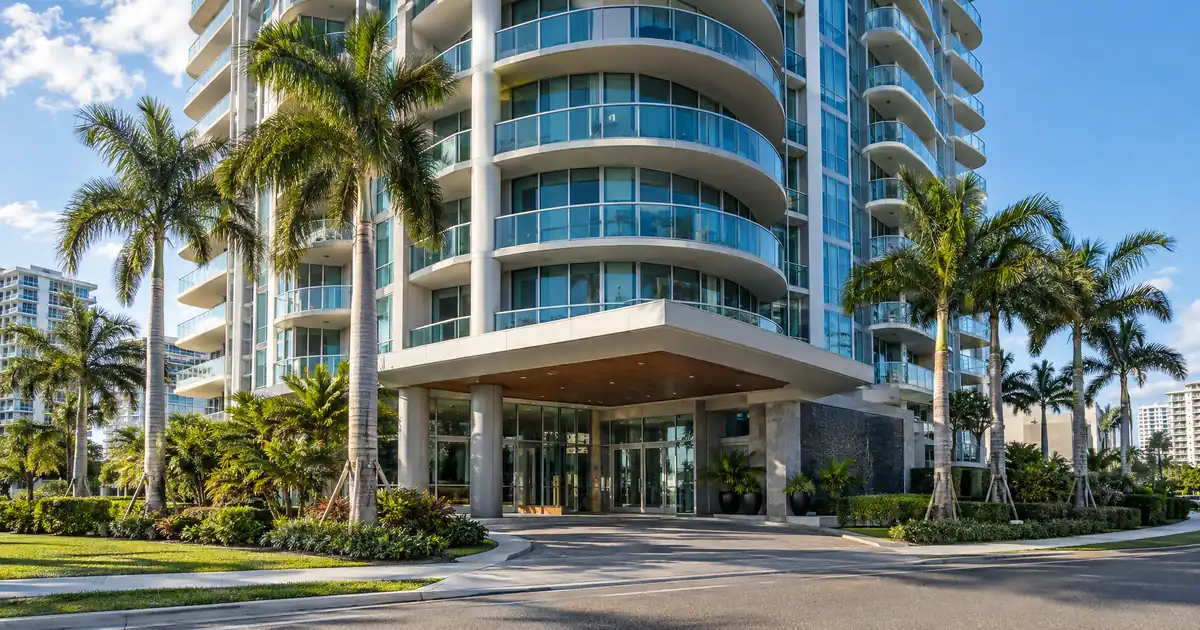
Can A Condotel Qualify For A Super Jumbo DSCR Loan — The Quick Read: Yes. Condotels can’t get a conventional or agency-backed mortgage at any size, but that’s exactly why the DSCR lane exists for them. Through select lenders in a wholesale network, condotel purchases can reach into six-figure and low-seven-figure loan sizes, with financing arranged up to $1,500,000 at 75% purchase leverage and 65% on a refinance, and $250,000 in required cash-in-hand on the file. Above that ceiling, condotel-specific programs generally stop — this is a project-type limit, not a borrower-quality problem.
Fannie Mae and Freddie Mac won’t buy a mortgage secured by a condotel unit under any circumstance. The Fannie Mae Selling Guide states directly that Fannie Mae does not purchase or securitize mortgages on units in condo or co-op hotels, and a project that operates as a hotel or motel lands on the agency’s ineligible list regardless of how the units are individually owned. That single rule is why nearly every condotel purchase in the country ends up financed through a non-agency channel — DSCR loans, portfolio lenders, or non-QM programs built specifically to fill the gap agency guidelines leave open.
DSCR Calculator
Run the numbers in your market
Rate source: Freddie Mac 30-yr average via FRED® — Federal Reserve Bank of St. Louis · effective Sep 17, 2026
Prefilled with local estimates — enter your own rent or nightly figures, taxes, insurance, and HOA for a more accurate picture.
Program parameters update from Lendmire’s centralized guideline source. Taxes and insurance are editable estimates.
As of Sep 17, 2026 · General Freddie Mac market benchmark, not a Lendmire loan offer. Rent, nightly rate, occupancy, taxes, and insurance are editable estimates. Short-term rental figures are estimates only and vary significantly by season, property type, management approach, and local short-term-rental rules — confirm local regulations before relying on them. Qualifying income for short-term rentals varies by program — some use appraisal market rent, others use documented STR history or projections — and is confirmed in underwriting. Not a Loan Estimate, approval, or commitment to lend. Program availability and eligibility are subject to lender guidelines, credit approval, property review, and underwriting.
Why Condotels Get Shut Out of Conventional Financing
Condotels get excluded because they behave like hotels, not homes. When a project runs a front desk, pools rental income across units, or requires owners to participate in a rental program, it fails the basic test agencies use for owner-controlled residential property. The exclusion isn’t about the borrower’s credit or income — it’s about the building’s operating structure.
A separate wrinkle sits inside the agency’s own compliance systems. Fannie Mae tracks project status through its Condo Project Manager system, and a project with an “Unavailable” status in CPM is not eligible for purchase by Fannie Mae, regardless of project review type. That agency-specific flag doesn’t bind DSCR underwriting directly, but it points at the same red flags a wholesale lender’s condo questionnaire checks: active litigation, incomplete construction, or a developer that still controls the homeowners association.
It’s worth separating two terms investors often mix up. Condotel status is one specific trigger for non-warrantable classification. But non-warrantable condos can fail for plenty of other reasons — heavy investor concentration, single-entity ownership limits, or underfunded HOA reserves. None of these involve hotel-style operations at all. A condotel is always non-warrantable. But a non-warrantable condo is not always a condotel.
How DSCR Underwriting Actually Handles a Condotel
DSCR loans qualify on what the property earns, not on the borrower’s traditional personal-income documentation. That’s the whole design, and it’s why condotels — an asset class agencies won’t touch — still have a real financing path. The lender looks at the unit’s rental income relative to its full monthly obligation and builds the file around that ratio, subject to lender guidelines and underwriting review.
Property review comes first, before the borrower’s file gets much attention. The HOA or management company fills out a questionnaire covering ownership composition, financial health, litigation status, and how the rental program is structured. That review determines whether the building even qualifies as a candidate for financing — before anyone runs numbers on the unit itself.
Coverage math for condotels follows the same structure used across the DSCR world, but leverage compresses because of the property type. Through select lenders in the wholesale network, condotel financing typically caps at 75% loan-to-value on a purchase and 65% on a refinance, with a hard ceiling around $1,500,000 and a required $250,000 in cash-in-hand. That’s meaningfully tighter than a standard single-family rental, where leverage on a comparable loan size can run to 80% purchase. The gap reflects real risk: hotel-style operating agreements, seasonal income swings, and thinner appraisal comparables all push lenders toward more conservative structuring.
Rental income for a condotel doesn’t come from a hotel’s marketing brochure or a resort’s projected-occupancy sheet. Instead, appraisers use standardized forms — the Single-Family Comparable Rent Schedule for one-unit properties, or the similar income form for multi-unit properties — to document market rent from comparable rentals. A trade explainer on this process states plainly that appraisers are not required to assess business income when completing these forms — that job is out of scope for the appraisal itself. The lender then takes that market-rent figure and runs the actual income-to-payment comparison — the DSCR calculation.
Where the Super Jumbo Ladder Comes In
Super jumbo isn’t a government-defined category — no agency sets a threshold for it. It’s simply the tier where loan sizes climb past what standard DSCR programs handle, and where leverage, credit, and reserve requirements step down and up together as balance size increases. Terms vary by lender guidelines, property type, leverage, credit profile, and full file review.
Across the wholesale network, the standard DSCR program runs to $3,000,000, and a broader portfolio investor ladder extends financing from $150,000 up to $10,000,000 for qualified investors, subject to underwriting. Short-term-rental files and no-ratio structures stop at $2,000,000 regardless of overall program ceiling. Here’s where the condotel-specific cap matters most: condotel financing tops out at $1,500,000 with $250,000 cash-in-hand, which sits well inside the standard DSCR range and doesn’t reach into true super jumbo territory (the $3,000,000-plus tier) at all.
That’s the honest answer to the question buried here’s title. A condotel can absolutely qualify for a DSCR loan sized well above what most investors assume — six figures into seven figures — but the condotel project type itself, not the borrower’s credit or the lender’s overall size ladder, is what caps the deal at $1,500,000. An investor chasing a $4,000,000 condotel unit won’t find a program that stretches the condotel cap to meet that price point. The unit’s classification, not the borrower’s balance sheet, sets the ceiling.
Leverage on the broader super jumbo ladder does step down as size increases — purchase and rate-term financing run at 75% up through $3,000,000, then compress to 65% between $3,000,000 and $4,000,000, and to 60% from $4,000,000 up to $10,000,000, with everything above $4,000,000 reviewed case by case before submission and cash-out unavailable at that tier. Credit floors rise too — 660 on most files, stepping up to 700 above $3,000,000. None of that ladder applies directly to a condotel purchase capped at $1,500,000, but it explains the broader mechanics an investor should understand before assuming “super jumbo DSCR” means unlimited leverage at any price point.
The Cash Flow Test: Coverage Ratios on a Condotel File
A coverage ratio of 1.00 or better generally earns full leverage on a condotel file, meaning the property’s rent fully covers the monthly obligation. Below that line, options narrow but don’t disappear entirely.
Coverage between roughly 0.75 and 0.99 is a real path through select programs in the network, reaching up to $2,000,000 in loan amount — but leverage and terms adjust downward to offset the weaker coverage, subject to underwriting. This matters for condotel investors because seasonal occupancy is the norm, not the exception. A beachfront or ski-adjacent condotel might run strong coverage during peak months and soft coverage in the off-season, and the DSCR calculation typically uses a blended or trailing income figure rather than the best month on the calendar.
For short-term-rental income specifically, the wholesale network generally credits 80% of gross rental income. Lenders use either twelve months of documented operating history on a refinance or the appraisal’s short-term-rent analysis on a purchase. That haircut exists because gross booking revenue isn’t the same as reliable net income — cleaning fees, platform commissions, and vacancy between bookings all eat into what actually reaches the owner. This program path is generally reserved for experienced investors — typically defined as someone who has owned income property for at least twelve of the last thirty-six months.
Let’s run the numbers on a hypothetical. An investor is eyeing a $1,200,000 condotel unit, financing at 75% purchase leverage. Documented rental income covers the monthly obligation at roughly 1.1x. That coverage level clears the 1.00 threshold with some cushion. It typically supports full program leverage rather than a reduced-LTV structure — subject to appraisal, credit, and reserve review. Now compare that to a unit where seasonal income only covers about 0.85x on a trailing basis. That file likely moves toward the reduced-leverage sub-1.00 path instead of the standard program, with LTV and terms adjusting accordingly.
In practice, files that rely heavily on a hotel operator’s revenue-share agreement tend to run tighter coverage numbers than self-managed units. That’s because management fees and revenue splits reduce what flows back to the owner before the DSCR math even gets calculated. Reviewing the operator agreement matters a lot here — the revenue split, the management fee structure, and any blackout dates that limit personal use. This review is often the difference between a file that qualifies comfortably and one that needs a reduced-leverage structure to clear underwriting.
Reserves, Credit, and Documentation for Condotel Files
Most condotel files need six months of PITIA in reserves held on the subject property, rising to twelve months for first-time investors — with no additional reserve requirement layered on for other financed properties in the portfolio. Two appraisals become standard practice above $2,000,000 in loan amount, though that threshold sits above where most condotel-specific financing tops out given the $1,500,000 program cap. Exact terms depend on the lender’s guidelines, property type, leverage, and a full review of the borrower’s file.
Pricing and available terms vary by lender, borrower profile, property type, and full underwriting review. Entity vesting — closing the loan in an LLC rather than a personal name — is generally welcome across the network, though layered entity structures typically aren’t. Interest-only structuring is available on many files, running up to 120 months on 30- and 40-year terms, capped at 75% loan-to-value with coverage of 0.75 or better, qualified on the interest-only payment rather than the fully amortizing one. For an investor managing a seasonal cash flow pattern, an interest-only period can smooth the carrying cost during slower months.
One edge case is worth flagging: mandatory rental-pool participation. Here, the management company controls unit availability, and guests can be placed in any unit within the pool — not just the specific one an owner bought. If an investor can’t independently list or manage their own unit, the property functions more like a hotel program than a true rental. This structure is the single most common reason a condotel deal stalls in underwriting, no matter the borrower’s credit profile or loan size. Litigation against the HOA, incomplete construction, or a developer still controlling the association board can create similar structural problems — problems a strong personal financial file can’t offset.
DSCR vs. the Alternatives for a Condotel Purchase
| Path | Condotel Eligible? | Reviewed on |
|---|---|---|
| Conventional/Agency | No — categorically excluded | N/A |
| DSCR (wholesale network) | Yes, to $1,500,000 | Property rental income |
| Bank statement / Non-QM | Sometimes, lender-dependent | Personal cash flow + property |
| Portfolio (balance sheet) | Sometimes, lender-dependent | Varies by lender |
For investors comparing structures more broadly, Lendmire’s trust-held condo guide for super jumbo financing covers how vesting affects eligibility on high-value condo purchases. The super jumbo bank statement approach to condotels walks through the personal-income alternative for investors whose files don’t lean entirely on property-level rent. For a fuller grounding in how DSCR underwriting works across property types, start with Lendmire’s complete DSCR loans guide.
DSCR loans are designed for non-owner-occupied investment properties. Because they are business-purpose investor loans, they are reviewed differently from a standard owner-occupied mortgage.
DSCR vs. conventional financing
Two common ways to finance an investment property in this market. They qualify you differently — here’s how investors weigh them.
Why investors choose it
- Qualifies on the property’s rental income — no personal tax returns, W-2s, or pay stubs needed to document income.
- No personal debt-to-income ceiling to clear, so existing mortgages and obligations don’t cap your borrowing the same way.
- Can be closed in an LLC, keeping the property inside a business entity.
- Built for scaling — not held to the limit on number of financed properties that conventional financing applies.
- Underwriting centers on the deal: generally qualifies when the rent covers the payment, a 1.00x coverage ratio being a common baseline (confirmed in underwriting).
- Designed specifically for investment property, including long-term and, where the program allows, short-term rentals.
Where it’s strong
- Often the lowest ongoing financing cost for a buyer who fully qualifies on personal income — a fit for a first property or a cost-first purchase.
Trade-offs for investors
- Requires full personal income documentation and must fit within a debt-to-income limit — salary, existing debts, and other mortgages all count.
- Typically held in your personal name rather than a business entity.
- Caps how many financed properties you can carry, which can become a ceiling as a portfolio grows.
- Evaluates you as a borrower as much as the property, which usually means more paperwork.
How investors usually choose: a first or single property often optimizes for the lowest financing cost; portfolio builders often optimize for leverage, vesting in an LLC, and scaling past conventional caps. The right answer depends on your goals, the property, and current guidelines — both paths run through select lenders in Lendmire’s wholesale network, with eligibility and terms confirmed in underwriting.
Tax treatment can depend on how the funds are used and how the property is held; investors should keep clear records and speak with a qualified tax professional before relying on any deduction.
Key Terms Defined
Condotel: A condominium unit inside a project that operates like a hotel — often with a front desk, rental-pooling requirements, or mandatory participation in a rental program — which makes it ineligible for agency-backed financing.
DSCR (Debt Service Coverage Ratio): A ratio comparing a property’s rental income to its full monthly obligation (principal, interest, taxes, insurance, and any HOA dues); a ratio of 1.00 means the rent exactly covers the payment.
Non-warrantable condo: A condo project that fails one or more agency eligibility standards — investor concentration, HOA reserve levels, litigation, or hotel-style operation — making it ineligible for conventional financing regardless of the specific reason.
Cash-in-hand: Funds required at closing beyond the down payment, often used on condotel files to offset the property type’s added risk.
Super jumbo: An industry term, not a regulatory category, describing loan sizes that exceed standard investor-loan program ceilings — typically north of $3,000,000 in the DSCR space.
If a condotel purchase or refinance is on the table, Lendmire can help compare how the numbers work based on the property’s income, credit profile, available leverage, and the investor’s broader goals. Reach Lendmire at 828-256-2183 or through its mortgage quote form to talk through a specific file.
Frequently Asked Questions
What happens if a condotel unit is priced above the $1,500,000 program cap?
The condotel-specific DSCR path generally stops at $1,500,000 regardless of the borrower’s credit or reserves — this is a project-type limit, not a personal qualification issue. Investors targeting higher-priced units may need to explore portfolio or non-QM structures, since the standard condotel ceiling doesn’t stretch with loan size the way other property types do.
Does a condotel need two appraisals?
Two appraisals typically apply to loans above $2,000,000, but most condotel-specific financing tops out at $1,500,000, so a single appraisal generally applies. Condotel appraisals can still be more complex than a standard condo because comparable sales and comparable rentals for hotel-condo hybrids are often limited.
Can an investor get a condotel loan with sub-1.00 coverage?
Coverage between roughly 0.75 and 0.99 is available through select programs in the wholesale network, generally up to $2,000,000 in loan amount, but leverage and terms adjust to offset the weaker ratio, subject to underwriting. This path isn’t automatic — it depends on the borrower’s credit, reserves, and the specific property’s documented income.
Does mandatory rental-pool participation disqualify a condotel from DSCR financing?
Mandatory rental-pool participation can disqualify a condotel from DSCR financing. When management controls unit availability and guests may be placed in any unit within a shared pool, the property functions more like a hotel program than a rental the owner independently manages, which is one of the more common reasons a condotel file runs into underwriting resistance.
Is short-term rental income treated differently than long-term lease income on a condotel?
Yes. Short-term-rental income is generally credited at 80% of gross income, based on twelve months of documented operating history on a refinance or the appraisal’s short-term-rent analysis on a purchase, and this path is typically reserved for investors with prior income-property experience.
For current guidelines and terms, see Lendmire’s super jumbo DSCR loan programs page.
Self-employed borrowers can compare both super jumbo programs on Lendmire’s self-employed mortgages page.
About Lendmire
Lendmire (NMLS# 2371349) is a mortgage brokerage focused on DSCR investor financing, helping arrange programs through wholesale and investor-lending channels in 40 markets, including Washington, D.C. DSCR loans are evaluated by the lender on property cash flow rather than personal income, subject to lender guidelines, supporting LLC closings and accommodating investors with four or more financed properties. Scotsman Guide Top Mortgage Workplace in both 2025 and 2026.
Get Started
Ready to find the right loan for you?
In about 30 seconds you can review financing options available for your home or investment property. No commitment required.
Informational only. Not a Loan Estimate, approval, or commitment to lend. Program availability and eligibility are subject to lender guidelines, credit approval, property review, and underwriting.
References
1. Fannie Mae Selling Guide — General Property Eligibility
2. Fannie Mae Ineligible Projects FAQ PDF
3. GoverningDocs — What Is a Non-Warrantable Condo?
4. McKissock Learning — Form 1007 and Its Impact on Short-Term Rental Appraisals
Brandon Miller
Founder & CEO, Mortgage Loan Originator, Lendmire LLC
- Mortgage Loan Originator · NMLS# 1129696 · Verify on NMLS Consumer Access
- North Carolina Real Estate Broker · License# 343312 · Verify on NCREC
- North Carolina Insurance Producer · License# 19053198 · Property, Casualty, Life, Health · Verify on NAIC SBS
- Lendmire LLC · Firm NMLS# 2371349 · Verify firm licensure
Compliance and disclosures. Lendmire (NMLS# 2371349) is a licensed mortgage broker and is not a direct lender, depository institution, financial advisor, or tax professional. Content in this article is general market analysis and educational information — not financial, legal, or tax advice for any specific situation. Lendmire does not guarantee loan approval; every transaction is subject to underwriting by the funding lender. Mortgage pricing and loan program guidelines are subject to change at any time without notice and vary by borrower characteristics, property type, and state regulations. Lendmire complies with Equal Housing Opportunity. Licensure verification: NMLS Consumer Access.


