
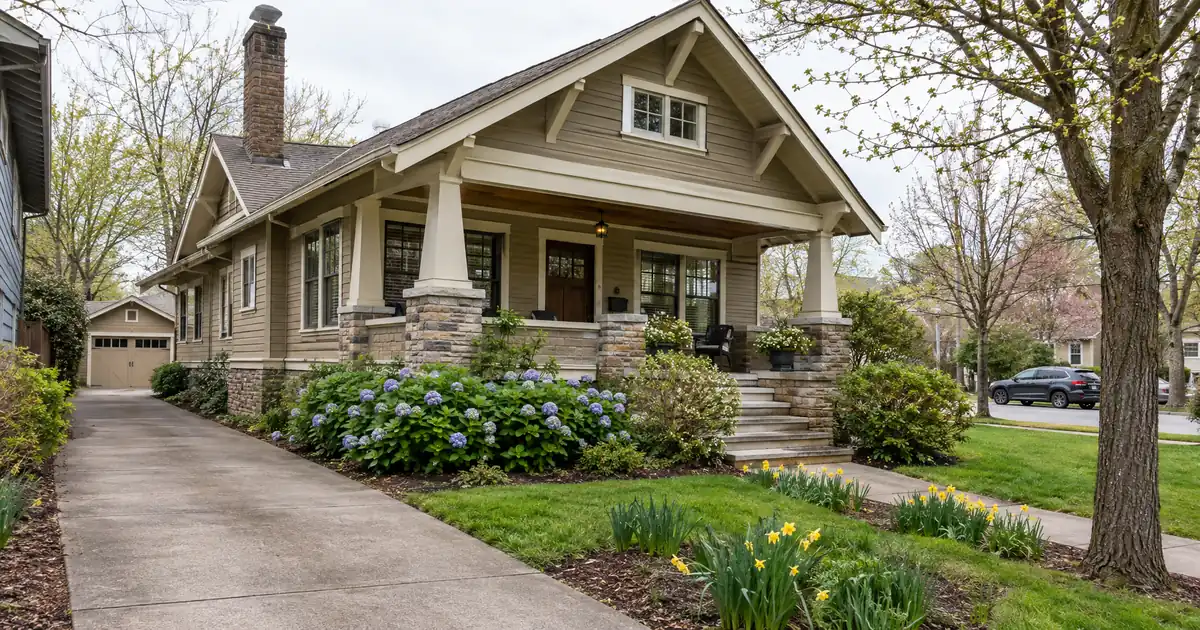
The Quick Read: The two loans do different jobs, so a BRRRR investor with a batch of properties is usually choosing based on where each property sits in the project, not picking one product for the whole batch. A construction loan pays for work in progress. A DSCR loan is a long-term loan on a finished, rentable property that qualifies primarily on property-level rental income covering the payment, subject to lender guidelines.
- A construction loan fits properties still under rehab or build, where money must flow out in stages.
- A DSCR loan fits properties that are finished, habitable, and leased or lease-ready.
- A construction loan does not replace the refinance step, because it ends in a payoff or a conversion to a permanent loan.
- A batch often splits: finished properties go to DSCR, while unfinished ones stay on construction or bridge funding.
- Qualification differs. Construction underwrites the plan and the borrower, and DSCR underwrites the rent against the monthly obligation.
The Honest Answer: Who Each Option Is Really For
A construction loan is for the investor whose properties are not done. It releases money as work is completed and inspected. The investor pays interest only on what has been drawn, and the balance comes due at completion. Freddie Mac’s consumer education page describes this interest-only structure and the choice at the end: pay the balance off in cash or convert it to a standard mortgage. Those explainers are written mainly for owner-occupied new builds, so treat the details as the general shape of the product.
A DSCR loan is for the investor whose properties are finished. It looks at rent against the full monthly obligation of principal, interest, taxes, insurance, and association dues. It does not fund unfinished work and it does not need the investor’s personal income documents.
For a batch refinance, the real question is not which loan is better. It is whether each property is ready for permanent financing. Finished and leased properties belong in the DSCR lane. Half-finished properties belong on construction or bridge funding until the work is done.
This page walks through that choice. It sits next to the complete DSCR loans guide, which covers the program basics.
Side-by-Side
The DSCR column reflects typical guidelines across select lenders in Lendmire’s wholesale network. The construction column shows published industry norms, which vary by lender and by whether the property is owner-occupied or an investment. Lendmire’s wholesale network places DSCR loans.
| Factor | DSCR Loan | Construction Loan |
|---|---|---|
| Main purpose | Long-term loan on a finished rental | Funds work in progress |
| Review basis | Rent vs. full monthly obligation | Plan, budget, and borrower |
| Personal income docs | Typically not the basis | Commonly reviewed |
| Property condition | Habitable and rentable | Unfinished is expected |
| How money moves | Funded at once | Released in staged draws |
| How it ends | Long-term hold or refinance | Payoff or conversion at completion |
| Entity vesting | LLC often allowed per program | Lender-specific |
| Reserves | Often around 6 months PITIA | Lender-specific |
| Timeline | Tied to appraisal and file review | Tied to build and inspection schedule |
Two rows deserve a closer look. The first is “how it ends.” A construction loan always has a second chapter, because the balance must be paid off or converted. For a rental investor, that permanent loan is frequently a DSCR loan.
The second is reserves. Across the network, reserves vary by lender, leverage, loan size, and transaction type. They commonly run around 6 months of PITIA, and loans above $1,500,000 typically step up to about 9 months. Select conservative files at modest leverage can see reserves waived. Never assume one number applies to every file.
Key Terms Defined
Construction loan: A short-term loan that releases money in stages as work is finished and inspected.
Draw: One staged release of construction funds, usually tied to a completed milestone.
DSCR: The ratio of a property’s rent to its monthly obligation of principal, interest, taxes, insurance, and association dues (PITIA).
PITIA: Principal, interest, taxes, insurance, and association dues, the full monthly cost the rent has to cover.
Seasoning: The time an owner has held a property before a lender will let the investor pull cash out against its value.
Blanket loan: One loan secured by several properties instead of one note per property.
Release clause: A loan term that lets a single property leave a blanket loan once conditions are met.
What a DSCR Test Actually Measures
DSCR compares rent to the monthly obligation. The general definition, as Wikipedia explains, is net operating income over debt service. Investor loans use the PITIA version, where the rent is divided by the full housing obligation. The same reference notes that non-QM and investor-focused lenders may accept lower ratios under specific programs.
In the network, 1.00 is where many select programs start. A separate select-lender path takes coverage below 1.00, with leverage and terms adjusted. Stronger ratios usually open better leverage and pricing.
Clearing 1.00 does not mean a property makes money. Repairs, vacancy, management, utilities, and capital expenses sit outside the calculation. A property can clear the coverage test and still leave thin cash flow after real operating costs.
DSCR loans are designed for non-owner-occupied investment properties. Because they are business-purpose investor loans, they are reviewed differently from a standard owner-occupied mortgage.
When a DSCR Loan Is the Better Fit
A DSCR loan wins when the property is done and the question is long-term financing. Several investor profiles point this way.
The finished, leased property. When the rehab is complete and a tenant is in place, the property has what the test needs: a rent figure and a habitable unit. A construction loan has nothing left to fund. The usual BRRRR exit is a DSCR cash-out or rate-and-term refinance that pays off the short-term loan.
The investor with many financed properties. Personal income documents and debt-to-income math get harder to manage with each added loan. DSCR files shift the test to the property. For investors who hold properties in entities or have uneven tax-return income, that shift can matter. LLC vesting is commonly accepted, subject to lender program eligibility.
The investor who wants a long runway. The spine of the network’s programs is the 30-year fixed. Select lenders also offer extended terms such as 40-year amortization and interest-only periods, and ARM structures exist for investors who want them. A construction loan, by design, has a short life.
The investor with a clean file. Most programs want a score around 660, and a 620 floor exists in parts of the network. A score of 700 or above unlocks the strongest leverage tiers. Cash-out refinances on investment property top out around 75% LTV across most of the network, and about 6 months of seasoning is the common expectation. On a purchase, most files land at 75% to 80% LTV, and select high-leverage programs reach 85% LTV with roughly a 700 or better score. Loan sizes run up to $3,000,000 on standard programs, and above $2,500,000 the network generally holds to 30-year fixed structures. Every file is underwritten individually.
Picture an investor with four finished, leased properties from a rehab cycle. Three clear roughly 1.2x on the appraiser’s rent figure and one sits close to 1.00. Those four can move into DSCR refinances as separate notes. The borderline property may need a lower loan amount or a program built for thinner coverage. Whether it qualifies is up to the lender.
When a Construction Loan Is the Better Fit
A construction loan wins when the property cannot yet support permanent financing. It is the right tool when the work is real, ongoing, and needs to be funded in stages.
The unfinished or ground-up project. A property that is not rent-ready generally does not fit a DSCR loan. Draw-based funding covers the work as it happens, and inspections tie each release to progress. Investors who try to refinance too early often learn this at the appraisal.
The investor who needs staged capital. Interest accrues only on drawn funds, which keeps carrying cost lower early in a build. That structure suits larger scopes. It does not suit a light cosmetic rehab that is already done.
The investor with a funded exit. A construction loan ends with a balance due. The investor needs a plan for that day. A paid-off note, a conversion, or a DSCR refinance on the finished property all work. A construction loan with no exit plan is the main risk in this lane.
The investor who wants a single-close product. Some construction loans convert to permanent financing automatically. Others require a second application, a new appraisal, and a second closing. Whether a given product accepts investment property, and how it underwrites rental income, is lender-specific. Ask before assuming.
Construction loans also tie the investor’s capital to the pace of the work. A delay in one property extends the interest on that property. Across a batch, delays compound.
The Batch Question: One Note or Many
A batch changes the comparison, because the exit structure matters as much as the loan type.
Separate loans on each property keep the risk contained. If one property is weak, it affects only itself. The investor can sell or refinance a single property without touching the rest. The downside is more paperwork and more individual appraisals.
A blanket loan secures several properties under one note. Nav explains that a blanket mortgage lets multiple properties secure one loan, and it advises securing a release clause so individual properties can come out once conditions are met. Without one, selling a property tied to the loan becomes much harder. A blanket loan usually tests blended coverage, so one weak property can drag the pool down. A default can also reach every pledged property.
For most investors refinancing a batch of BRRRR properties, individual notes keep exits independent, and that flexibility often outweighs the added paperwork. A pooled structure makes more sense when the properties are similar, the coverage is strong across the group, and the release terms are written clearly.
The Handoff: Four Gates Before a DSCR Refinance
Moving a property from construction or bridge funding into a DSCR loan means clearing several tests. Clearing one does not clear the others.
1. Completion. The work is finished and the property is habitable. A half-done property does not fit.
2. Seasoning. On a cash-out refinance, about 6 months of ownership is the common expectation across the network. A payoff-only refinance is treated differently from a cash-out request.
3. Appraisal and rent. The new lender sizes the loan on its own appraisal and its own rent figure. It does not use the investor’s after-repair-value estimate. Rent schedules typically come through a rent-schedule appraisal form, and a lease may be reviewed alongside it.
4. Coverage and leverage. Rent must cover the monthly obligation at the requested loan size. A larger loan lowers the ratio, so a high cash-out request can fail coverage even when value is fine.
A larger down payment or more equity lowers the monthly obligation and can lift the DSCR. It does not erase leverage caps, credit floors, reserve rules, or property eligibility. The strongest files clear both tests: enough equity and enough rental coverage.
One timing risk deserves attention. A short-term note can mature before the seasoning clock ends. Line up the bridge term and the seasoning period before buying, not after.
Where Each Option Can Go Wrong
Construction and DSCR financing fail in different places.
On the construction side, the usual problems are budget overruns, delays that extend carrying cost, and a balance due with no funded exit. On a batch, one stalled property can strain the whole plan.
On the DSCR side, the usual problems are an appraisal below the investor’s estimate, a rent figure lower than expected, a property that is not lease-ready, and missing lease or deposit documents. DSCR does not mean no paperwork. The personal-income package is not the basis, but credit, reserves, entity documents, and the appraisal still matter.
Some property types are not offered through the network’s DSCR programs at all. Manufactured homes, log homes, and barndominiums fall in that group. An investor with one of those in a batch needs a different path for that property.
Short-term rentals follow their own track. Purchase leverage tops out at 75% LTV, refinance runs around 70%, and cash-out on short-term-rental collateral runs 70%. Expect a 640 or better score, roughly 12 months of hosting history, and a 1.00 coverage floor on purchases. Refinances are reviewed against 1.00 as well. Short-term rental rules can vary by city, county, HOA, and property type, so investors should confirm local rules before relying on projected rental income. Leverage, reserves, and pricing vary by lender and program; the final terms follow the full file review.
A Balanced Verdict
Choose construction or bridge funding when the work is unfinished, the scope is large, and a funded exit exists. Choose a DSCR loan when the property is finished, habitable, and ready to prove its rent. For a batch, expect a mix, with each property taking the tool that matches its stage.
The comparison flips in a few cases. If the rehab is light and nearly done, finishing it and moving to DSCR beats extending a short-term note. If a property is a true ground-up build or a deep gut rehab, a DSCR loan is not an option until the work ends. If your numbers only clear coverage at the edge, consider a lower loan amount or a select-lender path with adjusted leverage before assuming the refinance will work.
Tax treatment varies; consult a qualified professional before relying on any deduction.
Run the exit before taking the first loan. Estimate the rent, test the coverage at the loan size you expect, and confirm the seasoning window fits the note’s term. That discipline matters more than which product comes first.
For a related look at timing, see Lendmire’s article No-Seasoning DSCR Cash-Out vs Six-Month Wait for a BRRRR Investor.
If you are buying or refinancing a rental property and want to see how the numbers work, Lendmire can help you compare DSCR loan options based on the property income, credit profile, leverage, and investor goals. As a mortgage broker, Lendmire arranges DSCR investor loans through select lenders in its wholesale network across 41 markets, including Washington, D.C. Request a quote at Lendmire’s quote page or call 828-256-2183. Program details change and are not a commitment to lend.
Frequently Asked Questions
Can a construction loan serve as my BRRRR refinance?
Not directly. A construction loan funds the build and then ends in a payoff or a conversion to a permanent loan. For a rental investor, the permanent step is often a DSCR loan on the finished property.
Can a DSCR loan pay for my rehab?
Generally no. DSCR loans need a habitable, lease-ready property because the test runs on rent. Rehab is typically funded by a short-term acquisition and rehab loan, with the DSCR loan as the exit.
What if only some properties in my batch are finished?
Start with the finished ones. Properties that are complete and leased can move into DSCR refinances as separate notes. Unfinished ones stay on construction or bridge funding until the work is done and the seasoning window is met.
Does a DSCR loan mean no documentation?
No. It means qualification runs on documented income under the applicable program rather than traditional personal-income documentation, subject to lender guidelines. Credit, reserves, entity papers, the appraisal, and lease materials still apply.
Should I use separate loans or a blanket loan for the batch?
It depends on how similar the properties are and how much exit flexibility you want. Separate notes keep each property independent. A blanket loan simplifies paperwork but ties properties together through blended coverage and release terms, so a release clause matters.
About Lendmire
Lendmire (NMLS# 2371349), a non-QM mortgage broker serving investors in 41 markets including Washington, D.C., helps structure DSCR scenarios commonly evaluated around a property’s rental income rather than personal income paperwork, subject to lender guidelines. A Scotsman Guide Top Mortgage Workplace in 2025 and 2026, Lendmire places loans through wholesale investor lenders and is not a direct lender.
Get Started
Ready to find the right loan for you?
In about 30 seconds you can review financing options available for your investment property. No commitment required.
Informational only. Not a Loan Estimate, approval, or commitment to lend. Program availability and eligibility are subject to lender guidelines, credit approval, property review, and underwriting.
References
1. Freddie Mac – Loan Options for Building Your Home
2. Wikipedia – Debt Service Coverage Ratio
3. Nav – Cross Collateralization
This article is part of Lendmire’s DSCR loan program — full qualification details, guidelines, and scenarios live on the program page.
Related reading: Does a Portfolio DSCR Loan Save Money Over One Loan per Rental? · Can an Investor Finance Several Rentals Under One DSCR Loan? · Can a Self-Employed Investor With Lean Tax Returns Use a DSCR Loan?
Brandon Miller
Founder & CEO, Mortgage Loan Originator, Lendmire LLC
- Mortgage Loan Originator · NMLS# 1129696 · Verify on NMLS Consumer Access
- North Carolina Real Estate Broker · License# 343312 · Verify on NCREC
- North Carolina Insurance Producer · License# 19053198 · Property, Casualty, Life, Health · Verify on NAIC SBS
- Lendmire LLC · Firm NMLS# 2371349 · Verify firm licensure
Compliance and disclosures. Lendmire (NMLS# 2371349) is a licensed mortgage broker and is not a direct lender, depository institution, financial advisor, or tax professional. Content in this article is general market analysis and educational information — not financial, legal, or tax advice for any specific situation. Lendmire does not guarantee loan approval; every transaction is subject to underwriting by the funding lender. Mortgage pricing and loan program guidelines are subject to change at any time without notice and vary by borrower characteristics, property type, and state regulations. Lendmire complies with Equal Housing Opportunity. Licensure verification: NMLS Consumer Access.