
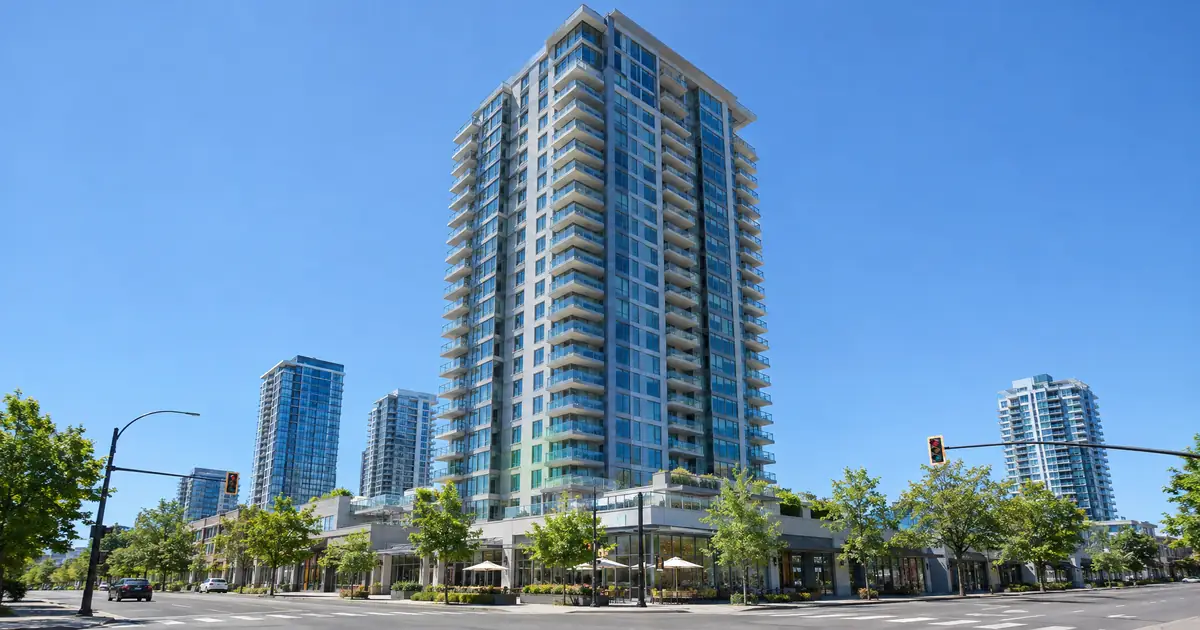
The Quick Read: A conventional cash-out on a high-rise condo unit passes two separate tests. The borrower has to qualify, and the building has to qualify, and a commercial floor can sink the building test even when credit and equity are strong. Across Lendmire’s wholesale network, investors who hit that wall usually move to a DSCR cash-out, where the unit is judged on rent and the building falls under each lender’s own project standards.
- The building is reviewed before the borrower’s file matters, and the review looks at the whole structure, not just your unit.
- A commercial floor counts as a share of total square footage, so floor count alone does not decide the result.
- A refinance does not let a building skip project review.
- DSCR cash-out on an investment property tops out around 75% LTV across most of the network, subject to lender guidelines.
- Clearing the building test and clearing the rent test are separate gates, and neither cures the other.
What Does Cash-Out Mean on a Condo Unit?
A cash-out refinance replaces your current loan with a larger one and pays you the difference. On a condo, the lender also has to approve the project that contains the unit. That second step is what surprises most investors.
Conventional means the loan is built to be sold into the agency market. Those loans follow the agency’s rulebook for the borrower and for the building. A rate-and-term refinance returns no cash. A limited cash-out sits between the two. A true cash-out is the category with the least room for exceptions, which matters later here.
Investors usually reach for conventional first. Underwriting runs on personal income and debt-to-income ratios, and many investors like that familiarity. The catch is that the same loan also depends on the building you happen to own in.
Why Does the Building Get Reviewed Before You Do?
Because the lender is secured by one unit in a shared structure, the health of the structure is part of the collateral. A conventional lender runs a project-level gate first and a unit-level analysis second. If the project fails, the loan stops, no matter how clean your file looks.
| Factor | Borrower test | Building test |
|---|---|---|
| What is reviewed | Credit, income, debt, equity | Commercial share, insurance, reserves, litigation |
| Who controls it | You | The association and its manager |
| Document source | Your tax and bank records | The HOA questionnaire and budget |
| Fixable by you | Often | Rarely, and slowly |
The building test is where a high-rise with a commercial floor gets exposed. A tower with a retail podium, a restaurant at street level, or a hotel operation on the lower floors puts commercial use inside the project. The question is how much, who owns it, and who runs it.
How Does the Commercial-Floor Test Actually Work?
The agency limit is 35% commercial or non-residential space. The Fannie Mae Selling Guide on ineligible projects states it as a share of the project, or of the building the project sits in, including space above and below grade. Older articles still print 25%, which was the earlier allowance before the limit was raised.
The words “building the project sits in” matter for a tower. The test can reach commercial floors owned by a separate entity. Your association may not control that space at all, yet it can still count against the building.
Here is how the step-by-step calculation runs:
1. The lender gets the total square footage of the project or building.
2. It identifies the commercial and non-residential square footage.
3. It removes anything the rulebook exempts, such as commercially owned or operated parking.
4. It divides commercial space by total space and compares the result to the limit.
Counting method is where outcomes diverge. Owner-only amenities such as a resident gym are generally excluded from the commercial side. Lobbies and corridors that serve both shops and residents are a judgment call, and lenders handle them differently. Ask for the counting method in writing.
Floor count does not decide the result. A ten-story building with two retail floors can pass if those floors are small. It can fail if the retail floors are large enough to push commercial space past 35% of total area.
The Separate Test That Catches Amenity Businesses
A building can pass the square-footage test and still fail a second one. The same guide treats a project as ineligible when the association earns more than 10% of its budgeted income from business arrangements tied to amenities or services open to owners and the public, such as a restaurant, health club or spa. A tower with a public-facing spa run by the association can trip this rule with modest commercial square footage.
The guide also has a row for commercial space owned, controlled or operated by a private entity in the same building as the residential units. A hotel and retail on the lower floors is the example. Read the full text of that row before relying on any summary of it.
FHA Uses a Different Number
The FHA program sets its own range. Under HUD’s condominium rule, the acceptable commercial share falls within a range of 25% to 55% of floor area, and HUD sets the specific figure by notice. FHA does not apply to an investor cash-out. The lesson is that a commercial-space limit belongs to a specific program, so always ask which rulebook is being applied.
A Worked Scenario: Pass, Fail and Fixable Fail
Consider a hypothetical tower. All figures below are illustrative assumptions, not market data.
- Pass: Two small retail floors make up 22% of total square footage. The building passes the commercial test even though two of ten floors are retail. The investor still has to clear the other project checks.
- Fail: The same tower has two large retail floors at 40% of total square footage. The building fails the 35% test, and no amount of personal strength fixes that.
- Fixable fail: A tower shows 38% commercial when everything is counted, including a garage run by a commercial operator. Because commercially owned or operated parking is exempt from the agency calculation, the corrected share lands near 31%. The building passes once the calculation is done properly.
The fixable case is why verifying the figure matters. A manager may report a percentage using a different method than the lender uses. Get the number from the declaration, the floor plans or the property manager in writing, not from a verbal answer.
Why Doesn’t a Refinance Skip the Project Review?
A refinance does not exempt a building from review. The agency waives full project review only in narrow cases. One example is a loan the agency already owns that is being refinanced as a limited cash-out at up to 80% LTV, per the waiver provision. A true cash-out on an investor condo held by a third party does not fit that waiver. Every figure here varies by lender and program — guidelines, property type, leverage, and credit profile all apply.
Many owners assume that because the building was approved at purchase, it stays approved. Project status changes. A building’s status can show as Unavailable, which means the project was found ineligible and loans on its units cannot be sold to the agency. Commercial space is one listed reason for that status, and condo-hotel characteristics are another.
Context helps here. In the agency’s condo status data, only a small share of projects carry an ineligible status, and the leading reasons are insufficient master insurance and critical repair issues, not commercial space. The same page notes the agency has updated the status of more than 2,000 projects after documentation showed problems were fixed. A non-warrantable building can become warrantable.
Where the General Rule Breaks
The 35% figure is not a universal rule, and a few edge cases change the outcome.
Ground-floor retail does not automatically disqualify a building. The test is a share of square footage. A lower-floor shop in a large tower often falls well under the limit, subject to the counting method.
Condo-hotel features trip a different rule. A building with a hotel operation on the lower floors can be flagged for condo-hotel characteristics, not just for commercial share. Cash-outs on those buildings are generally handled more tightly than on a plain non-warrantable condo.
Owning a unit is not owning the building. A residential unit in a tower with a retail podium is a project-level question. Owning the commercial or mixed-use building itself is a different property type, and those loans use different programs and tests.
Other triggers stack with commercial space. The same questionnaire tests the master-policy deductible, delinquencies, litigation, reserves and how many units one owner holds. A building can clear the commercial test and still fail on insurance or critical repairs.
Nonconforming does not mean unfinanceable. Non-warrantable means no agency loan. As Bankrate notes, buyers who want a project the agencies will not back can try a portfolio lender, whose loans are held or sold to private investors.
Resale is the quiet cost. A building that fails agency tests has fewer eligible buyers, which can weigh on values over time.
Key Terms Defined
Warrantable condo: A project that meets the agency’s building standards, so loans on its units can be sold into the agency market.
Non-warrantable condo: A project that fails one or more of those standards, which sends loans on its units to lenders.
Project review: The lender’s check of the building itself, separate from the borrower’s credit and income.
HOA questionnaire: A form the association’s manager completes that puts commercial share, litigation, delinquencies, reserves and insurance on the record.
Commercial share: Non-residential square footage divided by the total square footage of the project or building.
DSCR: Monthly rent divided by the full monthly obligation, meaning principal, interest, taxes, insurance and any HOA dues.
What Changes on a DSCR Cash-Out?
A DSCR cash-out removes the personal-income test and puts the weight on the property. The loan is reviewed primarily on property-level rental income covering the payment, subject to lender guidelines. The building is still reviewed, but under each lender’s own project standards rather than the agency’s.
| Factor | Conventional cash-out | DSCR cash-out |
|---|---|---|
| Income basis | Personal income and DTI | Property rent vs. PITIA |
| Building standard | Agency project rules | Each lender’s own rules |
| Commercial limit | Fixed percentage test | Varies by lender |
| Property use | Often owner-oriented | Investment property |
The practical numbers matter. Most programs in the network cap cash-out on a standard rental at around 75% LTV, with about 6 months of seasoning measured from title recording. On a short-term rental, a cash-out ceiling of 70% applies instead. Coverage of 1.00 is where select programs start, and stronger ratios tend to open better pricing and leverage. A separate select-lender path takes coverage below 1.00, with leverage and terms adjusted.
Credit works in tiers. A 620 floor exists in parts of the network, most programs want around 660, and 700 and above unlocks the strongest leverage tiers. Loan sizes run up to $3,000,000 on standard programs. Reserves commonly run around 6 months of PITIA and step up to about 9 months above $1,500,000, though they vary by lender, leverage and loan size. These ranges describe typical guidelines, not promises, and every file is underwritten individually.
On condos specifically, lenders differ. Some treat a non-warrantable investment condo much like a warrantable one on pricing and eligibility. Others do not. What decides it is often the reason the building is non-warrantable. A building flagged for commercial share reads differently from one flagged for structural problems.
Keep two cautions in mind. HOA dues, special assessments and master-policy pass-throughs all sit inside the payment, so they lower the coverage number. And clearing 1.00 is not the same as positive cash flow, because repairs, vacancy, management, utilities and capex sit outside the calculation. Sizing the cash-out also depends on what you plan to do with it. Pulling equity to buy another rental is a different decision from funding a renovation, and tax treatment can depend on how the funds are used and how the property is held, so keep clear records and speak with a qualified tax professional before relying on any deduction.
Investors weighing a credit line instead of a refinance can read Lendmire’s piece Can You Get a HELOC on a High-Rise Condo With a Commercial Floor?, plus the related HELOC requirements for a high-rise condo with a commercial floor. For the broader program picture, the complete DSCR loans guide covers qualification from start to finish.
Across the files the network sees, one pattern repeats. Investors order an appraisal first and ask about the building second. The better sequence is the reverse, because a building problem shows up in the questionnaire long before it shows up in the appraisal.
Your Pre-Application Checklist
Before paying any application fee, request these from the association or its manager:
1. The completed condo questionnaire, with the commercial share stated.
2. The declaration and floor plans, so the percentage can be checked independently.
3. The current budget and reserve information.
4. The master insurance certificate, including the deductible.
5. Any litigation disclosure and recent structural or reserve studies.
6. Delinquency figures on assessments.
Then ask each prospective lender two questions: what commercial limit it applies, and how it counts parking, lobbies and shared corridors. If a reported percentage looks wrong, challenge it with the floor plans before the file is submitted.
If the building fails, there are three practical paths. You can wait for a cure if the problem is fixable, such as repairs completed or litigation resolved. You can move to a lender whose project standards fit the building. Or you can reconsider the timing of the cash-out. Which path makes sense depends on the reason the building failed and how long you can wait.
Frequently Asked Questions
Is the commercial-space limit on a conventional condo loan 25% or 35%?
The agency limit is 35% of the project or building, with commercially owned or operated parking exempted from the calculation. Lenders write their own limits.
Can I do a conventional cash-out on a high-rise unit if the building fails the test?
Not through the agency channel. The building has to pass first, regardless of your credit or equity. Investors in that position usually look at a lender with its own project standards, such as a DSCR cash-out through select lenders.
Does ground-floor retail automatically make a building ineligible?
No. The test measures commercial square footage against total square footage. A small retail footprint in a large tower often falls under the limit, subject to how the lender counts shared areas.
Does strong credit or high rent fix a bad building?
No. Project eligibility and unit income are separate gates. Strong credit helps the borrower test, and strong rent helps the DSCR test, but neither changes the building’s status.
What LTV can a DSCR cash-out reach on an investment condo?
Across most of the network, cash-out on a standard rental tops out around 75% LTV, with about 6 months of seasoning. Short-term-rental collateral tops out at 70% on a cash-out. Eligibility depends on the lender, credit, reserves and the building.
Next Step
If you are buying or refinancing a rental property and want to see how the numbers work, Lendmire can help you compare DSCR loan options based on the property income, credit profile, leverage, and investor goals. Lendmire is a broker that arranges DSCR financing through select lenders in its wholesale network, across 41 markets including Washington, D.C. You can reach the team at 828-256-2183. Whether a tower’s commercial floors sit under the limit is a question for the declaration and floor plans, and answering it early saves every later step.
For the mechanics of pulling equity out of a rental property, see Lendmire’s guide to cash-out refinance on an investment property.
About Lendmire
As a DSCR and non-QM mortgage broker, Lendmire — NMLS# 2371349 — connects investors with wholesale lending channels across 41 markets, including Washington, D.C. The property’s rental income, not the borrower’s tax returns, is central to lender review, which works for self-employed operators and portfolios beyond four financed properties. Scotsman Guide named Lendmire a Top Mortgage Workplace in both 2025 and 2026.
Get Started
Ready to find the right loan for you?
In about 30 seconds you can review financing options available for your investment property. No commitment required.
Informational only. Not a Loan Estimate, approval, or commitment to lend. Program availability and eligibility are subject to lender guidelines, credit approval, property review, and underwriting.
References
1. Fannie Mae Selling Guide: Ineligible Projects
2. HUD condominium rule, 24 CFR 203.43b
3. Fannie Mae Selling Guide: Waiver of Project Review
4. Bankrate: Freddie and Fannie condo mortgage rules
This article is part of Lendmire’s investment property cash-out refinance program — full qualification details, guidelines, and scenarios live on the program page.
Related reading: FHA Cash-Out vs Conventional Cash-Out When Paying Off a HELOC · Full-Doc Jumbo Cash-Out vs Super Jumbo DSCR on a High-Value Rental · Cash-Out Refinance vs HELOC Checklist for a Condo
Brandon Miller
Founder & CEO, Mortgage Loan Originator, Lendmire LLC
- Mortgage Loan Originator · NMLS# 1129696 · Verify on NMLS Consumer Access
- North Carolina Real Estate Broker · License# 343312 · Verify on NCREC
- North Carolina Insurance Producer · License# 19053198 · Property, Casualty, Life, Health · Verify on NAIC SBS
- Lendmire LLC · Firm NMLS# 2371349 · Verify firm licensure
Important disclosures. Lendmire (NMLS# 2371349) is a licensed mortgage brokerage. Lendmire is not a direct lender, depository institution, or financial advisor. All loan inquiries are subject to lender underwriting; this article does not constitute a commitment to lend. Rates, terms, and program guidelines are subject to change without notice and vary by borrower profile, property type, and state. Information in this article is general in nature and is not financial, legal, or tax advice. Equal Housing Opportunity. NMLS Consumer Access: nmlsconsumeraccess.org.