
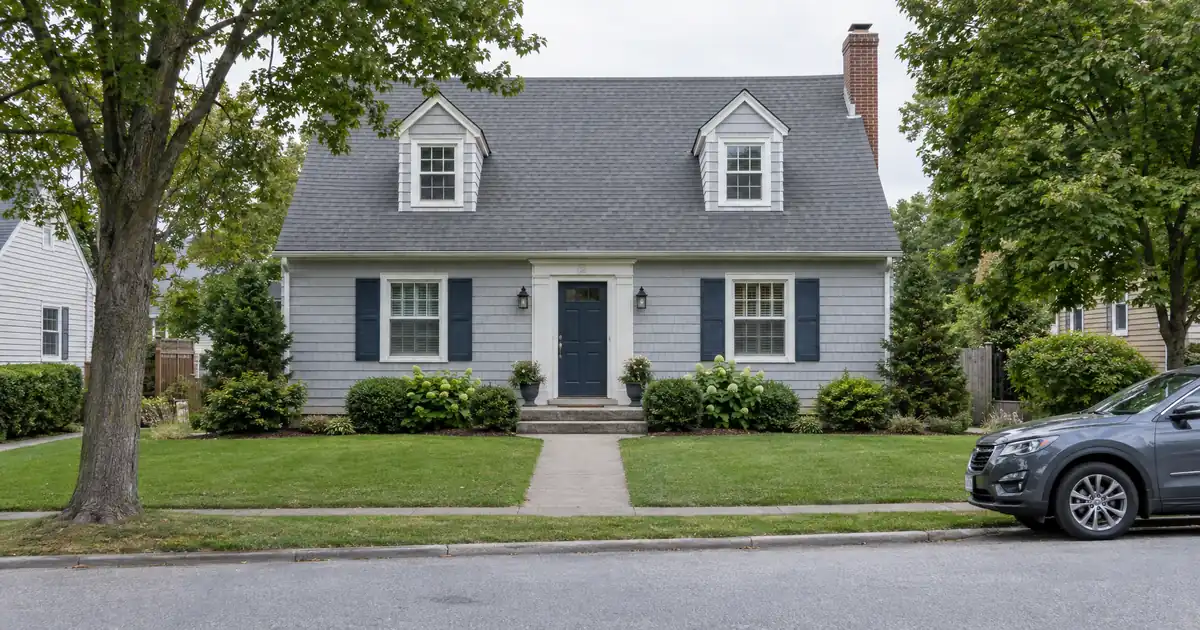
The Quick Read: A cash-out refinance on a Dallas rental replaces your current loan with a larger one and sends you the difference, and the new loan is sized mainly by the rent the property earns, not by your paycheck. Texas’ well-known homestead cash-out limits do not govern a non-owner-occupied rental. Instead, the lender’s investment-property program rules decide how much you can pull.
- Cash-out tops out around 75% LTV on a standard investment-property rental across most of the network, subject to lender guidelines.
- About 6 months of ownership, measured from the recorded deed, is the common seasoning expectation.
- 1.00 is where select programs start for coverage, and stronger ratios open better pricing and leverage.
- Credit floors begin at 620 in parts of the network, with most programs wanting around 660 and 700+ unlocking the strongest tiers.
- Reserves commonly run about 6 months of PITIA, stepping up to about 9 months above $1,500,000.
Most Dallas landlords asking this question want the same thing: turn trapped equity into the next down payment. This guide walks through how the loan is built, how underwriting treats it step by step, the structures that exist, and where the general rule breaks. For broader background, see Lendmire’s complete DSCR loans guide.
DSCR Cash-Out Calculator
Run the cash-out numbers in your market
Rate source: Freddie Mac 30-yr average via FRED® — Federal Reserve Bank of St. Louis · effective Oct 15, 2026
Prefilled with starting assumptions — enter your property’s value, balance, taxes, and insurance for a more accurate picture.
Program parameters update from Lendmire’s centralized guideline source. Taxes and insurance are editable estimates.
As of Oct 15, 2026 · General Freddie Mac market benchmark, not a Lendmire loan offer. Property value, balance, taxes, and insurance are editable estimates. Maximum loan-to-value varies by lender, program, property type, and seasoning. Not a Loan Estimate, approval, or commitment to lend. Program availability and eligibility are subject to lender guidelines, credit approval, property review, and underwriting.
Market Snapshot
A quick read on the investor landscape — figures come from the cited sources below. Confirm current property-level numbers before underwriting.
| Metric | Detail |
|---|---|
| Home prices | Median list price $435,000 in May, per the Rental Beast Q2 2026 DFW report |
| Typical rents | Single-family median rent near $2,200, up 0.2% year over year, per the same Rental Beast report |
What Is a Rental Cash-Out Refinance?
It is a new mortgage on a property you already own. The new loan pays off the old one, covers closing costs, and the leftover goes to you. DSCR loans are designed for non-owner-occupied investment properties. Because they are business-purpose investor loans, they are reviewed differently from a standard owner-occupied mortgage.
The lender qualifies the file primarily on property-level rental income covering the payment, subject to lender guidelines. Credit, reserves, and property eligibility still apply. Big retail lenders typically layer on personal-income documentation and haircut the rent. Select DSCR lenders in the network look at the property’s own numbers instead, which is why this lane suits self-employed landlords and investors with several financed properties.
Do Texas’s Cash-Out Limits Apply to a Rental?
No. The 80% cap and the extra waiting rules people associate with Texas cash-out loans come from the homestead section of the state constitution, and a rental is not a homestead.
The Texas Real Estate Research Center at Texas A&M explains that Article XVI, Section 50 holds the home-equity lending rules for cash-out refinances, home equity loans, and HELOCs. It also notes that these loans cannot be taken on a secondary residence or a rental or investment property. The Texas Attorney General’s opinion JC-0357 describes the section as protecting a homestead, with no lien valid on it unless it secures a listed debt.
| Factor | Texas homestead cash-out | Dallas rental cash-out |
|---|---|---|
| Governing rules | Constitutional Section 50 | Lender program rules |
| Property use | Owner-occupied | Non-owner-occupied |
| Leverage ceiling | Set by the constitution | About 75% LTV on a standard rental cash-out |
| Main qualifier | Borrower income and debts | Rent versus PITIA |
One practical wrinkle: a house that was once your primary residence and later became a rental may carry homestead history. If the existing loan is a Section 50(a)(6) loan, confirm with your title company or counsel how that affects a new refinance. Treat that as a question to ask, not a settled answer.
How Does Underwriting Treat the File, Step by Step?
Three tests apply at once, and the lowest result wins: the seasoning and value basis, the leverage cap, and the rent coverage. Failing any one ends the file.
1. Eligibility screen. Leverage, credit, and coverage must clear together. A strong score cannot rescue thin rent, and strong rent cannot rescue a score below the floor.
2. Seasoning check. The clock typically runs from the recorded deed, about 6 months in most of the network. Rehab completion and lease start generally do not restart or shorten it. Inside the window, some lenders size on cost basis, meaning price plus documented improvements.
3. Appraisal. The lender orders its own valuation and its own rent opinion, usually on Form 1007 for a single-family home. Your after-repair-value estimate does not size the loan. Appraisal risk is the usual swing factor.
4. Coverage test. The DSCR is monthly rent divided by monthly PITIA: principal, interest, taxes, insurance, and any HOA dues. It is tested on the new, larger payment, so pulling more cash lowers the ratio.
5. Sizing. The new loan is the lower of two limits: the leverage cap times appraised value, and the amount the rent can support at the required coverage.
6. Cash to you. Cash out equals the new loan, minus the old payoff, minus closing costs and any holdbacks. On a thin-equity file, that can shrink to a payoff-only refinance or even require cash to close.
7. Documents. Expect a mortgage payoff statement, the lease or market rent schedule, insurance and tax records, entity documents if an LLC holds title, evidence of reserves, and the appraisal.
Worked Example: Coverage Before and After
Run the numbers on a Dallas single-family rental, using modeled assumptions rather than market data. Say the property currently covers its payment at roughly 1.35x. The investor pulls cash up to the 75% LTV cap on the new appraisal. The larger loan raises PITIA, and coverage drops to about 1.05x. Leverage, reserves, and pricing vary by lender and program; the final terms follow the full file review.
That file still clears a 1.00 program start, but with little cushion. A stronger ratio typically earns better pricing and leverage, so some investors deliberately pull less than the maximum to stay in a healthier coverage tier. If the ratio slipped under 1.00, a separate select-lender path exists that takes coverage below 1.00, with leverage and terms adjusted, subject to credit approval and property review. Whether to use it depends on the property’s story. Reduced leverage and a thinner cushion are the price.
Where Dallas Carrying Costs Change the Math
Property tax is the biggest local swing in PITIA, and it varies by parcel. Ownwell, using assessor data, shows a median effective rate of about 1.55% for Dallas County, while other published estimates run higher. The takeaway is simple: pull the actual appraisal district figure for your parcel, not a metro average, before you model coverage.
Rent is the other side of the ratio. The Rental Beast Q2 report for the Dallas-Fort Worth area puts single-family median rent near $2,200, up 0.2% year over year, with a 60.3% concession rate. Soft rent growth with heavy concessions means coverage can run tight, so the lender’s rent opinion matters more than your listing price.
Here is the catch. Clearing 1.00 is not positive cash flow. DSCR compares rent to PITIA only, and repairs, vacancy, management, utilities, and capex sit outside it. A file can pass underwriting and still leave you cash-flow thin.
Structures and Variations That Exist
- Payoff-only or rate-and-term refinance. No cash back at closing, a higher leverage ceiling (up to 85% LTV on the network’s rate-and-term line), and often little seasoning. If a refinance returns cash, it falls under the cash-out cap.
- Standard rental cash-out. About 75% LTV, about 6 months of ownership, 1.00 as a select-program start.
- Short-term rental collateral. Cash-out on STR collateral is around 70% LTV, with a 640+ score and about 12 months of hosting history expected. Short-term rental rules vary by city, county, HOA, and property type, so confirm local rules before relying on projected income.
- Term options. The spine is the 30-year fixed. Extended 40-year terms and interest-only periods are available through select lenders, and ARMs exist for investors who want them.
- Loan size. Roughly up to $3,000,000 on standard programs, with smaller balances routed through select lenders. Above $2,500,000 the network generally holds to 30-year fixed.
- Not offered. Manufactured homes, log homes, and barndominiums fall outside these DSCR programs.
Where the General Rule Breaks
- LLC title. Homestead protection covers natural persons, not registered entities, per a Lone Star Land Law explainer. LLC-held rentals are routine for DSCR cash-out, subject to program terms. A bank HELOC on an LLC-held rental may need a vesting change or a different product.
- Inside the seasoning window. Heavy rehab equity can stay locked until the clock clears, because the loan may be sized on cost basis.
- Delayed financing. A cash buyer can sometimes borrow against a recent purchase, but it is capped near cost basis and does not capture appreciation.
- Prepayment charges. Many DSCR loans carry them, often stepping down over several years. Some broker sites claim Texas bans them on small investor loans, but that is not confirmed in any primary source, so read the actual loan terms instead of assuming.
- Thin equity. If the appraisal lands low, the 75% cap shrinks the proceeds, and costs and holdbacks come out first. Cash-out does not always return cash.
What the Investor Decision Looks Like
The strongest files clear both tests: enough equity and enough rental coverage. A larger paydown lowers the payment and can lift the ratio, but it never erases leverage caps, credit floors, reserve rules, or property eligibility.
Across the wholesale network, the pattern is consistent. Investors who treat the cash as the next down payment on another rental usually find the logic cleanest, because the new property adds rent while the old one carries a bigger payment. Investors pulling the maximum from a property that already covers only slightly above 1.00 often discover the new payment leaves almost no margin. In that case, a smaller draw, a sale, or a different product may fit better.
Tax treatment can depend on how the funds are used and how the property is held; investors should keep clear records and speak with a qualified tax professional before relying on any deduction.
Key Terms Defined
DSCR: Debt service coverage ratio, meaning monthly rent divided by monthly PITIA.
PITIA: Principal, interest, taxes, insurance, and any HOA dues on the property.
Seasoning: The lender-set waiting period after you take title before cash-out is available.
LTV: Loan-to-value, the new loan balance as a percentage of appraised value.
Form 1007: The single-family rent schedule an appraiser completes to support market rent.
Holdback: Funds a lender sets aside from proceeds until a condition is met.
Frequently Asked Questions
Can I do a cash-out refinance on a Dallas rental owned by an LLC?
Often yes, subject to program terms. Entity-held rentals are routine for DSCR loans, and the lender will want entity documents and a guarantor. A bank HELOC is a different story, since it may require a vesting change.
How much equity do I need to take cash out?
The cap is about 75% LTV on a standard rental, so the new loan must sit at or below that share of the lender’s appraised value. Your payoff, closing costs, and reserves come out of that room before any cash reaches you. Terms vary by lender guidelines, property type, leverage, credit profile, and full file review.
Does the Texas 80% cash-out limit apply to my investment property?
No. That limit comes from the homestead section of the state constitution, which the Texas A&M research center says does not reach rental or investment property. Your investment-property program sets its own leverage cap. Exact terms depend on the lender’s guidelines, property type, leverage, and a full review of the borrower’s file.
Does clearing 1.00 mean the rental cash flows?
No. The ratio counts rent against PITIA only. Vacancy, repairs, management, and capex are outside it, so model them separately before pulling cash.
What if my rent coverage falls below 1.00 after the cash-out?
A separate path is available through select lenders in the network, with leverage and terms adjusted. It is a structural choice worth stress-testing, not a fallback to reach for by default.
If you are buying or refinancing a rental property and want to see how the numbers work, Lendmire can help you compare DSCR loan options based on the property income, credit profile, leverage, and investor goals. Programs change and every file is reviewed individually; this is not a commitment to lend.
Dallas coverage will keep hinging on the gap between a soft rent line and a tax bill that varies parcel by parcel, so the investors who pull cash most safely are the ones who size the draw to the lender’s rent opinion, not to the equity alone.
About Lendmire
Lendmire (NMLS# 2371349) is a mortgage brokerage built around DSCR investor lending, with programs available in 41 markets, including Washington, D.C. DSCR lenders commonly evaluate rental-income coverage instead of personal income paperwork — a practical fit for LLC-owned and multi-property investors. Terms vary by lender, property, leverage, and program. Scotsman Guide named Lendmire a Top Mortgage Workplace in both 2025 and 2026.
For the mechanics of pulling equity out of a rental property, see Lendmire’s guide to cash-out refinance on an investment property.
Get Started
Ready to find the right loan for you?
In about 30 seconds you can review financing options available for your investment property. No commitment required.
Informational only. Not a Loan Estimate, approval, or commitment to lend. Program availability and eligibility are subject to lender guidelines, credit approval, property review, and underwriting.
References
1. blog.rentalbeast.com: Dallas Q2
2. Texas Real Estate Research Center
3. Texas Attorney General Opinion JC-0357
4. Ownwell, Dallas County property tax
5. Lone Star Land Law, homestead protections in Texas
This article is part of Lendmire’s investment property cash-out refinance program — full qualification details, guidelines, and scenarios live on the program page.
Related reading: FNMA Cash-Out Refinance for the Landlord Pulling Equity From One Rental · Cash-Out Refinance on a Single-Family Rental and the Equity You Keep · Cash-Out Refinance on a Condo Rental and the Equity You Keep
Guides: Investment Property Cash-Out Refinance in Dallas, TX · Investment Property Cash-Out Refinance in Texas
Brandon Miller
Founder & CEO, Mortgage Loan Originator, Lendmire LLC
- Mortgage Loan Originator · NMLS# 1129696 · Verify on NMLS Consumer Access
- North Carolina Real Estate Broker · License# 343312 · Verify on NCREC
- North Carolina Insurance Producer · License# 19053198 · Property, Casualty, Life, Health · Verify on NAIC SBS
- Lendmire LLC · Firm NMLS# 2371349 · Verify firm licensure
Disclosure information. Lendmire is a state-licensed mortgage brokerage under NMLS# 2371349. Lendmire is not a depository institution, direct lender, or financial advisor — all loans referenced are placed through wholesale lender partners and are subject to each lender's underwriting standards. This article is provided for general informational purposes and is not a commitment to lend, nor does it constitute financial, legal, or tax advice. Loan programs, terms, rates, and qualification standards change without notice and depend on borrower profile, property type, and the state in which the subject property is located. Equal Housing Opportunity provider. NMLS Consumer Access: nmlsconsumeraccess.org.