
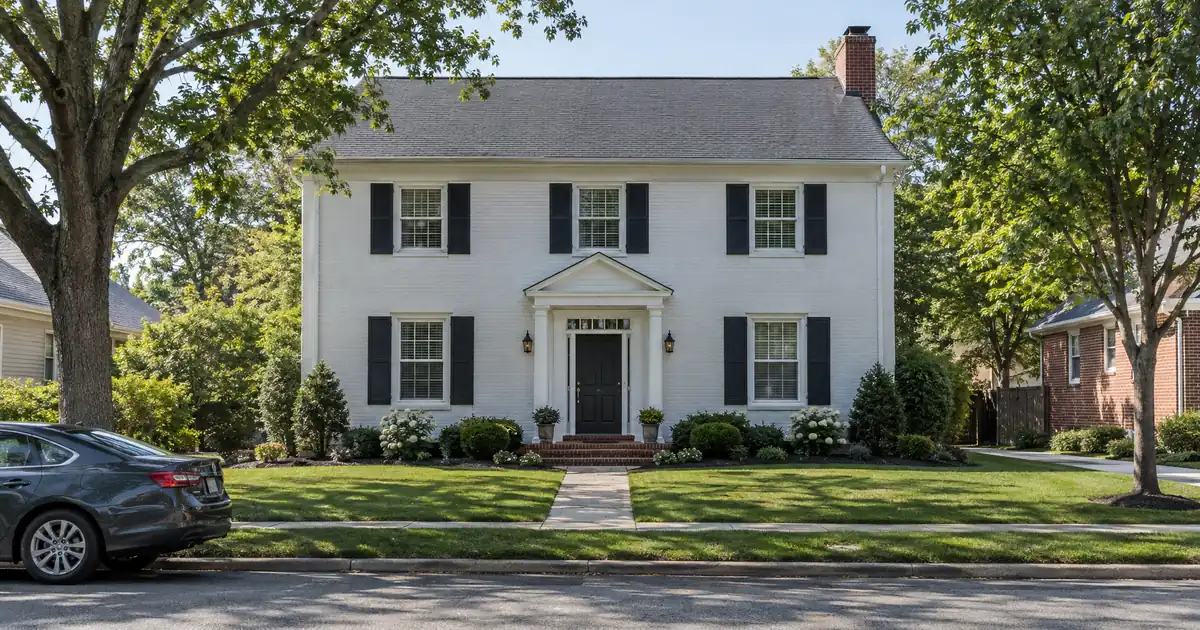
The Quick Read: A Fannie Mae cash-out refinance is a conventional loan that pays off your current mortgage on a rental and hands you the leftover equity, but it reviews you as a borrower, while a DSCR cash-out reviews the rental itself, so a landlord with one property should test both paths before choosing. The agency path has two clocks and a personal-income test. The DSCR path has a coverage test and a leverage cap.
- Agency cash-out applies only to loans sold to Fannie Mae. A DSCR loan follows investor guidelines instead.
- On a cash-out of a standard rental, most DSCR programs in the network top out around 75% LTV, with about 6 months of seasoning.
- The loan you actually get is the smaller of two numbers: what equity allows and what rent coverage allows.
- Clearing a coverage ratio is not the same as positive cash flow. Repairs, vacancy, and management sit outside the math. Every figure here varies by lender and program — guidelines, property type, leverage, and credit profile all apply.
What “FNMA Cash-Out” Actually Means
An FNMA cash-out refinance is a new first mortgage that pays off the existing loan on the same property. Fannie Mae’s Selling Guide topic on cash-out refinance transactions defines it that way. It also covers a new mortgage on a property owned free and clear. Proceeds retire the old first mortgage and any subordinate liens, cover closing costs and prepaids, and whatever remains is yours for any purpose.
DSCR Cash-Out Calculator
Run the cash-out numbers in your market
Rate source: Freddie Mac 30-yr average via FRED® — Federal Reserve Bank of St. Louis · effective Oct 8, 2026
Prefilled with starting assumptions — enter your property’s value, balance, taxes, and insurance for a more accurate picture.
Program parameters update from Lendmire’s centralized guideline source. Taxes and insurance are editable estimates.
As of Oct 8, 2026 · General Freddie Mac market benchmark, not a Lendmire loan offer. Property value, balance, taxes, and insurance are editable estimates. Maximum loan-to-value varies by lender, program, property type, and seasoning. Not a Loan Estimate, approval, or commitment to lend. Program availability and eligibility are subject to lender guidelines, credit approval, property review, and underwriting.
That last point matters for a landlord. The cash can fund the next down payment, repairs, or debt payoff. The cost is a bigger loan, less equity, and a heavier monthly obligation against one property’s rent.
Here is the scope limit. These rules govern only loans sold to Fannie Mae. A DSCR loan is a non-agency, non-QM product. It follows the guidelines of the investor lenders behind it. DSCR loans are designed for non-owner-occupied investment properties. Because they are business-purpose investor loans, they are reviewed differently from a standard owner-occupied mortgage.
Agency Rule, Lender Overlay, or Different Product?
Three layers get blurred in most landlord conversations. Keeping them apart saves a lot of confusion.
| Layer | What it is | Who sets it |
|---|---|---|
| Agency rule | Fannie Mae’s published eligibility | The agency |
| Lender overlay | Extra limits a lender adds on top | Each lender |
| DSCR program | A separate, property-income product | Each lender in the network |
A lender selling loans to Fannie Mae can be stricter than the agency but never looser. A DSCR lender isn’t bound by the agency at all. Across the wholesale network Lendmire works with, the DSCR guidelines differ from lender to lender, which is why one file can be a fit with one program and a miss with another.
The Agency Gates, in Order
Agency cash-out has two seasoning clocks, and the later one controls.
1. Ownership clock. At least one borrower must generally have been on title for six months.
2. Existing-loan clock. The first mortgage being paid off must generally be at least 12 months old, measured note date to note date. The same Fannie Mae cash-out topic carries the 12-month rule, and the FHLB MPF summary of the 2023 announcement confirms it sits on top of the six-month title test.
3. Leverage ceiling. Investment properties carry a lower ceiling than a primary residence. Confirm the current figure on the live agency matrix before you plan around it.
4. The borrower. The agency path reviews personal income, debt-to-income, credit, and how many financed properties you hold.
5. Reserves and title. Both are reviewed. Agency reserve requirements rise with the number of financed properties.
A landlord who bought with a loan 8 months ago can have the title clock satisfied and still fail the 12-month note-age clock. That is the trap people miss.
The Cash-Buyer Exception
Delayed financing is the named exception for cash buyers. It waives the wait on title, but it does not waive everything. The archived Selling Guide version requires an arm’s-length original purchase. It lists who may have bought: a natural person, certain trusts, or an LLC or partnership owned entirely by the borrower. That is an archived page, so verify the current wording on the live guide before relying on it. Industry summaries add that the purchase must be documented as all-cash and that the new loan stays capped near the documented investment plus eligible costs.
So delayed financing is a recovery tool, not a way to pull appraised-value equity on day one.
How the DSCR Path Treats the Same Rental
A DSCR cash-out qualifies primarily on property-level rental income covering the payment, subject to lender guidelines. The ratio is monthly rent divided by PITIA: principal, interest, taxes, insurance, and any HOA dues.
Across the network, these are the typical ranges for a cash-out on a standard rental:
- Leverage: most programs top out around 75% LTV on a cash-out.
- Seasoning: about 6 months of ownership is the common expectation.
- Coverage: 1.00 is where many select programs start. A separate select-lender path takes coverage below 1.00 with leverage and terms adjusted.
- Credit: a 620 floor exists in parts of the network. Most programs want around 660, and 700 or higher opens the strongest leverage tiers.
- Reserves: commonly about 6 months of PITIA, stepping up to about 9 months on loans above $1,500,000.
- Loan size: up to $3,000,000 on standard programs.
For a short-term rental, cash-out leverage is lower. A 70% ceiling applies to short-term-rental collateral, versus 75% on a standard rental, and programs typically want 12 months of hosting history. Short-term rental rules can vary by city, county, HOA, and property type, so investors should confirm local rules before relying on projected rental income.
All of this is subject to lender guidelines, the borrower, the property, and the loan scenario. Programs change, and every file is reviewed individually.
Agency vs. DSCR: A Side-by-Side
| Factor | Agency cash-out | DSCR cash-out |
|---|---|---|
| Who is reviewed | You, personally | The rental’s income |
| Income docs | Traditional personal-income documentation or leases | Rent schedule or leases |
| Seasoning | Two clocks, later one controls | About 6 months typical |
| Financed-property count | Matters | Each rental judged on its own rent |
| Typical cost | Generally lower | Generally higher |
| Entity title | Individual borrower generally | Often an LLC, subject to lender program eligibility |
The rent documentation differs too. On the agency path, a one-unit rental generally needs Fannie Mae’s Form 1007 (Single-Family Comparable Rent Schedule), and a two- to four-unit property needs Form 1025 (Small Residential Income Property Appraisal Report). Lenders also look at the borrower’s tax return or current leases. A DSCR file leans on the same appraiser rent schedule or the lease, then divides by PITIA. For a landlord whose traditional personal-income documentation shows heavy depreciation or write-offs, that difference can decide the file.
The Smaller of Two Numbers
Equity and coverage both cap your loan, and the lower one wins. Appraised value times the maximum LTV, minus the payoff, gives the equity number. Rent against the new payment gives the coverage number. Plenty of landlords have equity to spare and still get a smaller loan because rent can’t carry a bigger one. Experienced brokers call this being DSCR constrained.
A larger down payment on a purchase can lift coverage by lowering the payment. It never erases leverage caps, credit floors, reserve rules, or property eligibility. The strongest files clear both tests.
A Worked Example With One Rental
Run the numbers on a single rental, with every input a modeled assumption and no dollars involved. Set the appraised value at 100%.
Go case. The existing payoff is 55% of value. The 75% LTV ceiling on a cash-out leaves room for about 20% of value before closing costs. Costs and prepaids shrink that, so net cash lands somewhat under 20%. Before the refinance, the rent covers the old payment at roughly 1.4x. After the larger loan, coverage settles near 1.15x. That clears the 1.00 benchmark with cushion. Final terms depend on lender guidelines, property type, leverage, and the borrower’s complete credit picture.
No-go case. The payoff is 70% of value. The 75% ceiling leaves about 5% of value, and costs eat much of it. A prepayment penalty on the old loan, if there is one, can erase the rest. Pulling cash at all makes little sense here.
Coverage-constrained case. Equity is plentiful, but rent only covers a bigger loan at about 0.95x. Options include a smaller request, stronger rent, or a sub-1.00 structure. Sub-1.00 is available through select lenders in the network, with leverage and terms adjusted. A smaller request is usually the cleaner answer.
The One-Rental Stress Test
With a single property, there is no portfolio to absorb a weak month. Clearing the ratio is not the same as positive cash flow. DSCR compares rent to PITIA only. Repairs, vacancy, management, utilities, and capex sit outside it.
Before committing, check four things:
- Does coverage hold if the unit sits vacant for a stretch?
- Do reserves cover the payment plus a major repair?
- Is the rent supported by the appraiser’s schedule, not just your hopes?
- Does the cash have a defined job, such as a down payment on a second rental?
Pulling equity with no plan for it is a common mistake. You pay for the money every month either way.
Edge Cases Where the Rule Bends
- Recent cash purchase. Delayed financing may shorten the wait, with the loan limited to documented investment plus costs.
- LLC title. Agency cash-out generally wants an individual borrower. DSCR programs often lend to LLCs, subject to lender program eligibility.
- Existing second lien. Subordinate liens are typically paid off from proceeds, which shrinks net cash.
- Delinquent taxes. The agency guide allows them in the new loan amount with an escrow account.
- Inheritance or divorce award. The agency rulebook treats these as title-seasoning exceptions.
- Ineligible property types. Manufactured homes (single- and double-wide), log homes, and barndominiums are not offered in the network’s DSCR programs.
- Self-employed landlord. Heavy deductions can depress income on the agency path. This is where DSCR often pencils better.
Which Route Fits Which Landlord
| If you are… | Agency cash-out | DSCR cash-out |
|---|---|---|
| W-2 earner, one rental, strong traditional personal-income documentation | Often a fit | Worth comparing |
| Self-employed, heavy write-offs | Income may fall short | Often a fit |
| Holding several financed rentals | Count may bind | Each rental judged alone |
| Title held in an LLC | Harder | Common, per program terms |
This is a genuine toss-up for the W-2 landlord with one rental. The agency route generally costs less, and the DSCR route avoids the personal-income review. The flip point comes when your documented income doesn’t support the loan, your financed-property count is climbing, or the property sits in an entity. DSCR then becomes the practical lane. The complete DSCR loans guide covers the full program picture.
When Not to Do It
Skip the cash-out if any of these apply. The payoff is already near the leverage ceiling. Coverage falls near or below 1.00 after the new loan. The cash has no defined return. Or reserves would be thin after closing. Tax treatment can depend on how the funds are used and how the property is held, so investors should keep clear records and speak with a qualified tax professional before relying on any deduction.
Key Terms Defined
Seasoning: the time you must own the property, or hold the existing loan, before a cash-out is allowed.
Delayed financing: the agency exception that lets a cash buyer borrow against the property without the standard title wait.
Cash-out refinance: a new first mortgage that pays off the old one and returns the remaining equity to you.
DSCR: monthly rent divided by the full monthly obligation (PITIA), the main coverage test on investor loans.
PITIA: principal, interest, taxes, insurance, and association dues, the full monthly obligation on the property.
LTV: the loan balance as a percentage of appraised value.
Frequently Asked Questions
Can I use a Fannie Mae cash-out refinance on a rental I own personally?
Often yes, if you meet the agency gates. Those include the title and existing-loan seasoning clocks, a leverage ceiling that is lower for investment property, and a personal income and credit review. Confirm current limits on the live agency guide. If your income documents are thin or the property sits in an LLC, a DSCR cash-out may be the better fit.
How long must I own the rental before pulling cash out?
On the agency path, generally six months on title plus an existing first mortgage at least 12 months old. Delayed financing is the exception for cash buyers. On DSCR programs in the network, about 6 months of ownership is the common expectation.
How much equity can I pull from one rental with a DSCR loan?
Most programs cap a standard-rental cash-out around 75% LTV, then subtract your payoff and costs. Coverage can cap it sooner. A short-term rental typically tops out near 70% on a cash-out. Reserves of about 6 months of PITIA are common.
Does clearing the coverage ratio mean the rental is cash-flow positive?
No. The ratio compares rent to PITIA only. Vacancy, repairs, management, utilities, and capex are outside the calculation, so stress-test those separately.
What if my rent doesn’t cover the bigger loan?
Options include a smaller request, stronger documented rent, or a select-lender path below 1.00 coverage, where leverage and terms are adjusted. Qualification is subject to lender guidelines, credit approval, and property review.
If you are buying or refinancing a rental property and want to see how the numbers work, Lendmire can help you compare DSCR loan options based on the property income, credit profile, leverage, and investor goals. As a mortgage broker, Lendmire arranges financing through select lenders in its wholesale network across 41 markets, including Washington, D.C. Call 828-256-2183 or request a quote, and run the one-rental stress test before you commit to pulling a dollar of equity.
For the mechanics of pulling equity out of a rental property, see Lendmire’s guide to cash-out refinance on an investment property.
About Lendmire
Lendmire (NMLS# 2371349) is a mortgage brokerage focused on DSCR investor financing, helping arrange programs through wholesale and investor-lending channels in 41 markets, including Washington, D.C. DSCR loans are evaluated by the lender on property cash flow rather than personal income, subject to lender guidelines, supporting LLC closings and accommodating investors with four or more financed properties. Scotsman Guide Top Mortgage Workplace in both 2025 and 2026.
Get Started
Ready to find the right loan for you?
In about 30 seconds you can review financing options available for your investment property. No commitment required.
Informational only. Not a Loan Estimate, approval, or commitment to lend. Program availability and eligibility are subject to lender guidelines, credit approval, property review, and underwriting.
References
1. Fannie Mae Selling Guide: Cash-Out Refinance Transactions
2. Fannie Mae Selling Guide, archived cash-out topic (delayed financing)
This article is part of Lendmire’s investment property cash-out refinance program — full qualification details, guidelines, and scenarios live on the program page.
Related reading: DSCR HELOC for Landlords Weighing a Rental Cash-Out Refinance · Investment Property HELOC vs Cash-Out Refinance to Pull Cash Out · Multi-Family Cash-Out Refinance for Investors Who Raised NOI
Brandon Miller
Founder & CEO, Mortgage Loan Originator, Lendmire LLC
- Mortgage Loan Originator · NMLS# 1129696 · Verify on NMLS Consumer Access
- North Carolina Real Estate Broker · License# 343312 · Verify on NCREC
- North Carolina Insurance Producer · License# 19053198 · Property, Casualty, Life, Health · Verify on NAIC SBS
- Lendmire LLC · Firm NMLS# 2371349 · Verify firm licensure
Required disclosures. Lendmire (NMLS# 2371349) operates as a licensed mortgage broker, not a direct lender or depository. The discussion in this article is general in nature and should not be relied upon as financial, legal, or tax advice — every investment scenario is unique and should be reviewed by a qualified professional. Any loan inquiry is subject to lender underwriting, and this article is not a commitment to lend or a guarantee of approval. Mortgage rates, loan terms, and program guidelines vary by borrower, property, and state, and may change without notice. Equal Housing Opportunity. Verify licensure at NMLS Consumer Access.