
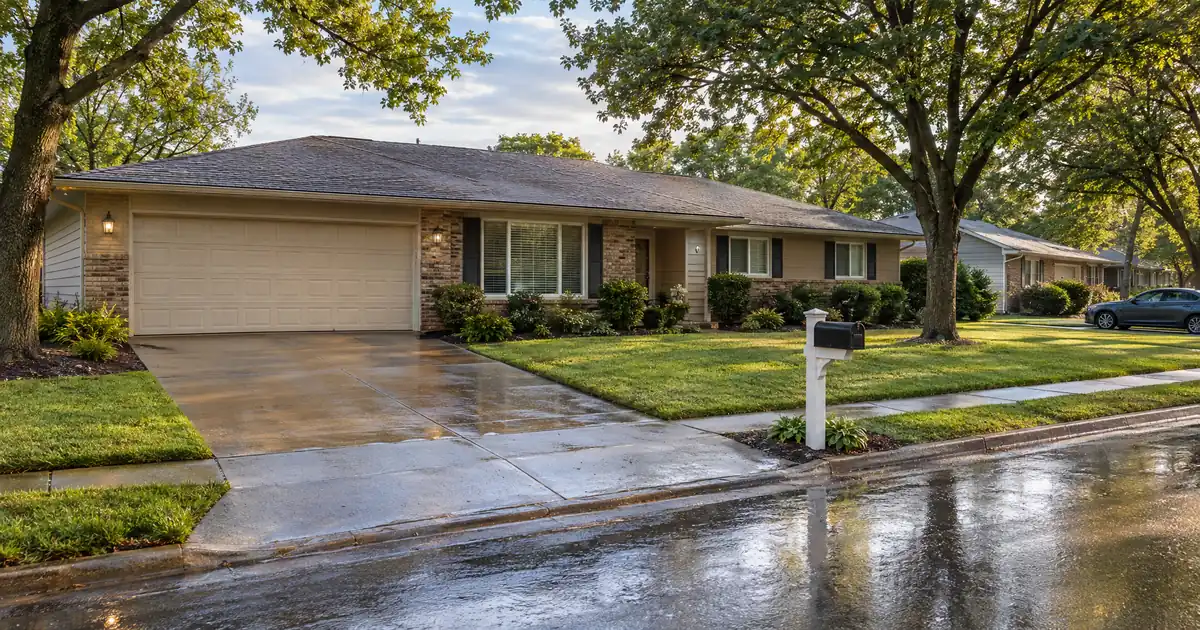
The Quick Read: Delayed financing is a waiting-period exception, not a separate loan. If you buy a rental with your own cash and no mortgage on it, select lenders in Lendmire’s wholesale network may let you take a cash-out refinance early, sized mostly by what you can document paying. Underwriting, pricing, and rent coverage still apply as they would on any cash-out.
- The exception waives the clock, not the credit, appraisal, reserve, or coverage tests.
- The new loan is capped by the lesser of the program’s cash-out leverage limit and your documented cost.
- Money spent on repairs after closing generally does not count toward that cost.
- A mortgage or hard-money loan on the property at purchase usually breaks the “cash purchase” test.
- Set up the paper trail at the purchase, not after it.
Key Terms Defined
Seasoning is the waiting period a lender wants between buying a property and refinancing it with cash out.
Delayed financing is an exception that lets a cash buyer refinance before that waiting period ends.
Cost basis is what you documented paying: the purchase price plus eligible closing costs.
Arm’s-length means the sale was between unrelated parties at a real market price.
Source of funds is the paper trail showing where your purchase cash came from.
DSCR (debt service coverage ratio) is monthly rent divided by the full monthly obligation on the loan.
PITIA is principal, interest, taxes, insurance, and any association dues, which together make up that obligation.
LTV (loan-to-value) is the loan amount as a percentage of the property’s appraised value.
DSCR Calculator
Run the numbers in your market
Rate source: Freddie Mac 30-yr average via FRED® — Federal Reserve Bank of St. Louis · effective Oct 15, 2026
Prefilled with starting assumptions — enter your own rent or nightly figures, taxes, insurance, and HOA for a more accurate picture.
Program parameters update from Lendmire’s centralized guideline source. Taxes and insurance are editable estimates.
As of Oct 15, 2026 · General Freddie Mac market benchmark, not a Lendmire loan offer. Rent, nightly rate, occupancy, taxes, and insurance are editable estimates. Short-term rental figures are estimates only and vary significantly by season, property type, management approach, and local short-term-rental rules — confirm local regulations before relying on them. Qualifying income for short-term rentals varies by program — some use appraisal market rent, others use documented STR history or projections — and is confirmed in underwriting. Not a Loan Estimate, approval, or commitment to lend. Program availability and eligibility are subject to lender guidelines, credit approval, property review, and underwriting.
What Delayed Financing Is, and What It Isn’t
It is a rule exception. Cash-out refinances normally require you to hold the property for a while first. On most files across the network, about 6 months of seasoning is the common expectation. Delayed financing lets a buyer who paid cash skip most of that wait.
Investors pay cash for good reasons. A cash offer can win a deal, and it can win a better price. Afterward, you want that capital back to buy the next property.
Many people assume this is a special product with its own pricing and looser standards. It isn’t. The refinance is priced and underwritten as a cash-out. Only the waiting period changes.
No regulator sets DSCR seasoning. Each lender decides its own policy, so one lender’s waiting period or documentation rules can differ sharply from the next. That is why working with a broker who sees many lenders’ guidelines matters. Some lenders in the network offer this exception and some don’t.
How It Works, Step by Step
1. You buy the rental with your own funds. No loan is recorded against the property at purchase.
2. You keep the purchase paperwork. That means the settlement statement showing no purchase financing, plus bank statements or wire records tracing the cash.
3. The lender confirms title. A current title record should show a clean property with no mortgage from the purchase.
4. The lender orders an appraisal. On a rental, the file also needs a rent figure from a lease or a market rent schedule. The appraisal forms for this are the 1007 for single-family rentals and the 1025 for small residential income properties.
5. The lender sizes the loan. The amount is the lesser of two numbers, covered in the next section.
6. The rent test runs. Rent coverage can cap the loan below the cost limit, so you need to clear both.
7. Proceeds fund the next acquisition. You’ve recycled the capital without holding the property through a full waiting period.
The best time to talk to a lender is before the cash purchase closes. A broker can tell you whether any lender in the network will honor the exception on that property and entity. Many loan officers outside the investor space are unfamiliar with it.
How the Loan Amount Gets Sized
The loan is the lesser of two numbers. The first is the program’s cash-out leverage cap applied to appraised value. On an investment property, that ceiling is about 75% LTV across most of the network on a cash-out refinance, subject to lender guidelines. The second is your documented cost: the purchase price plus eligible closing costs.
Here is a modeled example with assumptions, not market data. Say you pay cash and closing costs add about 2% of the price. Your cost basis is roughly 102% of the price.
| Appraisal vs. price | 75% of value | Binding limit |
|---|---|---|
| About 100% of price | About 75% of price | Leverage cap |
| About 110% of price | About 82.5% of price | Leverage cap |
| About 150% of price | About 112.5% of price | Cost cap (about 102%) |
Two things stand out. First, an appraisal near cost doesn’t return all your cash. The leverage cap holds you to about three-quarters of the value, so you leave roughly a quarter of your investment in the deal. Second, a cheap purchase with a big appraisal doesn’t unlock the full equity. Once value is high enough, documented cost becomes the ceiling.
Rehab money behaves the same way. Suppose you buy at a low price, spend heavily on repairs after closing, and the appraisal jumps. The repairs generally stay outside your documented cost. Some investors try to put rehab funds in escrow at purchase so they show on the settlement statement. Whether a lender accepts that varies, so ask before you rely on it.
A few lenders may size on appraised value up to price plus verified rehab. Don’t plan around that. Treat it as an exception you’d have to confirm in writing.
How Underwriting Treats the Rental
Once the cost cap is cleared, the file runs like any DSCR cash-out. Lender review centers primarily on whether property-level rental income covers the payment, subject to lender guidelines. DSCR loans are designed for non-owner-occupied investment properties. Because they are business-purpose investor loans, they are reviewed differently from a standard owner-occupied mortgage.
Here is how the pieces typically look across the network:
- Coverage: 1.00 is where many select programs start. A separate select-lender path takes coverage below 1.00, with leverage and terms adjusted. Stronger ratios open better pricing and higher leverage.
- Credit: A 620 floor exists in parts of the network. Most programs want around 660. A score of 700 or higher unlocks the strongest leverage tiers.
- Reserves: Commonly about 6 months of PITIA, stepping up to about 9 months on loans above $1,500,000. Reserves vary by lender, leverage, loan size, and transaction type.
- Loan size: Standard programs run up to $3,000,000. Smaller balances route through select lenders in the network.
- Property types: Manufactured homes, log homes, and barndominiums are not offered in these programs.
A brand-new purchase usually has no lease history. That’s normal. A signed lease helps. Where the property is vacant, the appraiser’s market rent schedule can supply the rent figure instead.
Clearing 1.00 does not mean the property produces positive cash flow. DSCR compares rent to PITIA only. Repairs, vacancy, management, utilities, and capital expenses sit outside the calculation, so budget for them separately.
Some lenders will also treat a vesting change as a trigger for extra title review. If you bought personally and want the refinance in an LLC, raise that early. Loans to LLC-titled entities are available subject to lender program eligibility.
Where the General Rule Breaks
Hard-money or bridge purchase. A lien on the property at purchase generally fails the “no purchase financing” test. You can often pay off that loan at once with a payoff-only refinance. Taking extra cash out inside the waiting period is the part that usually gets blocked.
Cash that came from a loan on another asset. A line of credit on a different property can sometimes serve as the source of funds, but it must be repaid at the new closing. That defeats the purpose of recycling capital.
Related-party sales. A purchase from a relative or business partner usually fails the arm’s-length test. So do gift funds. Money you were given generally can’t be recovered through the exception.
Entity vesting. The same borrower can often buy through an entity they fully own, but program rules differ. Confirm how the lender treats your entity before you close.
After the waiting period. Once seasoning has run, the exception stops mattering. The file becomes an ordinary cash-out sized on appraised value, and the cost cap falls away. If you bought well below market or did a heavy rehab, waiting can return more than the exception ever would.
Agency contrast, briefly. Conventional agency loans handle this with a named exception in the Fannie Mae Selling Guide, set against a standard cash-out rule of six months on title. The archived version of that guide spells out the arm’s-length test and the settlement-statement proof. Those agency rules don’t govern DSCR loans. They are useful only because DSCR lenders borrowed the concept, and a general explainer from SmartAsset describes the same cash-purchase-then-refinance idea.
Use It or Wait? How the Decision Looks in Practice
The choice comes down to whether you need the capital now and how the appraisal compares to your cost.
| Situation | Better path |
|---|---|
| Appraisal lands near cost, capital needed now | Delayed financing |
| Bought far below market, no rush | Wait for a seasoned cash-out |
| Heavy post-closing rehab | Wait for a seasoned cash-out |
| Cash came from a hard-money loan | Payoff-only refinance, then wait |
The exception wins when you paid roughly market price and want liquidity back. Waiting wins when you created equity through a bargain or a renovation.
Whichever way you go, document from day one. Keep the settlement statement and the funds trail. Track acquisition cost separately from improvement cost, so the lender can see exactly what counts.
For a broader view of how these loans are built, see the complete DSCR loans guide. For borrowers who qualify on asset depletion instead, Lendmire also covers how to use delayed financing after a cash purchase with asset depletion. Tax treatment can depend on how the funds are used and how the property is held. Keep clear records and speak with a qualified tax professional before relying on any deduction.
Frequently Asked Questions
Can I refinance a rental right after buying it with cash?
Sometimes. Select lenders in the network will review a cash-out refinance before the usual waiting period ends, as long as the purchase was arm’s-length with no financing against the property. Not every lender offers the exception, so confirm before you buy. The loan is capped by documented cost and the cash-out leverage limit, and the file still has to pass credit, appraisal, reserve, and rent-coverage review.
Do renovation costs count toward the loan amount?
Generally no. Money spent after closing usually stays outside the cost basis, so a heavy rehab won’t increase the loan under the exception. Some investors escrow repair funds at purchase so they appear on the settlement statement, but that depends on the lender. If a rehab is central to your plan, a seasoned cash-out sized on appraised value may fit better.
Does the exception relax credit or coverage standards?
No. It waives the waiting period only. The usual credit tiers apply, with a 620 floor in parts of the network, around 660 on most programs, and 700 or higher for the strongest leverage. Rent coverage and reserves are tested the same way as on any DSCR cash-out. Coverage below 1.00 is available through select lenders in the network, with leverage and terms adjusted.
Does a hard-money loan count as a cash purchase?
Generally not, if that loan is secured by the property you bought. The lien breaks the no-financing test. Many investors pay off hard money with a rate-and-term refinance instead, which doesn’t pull extra cash out during the waiting period.
What happens once the waiting period has passed?
The exception no longer matters. The file becomes a standard cash-out, which tops out around 75% LTV on an investment property across most of the network, or 70% on short-term-rental collateral. It is sized on appraised value rather than documented cost, so the proceeds can be larger when the property has appreciated.
Next Step
If you are buying or refinancing a rental property and want to see how the numbers work, Lendmire can help you compare DSCR loan options based on the property income, credit profile, leverage, and investor goals. As a broker, Lendmire arranges financing through select lenders in its wholesale network across 41 markets, including Washington, D.C. Programs change, every file is underwritten individually, and nothing here is a commitment to lend.
About Lendmire
A non-QM mortgage broker (NMLS# 2371349), Lendmire arranges DSCR financing for real estate investors in 41 markets — 40 states plus Washington, D.C. Because deals are underwritten primarily on property cash flow rather than personal income documentation, the structure suits self-employed buyers and entity-owned portfolios. Lendmire places loans through wholesale investor lenders; it is not a direct lender. Scotsman Guide named Lendmire a Top Mortgage Workplace in both 2025 and 2026.
Get Started
Ready to find the right loan for you?
In about 30 seconds you can review financing options available for your investment property. No commitment required.
Informational only. Not a Loan Estimate, approval, or commitment to lend. Program availability and eligibility are subject to lender guidelines, credit approval, property review, and underwriting.
References
1. Fannie Mae Selling Guide B2-1.3-03
2. Fannie Mae Selling Guide, archived version
3. SmartAsset delayed financing guide
This article is part of Lendmire’s DSCR loan program — full qualification details, guidelines, and scenarios live on the program page.
Related reading: Should a Homeowner Use a Cash-Out Refinance to Buy a Rental Outright? · Can a VA Cash-Out Refinance Fund a Rental Down Payment? · Can a Veteran Use a VA Cash-Out to Fund a Business or a Rental?
Brandon Miller
Founder & CEO, Mortgage Loan Originator, Lendmire LLC
- Mortgage Loan Originator · NMLS# 1129696 · Verify on NMLS Consumer Access
- North Carolina Real Estate Broker · License# 343312 · Verify on NCREC
- North Carolina Insurance Producer · License# 19053198 · Property, Casualty, Life, Health · Verify on NAIC SBS
- Lendmire LLC · Firm NMLS# 2371349 · Verify firm licensure
Disclosures. The information presented in this article is general market commentary, not financial, legal, or tax advice. Lendmire is a mortgage brokerage (NMLS# 2371349) — not a direct lender or depository institution — and loan placement is subject to lender underwriting. Nothing in this content represents a commitment to lend. Loan terms, pricing, and program availability vary based on borrower qualifications, property characteristics, and state of subject property, and are subject to change at any time. Lendmire complies with Equal Housing Opportunity requirements. Consumer access: nmlsconsumeraccess.org.