
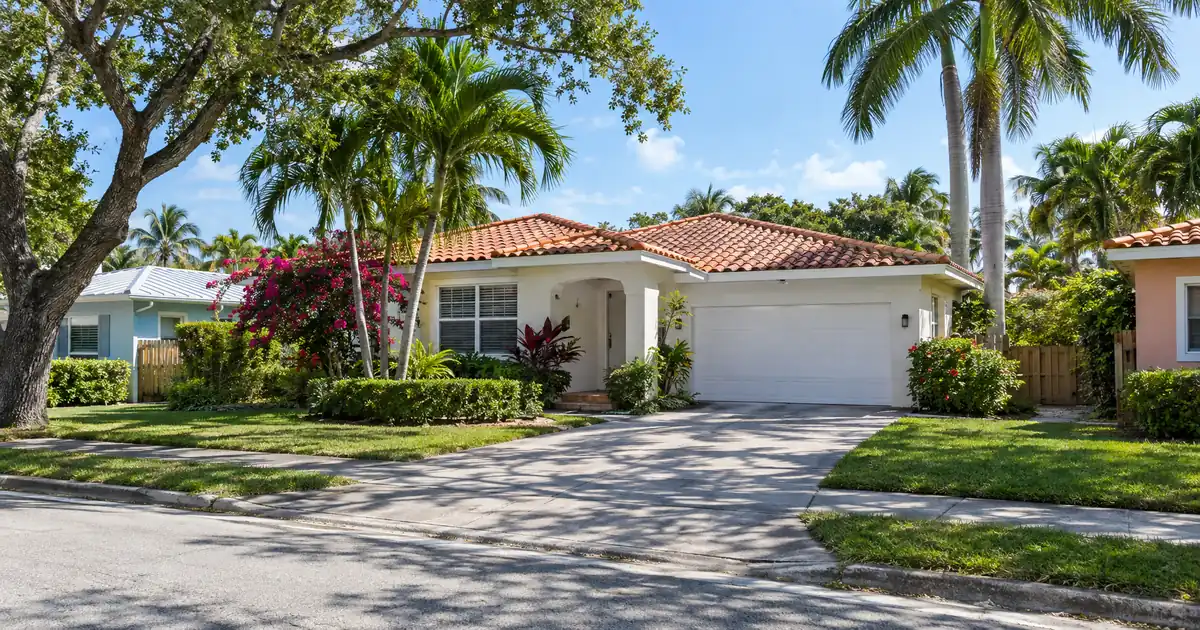
The Quick Read: No, because Florida taxes what the recorded mortgage secures, not whether the money is new, and a stand-alone rental HELOC is a new second lien that is taxed on its own while the existing first mortgage is left alone, in Miami-Dade or anywhere else in Florida. A home equity line of credit (HELOC) is a revolving line secured by your property. “New money only” becomes the rule when you renew or modify an existing recorded debt, and even then the exemption has conditions.
- Documentary stamp tax (“doc stamps”) on a recorded mortgage has no cap, so a bigger line costs proportionally more.
- Miami-Dade’s higher 60-cent rate and its surtax are written for deeds and other transfers, not for mortgages.
- A new second lien beside your first mortgage is not a renewal, so the increase-only rule does not apply to it.
- Whether tax lands on the full line or only on the drawn amount depends on how the mortgage is drafted.
- Budget from the maximum amount stated in the mortgage, then get the title agent’s exact figure.
Why the “New Money” Question Misses the Test
Investors ask this because refinance conversations are full of “you only pay on the new money.” That phrase is real, but it belongs to a narrow corner of Florida tax law. The tax does not ask how much cash you walked away with. It asks what debt the recorded instrument secures.
How large a line the equity supports.
An equity line is sized by combined loan-to-value, occupancy, and credit — not by rental coverage. Switch the occupancy or the credit band and the ceiling moves with it.
Investment-property lines require a 700 minimum credit score; second-home lines start at a 640 minimum and primary-residence lines at 600, and the combined-LTV ceiling steps down as the credit band drops on primary-residence and second-home lines and holds on investment-property lines; the line cap steps down on primary-residence lines and holds at every tier on investment-property and second-home lines.
A debt-to-income ratio above 45% requires 680+ credit. Profiles under 640 are limited to single-family homes. At least 75% of the approved line is drawn at closing. Ceilings, floors, and caps update from Lendmire’s centralized guideline source.
Line estimate
Illustrative estimate only — not a quote, Loan Estimate, approval, or commitment to lend. The rate is an editable assumption; equity-line pricing is variable through both the draw and repayment periods and never converts to fixed. Occupancy and credit drive the ceiling together: an investment property tops out at 70% combined LTV (minimum credit 700, line cap $500,000); a second home tops out at 90% combined LTV (minimum credit 640, line cap $500,000), with the ceiling stepping down as the credit band drops (the cap holds at every tier); a primary residence tops out at 90% combined LTV (minimum credit 600), and its $750,000 maximum line is available only at 75% combined LTV or below with a 700-or-better credit profile (720 on the longer-runway program) and a full appraisal. Lines above $500,000 require a full appraisal. Credit, debt-to-income, property type, and full underwriting review all affect the final line.
A rental HELOC works differently from a refinance. You keep your first mortgage exactly as it is. The lender records a brand-new mortgage behind it, or in first position if the property is free and clear. That new mortgage is the taxable document.
So the question sorts into two cases. If you open a fresh line, nearly every dollar of it is new money by definition. If you renew, modify, or increase an existing recorded debt, the “increase only” logic can apply. The rest of this article shows which case you are in.
What the State Actually Taxes on a Mortgage
Doc stamps on a mortgage run 35 cents per $100 of the secured amount, rounded up for any portion of $100. The Florida Department of Revenue says mortgages, liens, and security agreements are taxed when filed and recorded. It also says the base is the full amount of indebtedness secured, whether contingent or absolute, and that there is no cap on the tax due.
That “no cap” point trips up investors. You may have heard of a $2,450 limit. That limit applies to notes, not to a mortgage recorded in Florida. The administrative rule, Fla. Admin. Code 12B-4.051, says a recorded mortgage is taxed on the full amount of the obligation it secures. Its own example is a $1,000,000 obligation fully secured by a mortgage, with $3,500 due at recording.
Run that example forward and the scaling is plain: the tax moves in a straight line with the secured amount. An investment-property line in our network tops out at $500,000, so the tax on even the largest line is bounded by that ceiling.
Does Miami-Dade Charge More on a HELOC?
Not on the mortgage itself. Miami-Dade’s 60-cent rate and its added surtax attach to deeds and similar transfer documents. Koontz & Associates describes the split: 60 cents per $100 on documents in the county, plus a 45-cent surtax on documents transferring anything other than a single-family residence. The same page puts notes, mortgages, and liens at 35 cents per $100.
In plain terms, a HELOC mortgage on a Miami-Dade rental uses the statewide mortgage rate. Buying the rental from a seller is a deed transaction and carries the county’s higher charges. Borrowing against it afterward is a mortgage transaction and does not.
Drawn Amount or Full Line? The Part That Depends
Here is the question underneath your question: if you draw only part of the line, are you taxed only on that part? The honest answer is that it depends on how the instrument is written and how much is advanced.
Start with the documents. A HELOC usually has two pieces: a note or credit agreement, and a recorded mortgage. When both exist, the statute puts the tax on the mortgage at recording. A mortgage securing future advances must also state a maximum principal amount, under Chapter 697.
Then the readings diverge. Section 201.08 says that when a mortgage secures future advances, tax is paid at recording on the initial debt secured, excluding future advances. Tax is then paid on sums advanced whenever a future advance is made. The mortgage is not enforceable as to an advance until that tax is paid.
The Department of Revenue page reads more broadly, taxing the full secured amount even if contingent. An older advisory describes a Florida court holding that a mortgage securing a revolving line required tax at recording on the full line, not on individual advances.
So the base can be the full line, or it can be staged by advance. Do not rely on a flat rule that says “only what you draw.” Do not rely on one that says “always the full line” either.
Our network’s investment lines have a built-in wrinkle. At least 75% of the line is drawn at closing. That means even under a staged reading, most of the tax would land on day one.
Practitioner insight: On HELOC files in states with recording taxes, the closing-cost estimate that surprises borrowers is rarely the lender fee. It is the state tax computed on the maximum amount stated in the mortgage. Ask for that number before you pick a line size, not after.
When “New Money Only” Really Applies
The increase-only rule is real. It lives in the renewal section of the statute, Section 201.09. A renewal note that raises the unpaid balance but otherwise meets the exemption criteria is taxable only on the face amount of the increase. A renewal for less than the unpaid balance can be fully exempt, as a Department of Revenue advisory concludes for an amended and restated note and its mortgage.
What counts as a renewal matters a great deal:
- Counts as a renewal: modifications that add obligors, increase the principal balance, or change the interest rate, maturity date, or payment terms.
- Does not count as a renewal: corrections, additional security, lien consolidation, guarantor changes, and a substituted mortgagee.
Adding a person to the debt is where many investors lose the exemption. A Department of Revenue advisory treats an assumption of a note and mortgage as a taxable renewal. If you and a partner restructure who owes the debt, expect tax questions.
Now the point that answers your title. A new HELOC beside an existing first mortgage is a new recorded mortgage. It is not a renewal of the first. Do not apply the increase-only rule to a stand-alone second lien.
Decision Table: Which Path Are You On?
| Scenario | Likely doc stamp base | Key condition |
|---|---|---|
| New HELOC beside existing first | Amount secured by the new mortgage | Stand-alone second lien |
| Existing line renewed with higher balance | Increase only | Qualifying renewal, prior tax paid |
| Renewal for less than balance | Can be exempt | Same debt, no enlargement |
| Added borrower or assumption | Taxable renewal | New obligor breaks exemption |
| Future draws on a recorded line | Depends on drafting | Ask title for exact figure |
| DSCR cash-out refinance | Possibly the whole new balance | Unless renewal or assignment applies |
The last row is an inference rather than settled authority. A cash-out refinance creates a new note and mortgage. Because the treatment can vary by file, confirm any specific transaction with the title company.
HELOC or DSCR Cash-Out: Compare the Whole Package
Doc stamps are one line in a bigger comparison. The product that fits depends on your title, your leverage, and your goals. Here is how the two stack up across our wholesale network.
| Factor | Investment HELOC | DSCR cash-out refinance |
|---|---|---|
| Max leverage | 70% CLTV on an investment property | About 75% LTV on a standard rental |
| Line or loan size | $25,000 to $500,000 | Up to $3,000,000 on standard programs |
| Credit | 700 minimum | Often around 660; 620 in parts of network |
| Who can hold title | Individual or revocable trust | LLC, subject to program eligibility |
| First mortgage | Stays in place | Replaced by the new loan |
On the HELOC side, an investment line runs a 5-year interest-only draw followed by a 25-year repayment period. Pricing floats and never converts to fixed. Because the line cannot exceed $500,000, it generally runs on an automated valuation rather than a traditional appraisal. This HELOC product is available only in the 16 states where Lendmire operates full-service, and Florida is one of them.
CLTV (combined loan-to-value) adds your first mortgage and the new line together and divides by the property value. A 70% CLTV ceiling therefore limits how much total debt the property can carry, not just the new line.
On the DSCR side, the debt service coverage ratio compares monthly rent to the full monthly payment on the loan. Many select programs start at 1.00, and stronger ratios open better leverage. A separate select-lender path takes coverage below 1.00 with leverage and terms adjusted. Cash-out typically wants about 6 months of seasoning, meaning time you have owned the property. Reserves commonly sit around 6 months of the payment, though they vary by lender, leverage, and loan size.
Clearing 1.00 does not mean the property produces positive cash flow. Repairs, vacancy, management, and utilities sit outside the calculation.
Your first mortgage matters in this comparison. A HELOC leaves it untouched and does not reopen its tax. A refinance replaces it, which is why the tax comparison needs to be between the new line alone and the whole new balance.
If the rental sits in an LLC, a HELOC is usually off the table. LLCs, corporations, and land trusts cannot hold title on these lines. The property would need a vesting change, or a DSCR cash-out is the cleaner route. Our complete DSCR loans guide covers how that product is structured.
A Side-by-Side Picture Without the Dollar Math
Picture an investor with a Miami-Dade duplex and a healthy first mortgage. She wants to pull equity to fund the next purchase and has a 700-plus credit profile.
Path one, a new HELOC. She opens a line of credit of a size the 70% CLTV ceiling allows. The lender records a new second mortgage. The tax is computed on the maximum amount stated in that mortgage, subject to how the instrument handles future advances. Her first mortgage is never retaxed.
Path two, a DSCR cash-out. She replaces the first mortgage with a larger new loan, at about 75% LTV if the duplex is a standard rental. The new note and mortgage cover the full balance. Unless a qualifying renewal or assignment exemption fits, tax can reach the whole new amount rather than only the cash she takes out. These specifics are subject to lender guidelines and a full review of property, leverage, and credit.
Neither path is automatically cheaper. The better choice turns on how much of her existing first mortgage she would be re-taxing, versus how much leverage and term flexibility she needs. The stronger plays tend to clear both tests: enough equity and enough rental coverage.
Questions to Ask Before You Sign
Put these to your title agent or closing attorney:
1. What maximum principal amount will the mortgage state, and is tax computed on all of it at recording?
2. Does the instrument secure future advances, and will tax be paid again as each draw is made?
3. Is any existing recorded debt being renewed or modified, or is this a stand-alone second lien?
4. Does anything in the file add an obligor or change the debt’s terms?
5. Where is the intangible tax computed, and on what base? It is a separate tax from doc stamps.
Tax treatment can depend on how the funds are used and how the property is held. Keep clear records and speak with a qualified tax professional before relying on any deduction.
Key Terms Defined
Doc stamps (documentary stamp tax): a Florida state tax charged when a mortgage or note is recorded, computed on the amount of debt the instrument secures.
Intangible tax: a separate state tax on mortgages with its own rate and rounding, not the same as doc stamps.
Future advance: money a lender releases under an existing recorded mortgage after closing, such as a later draw on a line.
Renewal: a change to an existing recorded debt that can qualify for an exemption, or for tax on only the increase, if it meets statutory conditions.
CLTV: combined loan-to-value, which adds all loans against a property and divides by its value.
Obligor: a person legally responsible for repaying the debt.
Common Misconceptions
“Doc stamps apply only to what I draw.” Not safely. The base can be the amount stated in the mortgage, and staging by advance depends on drafting.
“The $2,450 cap protects me.” That cap is for notes. A recorded mortgage has no limit.
“Miami-Dade’s 60-cent rate applies to my HELOC.” That rate belongs to deeds and transfers.
“A refinance is always exempt or always fully taxed.” Both are wrong. A qualifying renewal can be taxed only on the increase, but added borrowers and changed terms can break it.
“My lender sets this fee.” It is a state tax collected at recording, separate from lender charges.
Frequently Asked Questions
Does Miami-Dade add a surtax to the doc stamps on a rental HELOC?
The county surtax attaches to transfers of real property other than single-family residences, not to mortgages. A HELOC mortgage on a Miami-Dade rental is taxed at the statewide mortgage rate rather than the county surtax. Your purchase deed carried the higher county charges, and the later borrowing does not.
If I only draw part of the line, do I owe tax only on that part?
It depends on how the mortgage is drafted. The statute allows tax on the initial debt at recording with tax on later advances as they are made. The Department of Revenue reads the base as the full secured amount, even if contingent. On our network, at least 75% of an investment line is drawn at closing, so most of the tax is likely due up front either way.
Is my existing first mortgage taxed again when I add a HELOC?
No. A HELOC is a separate recorded mortgage and leaves the first mortgage in place. Only the new instrument is taxed. A refinance that replaces the first mortgage is the case where the whole new balance can be taxed.
Does an unsecured note’s cap help with a mortgage-backed line?
No. The cap applies to unsecured notes only. Avoiding a stated loan amount is not a strategy for any loan secured by a recorded mortgage, according to Baggé Law.
Can an LLC that owns my rental take out a HELOC?
Usually not. Under our network’s HELOC programs, title must be held by an individual or a revocable living trust. A property already in an LLC would need a vesting change, or a DSCR cash-out refinance may fit better, subject to lender program eligibility.
If you are considering a home equity line and want to see how the numbers work, Lendmire can help you compare HELOC options based on the property, the equity available, credit profile, combined leverage, and your goals.
Miami-Dade investors who treat the maximum amount stated in the mortgage as the number that drives closing costs will rarely be surprised by the tax bill.
About Lendmire
Lendmire — NMLS# 2371349 — is a mortgage broker that arranges home equity lines of credit in its 16 full-service states through wholesale lenders, on primary residences, second homes and investment properties. Every line is subject to the lender’s guidelines and full underwriting. Scotsman Guide named Lendmire a Top Mortgage Workplace in both 2025 and 2026.
Investors who want the broader program framework can review how DSCR loans work.
Get Started
Ready to find the right loan for you?
In about 30 seconds you can review financing options available for your home or investment property. No commitment required.
Informational only. Not a Loan Estimate, approval, or commitment to lend. Program availability and eligibility are subject to lender guidelines, credit approval, property review, and underwriting.
References
1. Florida Department of Revenue – Documentary Stamp Tax
3. Koontz & Associates – Documentary Stamp Taxes
6. Florida DOR advisory 92M-009
7. Florida DOR advisory 12B4-002
8. Florida DOR advisory 22B4-002
9. Baggé Law – Strategies to Avoid Florida Documentary Stamp Tax
This article is part of Lendmire’s investment property HELOC program — full qualification details, guidelines, and scenarios live on the program page.
Related reading: Cash-Out Refinance Title Requirements on an Inherited Tenanted Rental · Probate and Title Requirements for an LLC-Held Inherited Rental Refinance · How to Stress-Test DSCR on a Short-Term Rental Cash-Out Refinance
Guides: Investment Property HELOC in Miami, FL · Investment Property HELOC in Florida
Brandon Miller
Founder & CEO, Mortgage Loan Originator, Lendmire LLC
- Mortgage Loan Originator · NMLS# 1129696 · Verify on NMLS Consumer Access
- North Carolina Real Estate Broker · License# 343312 · Verify on NCREC
- North Carolina Insurance Producer · License# 19053198 · Property, Casualty, Life, Health · Verify on NAIC SBS
- Lendmire LLC · Firm NMLS# 2371349 · Verify firm licensure
Legal disclosures. Lendmire (NMLS# 2371349) is a state-licensed mortgage brokerage that arranges financing through wholesale lender relationships. Lendmire is not a direct lender, depository institution, or registered financial advisor. The discussion above is general informational content about real estate financing — it is not financial, legal, or tax advice, and readers should consult licensed professionals for guidance on their individual circumstances. Loan inquiries are subject to lender underwriting; this article does not represent a commitment to lend. Loan terms, rates, and qualification standards vary by borrower, property, and state, and are subject to change at any time. Equal Housing Opportunity. NMLS Consumer Access: nmlsconsumeraccess.org.