
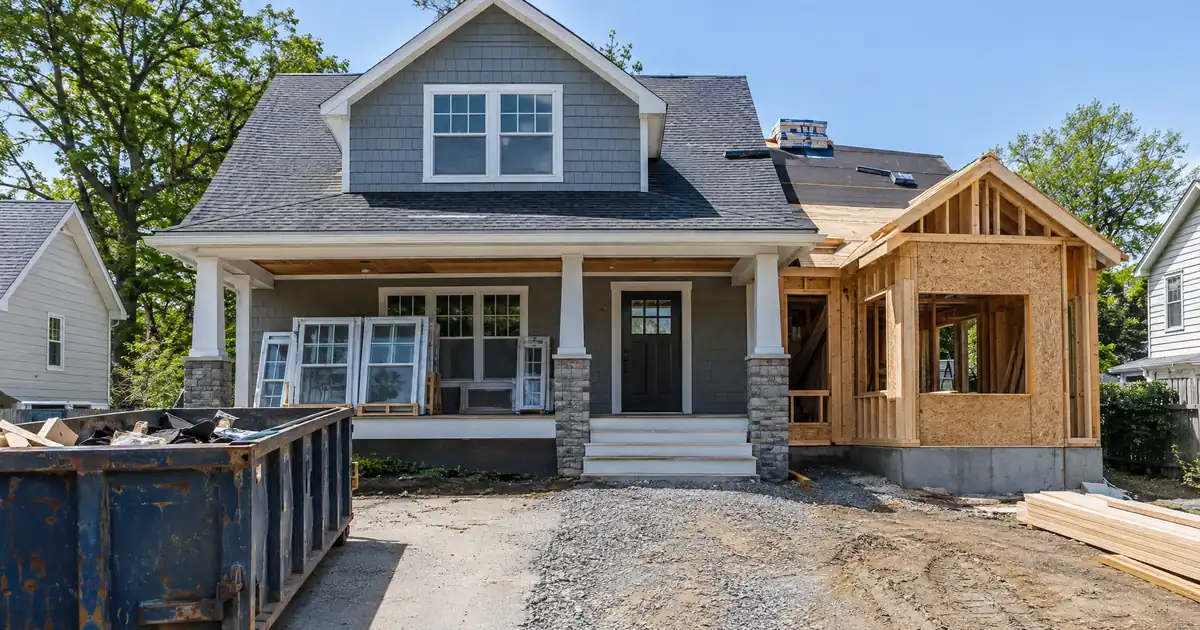
The Quick Read: To document a BRRRR rehab for a DSCR takeout, build one organized file that shows what you spent, what work was done, and what rent the finished property earns, then hand it to the lender’s appraiser and underwriter. The file proves cost and visible work. It never sets value, because the lender’s own appraisal does that.
- Build the file as the rehab happens, not after it ends.
- Keep the scope, invoices, draw history, permits, photos, bridge payoff and lease together.
- Confirm the lender’s seasoning rule and start date before the bridge loan closes.
- Expect the appraiser to set value and market rent, not your after-repair estimate.
- Clearing 1.00 coverage is not the same as positive cash flow.
Most BRRRR stalls trace back to the exit, not the purchase. BRRRR stands for buy, rehab, rent, refinance, repeat. The refinance step is an ordinary lender decision, and each lender’s written guideline governs it. No universal rulebook exists. What follows is how a DSCR takeout file actually gets read, built from the files we place across a wholesale network of DSCR lenders.
DSCR Cash-Out Calculator
Run the cash-out numbers in your market
Rate source: Freddie Mac 30-yr average via FRED® — Federal Reserve Bank of St. Louis · effective Oct 8, 2026
Prefilled with starting assumptions — enter your property’s value, balance, taxes, and insurance for a more accurate picture.
Program parameters update from Lendmire’s centralized guideline source. Taxes and insurance are editable estimates.
As of Oct 8, 2026 · General Freddie Mac market benchmark, not a Lendmire loan offer. Property value, balance, taxes, and insurance are editable estimates. Maximum loan-to-value varies by lender, program, property type, and seasoning. Not a Loan Estimate, approval, or commitment to lend. Program availability and eligibility are subject to lender guidelines, credit approval, property review, and underwriting.
Key Terms Defined
DSCR (debt service coverage ratio): the property’s monthly rent divided by its full monthly payment: principal, interest, taxes, insurance and any HOA dues.
Takeout refinance: the long-term loan that pays off your short-term bridge or hard money loan.
ARV (after-repair value): your own estimate of the value once the work is done. The lender does not use it.
Cost basis: what you paid for the property plus documented rehab spending.
Seasoning: the ownership time a lender wants before it sizes a cash-out loan on appraised value instead of cost.
Draw history: the record of rehab money released in stages, usually after inspections.
Scope of work: the written list of every repair, with a budget for each line.
Who Reads Your File, and What Each Person Wants
Three people touch a takeout file, and they want different things. The appraiser wants to understand what changed in the property. The underwriter wants to confirm the money trail and the income. The payoff side wants a clean number to retire the bridge.
The lender’s own appraiser sets value. Your ARV estimate is a planning number, nothing more. The core BRRRR risk is that the property appraises low after the rehab, which disrupts the plan to pull capital back out. Rehabs that run over budget are the other common failure.
Receipts show what you spent. The appraisal shows what the property is worth. An improvement may support a higher appraised value, depending on comps and underwriter review. It never converts dollar for dollar.
The same appraisal also carries a market-rent opinion. Lofty’s BRRRR guide notes that lenders underwrite on either actual or appraiser-estimated rent, which is why a signed lease matters. For form names, Fannie Mae’s appraiser resources list Form 1007, the single-family comparable rent schedule, and Form 1025, the small residential income property report for 2-4 units. DSCR loans are not agency products. Which form a given program orders is program-specific.
What Goes in the File?
Here is the master list. It is practitioner convention, not a published standard.
| Document | What it proves | Capture it when |
|---|---|---|
| Scope of work and budget | What you planned to do | Before rehab starts |
| Invoices and receipts | What you spent | As each is issued |
| Proof of payment | That you actually paid | Same day as payment |
| Draw history | When money moved | At each draw |
| Permits closed or finaled | Work was approved | At completion |
| Before and after photos | Visible change | Before, during, after |
| Purchase settlement statement | Your starting cost | At purchase |
| Bridge payoff letter | What the new loan must retire | Before application |
| Signed lease, deposit, first rent | Income is real | At lease-up |
Many lenders also ask for lien waivers and final inspection sign-offs. If a contractor will not provide a waiver, tell your broker early rather than at underwriting.
Build the File as You Go
Plan the exit before the rehab starts. The refinance has to be planned backward from the bridge loan’s maturity. Inman’s explainer on the BRRRR method makes the point that the rehab creates equity quickly, and that speed is also the risk. That means knowing the seasoning rule and its start date before the bridge closes.
Here is a simple sequence.
1. Before purchase: save the scope, the budget and a set of dated photos of every room and system.
2. At each draw: file the invoice, proof of payment and inspection result together, and log the amount in one running ledger.
3. Before walls close: photograph plumbing, wiring and framing. Hidden work is the hardest to prove later.
4. At completion: collect permit sign-offs, final photos and any lien waivers.
5. At lease-up: file the signed lease, the deposit receipt and proof of the first month’s rent.
6. Before application: reconcile total invoices against draw releases, so your cost basis matches the lender’s math.
Use one folder per phase and one naming pattern, such as date, vendor, amount. The test is simple: could a stranger reconstruct the whole rehab in ten minutes? If not, fix the file before it reaches a lender.
The One-Page Improvement Summary
The appraiser does not want a binder. A one-page summary of interior and exterior updates since closing works better, ideally with before-and-after photos and the budget. Add a one-page list of closed comps in the area. Leave the sale prices off, because many appraisers dislike being handed values. Keep permits and receipts in a backup file in case the appraiser asks for proof.
That package comes from an investor education guide on BRRRR refinancing — an informal source whose figures are anecdotal, so use it for the document list only.
How Underwriting Actually Treats It
Underwriting runs in a set order. The lender orders the appraisal, and the appraiser reports value and market rent. Then comes the coverage test.
DSCR is rent divided by the full payment on the new, larger loan. A bigger loan lowers the ratio, so rent can cap the loan before value does. Across our network, 1.00 is where select programs start, and stronger ratios open better pricing and leverage. A separate select-lender path takes coverage below 1.00, with leverage and terms adjusted.
Cash-out refinances top out around 75% LTV on an investment property across most of the network, with about 6 months of seasoning as the common expectation. Most programs want a score around 660. A 620 floor exists in parts of the network, and 700 or higher unlocks the strongest leverage. Reserves commonly run about 6 months of PITIA, stepping up to about 9 months on loans above $1,500,000. All of it is subject to lender guidelines, and every file is underwritten individually.
Finally, the new loan has to retire the bridge, including accrued interest, fees and closing costs. Extension fees and accruing interest raise the appraisal you need to break even.
Where the General Rule Breaks
Cost-basis sizing inside the seasoning window. Before seasoning clears, some programs size the loan on cost, meaning purchase plus documented rehab. Here your invoices decide the proceeds. After seasoning, the appraisal governs. The specifics are program-dependent.
Seasoning clocks. The clock commonly runs from title recording, not from the end of the rehab. Get the start date in writing. Market surveys of investors report a wide spread in seasoning from lender to lender, so do not assume a number from a forum or a friend.
Delayed financing. This is an agency-origin concept for cash purchases. It returns purchase cost, not ARV. Whether any DSCR program offers an equivalent is lender-specific.
Hard money as cash. Whether a bridge-funded purchase counts as cash for any early-exit rule varies by program.
Rent source. The lease and the appraiser’s market rent can differ. Many programs use the lower of the two, so confirm against the specific program.
Vacancy at refinance. Auben Realty’s BRRRR write-up notes that turnover just before the refinance can weaken the income documentation lenders want. Time your lease-up before you apply.
Low appraisal. The realistic options are bringing cash to closing, taking a smaller loan, waiting and reappraising, or submitting a reconsideration of value with comps and documented omitted work.
Payoff-only versus cash-out. A refinance that returns no cash is often treated more leniently than a cash-out. That is lender-specific.
DSCR vs. conventional financing
There are two common ways to finance an investment property, and they qualify you differently — here’s how investors weigh them.
Why investors choose it
- Qualifies on the property’s rental income — no personal tax returns, W-2s, or pay stubs needed to document income.
- No personal debt-to-income ceiling to clear, so existing mortgages and obligations don’t cap your borrowing the same way.
- Can be closed in an LLC, keeping the property inside a business entity.
- Built for scaling — not held to the limit on number of financed properties that conventional financing applies.
- Underwriting centers on the deal: generally qualifies when the rent covers the payment, a 1.00x coverage ratio being a common baseline (confirmed in underwriting).
- Designed specifically for investment property, including long-term and, where the program allows, short-term rentals.
Where it’s strong
- Often the lowest ongoing financing cost for a buyer who fully qualifies on personal income — a fit for a first property or a cost-first purchase.
Trade-offs for investors
- Requires full personal income documentation and must fit within a debt-to-income limit — salary, existing debts, and other mortgages all count.
- Typically held in your personal name rather than a business entity.
- Caps how many financed properties you can carry, which can become a ceiling as a portfolio grows.
- Evaluates you as a borrower as much as the property, which usually means more paperwork.
How investors usually choose: a first or single property often optimizes for the lowest financing cost; portfolio builders often optimize for leverage, vesting in an LLC, and scaling past conventional caps. The right answer depends on your goals, the property, and current guidelines — both paths run through select lenders in Lendmire’s wholesale network, with eligibility and terms confirmed in underwriting.
Fixing Gaps in the Paper Trail
Real rehabs are messy. Here is how each common gap gets handled.
| Problem | Practical fix |
|---|---|
| Lost receipt | Request a vendor reprint or bank record of payment |
| Self-performed labor | Keep materials receipts and dated photos of the work |
| Cash payments | Written receipt signed by the payee, logged in the ledger |
| Unpermitted work | Disclose it early; ask about permit closure |
| Mixed accounts | Pay from one account and note any transfers |
| Name mismatch | Align deed, contracts, insurance and lease |
Entity consistency matters more than people expect. If the property is titled in an LLC, subject to lender program eligibility, the contracts, payments, insurance and lease should all carry the same name.
Spend is not value. Picture two files for the same renovation. In the organized one, every invoice ties to a scope line and a draw, and the appraiser sees a clear before-and-after summary. In the messy one, totals do not reconcile and the lease is missing a deposit receipt. The first gets read in minutes. The second draws questions, and questions stall files. Neither file changes what the comps say.
What the Investor Decision Looks Like
Think about the whole loop. BRRRR recycles the same capital, so a failed or short exit locks up your next deal. That is the real cost of weak documentation.
Before you buy, ask three questions. Can the property reach rental standard on this budget? Will rent cover the new, larger payment with room to spare? Does the bridge maturity leave time for seasoning, a possible reappraisal and a delay?
Two cautions matter here. BRRRR does not work when you pay full market price or add no value, a point investor education material on BRRRR makes directly. And clearing 1.00 coverage does not mean the property cash flows. DSCR compares rent to PITIA only. Repairs, vacancy, management, utilities and capex sit outside the calculation.
A larger equity position can lift coverage and lower the payment. It never erases leverage caps, credit floors, reserve rules or property eligibility. Manufactured homes, log homes and barndominiums are not offered in these programs, so a rehab on one of those cannot be taken out through them. The strongest files clear both tests: enough equity and enough rental coverage.
The complete DSCR loans guide covers the loan basics.
Pre-Submission Checklist
- Scope, budget and invoices reconcile to one total.
- Every payment has proof.
- Photos are dated and cover hidden systems.
- Permits are closed or the status is disclosed.
- Lease, deposit and first-rent proof are in the file.
- The bridge payoff letter is current.
- Names match across every document.
- The seasoning start date is confirmed in writing.
- A stranger could rebuild the rehab in ten minutes.
If you are buying or refinancing a rental property and want to see how the numbers work, Lendmire can help you compare DSCR loan options based on the property income, credit profile, leverage, and investor goals. Reach the team at 828-256-2183. Tax treatment can depend on how the funds are used and how the property is held; investors should keep clear records and speak with a qualified tax professional before relying on any deduction.
Frequently Asked Questions
Do I need receipts for everything?
Keep them for everything you can, because the file is judged on whether the story reconciles. Small gaps are manageable with bank records and a note in the ledger. Large unexplained gaps are what draw questions. Materials-only receipts are fine for work you did yourself.
Do photos need dates?
Dated photos are far more useful than undated ones, since they show the sequence of the work. Most phones embed the date automatically, so leave that setting on. Take extra shots of plumbing, wiring and framing before walls close.
Does documented spend equal appraised value?
No. The appraiser values the property against comparable sales, and your records only help explain what changed. Strong documentation may support the appraiser’s view, depending on comps and underwriter review. It never guarantees a number.
When should I start the file?
Before the purchase closes. Save the scope, the budget and a baseline set of photos on day one. Also confirm the lender’s seasoning rule and start date, since that clock sets your bridge timeline.
Does this change seasoning?
Not directly. Seasoning is lender policy, and paperwork does not shorten it. What documentation can do is support cost-basis sizing in programs that use it inside the seasoning window. Ask your broker which approach a given program takes.
About Lendmire
As a DSCR and non-QM mortgage broker, Lendmire — NMLS# 2371349 — connects investors with wholesale lending channels across 41 markets, including Washington, D.C. The property’s rental income, not the borrower’s tax returns, is central to lender review, which works for self-employed operators and portfolios beyond four financed properties. Scotsman Guide named Lendmire a Top Mortgage Workplace in both 2025 and 2026.
Get Started
Ready to find the right loan for you?
In about 30 seconds you can review financing options available for your investment property. No commitment required.
Informational only. Not a Loan Estimate, approval, or commitment to lend. Program availability and eligibility are subject to lender guidelines, credit approval, property review, and underwriting.
References
2. Fannie Mae Appraiser Resources
3. Inman’s explainer on the BRRRR method
This article is part of Lendmire’s DSCR loan program — full qualification details, guidelines, and scenarios live on the program page.
Related reading: How to Prepare Lease and Rehab Docs for a BRRRR DSCR Refinance · How Much Rehab Spend a DSCR Appraisal Returns on a BRRRR · How a BRRRR Investor Prepares Lease and Deposit Docs for a DSCR Takeout
Brandon Miller
Founder & CEO, Mortgage Loan Originator, Lendmire LLC
- Mortgage Loan Originator · NMLS# 1129696 · Verify on NMLS Consumer Access
- North Carolina Real Estate Broker · License# 343312 · Verify on NCREC
- North Carolina Insurance Producer · License# 19053198 · Property, Casualty, Life, Health · Verify on NAIC SBS
- Lendmire LLC · Firm NMLS# 2371349 · Verify firm licensure
Compliance and disclosures. Lendmire (NMLS# 2371349) is a licensed mortgage broker and is not a direct lender, depository institution, financial advisor, or tax professional. Content in this article is general market analysis and educational information — not financial, legal, or tax advice for any specific situation. Lendmire does not guarantee loan approval; every transaction is subject to underwriting by the funding lender. Mortgage pricing and loan program guidelines are subject to change at any time without notice and vary by borrower characteristics, property type, and state regulations. Lendmire complies with Equal Housing Opportunity. Licensure verification: NMLS Consumer Access.