
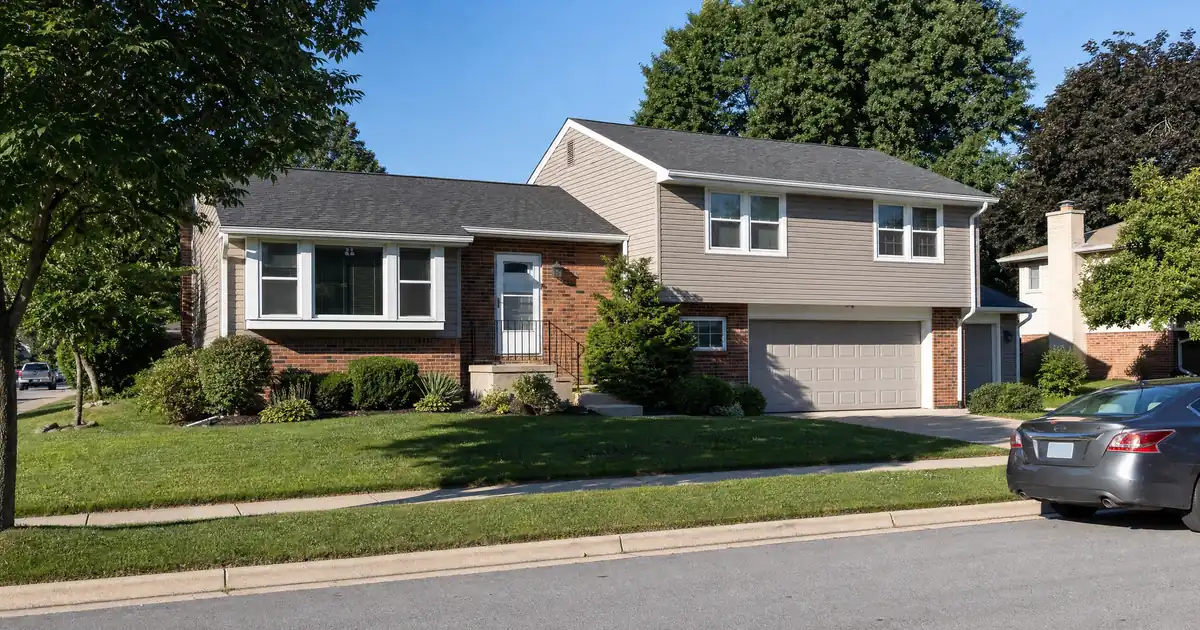
The Quick Read: Most short-term rental purchases financed through DSCR programs land around 25% down, which is the mechanical result of a roughly 75% loan-to-value ceiling on the strongest STR files across a wholesale lending network. Cash-out refinances on an existing Airbnb typically require more equity, capping closer to 70% LTV. There’s no fixed industry number — credit tier, rental coverage, and hosting history all move the figure, and a handful of property types and state overlays change the math entirely.
What Investors Need to Know First
- STR purchase leverage tops out around 75% LTV on the strongest files, which means roughly 25% down on most approvals.
- Cash-out or rate-term refinances on a short-term rental generally cap closer to 70% LTV — tighter than the purchase ceiling, not looser.
- A 640 credit score and about 12 months of hosting or landlord experience are common expectations on dedicated STR programs.
- Coverage below 1.00 and no-ratio structures both exist through select lenders in the network — neither is a universal offering, and both come with adjusted leverage and terms.
- Manufactured homes, log homes, and barndominiums are not offered under these DSCR programs, regardless of down payment size.
Key Terms Defined
DSCR (Debt-Service Coverage Ratio): a comparison of the property’s monthly rental income against its monthly housing payment — principal, interest, taxes, insurance, and any HOA dues (PITIA) — expressed as a ratio like 1.10x or 0.95x.
Short-Term Rental Calculator
Run the STR numbers in your market
Rate is an editable market assumption — the live benchmark loads when available.
Prefilled with starting assumptions — enter your nightly rate, occupancy, taxes, and insurance for a more accurate picture.
Short-term rental income is documented with a 12-month history or a market data report. Program parameters update from Lendmire’s centralized guideline source.
Fallback assumption · General Freddie Mac market benchmark, not a Lendmire loan offer. Nightly rate, occupancy, taxes, and insurance are editable estimates. Qualifying income for short-term rentals varies by program — some use appraisal market rent, others use documented STR history or projections — and is confirmed in underwriting. Not a Loan Estimate, approval, or commitment to lend. Program availability and eligibility are subject to lender guidelines, credit approval, property review, and underwriting.
LTV (Loan-to-Value): the loan amount divided by the property’s purchase price or appraised value, expressed as a percentage; a lower LTV means a larger down payment.
Reserves: liquid funds a borrower must show on top of the down payment and closing costs, typically measured in months of PITIA the borrower could cover if the property sat vacant.
Business-purpose loan: a loan made to acquire or refinance a non-owner-occupied rental property, underwritten differently than a consumer home loan because the borrower isn’t living in the property.
No-ratio loan: a structure where the lender doesn’t require the property’s income to clear a minimum coverage threshold at all, generally reserved for stronger borrower profiles.
Why There’s No Fixed “Airbnb Loan” Down Payment
There’s no dedicated “Airbnb loan” product with a published minimum down payment, because these purchases are financed as DSCR investment-property loans, and DSCR loans are underwritten as business-purpose loans rather than consumer mortgages. DSCR loans are designed for non-owner-occupied investment properties. Because they are business-purpose investor loans, they are reviewed differently from a standard owner-occupied mortgage — a distinction that shows up directly in consumer-protection compliance guidance, which notes that loans made to acquire or maintain non-owner-occupied rental property are treated as business-purpose transactions (Compliance Alliance).
That classification is why the down payment on an Airbnb purchase isn’t set by a federal rulebook. It’s set by the guidelines a wholesale lender applies to that specific file — loan size, credit tier, property type, and the strength of the rental income the property can document. Two borrowers buying similar short-term rentals can land at different down payment requirements based entirely on those variables.
How Underwriting Actually Sizes the Down Payment
The down payment is the residual of the approved leverage, not a number set first. A lender doesn’t start with “put down 25%” — it starts by evaluating the borrower’s credit, the property’s documented income, and the loan amount, then arrives at a maximum LTV. The down payment is whatever percentage is left over. These specifics are subject to lender guidelines and a full review of property, leverage, and credit.
For a dedicated short-term rental purchase, that process typically runs like this:
1. Credit tier is checked first. Most STR-specific programs across the network look for a 640 or better score before the strongest leverage is on the table.
2. Hosting history gets reviewed. Roughly 12 months of landlord or host experience is a common expectation, and files without it can see leverage pull back even with strong credit.
3. Rental income is documented — and this is where STR files diverge from long-term rentals. A standard rental purchase leans on the Single-Family Comparable Rent Schedule (Form 1007) or, for small multifamily, the operating income statement. But Fannie Mae itself has acknowledged that its own selling guide is silent on how — or whether — short-term rental income should be handled on those forms (Fannie Mae Appraiser Update). In practice, DSCR lenders working STR files lean on documented booking platform history and third-party short-term-rental data instead of forcing nightly rates through a form built for long-term leases.
4. The DSCR ratio is calculated. Documented monthly rental income (or projected income, on a purchase without operating history) is compared against PITIA. On most STR purchase programs in the network, a coverage ratio around 1.00 is where eligibility starts — not “the standard,” but a floor for that program tier.
5. LTV is set, and the down payment falls out of it. On the strongest STR purchase files, that leverage tops near 75%, meaning roughly 25% down. Weaker credit, thinner reserves, or a coverage ratio below the program floor pulls that leverage down and the required down payment up. Terms vary by lender guidelines, property type, leverage, credit profile, and full file review.
Down Payment by Structure: Purchase vs. Cash-Out Refinance
| Structure | Typical LTV Ceiling | Approx. Down Payment / Equity | Credit Floor | Coverage Floor |
|---|---|---|---|---|
| STR Purchase | up to ~75% | ~25%+ down | 700 typical | ~1.00 |
| STR Cash-Out/Refinance | up to ~70% | ~30%+ equity retained | 700 typical | ~1.00 |
| Long-term rental purchase (contrast) | 75-80% typical, up to 85% select | 15-25% down | 620-700+ | 1.00+ typical |
The refinance side is the one investors most often get backwards. A borrower who bought an STR at 75% LTV often assumes a future cash-out refinance will let them pull equity back to that same 75% mark. Most programs in the network cap cash-out on a short-term rental closer to 70% LTV, which means the equity cushion required to refinance is actually larger than the down payment required to purchase. That’s the opposite of how conventional refinancing usually feels, and it catches investors who model their exit before checking the refinance-specific ceiling.
Where the 75% Rule Breaks
The purchase-leverage ceiling isn’t universal — several structural factors move it in either direction, and an investor pricing out a deal should check which of these applies before assuming a flat 25% down. Exact terms depend on the lender’s guidelines, property type, leverage, and a full review of the borrower’s file.
Coverage below 1.00 doesn’t automatically kill the file. Sub-1.00 DSCR scenarios are available through select lenders in the network, with leverage and terms adjusted to offset the weaker ratio — usually meaning a lower LTV and, by extension, a larger down payment than the 25% baseline.
No-ratio structures exist, but narrowly. A handful of lenders in the network will qualify a file without measuring rental coverage at all, generally reserved for borrowers who already own a primary residence and bring a stronger overall credit and reserve profile. This is not a common offering and isn’t something every file can access.
Some property types aren’t eligible at any down payment. Manufactured homes — single- or double-wide — along with log homes and barndominiums are not offered under these DSCR programs. No amount of additional equity changes that; the property type itself is outside the program box.
A few states carry their own leverage caps. Purchases in Connecticut, Florida, Illinois, and New Jersey generally see LTV held near 75% even on long-term rental files that might otherwise reach 80-85% elsewhere, and loan amounts in those overlay states commonly cap closer to $2,000,000. For STR files already sitting near a 75% ceiling, this rarely changes the math — but it matters for an investor comparing a long-term-rental purchase in one of those states against an STR purchase and expecting the same leverage gap.
Local STR regulation can undercut the income the down payment math relies on. New York City’s Local Law 18 effectively bars most short-term rentals of less than a month’s duration in apartment buildings and has produced more than $72 million in fines against non-compliant hosts (Houfy). In active Florida enforcement markets, violations can run $1,500 to $20,000 per day, and HOA governing documents that prohibit short-term rentals outright — a restriction separate from any city or county law — can trigger daily fines, forced listing removal, or complications at resale or refinance (Hampton REA). None of that changes the down payment percentage on day one, but it can wipe out the rental income the DSCR calculation depends on — which is a down payment problem the second the file needs to refinance. Short-term rental rules can vary by city, county, HOA, and property type, so investors should confirm local rules before relying on projected rental income. Markets where regulation tightens are also where analysts see the most short-term-to-long-term rental conversions, which resets a file’s qualifying income model entirely (Mashvisor).
Funding the Down Payment Itself
The down payment doesn’t have to come from cash savings alone. Investors with equity in an existing rental or primary residence sometimes tap that equity to fund the next purchase — using home equity for a down payment on an investment property is one route, and a HELOC used as a down payment source is another, though investment-property HELOC lines across the network cap at $500,000 total — there’s no higher tier above that for non-owner-occupied equity lines. Some investors also look at private money lenders for real estate down payments to bridge a gap on a time-sensitive deal.
Every one of these sourcing strategies still runs into the same underwriting math above — a HELOC-funded down payment doesn’t change the LTV ceiling on the STR purchase itself, and a private money bridge still has to season and document cleanly before the DSCR lender will count it as the investor’s own funds. Lendmire’s complete DSCR loans guide covers how these structures interact in more depth.
What the Decision Looks Like in Practice
Consider an investor evaluating a $450,000 short-term rental purchase. At 75% LTV, that’s 25% down — assuming credit clears 640, hosting history is documented or comparable STR data supports the projected income, and the property’s coverage ratio comfortably clears the program’s entry floor. If credit sits lower, or the property’s income is thinner and coverage lands closer to break-even, the same purchase might only qualify at a reduced LTV — meaning more cash down to hit the same file. Every figure here varies by lender and program — guidelines, property type, leverage, and credit profile all apply.
Now run the refinance side. That same investor, twelve months later, wants to pull equity out for the next purchase. Because STR cash-out caps closer to 70% LTV rather than 75%, the equity left in the property after a refinance is larger than what was required to buy it. An investor who assumes symmetry between purchase and refinance leverage is usually the one surprised at the closing table.
DSCR files on short-term rentals also come with a documentation pattern worth knowing before submitting one: coverage clearing 1.00 on projected or trailing income is not the same as positive cash flow. The DSCR ratio only measures rent against PITIA — it says nothing about repairs, vacancy weeks between bookings, cleaning and management fees, or capital reserves, all of which sit outside the ratio and still come out of the investor’s pocket.
Lendmire, NMLS# 2371349, arranges DSCR financing for short-term rental purchases and refinances through a wholesale network spanning 40 states plus Washington, D.C. As a broker, Lendmire places files with lenders across that network rather than underwriting or funding loans directly; qualification runs primarily on the property’s rental income covering the payment, subject to lender guidelines, credit approval, and property review. Loans made to an LLC or other entity may be available, subject to program eligibility. Reserve requirements vary by lender, leverage, and loan size — commonly landing around six months of PITIA, occasionally waived on conservative rate-term files at modest leverage, and stepping up on larger loan amounts. Investors comparing options can call 828-256-2183 or request a rate-free quote to see how a specific property, credit profile, and leverage target line up against current program guidelines.
Loan approval is never guaranteed, and nothing here is a commitment to lend. Every scenario described here is subject to lender approval and to borrower, property, and program guidelines that can change without notice. This article is general information, not financial, legal, or tax advice — investors should confirm current program details directly with a lender before relying on any figure here, and speak with a qualified tax professional about how financing structure affects their specific situation.
Frequently Asked Questions
Is 20% down enough for an Airbnb loan?
Usually not on a dedicated short-term rental program. Because STR purchase leverage across the network typically tops out near 75% LTV, most files land closer to 25% down rather than 20%. A strong coverage ratio can support the program’s maximum available leverage, but it doesn’t push leverage past that ceiling, and 20% down sits below where most STR-specific guidelines allow.
Can I put less down if my rental income is strong?
A strong DSCR ratio can support the program’s maximum available leverage, but it doesn’t push leverage past that ceiling. Coverage well above 1.00 helps a file qualify more comfortably and may open better pricing tiers, but the 75% purchase ceiling on STR programs is a structural cap, not a target that moves indefinitely with income strength.
Does the down payment change if I already own the property and want to refinance?
Yes — and it typically requires more equity, not less. Cash-out refinances on short-term rentals generally cap around 70% LTV across the network, tighter than the roughly 75% purchase ceiling, so an investor pulling equity out later needs to leave more of it in the property than they put down originally.
What if my coverage ratio comes in below 1.00?
Sub-1.00 scenarios are available through select lenders in the network, but leverage and terms get adjusted to offset the weaker ratio — generally meaning a lower LTV and a larger down payment than a file that clears 1.00 comfortably. It’s a real path, just not one that comes with the same leverage as a stronger file.
Can I finance a manufactured home or barndominium as an Airbnb with a bigger down payment?
No. Manufactured homes — single- or double-wide — along with log homes and barndominiums are not offered under these DSCR programs regardless of down payment size or equity position. The property type itself falls outside program eligibility, not the leverage math.
Investors focused on short-term rentals can review DSCR loans for Airbnb and short-term rentals.
About Lendmire
Lendmire — NMLS# 2371349 — is a mortgage brokerage specializing in DSCR investor loans, helping arrange financing across 41 markets, including Washington, D.C., through wholesale and investor-lending channels. The model centers on property-level rental income reviewed by the lender rather than W-2 documentation, subject to lender guidelines, suiting entity-owned and multi-property investors. Lendmire holds Scotsman Guide Top Mortgage Workplace recognition for 2025 and 2026.
Get Started
Ready to find the right loan for you?
In about 30 seconds you can review financing options available for your investment property. No commitment required.
Informational only. Not a Loan Estimate, approval, or commitment to lend. Program availability and eligibility are subject to lender guidelines, credit approval, property review, and underwriting.
References
1. Compliance Alliance — Regulation Z and Investment Properties
2. Fannie Mae — Appraiser Update, June 2024
3. Houfy — Short-Term Rental Laws by State
4. Hampton REA — Florida Short-Term Rental Regulations
5. Mashvisor — Short-Term vs. Long-Term Rentals
This article is part of Lendmire’s short-term rental loan program — full qualification details, guidelines, and scenarios live on the program page.
Related reading: Vacation Rental Property Loans · Requirements For Short Term Rental Loan Approval · BRRRR Method DSCR Refinance
Brandon Miller
Founder & CEO, Mortgage Loan Originator, Lendmire LLC
- Mortgage Loan Originator · NMLS# 1129696 · Verify on NMLS Consumer Access
- North Carolina Real Estate Broker · License# 343312 · Verify on NCREC
- North Carolina Insurance Producer · License# 19053198 · Property, Casualty, Life, Health · Verify on NAIC SBS
- Lendmire LLC · Firm NMLS# 2371349 · Verify firm licensure
Important disclosures. Lendmire (NMLS# 2371349) is a licensed mortgage brokerage. Lendmire is not a direct lender, depository institution, or financial advisor. All loan inquiries are subject to lender underwriting; this article does not constitute a commitment to lend. Rates, terms, and program guidelines are subject to change without notice and vary by borrower profile, property type, and state. Information in this article is general in nature and is not financial, legal, or tax advice. Equal Housing Opportunity. NMLS Consumer Access: nmlsconsumeraccess.org.