
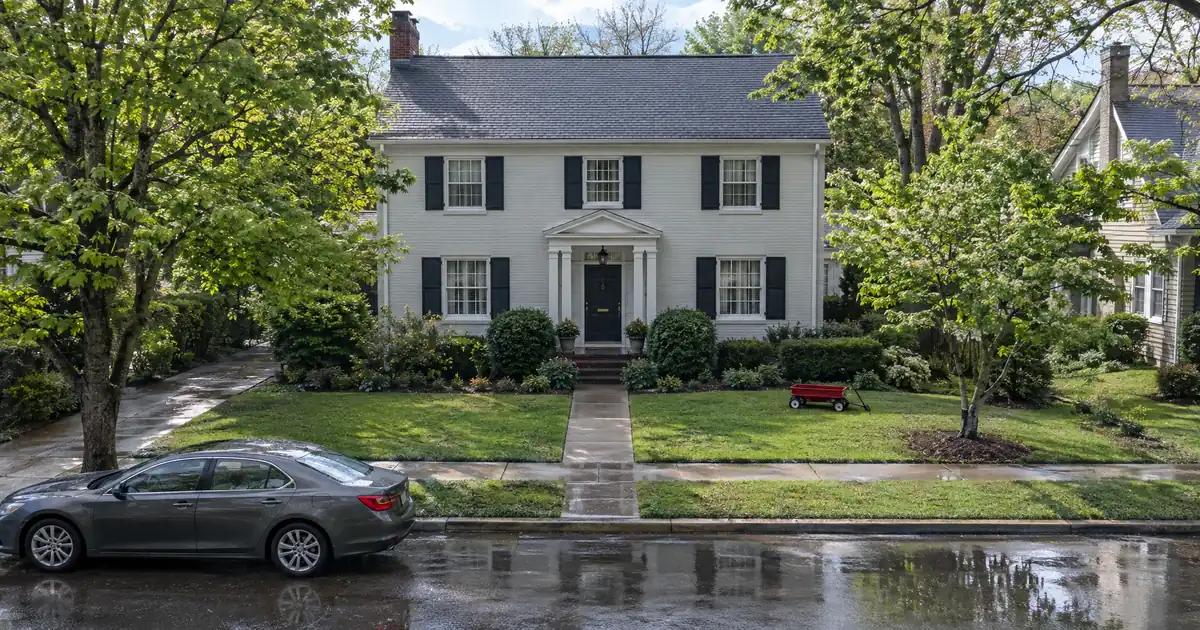
The Quick Read: When a rental has few comparable sales, the appraiser widens the search by time, distance, or similarity, adjusts each comparable, and explains every choice in the report. That process sets two separate numbers: the property’s value and its market rent.
- The value opinion drives loan-to-value (LTV, the loan size as a percentage of value).
- The rent opinion drives the coverage ratio (DSCR, monthly rent divided by the full monthly housing payment).
- A thin comp set can hurt either number, and each needs different evidence.
- Win or lose, run both numbers before you push back on a result.
Most investors think of an appraisal as one number. On a DSCR file it is two, and a unique property stresses both. This guide walks through how the appraiser builds each opinion, what the underwriter does with it, and where the usual rules break.
DSCR Calculator
Run the numbers in your market
Rate source: Freddie Mac 30-yr average via FRED® — Federal Reserve Bank of St. Louis · effective Oct 15, 2026
Prefilled with starting assumptions — enter your own rent or nightly figures, taxes, insurance, and HOA for a more accurate picture.
Program parameters update from Lendmire’s centralized guideline source. Taxes and insurance are editable estimates.
As of Oct 15, 2026 · General Freddie Mac market benchmark, not a Lendmire loan offer. Rent, nightly rate, occupancy, taxes, and insurance are editable estimates. Short-term rental figures are estimates only and vary significantly by season, property type, management approach, and local short-term-rental rules — confirm local regulations before relying on them. Qualifying income for short-term rentals varies by program — some use appraisal market rent, others use documented STR history or projections — and is confirmed in underwriting. Not a Loan Estimate, approval, or commitment to lend. Program availability and eligibility are subject to lender guidelines, credit approval, property review, and underwriting.
Key Terms Defined
Comparable (“comp”): A recently sold or leased property similar enough to the subject that its price or rent says something about the subject’s value.
Adjustment: A dollar change the appraiser makes to a comp to account for a difference, such as size, age, or a feature the subject lacks.
Market rent: The rent the appraiser believes the property would command on the open market, regardless of what any current lease says.
Rent schedule: The appraisal form that compares the subject to similar rentals and reconciles to one market rent figure.
Reconciliation: The final step where the appraiser weighs the evidence and states a single conclusion.
PITIA: Principal, interest, taxes, insurance, and association dues where they apply. This is the monthly obligation the rent must cover.
What Makes a Rental “Unique” to an Appraiser?
A rental is unique when the market has few close matches. The cause can be location, design, size, or a feature most buyers don’t expect. Appraisers describe the problem as a lack of recent, nearby, similar sales.
Common triggers include:
| Property type | Why comps run thin |
|---|---|
| Rural cabin or acreage | Few sales, long distances between them |
| Custom or high-end home | Features and size rarely repeat |
| Atypical design | Layout or style differs from the neighborhood |
| Mixed-use building | Residential and commercial traits blend |
| New or renovated build | Value rests on plans, finished quality, or limited sales |
Appraisal trade writers add that thin sales can also come from high owner retention, where homes simply rarely trade. Mueller Reports notes that rural subjects produce the oldest, most distant comps and the largest adjustments. If you own a cabin-type property, Lendmire’s piece How DSCR Appraisal Comps Work for a Rural Cabin Short-Term Rental goes deeper on that case.
Here is the part investors miss. Lenders care about uniqueness because it limits resale. If the property is hard to price, it is hard to sell, and the loan is secured by that sale value.
How the Appraiser Builds Value When Comps Are Scarce
The appraiser follows a sequence. Each step loosens one constraint at a time and documents why.
1. Start tight. Look for recent, nearby, similar sales.
2. Widen deliberately. If none exist, relax time, distance, or similarity.
3. Adjust each comp. Account for differences in size, age, condition, and features.
4. Weigh the approaches. The sales comparison approach leads, and other approaches check it.
5. Reconcile. State one value and explain how the evidence supports it.
McKissock, an appraiser education provider, reports that agency guidance sets no fixed distance limit. What matters is whether the comps reflect the same market influences as the subject. It also describes three ways to loosen the search, often called the three D’s:
- Dated: older sales from the same neighborhood.
- Distant: similar sales from competing neighborhoods.
- Dissimilar: sales with a different size, age, or feature set.
Each choice carries a tradeoff. Older sales need a time adjustment tied to how the market moved. Distant sales may reflect different buyers. Dissimilar sales need larger adjustments. The appraiser picks the path that best reflects how buyers in that market actually behave.
A second McKissock piece says that when sales are sparse, appraisers may also use active listings or pending sales. They must apply market-condition adjustments and explain each choice. That explanation is not optional, and it is what the underwriter reads.
Heavy adjustments weaken reliability. One practicing appraiser, Tampa Valuation, warns that sales that are too old or too far away, or adjusted too heavily, make the conclusion less dependable. A technique called paired-sales analysis helps here. The appraiser compares two homes that differ mainly by one feature to isolate what the market pays for it.
Where the Cost Approach Fits
The cost approach estimates what it would cost to rebuild the property, less depreciation, plus land value. McKissock’s cost-approach article says it is most useful for unique homes where comps are hard to find or would need extensive adjustments. It works as an independent check. It rarely works as the sole basis.
That matters because cost is not value. A custom feature may cost real money to build and still add little in the market. The appraiser needs buyer behavior to support the number.
How Market Rent Gets Set With Few Rental Comps
The rent side runs on the same logic as the value side, with a different form. For one-unit investment properties, appraisers typically use the single-family comparable rent schedule, known as Form 1007. Two-to-four-unit properties use a related form, Form 1025. These are agency forms that DSCR lenders borrow. DSCR loans themselves are not agency products, so each program sets its own rules.
Fannie Mae’s blank Form 1007 is a three-comparable grid. It tells the appraiser to adjust only for significant differences. It also requires comments on the range of rents, vacancy, trends, and support for adjustments. It ends with a final reconciliation of market rent. Rent concessions, such as a free month, are adjusted to the market rather than to the subject.
RealVals, an appraisal education site, lists what the form compares: location and view, design and appeal, age and condition, room count and living area, plus utilities and furniture.
Now the hard part. A cabin, a custom build, or a mixed-use building may have almost no true rental comps. The appraiser then uses the closest long-term rentals available, adjusts for the differences that matter, and explains the gap. A big rent gap cannot simply be adjusted away. The form’s own instruction to adjust only for significant differences limits how far the appraiser can stretch.
What the Underwriter Does With It
The rent opinion becomes the income side of the coverage test. Underwriting compares it to the full PITIA. Across the wholesale network Lendmire places files with, many programs qualify primarily on property-level rental income covering the payment, subject to lender guidelines. Where a signed lease and the appraised market rent differ, programs treat the two differently, so ask which figure your program uses before you model the deal.
For the leverage side, most purchase files land at 75% to 80% LTV on an investment property, subject to lender guidelines. Cash-out refinances top out around 75% LTV. Coverage of 1.00 is where select programs start, and stronger ratios open better terms. A separate select-lender path goes below 1.00 with leverage and terms adjusted.
One caution. Clearing 1.00 is not the same as positive cash flow. Repairs, vacancy, management, utilities, and capital spending all sit outside the calculation. A thin-comp rent opinion that barely clears leaves no room for those costs. For the full framework, see the complete DSCR loans guide.
Which Number Missed: Value or Rent?
A low result is not one problem. Diagnose it first, because the fix differs.
| If this missed | Effect on the loan | Evidence that helps |
|---|---|---|
| Value | Lower LTV room, smaller loan | Better comps, supported adjustments, paired-sales data |
| Rent | Lower coverage ratio | Leased comps, rental listings, support for any feature premium |
| Both | Smaller loan and tighter coverage | A full evidence package for each |
A low value shrinks the loan, so you fund the gap with cash. A rent opinion below your projection lowers the coverage ratio, and a deal that cleared on paper may not clear after the appraisal.
Here is the trade-off most people skip. Winning a value argument can raise the loan size, and a larger loan raises the payment, which lowers coverage. Run both numbers before you challenge anything. This one is a genuine judgment call. A higher value helps leverage, but if rent is the tighter constraint, the better move may be to fight the rent opinion instead.
Prepare Before the Appraisal Is Ordered
The lender or its management company orders the appraiser, not you. That independence is deliberate, so your leverage comes from preparation, not contact.
A practical package for a unique property:
- Your own comps: recent sales and leases, with notes on why each is relevant.
- Feature evidence: documentation of what the unusual feature is and what it adds, including any paired-sales evidence you can gather.
- Rent support: current leases, rental listings, or rent history for similar properties.
- A written summary: a short, factual note on what makes the property different.
- A plan B: an agreed fallback before the order goes out, such as a lower loan amount or more cash to close.
Send the package through your broker or lender. Never contact the appraiser directly.
An observation from broker-side experience: files on odd properties stumble when the borrower assumes the appraiser will see the value the borrower sees. The appraiser can only credit what the market evidence supports. Give them evidence and they can use it. Give them nothing and they widen the search on their own.
DSCR vs. conventional financing
There are two common ways to finance an investment property, and they qualify you differently — here’s how investors weigh them.
Why investors choose it
- Qualifies on the property’s rental income — no personal tax returns, W-2s, or pay stubs needed to document income.
- No personal debt-to-income ceiling to clear, so existing mortgages and obligations don’t cap your borrowing the same way.
- Can be closed in an LLC, keeping the property inside a business entity.
- Built for scaling — not held to the limit on number of financed properties that conventional financing applies.
- Underwriting centers on the deal: generally qualifies when the rent covers the payment, a 1.00x coverage ratio being a common baseline (confirmed in underwriting).
- Designed specifically for investment property, including long-term and, where the program allows, short-term rentals.
Where it’s strong
- Often the lowest ongoing financing cost for a buyer who fully qualifies on personal income — a fit for a first property or a cost-first purchase.
Trade-offs for investors
- Requires full personal income documentation and must fit within a debt-to-income limit — salary, existing debts, and other mortgages all count.
- Typically held in your personal name rather than a business entity.
- Caps how many financed properties you can carry, which can become a ceiling as a portfolio grows.
- Evaluates you as a borrower as much as the property, which usually means more paperwork.
How investors usually choose: a first or single property often optimizes for the lowest financing cost; portfolio builders often optimize for leverage, vesting in an LLC, and scaling past conventional caps. The right answer depends on your goals, the property, and current guidelines — both paths run through select lenders in Lendmire’s wholesale network, with eligibility and terms confirmed in underwriting.
If the Number Comes In Low
Start by reading the report, not reacting to the number. Check which comps were used, how large the adjustments were, and whether the narrative supports each one.
If the report holds factual errors or overlooked comps, request a review through your lender or broker. Valid evidence includes closed sales the appraiser missed, corrections to property facts, and market data supporting an adjustment. Opinions and asking prices do not count.
Some programs also require a second appraisal above a certain loan size. That is a lender rule, not a law, and the threshold varies by program. Reserves and loan size interact here. Reserves commonly run around 6 months of PITIA, and loans above $1,500,000 typically step up to about 9 months. Standard programs reach up to $3,000,000, with those above $2,500,000 generally held to 30-year fixed structures.
Edge Cases Where the General Rule Breaks
Luxury or high-value homes. Appraisers tend to search wider and make larger adjustments. Expect a longer lookback for sales. The report should explain why.
Rural properties. The oldest and most distant comps appear here, with the largest adjustments. Investors often underestimate how much this swings the value opinion.
Construction or renovation. An “as completed” value can rest on plans and specifications, which makes the appraiser’s support for the finished product central.
Short-term rentals. The rent schedule is built on long-term lease comps. Fannie Mae’s appraiser update addresses short-term rentals and Form 1007 directly, which signals the form is a poor fit. Short-term rental programs in the network typically document income differently, using hosting history. Typical guidance includes purchase leverage up to 75% LTV, refinance around 70%, and cash-out at 70% on short-term-rental collateral. Expect a 640+ score and about 12 months of hosting history. Coverage floors start at 1.00 on both purchases and refinances. For condos, see Lendmire’s guide How to Vet HOA Rental Rules Before Your First DSCR Condo STR Appraisal.
Mixed-use and special-use. These rarely have direct comps, so appraisers lean on income and cost approaches. That often pushes the deal toward commercial financing.
Property types the network does not offer. Manufactured homes (single- and double-wide), log homes, and barndominiums are not offered on DSCR programs in the network. A strong appraisal does not change that.
Common Misconceptions
“Unique means premium.” A feature that cost a lot to build does not automatically add that much value. The appraiser needs market support.
“No comps means no appraisal.” Appraisers widen the search and explain their choices. Cade Appraisals describes the same approach for custom homes.
“The cost approach sets the value.” It is mostly a cross-check.
“DSCR appraisals follow agency rules.” DSCR loans are non-agency. They borrow the forms and methods, but lenders set their own comp age and radius limits. Agency practice generally expects closed sales within about a year, with explanations for older ones. That is contrast only, not a DSCR rule.
“A big rent gap can be adjusted away.” The form limits adjustments to significant differences.
The Decision in Practice
Picture an investor eyeing a custom-built rental with a feature no neighbor has. Before making an offer, that investor asks the broker which comps will likely be used. They model the deal at a rent below their projection and check whether it still clears the coverage the program needs. They set a plan B in advance. If the value then comes in light, the decision is already made.
Credit and leverage still matter alongside this. A 620 score is a floor in parts of the network, most programs want around 660, and 700+ unlocks the strongest leverage tiers. A larger down payment lowers the payment and can lift coverage. It never erases leverage caps, credit floors, reserve rules, or property eligibility. The strongest files have enough equity and enough rental coverage.
Frequently Asked Questions
Can an appraiser value a property with no true comparables?
Yes. The appraiser widens the search by time, distance, or similarity, adjusts each comp, and explains the choices. Weaker comps and larger adjustments reduce reliability, so the report’s narrative matters as much as the number.
Does the cost approach set my value?
No. It is mostly an independent check on the sales comparison. It tends to matter more for unique homes, but a cost-only conclusion is a poor fit for most lending decisions.
What happens if the appraised rent is lower than my projection?
Your coverage ratio drops. A deal that cleared on paper may no longer clear, so you may need more cash down, a lower loan amount, or a different program. Sub-1.00 coverage is available through select lenders in the network, with leverage and terms adjusted.
Can I pick the appraiser or talk to them?
No. The lender or its management company orders the appraisal. Send any challenge, with evidence, through your broker or lender.
Will winning a higher value always help?
Not always. A higher value can support a larger loan, but a larger loan lowers coverage. Check both numbers first.
If you are buying or refinancing a rental property and want to see how the numbers work, Lendmire can help you compare DSCR loan options based on the property income, credit profile, leverage, and investor goals. Tax treatment varies; consult a qualified professional.
A rental nobody can easily compare is really a test of how well you can document it, and the investors who prepare that evidence before the order tend to see fewer surprises.
About Lendmire
As a non-QM mortgage broker (NMLS# 2371349), Lendmire facilitates DSCR investor loans across 41 markets, including Washington, D.C. DSCR eligibility is generally reviewed around property-level rental income instead of personal income documentation, subject to lender guidelines, serving LLC-structured portfolios and self-employed borrowers who don’t fit conventional boxes. A two-time Scotsman Guide Top Mortgage Workplace (2025, 2026).
Get Started
Ready to find the right loan for you?
In about 30 seconds you can review financing options available for your investment property. No commitment required.
Informational only. Not a Loan Estimate, approval, or commitment to lend. Program availability and eligibility are subject to lender guidelines, credit approval, property review, and underwriting.
References
1. www2.muellerreports.com: Appraising a Subject with No Comparable Sales
2. McKissock – Credible Appraisal When Comps Are Limited
4. McKissock – The Cost Approach
6. RealVals
7. Fannie Mae – Appraiser Update
This article is part of Lendmire’s DSCR loan program — full qualification details, guidelines, and scenarios live on the program page.
Related reading: How to Choose a DSCR Loan or Bank Commercial Loan on a Rental · How to Work Through a Low DSCR Appraisal as a W-2 Investor Scaling Up · Can a Cash Buyer Get a Second Appraisal Before a DSCR Cash-Out?
Brandon Miller
Founder & CEO, Mortgage Loan Originator, Lendmire LLC
- Mortgage Loan Originator · NMLS# 1129696 · Verify on NMLS Consumer Access
- North Carolina Real Estate Broker · License# 343312 · Verify on NCREC
- North Carolina Insurance Producer · License# 19053198 · Property, Casualty, Life, Health · Verify on NAIC SBS
- Lendmire LLC · Firm NMLS# 2371349 · Verify firm licensure
Legal disclosures. Lendmire (NMLS# 2371349) is a state-licensed mortgage brokerage that arranges financing through wholesale lender relationships. Lendmire is not a direct lender, depository institution, or registered financial advisor. The discussion above is general informational content about real estate financing — it is not financial, legal, or tax advice, and readers should consult licensed professionals for guidance on their individual circumstances. Loan inquiries are subject to lender underwriting; this article does not represent a commitment to lend. Loan terms, rates, and qualification standards vary by borrower, property, and state, and are subject to change at any time. Equal Housing Opportunity. NMLS Consumer Access: nmlsconsumeraccess.org.