
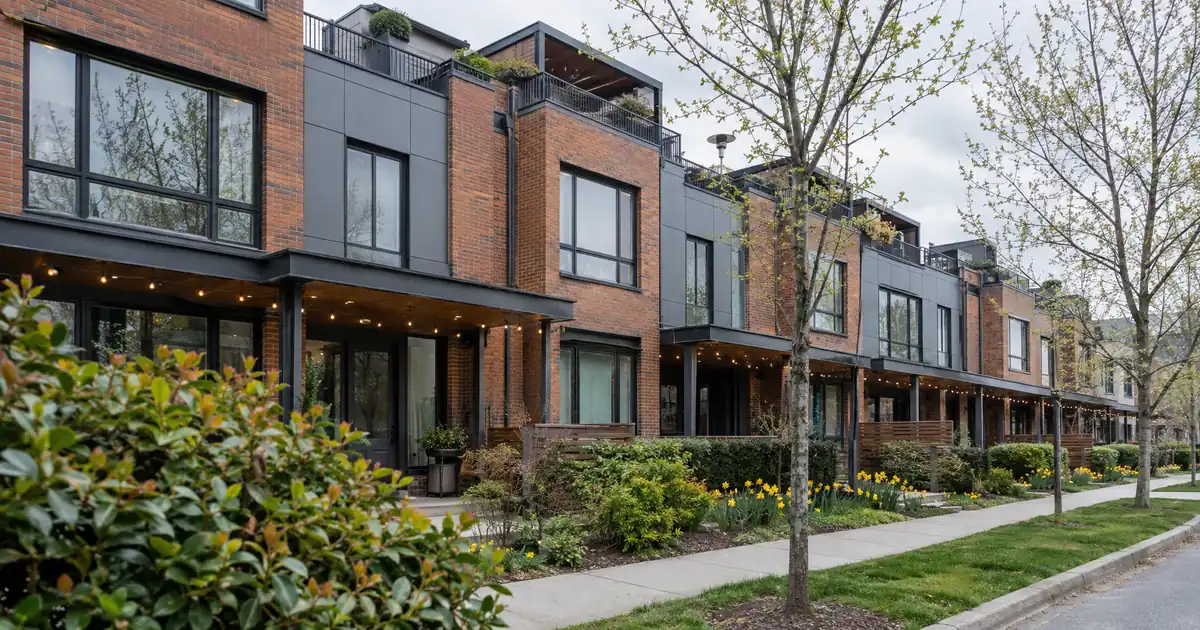
The Quick Read: Read the building’s recorded documents before you order a short-term rental appraisal, because the HOA decides whether the income is legal, and the appraiser does not. Two separate gates apply: the HOA must allow the use, and the lender must accept the income. A clean appraisal cannot open the first gate, so the documents come first, then the appraisal, then the loan file.
- Pull the declaration, the rules and regulations, and about a year of meeting minutes before you rely on any listing claim.
- Search for minimum stays, rental caps, owner-occupancy waiting periods, and board approval requirements.
- Get the management company’s answer in writing and match it to the recorded declaration.
- Check city rules separately, since a city permit never overrides the HOA.
- Know the network’s STR basics: purchases to 75% LTV, refinances around 70%, a 640+ score, and a 1.00 coverage floor on both, subject to lender guidelines.
Here is the order of operations most first-time condo buyers get backwards. They find a unit, see strong nightly-rate comps, order an appraisal, and only then ask whether the building allows Airbnb. Flip that sequence. The appraisal costs money. The HOA check costs a few hours of reading.
Short-Term Rental Calculator
Run the STR numbers in your market
Rate source: Freddie Mac 30-yr average via FRED® — Federal Reserve Bank of St. Louis · effective Oct 15, 2026
Prefilled with starting assumptions — enter your nightly rate, occupancy, taxes, and insurance for a more accurate picture.
Short-term rental income is documented with a 12-month history or a market data report. Program parameters update from Lendmire’s centralized guideline source.
As of Oct 15, 2026 · General Freddie Mac market benchmark, not a Lendmire loan offer. Nightly rate, occupancy, taxes, and insurance are editable estimates. Qualifying income for short-term rentals varies by program — some use appraisal market rent, others use documented STR history or projections — and is confirmed in underwriting. Not a Loan Estimate, approval, or commitment to lend. Program availability and eligibility are subject to lender guidelines, credit approval, property review, and underwriting.
Lendmire is a mortgage broker that arranges DSCR investor loans through select lenders in its wholesale network, across 40 states plus Washington, D.C. The brokerage sees this problem constantly: the numbers look great on paper, and the building’s rules quietly erase them. Short-term rental rules can vary by city, county, HOA, and property type, so investors should confirm local rules before relying on projected rental income.
Key Terms Defined
CC&Rs (declaration): The recorded legal document that sets the rules for a condo or community, including rental limits.
Rules and regulations: Additional rules the HOA board adopts, which the board can often change without an owner vote.
DSCR (debt service coverage ratio): Monthly rent divided by the full monthly housing payment: principal, interest, taxes, insurance, and HOA dues.
PITIA: That full payment: principal, interest, taxes, insurance, and association dues.
Form 1007: The appraisal form that documents monthly market rent for a property.
Estoppel or questionnaire: A written statement from the HOA or its management company confirming facts about the unit and the building, including rental rules.
Non-warrantable condo: A condo project that falls outside agency loan guidelines, often because of investor concentration or litigation. It is a different issue from whether short-term rentals are allowed.
Why Does the HOA Gate Come Before the Appraisal?
The HOA gate comes first because it decides whether short-term rental income can legally exist. The appraiser values the real property. The lender decides how income counts. Neither one can grant you permission the recorded documents withhold.
McKissock, an appraiser-education provider, explains that Form 1007 documents monthly rent rather than nightly rent or business income, and that appraisers value the real property while the lender decides how income is counted. So an appraisal packed with strong STR numbers proves nothing about legality.
City rules and HOA rules also stack. AirROI, a short-term rental data platform, notes that CC&Rs are private contracts that can ban or limit short-term rentals no matter what the city allows. A city permit does not override the HOA. HOA approval does not replace a permit. You need both.
One more point for first-timers. DSCR loans qualify primarily on property-level rental income covering the payment, subject to lender guidelines. That is the whole appeal. But the income has to be lawful at that address, or the number you are underwriting is fiction.
Which Documents Do You Need, and Where Do They Live?
Collect the declaration, the current rules, the budget, the reserve study, about a year of minutes, the master insurance page, and any litigation notices. Rental restrictions hide in three places, and you should check all of them.
Governingdocs.dev says restrictions sit in the CC&Rs (the most binding, changed only by owner vote), the board’s rules and regulations (which the board can amend), and recent meeting minutes (which reveal proposed changes). Check all three during your contingency period.
| Document | What to look for | Red flag |
|---|---|---|
| Declaration | Rental definitions, minimum terms, caps | Ban or 6+ month minimum |
| Rules and regulations | Registration, guest limits, fines | Recent tightening |
| Meeting minutes | Pending amendments, complaints about rentals | Board discussing a ban |
| Budget and reserve study | Dues level, reserve health | Special assessment talk |
| Master insurance page | Coverage gaps | Lapsed or thin coverage |
Homestimulus, a consumer-education site, adds two items worth requesting: the delinquency rate and the amendment procedure, including what vote it takes to change the documents. Dues feed straight into your payment, so a weak budget hits your coverage ratio directly.
Who do you ask? Start with the listing agent, then the management company. The documents are often unavailable until an offer is accepted. That is a reason to write your contract so it lets you review them before your deposit is at risk.
How Do You Read the Rental Clauses?
Search the declaration for the words rent, lease, transient, and occupancy, then map each clause to what it does to nightly income. The minimum stay is the clause that matters most.
| Clause type | What it means for STR income |
|---|---|
| Outright ban | No STR income. Walk or underwrite long-term rent |
| Minimum lease term of 6+ months | Nightly rentals are out in practice |
| Annual rental cap | Check whether the cap is already full |
| Board approval per rental | Approval can be withheld or delayed |
| Owner-occupancy waiting period | You may not rent for a set stretch after purchase |
| Guest registration or occupancy caps | Allowed, but adds friction and fines |
AirROI catalogs these same types, including minimum terms of 30, 60, 90, or 180-plus days. A minimum of six months or more removes nightly rentals from the table. One investor on a BiggerPockets forum thread described cancelling five offers on Las Vegas condos because the CC&Rs required rentals of at least six months. Anecdotal, but it shows how common the trap is.
Watch the wording. “Leasing” and “occupancy” are not always the same thing in a declaration, and “transient” may or may not be defined. If a clause is ambiguous, do not interpret it yourself. BiggerPockets recommends having an agent or attorney review the CC&Rs, and notes that many HOAs limit or ban rentals under 30 days.
Silence is not permission either. A BiggerPockets thread makes the point that a declaration that never mentions short-term rentals does not mean the city allows them. Boards can add rules, and zoning and permits are a separate check.
Can the Rules Change After You Buy?
Yes. The amendment threshold tells you how exposed you are, and the minutes show whether a change is coming. AirROI reports that CC&R amendments typically need a 67 to 75 percent owner supermajority, so a determined board with owner support can add a ban later.
Read the last year of minutes for words like rental, Airbnb, short-term, or amendment. Complaints about rentals, a committee on the topic, or a scheduled owner vote are the warning signs. A building that has already tightened rules once will often do it again.
Who a new rule binds depends on the state. In Florida, a law firm summary explains that a condo amendment changing rental terms applies only to consenting owners and later buyers, while HOA amendments on rentals shorter than six months, or more than three times a year, can bind all owners. For you as a buyer, the key question is when the restriction was recorded. An amendment recorded before your purchase binds you.
California works differently. An attorney summary of Civil Code section 4741 says associations may prohibit rentals of 30 days or less, while longer minimums and forced owner-occupancy periods are limited. That is attorney-marketing material, so have counsel verify the statute for your unit.
How Do You Get the Answer in Writing?
Send the management company a written questionnaire and keep the reply. A verbal “yes, people Airbnb here” is worth nothing if the declaration says otherwise.
Condo questionnaires typically ask whether short-term rentals exist in the building, what the minimum rental period is, and whether owners must share rental profits or join a rental program. Use the lender’s own form when there is one. Your request should cover:
1. Whether short-term rentals (stays under 30 days) are permitted for this unit.
2. The minimum rental period, if any.
3. Any rental cap and whether it is currently full.
4. Any owner-occupancy period before renting.
5. Any pending or proposed amendments.
6. Any mandatory rental pool or hotel-style program.
7. Unpaid dues, fines, or special assessments on the unit.
Then compare the written answer to the recorded declaration. If they conflict, the recorded document usually controls, and you should treat the conflict as a stop sign until counsel says otherwise. Governingdocs.dev advises checking whether a restriction sits in the recorded declaration and was properly adopted, since a board resolution may not hold up. It also says unclear or unrecorded rules may be unenforceable, but you should not bet a purchase on that.
Fines matter for the loan too. AirROI says fines can become property liens that block a sale or refinance. A building that fines STR violators daily is a building where a mistake gets expensive.
How Do the Appraisal and the Loan File Fit In?
Once the HOA clears the use, the appraiser values the real property and the lender builds the income case separately. The appraisal is evidence about value and monthly market rent, not a ruling on STR legality or STR earnings.
Agency guidance is useful as contrast here. DSCR loans are not agency products, but Fannie Mae’s appraiser update addresses Form 1007 and short-term rentals, and a reproduction of that text says the form calls for monthly market rent from comps leased monthly, that it was not designed for STRs, and that multiplying a nightly rate by 30 would be incorrect. It also leaves the income classification to the lender. That is why non-QM files often rely on a separate STR analysis or platform data instead of the 1007 alone.
HousingWire makes a related point: many variables drive STR income, and none can be developed on Form 1007. It suggests lenders state up front that STR income will be analyzed in a narrative addendum.
Across the wholesale network, STR files follow a recognizable pattern. Purchases go up to 75% LTV, and refinances sit around 70% on short-term-rental collateral, with cash-out also at 70%. Expect a 640+ credit score and about 12 months of hosting history on a refinance. Coverage starts at 1.00 on both purchases and refinances, and stronger ratios open better terms. All of this is subject to lender guidelines and credit approval.
A first purchase has no hosting record, so the file leans on projections from the appraiser’s STR analysis or platform data. Many experienced investors also run a second case on supported long-term rent. If the HOA bans nightly stays, that second case is your whole file.
Remember what the ratio does and does not measure. DSCR compares rent to the full housing payment, HOA dues included. Clearing 1.00 does not mean positive cash flow, because repairs, vacancy, management, utilities, and capex sit outside the calculation.
DSCR vs. conventional financing
There are two common ways to finance an investment property, and they qualify you differently — here’s how investors weigh them.
Why investors choose it
- Qualifies on the property’s rental income — no personal tax returns, W-2s, or pay stubs needed to document income.
- No personal debt-to-income ceiling to clear, so existing mortgages and obligations don’t cap your borrowing the same way.
- Can be closed in an LLC, keeping the property inside a business entity.
- Built for scaling — not held to the limit on number of financed properties that conventional financing applies.
- Underwriting centers on the deal: generally qualifies when the rent covers the payment, a 1.00x coverage ratio being a common baseline (confirmed in underwriting).
- Designed specifically for investment property, including long-term and, where the program allows, short-term rentals.
Where it’s strong
- Often the lowest ongoing financing cost for a buyer who fully qualifies on personal income — a fit for a first property or a cost-first purchase.
Trade-offs for investors
- Requires full personal income documentation and must fit within a debt-to-income limit — salary, existing debts, and other mortgages all count.
- Typically held in your personal name rather than a business entity.
- Caps how many financed properties you can carry, which can become a ceiling as a portfolio grows.
- Evaluates you as a borrower as much as the property, which usually means more paperwork.
How investors usually choose: a first or single property often optimizes for the lowest financing cost; portfolio builders often optimize for leverage, vesting in an LLC, and scaling past conventional caps. The right answer depends on your goals, the property, and current guidelines — both paths run through select lenders in Lendmire’s wholesale network, with eligibility and terms confirmed in underwriting.
Where the General Rule Breaks
The “check the HOA” rule has exceptions, and these are the ones that trip up first-timers.
Condotels and rental pools. Mandatory rental programs or hotel-style operations are a different category from an ordinary condo. If participation is mandatory, the program’s distribution statements may become the income documentation, and buying an “opt-out” unit can violate the declaration.
Non-warrantable is not the same as STR-restricted. A building can be non-warrantable (too many investors, pending litigation) and still work for a DSCR lender, because the lender may not care about the agency test. The HOA’s STR permission is the additional gate. Investor-heavy buildings whose documents permit short stays can work. Litigation and deed restrictions are separate problems you review on their own.
Cap already full. A building may allow rentals in theory while the cap is full and a waitlist applies. That blocks you as completely as a ban.
Ineligible property types. Manufactured homes, log homes, and barndominiums are not offered through the network’s DSCR programs, so they never reach the HOA question at all.
Conflicting documents. When the declaration, the rules, and the management company disagree, treat it as unresolved. Get counsel’s read before the appraisal is ordered.
What Does the Decision Look Like?
Sort every finding into go, conditional, or no-go before you spend appraisal money.
| Finding | Verdict | Next move |
|---|---|---|
| Written confirmation, no minimum stay, no cap issue | Go | Order appraisal and STR analysis |
| Board approval required, rules pending | Conditional | Get approval terms in writing first |
| Ambiguous or conflicting clause | Conditional | Attorney review before appraisal |
| 6+ month minimum or outright ban | No-go for STR | Walk, or underwrite long-term rent |
| Mandatory rental pool | Conditional | Confirm lender acceptance first |
Picture an investor eyeing a condo in a building whose declaration defines “rental” but never defines “transient.” The management company says short stays are fine. The minutes show an owner asking the board to clarify. That is a conditional finding, not a go. The sensible move is a written reply from management, an attorney’s read of the clause, and a contract contingency that lets the investor exit if the board clarifies against STRs.
If STR is not allowed, you have two honest fallbacks. You can walk away. Or you can underwrite on supported long-term rent, which may still produce workable coverage at the network’s standard purchase leverage of roughly 75% to 80% LTV on an investment property, subject to lender guidelines. Coverage below the standard 1.00 floor is an exception path, available only through select lenders in the network, with leverage and terms adjusted. Just remember a restricted building also narrows your resale buyer pool, so factor in the exit.
For the timeline, think in sequence rather than days. Request documents at or before contract. Finish the HOA review and written confirmation next. Order the appraisal and STR analysis only after that. Lender questionnaires cross-check your findings last. Skipping ahead risks paying for an appraisal on a unit you cannot legally run as an STR.
Lendmire’s complete DSCR loans guide covers the full qualification picture. Tax treatment can depend on how the funds are used and how the property is held; investors should keep clear records and speak with a qualified tax professional before relying on any deduction.
If you are buying or refinancing a rental property and want to see how the numbers work, Lendmire can help you compare DSCR loan options based on the property income, credit profile, leverage, and investor goals. Reach the team at 828-256-2183 or request a quote through the site.
Frequently Asked Questions
Does a city STR permit override the HOA?
No. The two layers are independent. The city decides whether the use is lawful under local rules, and the HOA decides under its private covenants. You need both, and a permit in hand does not cure a ban in the CC&Rs.
Can the HOA change the rules after I buy?
Often, yes. Amendments to the CC&Rs typically need an owner supermajority, and the board can change its own rules and regulations without a vote. State law decides who a new rule binds, so read the minutes for pending changes and ask counsel how your state treats amendments adopted after purchase.
Does a favorable appraisal prove the building allows short-term rentals?
No. The appraiser values the real property and documents monthly market rent. The appraisal says nothing about whether the declaration permits nightly stays. Confirm legality from the recorded documents and written HOA confirmation first.
Does a non-warrantable building rule out a DSCR loan?
Not automatically. Non-warrantable status usually relates to agency loan tests such as investor concentration or litigation, and a DSCR lender in the network may review the project differently. Lender guidelines vary, and the HOA’s STR permission remains a separate gate.
What if the documents are silent on short-term rentals?
Silence is not a green light. The board can add rules, local ordinances still apply, and the management company may interpret the documents differently than you do. Get written confirmation and have an attorney review any ambiguity before you spend on an appraisal.
Investors focused on short-term rentals can review DSCR loans for Airbnb and short-term rentals.
About Lendmire
Lendmire (NMLS# 2371349) is a mortgage brokerage built around DSCR investor lending, with programs available in 41 markets, including Washington, D.C. DSCR lenders commonly evaluate rental-income coverage instead of personal income paperwork — a practical fit for LLC-owned and multi-property investors. Terms vary by lender, property, leverage, and program. Scotsman Guide named Lendmire a Top Mortgage Workplace in both 2025 and 2026.
Get Started
Ready to find the right loan for you?
In about 30 seconds you can review financing options available for your investment property. No commitment required.
Informational only. Not a Loan Estimate, approval, or commitment to lend. Program availability and eligibility are subject to lender guidelines, credit approval, property review, and underwriting.
References
1. McKissock: Form 1007 and short-term rental appraisals
2. AirROI: HOA restrictions glossary
3. Governingdocs.dev: HOA rental restrictions guide
4. Homestimulus
6. BiggerPockets: Vet the HOA of a vacation rental
8. Hamilton Mikes – Florida condo/HOA rental restrictions
9. David Watkins – California HOA rental rules
11. Fannie Mae’s appraiser update
12. Fannie Mae update reproduction (Nevada Real Estate Division)
13. HousingWire: Short-term rentals and the appraisal playbook
This article is part of Lendmire’s short-term rental loan program — full qualification details, guidelines, and scenarios live on the program page.
Related reading: Does a Rural Appraisal Hurt a DSCR Loan? · How an STR DSCR Loan Treats a Management Company’s Cut · Can You Get a DSCR Loan on a Condo?
Brandon Miller
Founder & CEO, Mortgage Loan Originator, Lendmire LLC
- Mortgage Loan Originator · NMLS# 1129696 · Verify on NMLS Consumer Access
- North Carolina Real Estate Broker · License# 343312 · Verify on NCREC
- North Carolina Insurance Producer · License# 19053198 · Property, Casualty, Life, Health · Verify on NAIC SBS
- Lendmire LLC · Firm NMLS# 2371349 · Verify firm licensure
Compliance and disclosures. Lendmire (NMLS# 2371349) is a licensed mortgage broker and is not a direct lender, depository institution, financial advisor, or tax professional. Content in this article is general market analysis and educational information — not financial, legal, or tax advice for any specific situation. Lendmire does not guarantee loan approval; every transaction is subject to underwriting by the funding lender. Mortgage pricing and loan program guidelines are subject to change at any time without notice and vary by borrower characteristics, property type, and state regulations. Lendmire complies with Equal Housing Opportunity. Licensure verification: NMLS Consumer Access.