
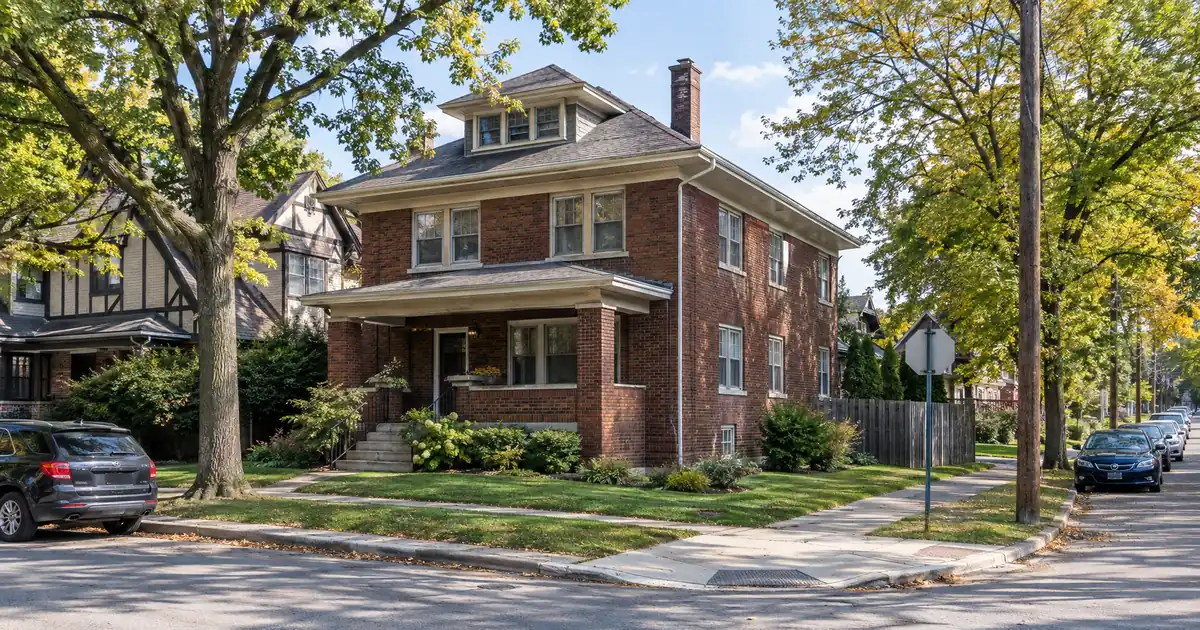
A three-bedroom frame house in Broadway-Slavic Village hits the DSCR math like this. Say the investor bought it cheap, renovated it, and placed a tenant. Assume (as a modeled input, not a market fact) that it now appraises near $100,000 and rents for $1,000, which sits inside the $850–$1,100 band an investor guide for Slavic Village gives for this house type. The refinance caps at 75% of appraised value. The rent is then measured against the full monthly obligation: principal, interest, taxes, and insurance. Including taxes and insurance, that lands near 1.4x, which clears the standard 1.00 benchmark with room to spare.
The coverage was never the hard part on a deal like this. The appraisal was, and so was the timing.
DSCR Cash-Out Calculator
Run the cash-out numbers in Cleveland, OH
Rate source: Freddie Mac 30-yr average via FRED® — Federal Reserve Bank of St. Louis · effective Sep 24, 2026
Prefilled with starting assumptions — enter your property’s value, balance, taxes, and insurance for a more accurate picture.
Program parameters update from Lendmire’s centralized guideline source. Taxes and insurance are editable estimates.
As of Sep 24, 2026 · General Freddie Mac market benchmark, not a Lendmire loan offer. Property value, balance, taxes, and insurance are editable estimates. Maximum loan-to-value varies by lender, program, property type, and seasoning. Not a Loan Estimate, approval, or commitment to lend. Program availability and eligibility are subject to lender guidelines, credit approval, property review, and underwriting.
TL;DR: A cash-out refinance on a Cleveland, Ohio rental is underwritten primarily on the property’s rental income measured against its full monthly obligation, so the appraised value of the renovated house sets the ceiling on proceeds more than the borrower’s traditional personal-income documentation do.
- East Side stock offers the strongest rent-to-value ratios, but appraisal comps are the binding constraint.
- Cash-out caps at 75% LTV, with roughly 6 months of ownership measured from title recording.
- Citywide gross rent runs about 1.09% of value per SFR Analytics.
- Ohio City and downtown values are flat, so proceeds there depend on your original basis.
- Reserves of about 6 months of PITIA are typical, and proceeds are never a guaranteed figure. Exact terms depend on the lender’s guidelines, property type, leverage, and a full review of the borrower’s file.
Lendmire (NMLS# 2371349) helps arrange DSCR financing for Cleveland, Ohio investors through wholesale and investor-lending channels across 41 markets, including Washington, D.C. The brokerage does not lend or approve anything itself. It structures the request, and lenders review eligibility. Lendmire’s Ohio DSCR platform is the statewide hub, and this piece narrows to one question: what happens after you already own the property.
Cleveland Market Snapshot
A quick read on the Cleveland investor landscape — figures come from the cited sources below. Confirm current property-level numbers before underwriting.
| Metric | Detail |
|---|---|
| Home prices | $100K median listing (Redfin Slavic Village) |
| Typical rents | $1,451 rent (+2.88%) (Matthews Cleveland Multifamily) |
| Recent appreciation | +0.8% (Zillow) |
| Cap rates | 8.01% cap (Matthews Cleveland Multifamily) |
| Employment | 800 jobs (Yardi Matrix Cleveland Report) |
| Vacancy | 3.68% (Matthews Cleveland Multifamily) |
How the Equity-Extraction Math Actually Works
A cash-out refinance replaces your existing loan with a new one sized to a percentage of the appraised value, and the difference, after payoff and costs, comes to you as capital. On a DSCR investment-property file the ceiling is 75% of value, and the rent has to carry the new payment.
Walk through it in four steps.
1. Value. An appraiser sets the number. On a renovated Cleveland house, that number comes from sold comps, not from an online estimate.
2. Loan size. The new loan cannot exceed 75% of that value. Lendmire’s equity-extraction mechanics page walks the full sequence, and this article stays on Cleveland.
3. Payoff. Whatever you owe on the current loan, including any hard-money or bridge balance, comes off the top.
4. Coverage. Divide the qualifying monthly rent by the full monthly obligation. Most standard programs are built around a 1.00 benchmark because the rent covers the payment at that level. Lower ratios sometimes get reviewed, but they typically require stronger compensating factors, lower leverage, or more cash in. Eligibility depends on lender guidelines, credit, reserves, and property review. If you want the mechanics of the ratio itself, our guide to DSCR qualification covers them.
Three other parameters matter for Cleveland files. Seasoning runs about 6 months from title recording, which matters if you closed a purchase with a short-term loan and want to refinance out of it. Credit tiers begin at a 620 floor, with better positioning at 660, 680, and 700. Reserves run about 6 months of PITIA on most files. Program details change, and none of this is a commitment to lend.
One structural point is specific to Cleveland. Loan amounts on standard programs reach $3,000,000, but many East Side and Southwest Side balances are small. Small-balance files route through select lenders in the network rather than the standard programs. That is a workable path, but it should be discussed early, not discovered at the end.
Here is the practitioner observation. DSCR files in markets like this one typically look like a low-basis, high-coverage rental where the rent easily clears the benchmark and the real negotiation is about the appraisal. The stronger files arrive with sold comps of comparable renovated houses already pulled, a lease in place, and a clear plan for where the proceeds go. The weaker files arrive with a great rent roll and an appraisal that comes in at a fraction of the investor’s assumed value.
The East Side: Thick Coverage, Thin Comps
The East Side, and Broadway-Slavic Village in particular, offers the highest rent-to-value ratios in Cleveland. Coverage is rarely the problem there. The appraisal is.
NeighborhoodScout reports a median real estate price of $78,857 and an average rent of $1,592 for Slavic Village. Cleveland.co, citing ACS data, shows a median rent of $801 and a median home value of $62,517. Those two sources are far apart, and the gap most likely reflects different methods: all units versus investor-grade rentals. Treat both as directional. The safer read is that Slavic Village prices sit far below the citywide level and rents sit high against them. Redfin showed a median listing price near $100K across cheap homes, plus 41 multi-family units for sale in the prior month, so the neighborhood’s small multifamily inventory is deep.
The investor guide cited above frames a BRRRR case here: a frame house bought for $55K, roughly $25K of rehab, an after-repair value of $95K–$110K, and a 75% LTV refinance that leaves $10K–$15K of capital still in the deal. That is a blog illustration, not a dataset, and it flags lead paint, old wiring and plumbing, and vacant adjacent properties as rehab and appraisal risks. Every figure here varies by lender and program — guidelines, property type, leverage, and credit profile all apply.
Here is what the illustration teaches. On a low basis, a 75% refinance can return most of your capital. It is thin at the low end of the value range, though, and it only works if the appraiser agrees with your ARV. Run the coverage on the assumptions above (ARV between $95K and $110K, rents between $850 and $1,100) and the ratio lands somewhere around 1.15 to 1.5 including taxes and insurance. All of that is modeled, and none of it is sourced market data. The point is that rent is not the binding constraint. Appraisal comps are.
The flip point matters here. If you are an experienced operator with a contractor relationship and a tolerance for hands-on management, Slavic Village can be the most efficient cash-out play in the city. If you are a first-time landlord relying on a property manager, the coverage advantage may not survive the operating friction. The same guide ranks it among the top areas for pure cash flow for an active operator, and it warns that it demands active management.
Collinwood and Glenville on the Northeast Side draw the same cash-flow and BRRRR interest. Morse Moving reports out-of-state investors targeting Slavic Village, Glenville, and Old Brooklyn. No reliable price or rent source turned up for Collinwood or Glenville, so treat any specific number you see for them with suspicion.
Which Price Signal Should the Appraisal Follow?
Cleveland’s citywide price signals disagree with each other, and the disagreement matters for cash-out. Renovated, reviewable houses are holding value while the distressed tail is not.
Propcash, citing Redfin, put the median sold price at $135,000, up 3.3%. Zillow shows the whole-stock city average at $120,549, down 2.3% year over year, and Propcash cites a typical value of $104,666, down 1.4%. Data USA lists a median property value of $102,000, and the same profile puts homeownership at 41.7%, which makes Cleveland a renter-majority city.
Those numbers do not conflict so much as measure different things. Sold prices of renovated houses can rise while a whole-stock estimate that includes distressed and vacant properties falls. For a cash-out refinance, the second number is background. The first is what an appraiser leans on.
The practical instruction is to underwrite the refinance on recent sold comps of comparable renovated houses in your block, not on the blended citywide trend. If your comps support the value, the 75% math works. If they do not, no amount of citywide optimism will rescue the appraisal.
This one is a genuine judgment call. An investor who bought at a deep discount can hold and refinance even if the appraisal lands conservatively, because the basis is low. An investor who paid near market, hoping for appraisal uplift on a neighborhood trend, is in a riskier position, and that difference is worth stress-testing before ordering an appraisal.
Old Brooklyn and West Park: Less Yield, Steadier Hold
The Southwest and far West Sides trade some rent-to-value for stability, and cash-out on those houses works when your goal is a long hold with predictable tenancy.
The selltohomepros guide cites $110K–$160K for a solid three-bedroom in Old Brooklyn, with rents of $1,200–$1,500. It describes the tenant base as skilled trades, nurses, and city employees, with longer tenure and lower turnover than the East Side. The trade-off is a rent-to-price ratio of 0.9%–1.1%. For West Park and Kamm’s Corners, it reports single-family homes at $130K–$180K, renting for $1,300–$1,600.
Run the range on a modeled basis. At the low-rent, high-value corner of Old Brooklyn’s band, coverage including taxes and insurance drops toward 1.1. At the high-rent, low-value corner it climbs well above 1.5. A typical mid-range house sits in between, comfortably clearing the benchmark. Those are modeled figures from ranges, not observed transactions.
What you get for the lower yield is durability. Longer tenancy and fewer turns keep the vacancy haircut smaller. An investor refinancing to recycle capital into more East Side purchases may prefer to hold Old Brooklyn as the stable anchor of the portfolio and pull equity from the higher-yield houses. That sequencing is a strategy choice, not a rule.
Duplexes: Where Two Rent Rolls Change the Ratio
A duplex or small multifamily building carries two rents on one parcel and one loan, and that mechanism lifts coverage well above what a single-family rental can produce.
Mogul uses an illustrative Cleveland duplex priced at $130,000 with $1,800 of combined monthly rent, about a 1.38% rent-to-price ratio. Mogul labels this an illustration, not a transaction dataset, so verify against real duplex comps. Run the numbers on that setup and the coverage clears 1.5 comfortably, even including taxes and insurance and even with a conservative vacancy haircut. Compare that to SFR Analytics’ citywide screen, which shows a median asking rent of $1,645 against an average home value of $151,037 and a 1.09% monthly rent-to-value ratio. Those are screening ratios, not property returns, but they show the gap.
Small multifamily is deep in Slavic Village, where Redfin showed 41 multi-family listings in a month. Matthews reports an 8.01% average cap rate and roughly $78,300 per unit for the metro multifamily market it tracks. Vacancy there fell to 3.68%, and rents grew 2.88% year over year to $1,451. Yardi Matrix has asking rents at $1,246, up 2.8%. The datasets differ, so read both as “rents are rising modestly.”
Here’s the catch. A cash-out on a duplex still depends on the appraisal, and two-to-four-unit appraisals lean on income-based reasoning as well as sales comps. If you hold the property in an LLC, that structure is typically workable subject to lender program eligibility, and it is worth raising up front.
Skip the Appreciation Story in Ohio City and Downtown
Ohio City and downtown attract the most attention, and they are the weakest cash-out plays in the city.
Zillow shows Ohio City averaging $314,130, up just 0.8% year over year. Downtown averages $291,191, down 1.4%. Those values sit at two to three times the city’s average level with roughly flat prices. Cash-out proceeds there depend on your original basis, not on appreciation, and rent-to-value is thinner than on the East Side. Apartments.com reports an office-to-apartment conversion pipeline concentrating new luxury supply downtown, which is mostly institutional product and a poor fit for small-balance DSCR.
Tremont and Detroit-Shoreway sit in between. They draw young professionals and healthcare workers, and they suit doubles and small multifamily. The Ark7 figure of a 28.5% price jump in Tremont is not tied to a dated primary source, so skip it. Expect lower rent-to-value than the East Side, and treat any appreciation as upside, not as the basis for your refinance.
Thinking out loud for a moment: the appreciation-first investor and the cash-flow-first investor will read this section differently. If you bought Ohio City years ago at a much lower basis, the refinance may still make sense. If you are buying there now and planning a cash-out on the strength of the neighborhood’s reputation, the flat values argue for caution.
The Medical Corridor Under the Tenant Base
A large, non-cyclical hospital and university base supports steady rental demand across University Circle, Tremont, Ohio City, and Old Brooklyn, and that matters for a long-hold refinance.
Cleveland Clinic reports more than 48,000 employees, the largest private employer in Northeast Ohio, on a 173-acre main campus near downtown. Other sources cite higher system-wide counts, so “roughly 50,000 in Northeast Ohio” is the safer framing. University Hospitals and MetroHealth add to it. Data USA shows Health Care and Social Assistance employing 31,457 residents, ahead of Manufacturing at 19,153 and Retail Trade at 16,868. Case Western Reserve University enrolled 12,475 per Data USA, and Cleveland State enrolled 13,107 in the fall, down from 14,191 the prior fall on international losses.
Two honest caveats. Employees are spread across the region, so this backs the demand narrative for a corridor, not any one address. And the broader job picture is soft: Yardi Matrix says Cleveland gained only 800 net jobs, with unemployment at 3.4%, and Marcus & Millichap notes Cleveland led the nation in household consolidation amid weak population growth. Steady demand does not mean growing demand.
DSCR vs. conventional financing
Two common ways to finance an investment property in Cleveland, OH. They qualify you differently — here’s how investors weigh them.
Why investors choose it
- Qualifies on the property’s rental income — no personal tax returns, W-2s, or pay stubs needed to document income.
- No personal debt-to-income ceiling to clear, so existing mortgages and obligations don’t cap your borrowing the same way.
- Can be closed in an LLC, keeping the property inside a business entity.
- Built for scaling — not held to the limit on number of financed properties that conventional financing applies.
- Underwriting centers on the deal: generally qualifies when the rent covers the payment, a 1.00x coverage ratio being a common baseline (confirmed in underwriting).
- Designed specifically for investment property, including long-term and, where the program allows, short-term rentals.
Where it’s strong
- Often the lowest ongoing financing cost for a buyer who fully qualifies on personal income — a fit for a first property or a cost-first purchase.
Trade-offs for investors
- Requires full personal income documentation and must fit within a debt-to-income limit — salary, existing debts, and other mortgages all count.
- Typically held in your personal name rather than a business entity.
- Caps how many financed properties you can carry, which can become a ceiling as a portfolio grows.
- Evaluates you as a borrower as much as the property, which usually means more paperwork.
How investors usually choose: a first or single property often optimizes for the lowest financing cost; portfolio builders often optimize for leverage, vesting in an LLC, and scaling past conventional caps. The right answer depends on your goals, the property, and current guidelines — both paths run through select lenders in Lendmire’s wholesale network, with eligibility and terms confirmed in underwriting.
Vacancy needs the same submarket-by-submarket haircut. Downtown and new-build product face supply risk. East Side stock faces investor-inventory risk. Matthews’ 3.68% and NEOtrans’ 95.8% occupancy (per Colliers, reported by NEOtrans) describe the multifamily market broadly, while Apartments.com says vacancy is elevated where new supply lands. Call it tight to moderate, and vary your underwriting accordingly.
When Pulling Equity Is the Wrong Move
Cash-out is a tool, and it points in more than one direction.
Recycling into another East Side purchase. This is the cleanest case. Coverage on the next property is strong at current price levels, and the refinance funds the down payment.
Pulling equity to cover a shortfall. Different story. If the proceeds paper over weak operations, the new, larger loan adds to the burden. Coverage that only barely clears 1.00 after the cash-out leaves no cushion for a vacancy.
Refinancing into a larger loan on a flat-value block. If comps do not support the value you want, the 75% ceiling produces less than you expect. Wait, or renovate further.
Compare against conventional. A W-2 borrower with one or two financed rentals may find conventional refinancing cheaper, and Lendmire’s breakdown of DSCR versus conventional loans covers where the flip point falls. DSCR tends to win for entity-held portfolios, self-employed borrowers, or anyone whose traditional personal-income documentation understates rental income. If you want to compare structures for a specific property, compare DSCR options or call 828-256-2183.
One reminder that applies to everything above. Verify current local rental rules, taxes, and insurance with qualified local professionals before you commit.
Frequently Asked Questions
How do you qualify for a DSCR cash-out refinance in Cleveland, Ohio?
Qualification centers on the property’s rent measured against its full monthly obligation, with 1.00 as the common benchmark. Lenders also review credit (a 620 floor, with tiers at 660, 680, and 700), about 6 months of reserves, and roughly 6 months of ownership from title recording. The loan is capped at 75% of appraised value. All of it is subject to lender guidelines and property review.
What are the requirements for an investment property loan in Cleveland, Ohio?
Programs typically look at the appraised value, the rent, credit, reserves, and property type. Manufactured homes, log homes, and barndominiums fall outside these DSCR programs. Small-balance Cleveland files often route through select lenders in the network, which is worth raising at the start.
Does the East Side or the West Side produce more cash-out proceeds?
It depends on the property, but East Side houses usually show stronger coverage while West Side houses show steadier comps. Proceeds come from the lender’s maximum loan-to-value on the appraised value, less the payoff, so a low East Side basis can return most of your capital. A West Side house with a higher basis returns less relative to the price but holds value more reliably. Neither outcome is guaranteed.
Can a self-employed investor buying in Cleveland be reviewed for DSCR financing?
Yes, subject to program guidelines. Lendmire arranges DSCR investor loans, and qualification rests primarily on the property’s rental income rather than personal income documentation. That makes it a common fit for self-employed borrowers.
Why does the appraisal matter more than the rent on a Cleveland refinance?
Because rent is usually strong against low East Side prices, and the value the appraiser assigns sets the loan ceiling. Redfin’s sold-price median and Zillow’s whole-stock average diverge, so comps of renovated houses on your block are the number that counts.
For current guidelines and terms, see Lendmire’s DSCR loan programs page.
About Lendmire
Lendmire is a non-QM mortgage brokerage (NMLS# 2371349) arranging DSCR investor loans in 41 markets, including Washington, D.C., through wholesale and investor-lending channels. DSCR loans are evaluated by the lender on rental income rather than personal income, subject to lender guidelines — a fit for LLC-owned portfolios, self-employed investors, and operators scaling beyond conventional loan caps. Recognized as a Scotsman Guide Top Mortgage Workplace in 2025 and 2026.
Get Started
Ready to find the right loan for you?
In about 30 seconds you can review financing options available for your investment property. No commitment required.
Informational only. Not a Loan Estimate, approval, or commitment to lend. Program availability and eligibility are subject to lender guidelines, credit approval, property review, and underwriting.
References
1. investor guide for Slavic Village
3. a 2026 Scotsman Guide Top Workplace
4. a 2025 Scotsman Guide Top Mortgage Workplace
5. Redfin
6. Matthews: Cleveland Multifamily
7. Zillow
8. Yardi Matrix: Cleveland Multifamily Report
10. Cleveland.co
11. Propcash
12. Zillow: Cleveland Home Values
13. Mogul
14. Downtown
15. Apartments.com
18. Case Western Reserve University: Student Facts
19. Data USA
20. Cleveland State
22. Colliers, reported by NEOtrans
This article is part of Lendmire’s investment property cash-out refinance program — full qualification details, guidelines, and scenarios live on the program page.
Related reading: Cash Out Refinance Investment Property Twinsburg Ohio · Cash Out Refinance Investment Property in North Olmsted · Cash Out Refinance Investment Property Findlay Ohio
Guides: Investment Property Cash-Out Refinance in Cleveland, OH · Investment Property Cash-Out Refinance in Ohio
Brandon Miller
Founder & CEO, Mortgage Loan Originator, Lendmire LLC
- Mortgage Loan Originator · NMLS# 1129696 · Verify on NMLS Consumer Access
- North Carolina Real Estate Broker · License# 343312 · Verify on NCREC
- North Carolina Insurance Producer · License# 19053198 · Property, Casualty, Life, Health · Verify on NAIC SBS
- Lendmire LLC · Firm NMLS# 2371349 · Verify firm licensure
Important disclosures. Lendmire (NMLS# 2371349) is a licensed mortgage brokerage. Lendmire is not a direct lender, depository institution, or financial advisor. All loan inquiries are subject to lender underwriting; this article does not constitute a commitment to lend. Rates, terms, and program guidelines are subject to change without notice and vary by borrower profile, property type, and state. Information in this article is general in nature and is not financial, legal, or tax advice. Equal Housing Opportunity. NMLS Consumer Access: nmlsconsumeraccess.org.