
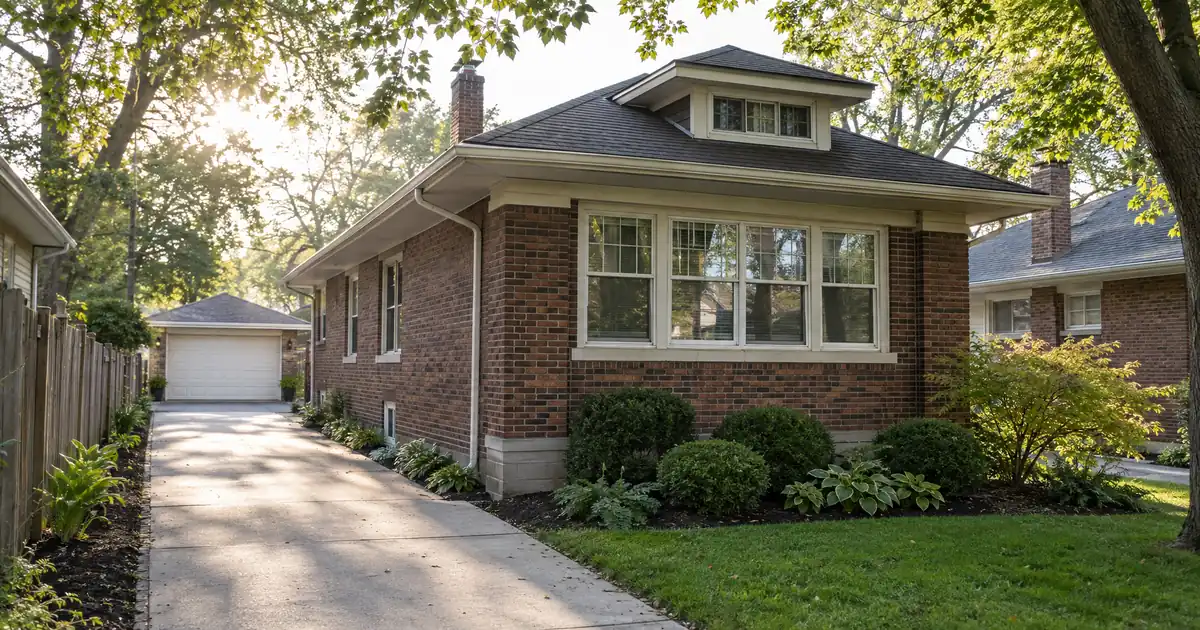
NeighborhoodScout puts Decatur’s ten-year home value gain at 52.64%, an annualized 4.32% that trails most U.S. cities. That single figure should shape every cash-out decision here. An investor who bought a few years ago and expects the appraisal to do the heavy lifting will likely be disappointed. An investor who owns a rent-stable duplex near a major employer, and who treats the refinance as a coverage problem rather than an appreciation bet, has a workable plan.
DSCR Cash-Out Calculator
Run the cash-out numbers in Decatur, IL
Rate source: Freddie Mac 30-yr average via FRED® — Federal Reserve Bank of St. Louis · effective Sep 24, 2026
Prefilled with starting assumptions — enter your property’s value, balance, taxes, and insurance for a more accurate picture.
Program parameters update from Lendmire’s centralized guideline source. Taxes and insurance are editable estimates.
As of Sep 24, 2026 · General Freddie Mac market benchmark, not a Lendmire loan offer. Property value, balance, taxes, and insurance are editable estimates. Maximum loan-to-value varies by lender, program, property type, and seasoning. Not a Loan Estimate, approval, or commitment to lend. Program availability and eligibility are subject to lender guidelines, credit approval, property review, and underwriting.
Key Takeaways:
A DSCR cash-out refinance in Decatur, Illinois is underwritten primarily on the property’s rental income measured against its full monthly obligation, and in a market where the median sale price is roughly $115K per Redfin, coverage usually tightens before the 75% loan-to-value ceiling does, so rent strength matters more than appraised equity.
- Zumper’s median rent of $875 against a $115K median sale price leaves single-family coverage thin.
- Duplexes and small apartment buildings are about 4.40% of housing stock, per NeighborhoodScout, and often cover best.
- Ten-year appreciation averaged 4.32% annually, so underwrite on rent, not price growth.
- Seasoning runs about 6 months from title recording, and cash-out tops out at 75% LTV.
Decatur Market Snapshot
A quick read on the Decatur investor landscape — figures come from the cited sources below. Confirm current property-level numbers before underwriting.
| Metric | Detail |
|---|---|
| Home prices | $115K median price (Redfin) |
| Typical rents | $703 avg (Apartments.com) |
| Recent appreciation | +8.3% yoy (Zillow) |
| Cap rates | 8.06% cap rate (LoopNet Decatur Multifamily) |
| University enrollment | ~1,600 students (Millikin University) |
| Population | 68,763 population (2024) (U.S. Census Bureau |
The Equity Story Is Thinner Than It Looks
Decatur is a cash-flow market with modest appreciation, and the equity available to pull depends on rent coverage and reserves as much as on the appraisal. The recent data is noisy. Zillow shows average values up 8.3% over the past year, while Redfin shows 4.1%. Neither changes the ten-year picture.
Redfin’s median sale price of $115K is the working figure here. Homes.com shows a higher median of $125,000 on its listing mix, a reminder that price sources disagree in a market this small. Redfin also counted 69 homes sold in a recent March, down from 80 a year earlier. Thin transaction volume means appraisers have fewer comparable sales to work with, and a cash-out file lives or dies on the appraisal.
The practical takeaway: equity in Decatur mostly comes from forced appreciation, meaning rehab, unit reconfiguration or bringing below-market rents up to the market. It rarely comes from waiting. Appreciation-led refinance plans that work in faster-growing metros don’t translate here.
Who Actually Pays the Rent
Tenant demand rests on a short list of employers, which is both a strength and a concentration risk. The Decatur Economic Development Corporation lists Archer Daniels Midland at 4,000 employees, Caterpillar at 3,150, Decatur Memorial Hospital at 1,903 and Decatur Public Schools at 1,829. HSHS adds 930.
Data USA counts 5,206 resident workers in manufacturing, 4,357 in health care and social assistance and 3,152 in retail trade, with employment up 1.15% in the latest year. The citywide population sits at 68,763. Census Bureau via Data Commons. HORN for Decatur notes the population ticked up by 93 residents after years of decline, but the decline since 2010 was 9.6%. Median household income is $50,809.
That income figure matters for the lender’s view of rent. Renters here are not stretching to $1,500 a month. They pay in the $700-$900 band, and the files that hold up are priced accordingly.
One newer signal helps. Caterpillar announced a $10 million Illinois allocation from its $100 million, five-year Building the Future Workforce Initiative, with Richland Community College and Millikin University among the training partners. That reads as a company investing in its Decatur pipeline rather than shrinking it, which supports workforce rental demand over a medium horizon. It is a press release, not a lease guarantee.
Education and healthcare add smaller layers. Millikin University enrolls roughly 1,600 students, and HSHS St. Mary’s Hospital runs 144 beds with a $90 million infrastructure renovation underway. Richland Community College reported 2,552 students in a recent fall term, mostly part-time. These are commuter and workforce tenants, not a dense student-housing wave. Don’t underwrite a cash-out as if they were.
Where the Coverage Clears (and Where It Doesn’t)
Coverage is strongest in the low-basis zip codes and on small multifamily, and weakest on average-priced single-family homes in the higher-value zips. The same rent supports very different debt loads depending on where the building sits.
62522 has the lowest basis in the research, with Zillow’s average home value at $94,342. A $875 rent against that value is about 0.9% of price monthly. Modeled at a 75% LTV and including taxes and insurance, coverage lands around 1.3x. The catch is loan size. Balances this small route through select lenders in the network rather than the standard programs, so the pool of options narrows. These specifics are subject to lender guidelines and a full review of property, leverage, and credit.
62521 is the bimodal one. Zillow shows an average value of $124,506, while Rentable puts average rent near $770. That is roughly 0.6% of price monthly. Single-family homes priced at the zip average struggle to reach 1.0x with taxes and insurance in the stack. The deals that work here are bought below the average or added to through rehab.
62526 is the higher-value suburban-style zip. It has commuter appeal for ADM and Caterpillar staff, but RealtyTrac notes foreclosure values up to $389,533 there, which signals a price basis that workforce rents can’t service. Skip it for cash-flow refinances.
Among named neighborhoods, Homes.com lists West End, Near West, Lions Park, North Fork and Garfield Park as having the most homes for sale. West End’s historic brick stock is the clearest candidate for conversion plays. Neighborhood-level rent and price data is thin, so treat those names as places to start comp work, not as underwriting evidence.
Small multifamily is the structural edge. Listings on Redfin show in-place unit rents between $700 and $975. Pricing and available terms vary by lender, borrower profile, property type, and full underwriting review. Stack two or three of those rents against a low basis and coverage stops being a struggle. Larger assets price differently: a 64-unit building sits at an 8.06% asking cap rate per LoopNet. That is a listing claim, not a verified yield, and five-plus unit deals live in a different lending lane entirely.
Run the Numbers: Three Modeled Refinances
These examples use modeled assumptions, not sourced deal data. Each divides assumed rent by full monthly obligation, including principal, interest, taxes and insurance, and rounds coverage down. Qualification remains subject to lender guidelines, credit approval and property review.
Single-family at the median. Say a rehabbed house appraises at $120,000 and rents for $875, the Zumper median. At the 75% LTV ceiling, coverage is just over 1.0x. That clears the standard 1.00x benchmark, barely. Drop the requested leverage to 65% and coverage rises to about 1.15x. The lesson: the cash left on the table by requesting less leverage is the price of a safer file, and sometimes it’s the only way the file works. Terms vary by lender guidelines, property type, leverage, credit profile, and full file review.
Sub-1.00 territory. Picture an investor holding a 62521 house appraising at $125,000 with rent at $770. At 75% LTV, coverage falls to the high-0.8s. A lender may review structures such as a sub-1.00 program, an interest-only period or lower leverage, with stronger credit and more reserves as the usual trade. Whether any of those is available depends on the lender and the file. The honest question is whether to use one. If the only way the file works is sub-1.00 on a long-term rent, the better move may be a rent bump or a rehab before refinancing.
Duplex. Consider a duplex appraising at $140,000 with two units at $700 each, the in-place rents from the research. At 75% LTV, coverage is about 1.4x. With $900 and $975 units, it moves to roughly 1.8x. That cushion is what lets a borrower pull equity and still hold a reserve buffer. Exact terms depend on the lender’s guidelines, property type, leverage, and a full review of the borrower’s file.
DSCR files in markets like this one typically look like lower balances, tighter rent-to-debt ratios on single-family and more appraisal scrutiny, because comparable sales are scarce. The files that move smoothly usually arrive with current leases, a rent schedule that matches the comps and a fresh insurance quote rather than last year’s. The files that stall usually lean on a rent figure the appraiser can’t support.
For the mechanics of how the ratio is calculated, the DSCR qualification mechanics page covers the formula in full.
What Seasoning and the 75% Ceiling Mean Here
Cash-out proceeds are capped by three things at once: 75% of appraised value, the 1.00x coverage benchmark and about six months of reserves. The tightest of the three sets the number. In Decatur, it’s usually coverage.
Seasoning runs about six months of ownership, measured from title recording. That matters for investors doing a fast rehab-and-refinance, since the clock starts at recording, not at renovation completion. Credit tiers generally run from a 620 floor up through 660, 680 and 700, with better tiers opening more leverage. Reserves are typically about six months of the full obligation. Program details vary by borrower, property and loan scenario, and the cash-out refinance walkthrough breaks them down by tier. Lendmire arranges these loans through lending partners, subject to program terms, and LLC-titled properties are accepted subject to lender program eligibility.
Equity available is never a guaranteed figure. It depends on the appraisal, the rent used for lender review, the payoff and reserves, and the calculator is the right place to convert percentages to dollars.
Where Most Decatur Refinances Go Wrong
The most common mistake is ignoring vacancy. NeighborhoodScout classifies 14.44% of Decatur’s housing stock as vacant, and that can hold prices below where they’d otherwise sit. A citywide figure that high means pocket selection matters more than the citywide average. A property near an employer or hospital cluster in a low-vacancy tract is a different risk than a house in a weaker one, even at the same rent.
The second mistake is trusting blended rent figures. Apartments.com shows an average of $703 and Redfin shows about $710, against Zumper’s $875. The gap probably reflects different property mixes, since newer or renovated inventory commands more. Use rent comps for your actual unit condition, not the citywide average.
The third is timing the cash-out to a price spike. Decatur’s median list price jumped 17.8% in a recent year per HousingWire, but against a ten-year annualized 4.32%, that looks like a cyclical blip. Pull equity on in-place rents and forced appreciation. Not on the headline.
(And if the refinance proceeds are headed to a second Decatur purchase, the coverage math on that deal deserves the same scrutiny as the one being refinanced.)
Is Pulling Equity Out the Right Move at All?
It depends on what the money does next. Pulling equity to buy a duplex in a low-basis zip where coverage clears 1.3x or better is a straightforward reinvestment. Pulling it to fund a renovation that lifts rents on the same building is arguably a stronger use, since it adds both income and appraised value. Pulling it to chase a market where the coverage math doesn’t pencil is a different decision and worth stress-testing first.
There’s also the conventional alternative. A borrower with strong traditional employment income and one or two rentals may carry a lower cost on a conventional refinance, and the guide “Where DSCR and Conventional Diverge” is worth comparing before committing. The flip point tends to arrive with entity-owned holdings, self-employed borrowers or a portfolio that has outgrown conventional financing limits. For a single personally-owned house with clean traditional personal-income documentation, conventional may be the better tool. For a LLC-held portfolio of small multifamily, DSCR is typically the only practical lane.
A genuine toss-up: a cash-out that pays off a low-cost existing loan to fund a new purchase. The new debt replaces cheaper debt, so the total cost of capital rises. The refinance can still make sense if the new acquisition’s return clears the difference, but that’s a judgment call the coverage ratio alone can’t make.
DSCR vs. conventional financing
There are two common ways to finance an investment property in Decatur, IL, and they qualify you differently — here’s how investors weigh them.
Why investors choose it
- Qualifies on the property’s rental income — no personal tax returns, W-2s, or pay stubs needed to document income.
- No personal debt-to-income ceiling to clear, so existing mortgages and obligations don’t cap your borrowing the same way.
- Can be closed in an LLC, keeping the property inside a business entity.
- Built for scaling — not held to the limit on number of financed properties that conventional financing applies.
- Underwriting centers on the deal: generally qualifies when the rent covers the payment, a 1.00x coverage ratio being a common baseline (confirmed in underwriting).
- Designed specifically for investment property, including long-term and, where the program allows, short-term rentals.
Where it’s strong
- Often the lowest ongoing financing cost for a buyer who fully qualifies on personal income — a fit for a first property or a cost-first purchase.
Trade-offs for investors
- Requires full personal income documentation and must fit within a debt-to-income limit — salary, existing debts, and other mortgages all count.
- Typically held in your personal name rather than a business entity.
- Caps how many financed properties you can carry, which can become a ceiling as a portfolio grows.
- Evaluates you as a borrower as much as the property, which usually means more paperwork.
How investors usually choose: a first or single property often optimizes for the lowest financing cost; portfolio builders often optimize for leverage, vesting in an LLC, and scaling past conventional caps. The right answer depends on your goals, the property, and current guidelines — both paths run through select lenders in Lendmire’s wholesale network, with eligibility and terms confirmed in underwriting.
Investors weighing the options can review refinancing options or talk through the file with Lendmire at 828-256-2183. Local rental rules, taxes and insurance deserve a separate check with qualified local professionals before any refinance closes.
Decatur Against Its Peers
Decatur’s rent coverage is similar to other small central-Illinois markets, but its employment base is deeper. Danville, Kankakee and Quincy don’t host an agribusiness headquarters on ADM’s scale, and that concentration of employment is what keeps Decatur’s workforce rentals occupied. For a refinance built on existing equity, the math favors Decatur over those peers right now, with one caveat: ADM and Caterpillar carry the whole market, and a downturn in either would expose how little else there is to fall back on.
Frequently Asked Questions
How do you qualify for a DSCR loan in Decatur, Illinois?
Coverage is the test. Lenders divide the property’s rent used for lender review by its full monthly obligation and generally look for at least 1.00x, alongside credit, reserves and a property review. On a Decatur single-family house at median rents, coverage can be thin, so duplexes and lower-basis properties tend to qualify more easily. Eligibility remains subject to lender guidelines.
What are the requirements for an investment property cash-out refinance in Decatur, Illinois?
Typical guidance includes about six months of ownership from title recording, a credit score of 620 or higher, reserves of about six months of the full obligation and a cap of 75% LTV. Smaller Decatur balances route through select lenders in the network, since the standard programs are built for larger loans. These are guideline ranges, not commitments. Every figure here varies by lender and program — guidelines, property type, leverage, and credit profile all apply.
Does a low Decatur purchase price limit how much cash I can pull out?
Yes, in a practical sense. Because values in Decatur sit well below many larger Illinois metros, even a loan at 75% of the appraised value is a modest amount, and any payoff comes out of it first. Borrowers who bought low and rehabbed to lift rents and value tend to have the most cash left after payoff.
Which Decatur zip codes tend to give the best coverage for a refinance?
62522 leads on basis, with an average value of $94,342, which lifts coverage on workforce rents. 62521 works for below-average purchases or small multifamily. 62526 is priced for move-up buyers and rarely cash-flows on workforce rents. Submarket comps matter more than zip averages.
For current guidelines and terms, see Lendmire’s DSCR loan programs page.
About Lendmire
Lendmire — NMLS# 2371349 — is a mortgage brokerage specializing in DSCR investor loans, helping arrange financing across 41 markets, including Washington, D.C., through wholesale and investor-lending channels. The model centers on property-level rental income reviewed by the lender rather than W-2 documentation, subject to lender guidelines, which suits entity-owned and multi-property investors. Lendmire was named a 2026 Scotsman Guide Top Mortgage Workplace and a top-ranked workplace in 2025.
Get Started
Ready to find the right loan for you?
In about 30 seconds you can review financing options available for your investment property. No commitment required.
Informational only. Not a Loan Estimate, approval, or commitment to lend. Program availability and eligibility are subject to lender guidelines, credit approval, property review, and underwriting.
References
2. Redfin
3. Zumper’s
5. Zillow
6. LoopNet
9. Homes.com
10. Decatur Economic Development Corporation
11. Data USA
12. HORN for Decatur
13. PR Newswire: Caterpillar Illinois workforce investment
15. Richland Community College
16. Zillow — Home Values Decatur IL
17. Zillow — Home Values Decatur IL
18. Rentable
19. RealtyTrac
20. Redfin
21. HousingWire
22. a 2026 Scotsman Guide Top Mortgage Workplace
23. Scotsman Guide — Top Workplaces 2025
This article is part of Lendmire’s investment property cash-out refinance program — full qualification details, guidelines, and scenarios live on the program page.
Related reading: Luxury Rental DSCR Loans In New Jersey · Jersey Shore Vacation Rental Loans: DSCR Financing In Ocean City, Cape May And Long Beach Island · DSCR Cash-out Refinance In New Jersey: Pulling Equity From A Rental
Guides: Investment Property Cash-Out Refinance in Decatur, IL · Investment Property Cash-Out Refinance in Illinois
Brandon Miller
Founder & CEO, Mortgage Loan Originator, Lendmire LLC
- Mortgage Loan Originator · NMLS# 1129696 · Verify on NMLS Consumer Access
- North Carolina Real Estate Broker · License# 343312 · Verify on NCREC
- North Carolina Insurance Producer · License# 19053198 · Property, Casualty, Life, Health · Verify on NAIC SBS
- Lendmire LLC · Firm NMLS# 2371349 · Verify firm licensure
Disclosure information. Lendmire is a state-licensed mortgage brokerage under NMLS# 2371349. Lendmire is not a depository institution, direct lender, or financial advisor — all loans referenced are placed through wholesale lender partners and are subject to each lender's underwriting standards. This article is provided for general informational purposes and is not a commitment to lend, nor does it constitute financial, legal, or tax advice. Loan programs, terms, rates, and qualification standards change without notice and depend on borrower profile, property type, and the state in which the subject property is located. Equal Housing Opportunity provider. NMLS Consumer Access: nmlsconsumeraccess.org.