
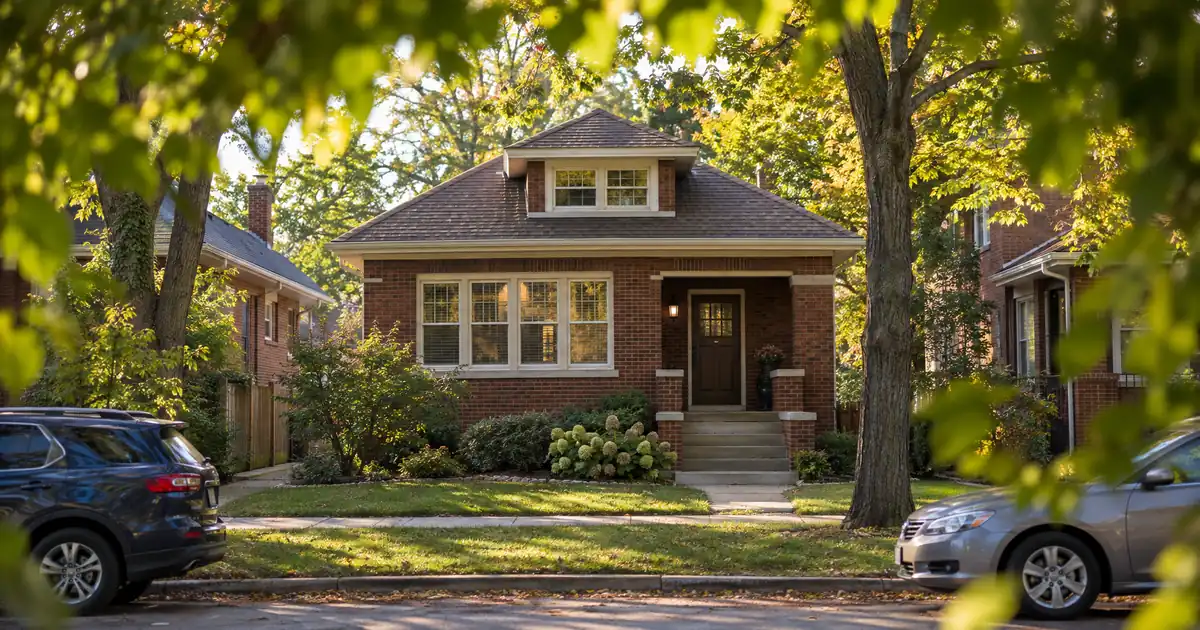
A cash-out file can stall before anyone looks at the rent roll. The appraiser pulls comps from a thin sales month, the value lands under the number the borrower planned around, and the loan-to-value ceiling shrinks the proceeds along with it. Seasoning trips files the same way. The title is recorded, but the ownership clock gets measured from the wrong document.
Both problems show up in DeKalb, Illinois, a university town of 40,443 residents with a median age of 26.1. The demand story is strong. The appraisal story is thinner, and the coverage math punishes the wrong property type.
DSCR Cash-Out Calculator
Run the cash-out numbers in Dekalb, IL
Rate source: Freddie Mac 30-yr average via FRED® — Federal Reserve Bank of St. Louis · effective Sep 24, 2026
Prefilled with starting assumptions — enter your property’s value, balance, taxes, and insurance for a more accurate picture.
Program parameters update from Lendmire’s centralized guideline source. Taxes and insurance are editable estimates.
As of Sep 24, 2026 · General Freddie Mac market benchmark, not a Lendmire loan offer. Property value, balance, taxes, and insurance are editable estimates. Maximum loan-to-value varies by lender, program, property type, and seasoning. Not a Loan Estimate, approval, or commitment to lend. Program availability and eligibility are subject to lender guidelines, credit approval, property review, and underwriting.
At a Glance: A DSCR cash-out refinance in DeKalb, Illinois fits investors who already own near-campus duplexes or small multifamily and want equity out against rental income. The loan is underwritten primarily on the property’s rent measured against its full monthly obligation, with a 75 percent leverage ceiling and roughly six months of ownership required first.
- NIU enrolled 16,078 students, with only about 4,500 living on campus.
- Citywide average rent is $1,158, with two-bedrooms at $1,219.
- Single-family at citywide rents tends to land below 1.00 once taxes and insurance are counted.
- Small multifamily near Greek Row carries the coverage ratio.
- Cash-out is capped at 75 percent LTV, measured after seasoning from title recording.
Dekalb Market Snapshot
A quick read on the Dekalb investor landscape — figures come from the cited sources below. Confirm current property-level numbers before underwriting.
| Metric | Detail |
|---|---|
| Home prices | $204,700 median property value (Data USA (Census ACS)) |
| Recent appreciation | +5.5% yoy (Zillow Home Value Index) |
| University enrollment | 16,078 total (NIU Fast Facts) |
| Population | 40,443 population (Census Reporter (ACS 2024 5-yr)) |
| Employment | 20.2K→20.6K employees (Data USA (Census ACS)) |
| Vacancy | notes (Coldwell Banker Today’s Realtors) |
What the Appraisal Sees in DeKalb
The value you refinance against is not the headline number. DeKalb’s sales volume is small, and small markets produce wide swings in year-over-year figures. Plan around a conservative appraisal, not the best trailing reading.
Zillow puts the average DeKalb home value at $257,752, up 5.5 percent over the past year. That is the figure used throughout this article. Redfin’s three-month median reads differently: $256,000, down 6.6 percent year over year. The gap comes from methodology and sample size, not from one source being wrong. NeighborhoodScout shows trailing appreciation near 3.97 percent, while its most recent quarter annualizes to 9.65 percent. Same town, three different stories.
Volume is the real issue. Redfin’s monthly snapshot showed 27 homes sold in one recent month, with homes averaging about 42 days on the market. Fewer sales means fewer clean comps. Appraisers reach further back or wider, and the pulled value can lag a market that feels hotter on the ground.
The fix is operational. Pull recent in-neighborhood sales and condition notes before the order goes in. If the value comes back light, a documented appraisal reconsideration packet is a routine step, not a fight. Files that assume the headline appreciation number will be the appraised number are the ones that get resized late.
Seasoning, the 75 Percent Cap, and Reserves
A cash-out refinance on an investment property is capped at 75 percent LTV, and the ownership clock runs roughly six months from title recording. Those two numbers set the ceiling before rent enters the picture. Guidelines vary by lender and file, so treat them as typical ranges, not promises.
Lendmire (NMLS# 2371349) is a DSCR-focused mortgage broker arranging investor loans in 40 states plus Washington, D.C. It places DeKalb cash-out files with wholesale lenders, which review eligibility and approve. For the mechanics of how coverage is calculated, the guide “What Is a DSCR Loan” covers the basics. The side-by-side comparison handles the conventional contrast, and Illinois-specific options sit on the hub page for DSCR loan options for Illinois investors.
Other file parameters worth planning around, all subject to lender guidelines:
- A 1.00 coverage ratio is the common baseline: rent used for lender review against full PITIA.
- Credit tiers typically start at a 620 floor, with better terms at 660, 680, and 700.
- Reserves are typically about six months of PITIA, more on very large balances.
- Standard programs go up to $3,000,000, with smaller balances routed through select lenders.
- Borrowers holding title in an LLC are generally workable, subject to lender program eligibility.
Seasoning is where recent buyers get caught. A recent purchase may not be cash-out eligible yet, no matter how much value a renovation added, because lenders look at how long the borrower has held title. The settlement statement and recorded deed document the start date. Check that document before the file goes in, since seasoning requirements vary by lender and by file. A detailed walkthrough of the cash-out product lives at Lendmire’s DSCR cash-out refinance.
Equity available is not a guaranteed cash figure. It depends on the appraised value, the rent used for lender review, PITIA, reserves, and the 75 percent ceiling. All five have to line up.
Where the Coverage Math Holds (and Where It Doesn’t)
Single-family rentals at citywide average rent do not clear 1.00 on a cash-out in DeKalb. Duplexes and small multifamily sit near the line. Per-bedroom product near campus is where coverage builds a cushion.
Run the numbers on a modeled single-family at the $257,752 citywide average value, renting at the $1,219 two-bedroom average from RentCafe. At 75 percent LTV, with taxes and insurance counted, coverage lands around 0.7 or lower. These are modeled assumptions, not sourced deal data. Property taxes and insurance weigh heavily on Illinois files, and they are what push single-family underwater.
Now model a $350,000 duplex, the median multifamily listing price in Greek Row, with two-bedroom units at that same average rent. At 75 percent LTV including taxes and insurance, coverage comes out right around 1.0 at best. Cut leverage to 65 percent and it improves to roughly 1.1. Lower leverage buys coverage, but it also shrinks proceeds. That is the tension in every DeKalb cash-out.
When a file lands under 1.00, a few structures may be reviewed: a sub-1.00 program, interest-only payment structuring, or lower leverage. Each carries its own pricing, reserve, and credit requirements, and eligibility stays subject to lender guidelines, credit approval, and property review.
DSCR files in markets like this one typically look the same on the front end. The investor has equity on paper and a rent roll that looked fine at purchase. Then the full PITIA, with real tax and insurance figures, reprices the coverage. The files that move cleanly run the coverage on current bills before the application goes in, not on the numbers from the original purchase.
Greek Row and the Fifth Ward
Greek Row and the surrounding Ward 1 blocks are where per-bedroom income stacking produces the strongest coverage in the city. The city’s Greek Row plan describes the area as one of the most densely populated and diverse neighborhoods in town. Multifamily listings there tend to sit on the market longer than average, which tells you the exit is slow.
The demand driver is structural. NIU’s enrollment grew in the latest fall count, and only a fraction of students live on campus. That leaves a large share needing off-campus housing every year. Rents are rising too, with two-bedroom averages up meaningfully from a year earlier.
Property type matters more than it does in most Illinois towns. NeighborhoodScout shows about 8.78 percent of DeKalb housing in duplexes or small converted buildings, plus a large slice of apartment complexes. Near campus, licensed rooming houses of nine or more bedrooms are a normal asset. Advertised room rents run roughly $475 to $650 a month including utilities, per listing data from Homes.com. Per-bedroom rolls can dwarf a single-family comp on the same lot.
The catch is documentation. Room-by-room leases, occupancy history, and rent-roll clarity carry more weight on rooming houses than on a standard duplex. Appraisers may struggle with rent comps for that product, and fewer lenders in the network will review it. Budget more time for the documentation and appraisal, and pull the local rooming-house licensing requirements before underwriting.
The North Fifth Ward Historic District is the quieter option. Homes listed near $266,450 are older stock, walkable to downtown and campus. Small multi-unit properties there can cash flow, but older buildings draw heavier condition adjustments from appraisers. Plan for that.
Rivermist: Skip the Cash-Out Thesis
Rivermist lists near $424,900. That is a newer subdivision priced for families and commuters, and the price is well above near-campus product. Rent does not scale with price the same way. At that basis and 75 percent leverage, single-family coverage ends up well below 1.00.
It can work as a hold for appreciation. As a cash-out candidate it’s weak unless the borrower accepts a sub-1.00 structure or drops leverage sharply. The investors pulling capital out of DeKalb and putting it to work elsewhere are mostly doing it from older multi-unit stock, not from the subdivision.
The Demand Base Beyond Students
Student demand is the headline, but employers give a cash-out file its second leg. The DeKalb County Economic Development Corporation lists Northwestern Medicine at 1,600 employees, Amazon at 1,000, and 3M at 800 in DeKalb. Northwestern Medicine Kishwaukee Hospital has more than 150 physicians on staff.
One more anchor often gets skipped. Meta’s data center in DeKalb cost $1 billion and promised more than 200 full-time jobs. That is a corporate renter base with no link to the academic calendar. It matters for workforce rentals away from campus, where lease length and turnover look different from student stock.
No official vacancy figure exists in the sources reviewed. Treat occupancy assumptions as something to verify with local property managers, not something to assume at 100 percent.
Frequently Asked Questions
How do you qualify for a DSCR cash-out refinance in DeKalb, Illinois?
Qualification centers on the property’s rent against its full PITIA, typically at a 1.00 baseline, plus credit, reserves, and ownership seasoning. Most files need about six months of ownership from title recording and stay at or under 75 percent LTV. A lender reviews the appraisal and rent documentation. Final eligibility depends on lender guidelines and the borrower’s profile.
DSCR vs. conventional financing
There are two common ways to finance an investment property in Dekalb, IL, and they qualify you differently — here’s how investors weigh them.
Why investors choose it
- Qualifies on the property’s rental income — no personal tax returns, W-2s, or pay stubs needed to document income.
- No personal debt-to-income ceiling to clear, so existing mortgages and obligations don’t cap your borrowing the same way.
- Can be closed in an LLC, keeping the property inside a business entity.
- Built for scaling — not held to the limit on number of financed properties that conventional financing applies.
- Underwriting centers on the deal: generally qualifies when the rent covers the payment, a 1.00x coverage ratio being a common baseline (confirmed in underwriting).
- Designed specifically for investment property, including long-term and, where the program allows, short-term rentals.
Where it’s strong
- Often the lowest ongoing financing cost for a buyer who fully qualifies on personal income — a fit for a first property or a cost-first purchase.
Trade-offs for investors
- Requires full personal income documentation and must fit within a debt-to-income limit — salary, existing debts, and other mortgages all count.
- Typically held in your personal name rather than a business entity.
- Caps how many financed properties you can carry, which can become a ceiling as a portfolio grows.
- Evaluates you as a borrower as much as the property, which usually means more paperwork.
How investors usually choose: a first or single property often optimizes for the lowest financing cost; portfolio builders often optimize for leverage, vesting in an LLC, and scaling past conventional caps. The right answer depends on your goals, the property, and current guidelines — both paths run through select lenders in Lendmire’s wholesale network, with eligibility and terms confirmed in underwriting.
What are the requirements for an investment property cash-out loan in DeKalb, Illinois?
The typical package is a recorded deed and settlement statement proving seasoning, a current lease or rent schedule, entity documents if the property sits in an LLC, current insurance quotes, and reserves documentation. Credit tiers start around a 620 floor. Manufactured homes, log homes, and barndominiums fall outside the network’s DSCR programs.
Why do DeKalb cash-out appraisals sometimes come in light?
Sales volume is thin, so appraisers reach further back or wider for comps, and the pulled value can trail the headline appreciation. Third-party sources also disagree, with Zillow showing gains and Redfin’s three-month median showing a decline. A reconsideration packet with recent in-neighborhood sales and condition adjustments is the standard response.
Can a near-campus rooming house work for a cash-out refinance?
It can be reviewed, but it’s a narrower path than a standard duplex. Per-room rent rolls, occupancy history, and licensing documentation carry more weight, and fewer lenders take this product. Coverage can look strong on paper, so the appraisal and lease documentation are usually what decide the file.
What credit score ranges may DSCR lenders review for a DeKalb rental property?
Lenders in the network typically review tiers at 620, 660, 680, and 700, with 620 as the floor. Lendmire arranges DSCR investor loans, and higher credit tiers may improve leverage and pricing options, subject to lender guidelines.
The Bottom Line on DeKalb Equity
The cash-out case in DeKalb rests on the rental demand NIU generates and the structural housing gap around it. It does not rest on headline appreciation, which swings with small sample sizes. Confirm current local rules, taxes, and insurance with qualified local professionals before any multi-unit underwriting.
Run coverage on real tax and insurance bills, document seasoning from the recorded deed, and go into the appraisal with your own comps. The investors who do that in DeKalb before the order goes in will come out ahead.
For current guidelines and terms, see Lendmire’s DSCR loan programs page.
About Lendmire
As a non-QM mortgage broker (NMLS# 2371349), Lendmire facilitates DSCR investor loans across 41 markets, including Washington, D.C. DSCR eligibility is generally reviewed around property-level rental income rather than personal income documentation, subject to lender guidelines, which suits LLC-structured portfolios and self-employed borrowers who don’t fit conventional boxes. The firm is a two-time Scotsman Guide honoree: a 2026 Scotsman Guide Top Mortgage Workplace and a top-ranked workplace in 2025. Investors can reach the team at 828-256-2183.
Get Started
Ready to find the right loan for you?
In about 30 seconds you can review financing options available for your investment property. No commitment required.
Informational only. Not a Loan Estimate, approval, or commitment to lend. Program availability and eligibility are subject to lender guidelines, credit approval, property review, and underwriting.
References
1. Census Reporter — Dekalb IL
2. Northern Illinois University Fast Facts
3. RentCafe: DeKalb average rent
5. Zillow Home Value Index: DeKalb, IL
6. Coldwell Banker Today’s Realtors
7. Redfin: DeKalb housing market
9. NIU Newsroom: enrollment up over 4 percent
11. Homes.com
12. $266,450
13. DeKalb County Economic Development Corporation: Top Employers
14. Northwestern Medicine Kishwaukee Hospital
15. Pantagraph: Meta data center in DeKalb
16. a 2026 Scotsman Guide Top Mortgage Workplace
17. Scotsman Guide — Top Workplaces 2025
This article is part of Lendmire’s investment property cash-out refinance program — full qualification details, guidelines, and scenarios live on the program page.
Related reading: Luxury Rental DSCR Loans In New Jersey · Jersey Shore Vacation Rental Loans: DSCR Financing In Ocean City, Cape May And Long Beach Island · DSCR Cash-out Refinance In New Jersey: Pulling Equity From A Rental
Guides: Investment Property Cash-Out Refinance in Illinois
Brandon Miller
Founder & CEO, Mortgage Loan Originator, Lendmire LLC
- Mortgage Loan Originator · NMLS# 1129696 · Verify on NMLS Consumer Access
- North Carolina Real Estate Broker · License# 343312 · Verify on NCREC
- North Carolina Insurance Producer · License# 19053198 · Property, Casualty, Life, Health · Verify on NAIC SBS
- Lendmire LLC · Firm NMLS# 2371349 · Verify firm licensure
Compliance and disclosures. Lendmire (NMLS# 2371349) is a licensed mortgage broker and is not a direct lender, depository institution, financial advisor, or tax professional. Content in this article is general market analysis and educational information — not financial, legal, or tax advice for any specific situation. Lendmire does not guarantee loan approval; every transaction is subject to underwriting by the funding lender. Mortgage pricing and loan program guidelines are subject to change at any time without notice and vary by borrower characteristics, property type, and state regulations. Lendmire complies with Equal Housing Opportunity. Licensure verification: NMLS Consumer Access.