
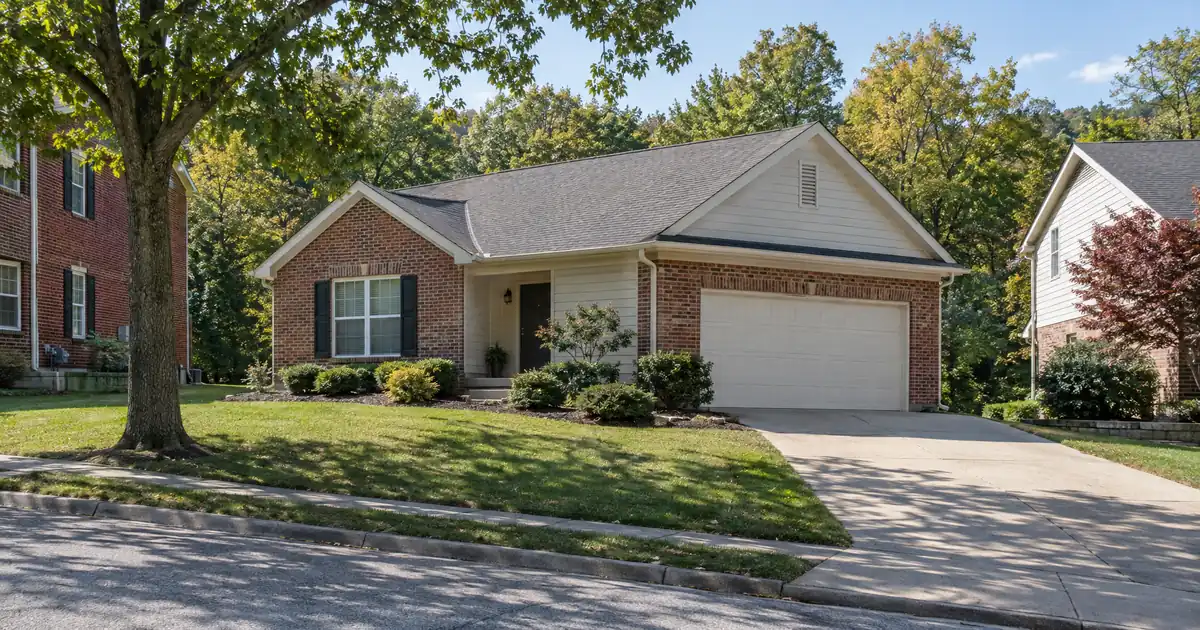
Town Center, at Main Street and Taylor Road, is where Wildwood’s investment story is changing. A 188-unit, $57.5 million apartment community is going up there, per Multi-Housing News, in a city that has almost no institutional rental stock. Any investor holding a single-family rental within a short drive of that site faces a new competitor. The same investor may also be sitting on more equity than the rent can carry. That combination shapes every DSCR cash out refinance in Wildwood, Missouri.
The Quick Read: A DSCR cash-out on a Wildwood rental is underwritten primarily on the property’s rental income measured against its full monthly obligation, and the city’s high prices against modest rents make leverage the deciding variable. Census-derived Census Bureau QuickFacts data puts the population at 35,133, mostly in owner-occupied single-family homes.
DSCR Cash-Out Calculator
Run the cash-out numbers in Wildwood, MO
Rate source: Freddie Mac 30-yr average via FRED® — Federal Reserve Bank of St. Louis · effective Sep 24, 2026
Prefilled with starting assumptions — enter your property’s value, balance, taxes, and insurance for a more accurate picture.
Program parameters update from Lendmire’s centralized guideline source. Taxes and insurance are editable estimates.
As of Sep 24, 2026 · General Freddie Mac market benchmark, not a Lendmire loan offer. Property value, balance, taxes, and insurance are editable estimates. Maximum loan-to-value varies by lender, program, property type, and seasoning. Not a Loan Estimate, approval, or commitment to lend. Program availability and eligibility are subject to lender guidelines, credit approval, property review, and underwriting.
- Cash-out LTV tops out at 75%, and about 6 months of title seasoning applies.
- House rents run roughly $2,500 to $3,800 against prices of $500K and up.
- Single-family coverage tends to sit near or below 1.0x at maximum leverage.
- Duplex and small multifamily inventory is thin but improves coverage when it appears.
- The Town Center apartment project adds Class A competition nearby.
Wildwood Market Snapshot
A quick read on the Wildwood investor landscape — figures come from the cited sources below. Confirm current property-level numbers before underwriting.
| Metric | Detail |
|---|---|
| Typical rents | $1,312 st. louis asking (Multi-Housing News) |
| Population | Daytime population change -23.1% (City-Data, Wildwood) |
Why Wildwood’s Rent-to-Value Is the Whole Story
Wildwood pays high rents on even higher prices, so DSCR cash-out here is a leverage-management exercise, not a yield play. Redfin put the median sale price at $528K in its most recent city-level read, down 7.9% year over year. Homes.com shows 3-bedroom houses renting at $2,980 and 4-bedroom houses at $3,800, with a price-to-rent ratio of 23.7. That is the pattern of a market that favors renting over buying, which is not the same as a market that rewards landlords.
Run the numbers on the middle of that range. Assume a $2,980 rent against the $528K median, measured on full PITIA, meaning principal, interest, taxes, and insurance on a 30-year amortization. Coverage lands around 0.9x at the 75% cash-out ceiling and near 1.0x at 65% LTV. These are modeled assumptions, not market data. The point is directional: the unlevered rent yield here is roughly 0.56% a month, and the 1.00 DSCR minimum in the program parameters leaves little slack. Every figure here varies by lender and program — guidelines, property type, leverage, and credit profile all apply.
Rent sources also disagree. Zumper puts the average house rent at $2,522 on limited data, while Zillow’s index, as summarized by Keeping Up With Inflation, has Wildwood leading Missouri at about $2,786 a month. Underwrite between $2,500 and $3,000 for a typical house. Skip the $3,800 four-bedroom quote as a base case.
Where a borrower’s coverage falls short of 1.00, lenders may review sub-1.00 programs, reduced leverage, or other restructuring, with any outcome subject to lender guidelines, credit approval, and property review. While DSCR lenders in this market run tighter sub-1.00 guidelines, Lendmire’s network includes options worth pricing side by side. The DSCR qualification mechanics explain how the ratio is built.
What Does Equity Extraction Actually Look Like Here?
Cash-out on an existing Wildwood rental is capped at 75% LTV, requires roughly 6 months of ownership measured from title recording, and depends on the appraised value, not the listing chatter. Equity available is never a guaranteed figure. It moves with rent used for lender review, PITIA, reserves of about 6 months, and that 75% ceiling. Final terms depend on lender guidelines, property type, leverage, and the borrower’s complete credit picture.
The appraisal is the first risk. Redfin shows $528K, Movoto shows a $700,000 median sold price for April, and Data USA shows $495,800 as the median property value. Movoto’s figure is about a third above Redfin’s. The gaps come from different methods, months, and property mixes. An appraiser working from closed comps can land below a listing-based value, so size your expected proceeds off the conservative end. Treat the high number as upside, not the plan.
Picture an investor who bought a four-bedroom house three years ago and now wants capital for the next deal. Assume a modeled rent of $3,200 against a $650K appraised value. At 75% LTV, coverage on full PITIA falls below 1.0x. Trimming leverage toward 65% pulls it to roughly 1.0x. The borrower gets less cash out, but the file is cleaner. That trade is the central decision in Wildwood cash-outs, and the cash-out refinance mechanics page shows how leverage and proceeds interact. These specifics are subject to lender guidelines and a full review of property, leverage, and credit.
DSCR files in markets like this one typically look like a strong-credit borrower with meaningful equity and a rent-to-PITIA ratio hovering right at the line. The files that move smoothly usually arrive with a rent survey or lease in hand, a conservative leverage ask, and reserves documented ahead of time. The ones that stall usually assumed listing prices would appraise, or assumed the top-of-market rent would hold.
Stack the Leases
Multi-unit product is where Wildwood’s numbers can flip in the investor’s favor. The city is described by NeighborhoodScout as a city of large, single-family homes, so duplexes and fourplexes are rare. City-Data, drawing on Census figures, gives mean values of $222,556 for 2-unit structures and $208,634 for 3-to-4-unit structures. Those means come from a very small stock, so treat them as directional only.
Then compare rents. Apartments.com lists duplex units at roughly $1,198 to $1,619 each. Two units gross about $2,400 to $3,200, which is in the same range as one 3-to-4-bedroom house. If the duplex price truly sits at a fraction of the single-family price, modeled coverage clears 1.3x on full PITIA at the 75% ceiling, even with conservative rents. The house at $528K and up cannot get near that.
Here is the catch. The stock is thin, stacked leases mean more tenant relationships and more vacancy exposure, and one live comp can erase the paper advantage. Townhomes and homes with in-law suites may be more available than true duplexes, and whether a given property counts as a two-unit for underwriting is a program question. LLC-titled holdings are reviewed subject to lender program eligibility.
Grover, Glencoe, and the Town Center Ring
Submarket data in Wildwood is thin, and no neighborhood-level rent-to-value table turned up in the research. What exists comes from listing aggregators, and it works as rent bands, not as price-paired submarkets.
Zumper calls Grover Wildwood’s most sought-after neighborhood, with average rent around $2,100. Glencoe is listed at $2,350, also on limited data. Those bands sit below the Homes.com house quotes, which suggests Grover and Glencoe rents are the more realistic underwriting anchors for older or smaller homes. Zumper also lists Pacific at $1,450, but Pacific is a separate town, so leave it out of Wildwood underwriting.
Then there is the Town Center ring. The new community adds roughly 190 units, according to Rosemann & Associates, and the FOX 2 St. Louis report on the approval notes commercial space alongside it. Walkable retail and dining could support demand for nearby rentals. Class A lease-up concessions could also pull tenants from small-investor houses. Both are plausible, and neither has been measured yet. Zumper’s August readout shows a steep year-over-year rent drop, but the sample is too thin to build a thesis on.
Honestly, the stronger play may be the older, walk-to-nothing rentals in Grover and Glencoe over anything within sight of Town Center, since they will not compete directly with new construction. Investors who prize the Town Center location could argue the opposite.
Skip the Assumption That Appreciation Will Rescue the Ratio
Prices have softened, not surged, so a Wildwood cash-out should be built on today’s appraisal and today’s rent. Redfin shows the median down 7.9% year over year, and Movoto shows homes taking 22 days to sell in April versus 12 a year earlier, with 142 sales against 120. More sales and slower pace means more comps for an appraiser and more negotiation for a seller.
Redfin’s neighborhood page shows an even sharper monthly drop, at $400K and down 24.5%. That is almost certainly a small-sample artifact of sales mix, not a trend, and demand does not look like it is collapsing. Still, a refinance thesis that needs further appreciation to lift the value is a weak one.
Three indicators are worth tracking over the next 6 to 24 months:
- Town Center lease-up pace. Concessions in the new community are an early signal for nearby small rentals.
- Appraisal-to-list gaps. If appraisals keep landing well under listing medians, plan on the lower leverage.
- Duplex and townhome listings. Any uptick in supply changes the unit-stacking math.
The demand side is steadier. Data USA shows the top resident industries as professional, scientific, and technical services (2,244 workers), finance and insurance (2,069), and health care (1,989). City-Data records a daytime population change from commuting of negative 23.1%, which fits a bedroom community. Tenant demand tracks St. Louis-area employment more than anything inside city limits. Investors should verify current local rental rules, taxes, and insurance with qualified local professionals before committing to any hold strategy.
Redeploying the Proceeds
The best use of Wildwood equity is often outside Wildwood. St. Louis asking rents rose 2.1% year over year to $1,312, per Yardi Matrix data reported by Multi-Housing News, and rent-to-price ratios in denser parts of the metro are structurally better than in a 68-square-mile suburb where 11 square miles are parks, according to the City of Wildwood. An investor who extracts equity here at conservative leverage and redeploys it into unit-dense product elsewhere in the region converts a low-yield asset’s value into higher-coverage collateral. Compare conventional versus DSCR on investor loans before choosing the structure, and consider rate-and-term and cash-out refinancing as alternatives. Eligible property types, borrower credit, and reserves are all reviewed by the lender, not promised in advance.
Those working in the state can also review Lendmire’s Missouri DSCR loan programs for statewide context, or call 828-256-2183 to talk through a specific Wildwood scenario.
Frequently Asked Questions
How do you qualify for a DSCR loan in Wildwood, Missouri?
Qualification centers on the property’s rent measured against its full monthly obligation, with a 1.00 minimum in the program parameters. Pricing and available terms vary by lender, borrower profile, property type, and full underwriting review. Because Wildwood prices are high against rents, leverage often has to drop to reach that ratio. Final eligibility rests with the lender.
DSCR vs. conventional financing
Two common ways to finance an investment property in Wildwood, MO. They qualify you differently — here’s how investors weigh them.
Why investors choose it
- Qualifies on the property’s rental income — no personal tax returns, W-2s, or pay stubs needed to document income.
- No personal debt-to-income ceiling to clear, so existing mortgages and obligations don’t cap your borrowing the same way.
- Can be closed in an LLC, keeping the property inside a business entity.
- Built for scaling — not held to the limit on number of financed properties that conventional financing applies.
- Underwriting centers on the deal: generally qualifies when the rent covers the payment, a 1.00x coverage ratio being a common baseline (confirmed in underwriting).
- Designed specifically for investment property, including long-term and, where the program allows, short-term rentals.
Where it’s strong
- Often the lowest ongoing financing cost for a buyer who fully qualifies on personal income — a fit for a first property or a cost-first purchase.
Trade-offs for investors
- Requires full personal income documentation and must fit within a debt-to-income limit — salary, existing debts, and other mortgages all count.
- Typically held in your personal name rather than a business entity.
- Caps how many financed properties you can carry, which can become a ceiling as a portfolio grows.
- Evaluates you as a borrower as much as the property, which usually means more paperwork.
How investors usually choose: a first or single property often optimizes for the lowest financing cost; portfolio builders often optimize for leverage, vesting in an LLC, and scaling past conventional caps. The right answer depends on your goals, the property, and current guidelines — both paths run through select lenders in Lendmire’s wholesale network, with eligibility and terms confirmed in underwriting.
What are the requirements for an investment property loan in Wildwood, Missouri?
Expect a credit floor of 620, about 6 months of reserves, and a 75% LTV ceiling on cash-out. Seasoning of roughly 6 months of ownership applies before pulling equity. Loan amounts run up to $3,000,000 on standard programs. Manufactured homes, log homes, and barndominiums fall outside these programs. Terms vary by lender guidelines, property type, leverage, credit profile, and full file review.
Does the new Town Center apartment community change cash-out math for nearby rentals?
It does not change the loan math directly, but it can change the rent assumptions behind it. An 188-unit Class A community adds concessions and lease-up competition close to Main Street and Taylor Road. Underwrite nearby small rentals with conservative rent and vacancy assumptions until the project stabilizes.
Is it realistic to find a duplex or fourplex in Wildwood to improve coverage?
It is possible but rare. Wildwood is dominated by large single-family homes, and the multi-unit stock is small enough that listed values are only directional. Investors targeting a unit-stacking play should be ready to widen the search to townhomes and nearby St. Louis-area submarkets.
The Read Forward
Wildwood rewards investors who treat equity as a tool and rent as a constraint. The ones who pull cash out at disciplined leverage, redeploy it into multi-unit product, and watch how Town Center’s lease-up plays out will come out ahead.
For current guidelines and terms, see Lendmire’s DSCR loan programs page.
About Lendmire
Lendmire, NMLS# 2371349, is a DSCR and non-QM mortgage brokerage with investor loan programs in 41 markets, including Washington, D.C. Lenders commonly review DSCR eligibility around property-level rent instead of personal income documentation, subject to lender guidelines, and the brokerage helps arrange financing for LLC-owned portfolios that exceed conventional financed-property limits. Lendmire was recognized by Scotsman Guide as a 2026 Top Workplace and as a 2025 Scotsman Guide Top Workplace.
Get Started
Ready to find the right loan for you?
In about 30 seconds you can review financing options available for your investment property. No commitment required.
Informational only. Not a Loan Estimate, approval, or commitment to lend. Program availability and eligibility are subject to lender guidelines, credit approval, property review, and underwriting.
References
1. Multi-Housing News, Wildwood Luxury Living
3. City-Data
4. Redfin, Wildwood housing market
5. Homes.com, Wildwood houses for rent
6. Zumper
8. Movoto, Wildwood market trends
11. Apartments.com
13. FOX 2 St. Louis
14. City of Wildwood, Economic Development
16. a 2025 Scotsman Guide Top Workplace
This article is part of Lendmire’s investment property cash-out refinance program — full qualification details, guidelines, and scenarios live on the program page.
Related reading: Cash Out Refinance Investment Property Wildwood Missouri · DSCR Cash Out Refinance Cape Girardeau Missouri · Investment Property Loans in Osage Beach, MO: Reading What the Long-Term Rental Data Shows
Guides: Investment Property Cash-Out Refinance in Missouri
Brandon Miller
Founder & CEO, Mortgage Loan Originator, Lendmire LLC
- Mortgage Loan Originator · NMLS# 1129696 · Verify on NMLS Consumer Access
- North Carolina Real Estate Broker · License# 343312 · Verify on NCREC
- North Carolina Insurance Producer · License# 19053198 · Property, Casualty, Life, Health · Verify on NAIC SBS
- Lendmire LLC · Firm NMLS# 2371349 · Verify firm licensure
Compliance and disclosures. Lendmire (NMLS# 2371349) is a licensed mortgage broker and is not a direct lender, depository institution, financial advisor, or tax professional. Content in this article is general market analysis and educational information — not financial, legal, or tax advice for any specific situation. Lendmire does not guarantee loan approval; every transaction is subject to underwriting by the funding lender. Mortgage pricing and loan program guidelines are subject to change at any time without notice and vary by borrower characteristics, property type, and state regulations. Lendmire complies with Equal Housing Opportunity. Licensure verification: NMLS Consumer Access.