
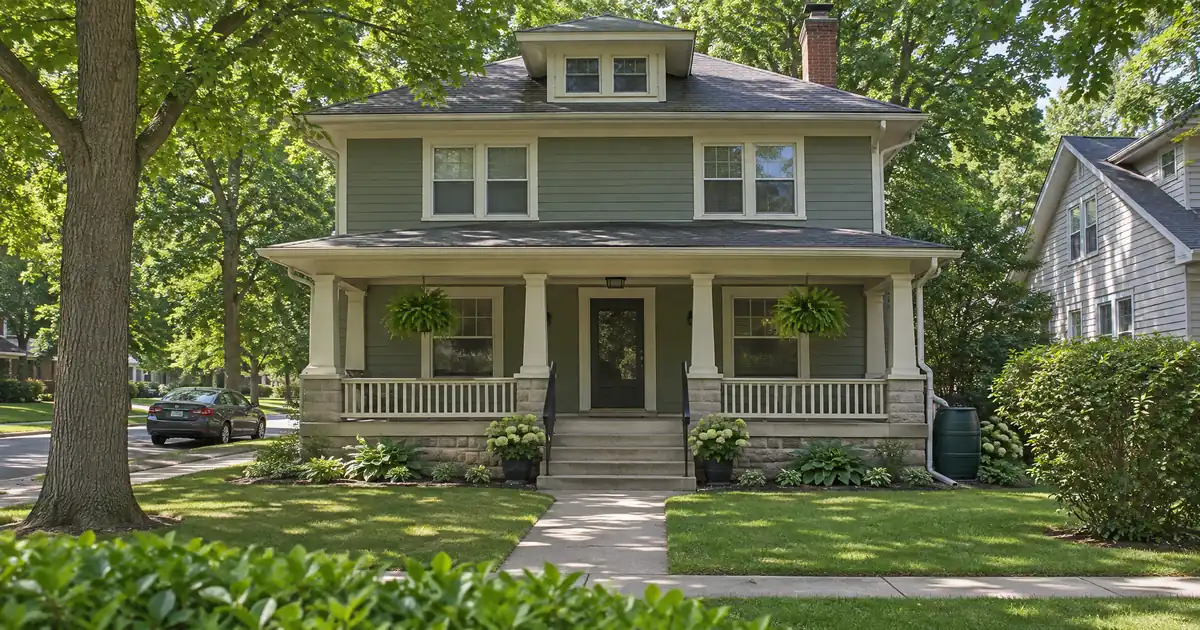
The Quick Read: A property with your parents living in it, even rent-free, generally cannot be financed as a DSCR cash-out, because these loans are written for non-owner-occupied investment properties and the borrower certifies that neither they nor their family will occupy the home. The question is not whether the rent covers the payment. It is whether the property can truthfully be certified as an investment property with no family living there.
- Standard DSCR paperwork includes an occupancy certification that covers you and your family, not only you.
- Charging your parents rent does not reliably fix it. Many programs bar immediate family even when they pay.
- Cash-out leverage tops out around 75% LTV on a standard rental, with about 6 months of ownership expected first.
- If your parents move out and the home is re-leased at market rent to an unrelated tenant, the file can move forward.
- If your parents must stay, the cash-out belongs in an owner-occupied product, not a DSCR loan. Every figure here varies by lender and program — guidelines, property type, leverage, and credit profile all apply.
Perhaps a family member needed a place, the arrangement felt informal, and now the equity looks tempting. This guide walks through how underwriting treats the situation, what the real options are, and where the general rule bends. For the full picture of how these loans work, see the complete DSCR loans guide.
DSCR Cash-Out Calculator
Run the cash-out numbers in your market
Rate source: Freddie Mac 30-yr average via FRED® — Federal Reserve Bank of St. Louis · effective Nov 5, 2026
Prefilled with starting assumptions — enter your property’s value, balance, taxes, and insurance for a more accurate picture.
Program parameters update from Lendmire’s centralized guideline source. Taxes and insurance are editable estimates.
As of Nov 5, 2026 · General Freddie Mac market benchmark, not a Lendmire loan offer. Property value, balance, taxes, and insurance are editable estimates. Maximum loan-to-value varies by lender, program, property type, and seasoning. Not a Loan Estimate, approval, or commitment to lend. Program availability and eligibility are subject to lender guidelines, credit approval, property review, and underwriting.
Key Terms Defined
DSCR (debt service coverage ratio): the property’s monthly rent divided by its monthly PITIA. It measures whether the rental income covers the payment.
PITIA: principal, interest, taxes, insurance, and any association dues. It is the full monthly housing obligation on the property.
Non-owner-occupied: a property the borrower and the borrower’s family do not live in and do not plan to live in.
Occupancy certification (or affidavit): a signed statement that the property is an investment property and who will, and will not, live there.
Business purpose: the loan proceeds are used for the investment or other business activity, not personal, family, or household spending.
Seasoning: the waiting period after you buy before a lender will let you pull cash out. About 6 months from title recording is the common expectation across the network.
Market rent schedule: the appraiser’s opinion of what the property would rent for. It is Form 1007 for a single-family home and Form 1025 for a 2-4 unit property.
Why Does Rent-Free Family Occupancy Block the Loan?
DSCR loans are designed for non-owner-occupied investment properties. Because they are business-purpose investor loans, they are reviewed differently from a standard owner-occupied mortgage. That label is the entire foundation of the product, and family living in the home undercuts it.
Here is how the certification typically reads. The borrower states that neither they nor any family member intends to occupy the property at any time. The borrower also states that the loan proceeds will not go to personal, family, or household purposes. A parent living in the house makes the first statement untrue. A rent-free parent has no lease, so there is nothing in the file that looks like a tenancy.
The rule comes from the lender’s program, not from a statute. A regulator did not decide that parents cannot live in your rental. The lenders in the network decided that a loan underwritten as an investment property should be one. Misstating the facts is a different matter. A federal financial-crimes advisory from FinCEN treats occupancy fraud as including claims that others, such as family members, will occupy a property. Standard affidavits also tie a false statement to default, acceleration, and possible foreclosure.
So the rent math is beside the point. A property could cover its payment at 1.5x and still fail, because the file stops at the occupancy gate before coverage is ever tested.
How Underwriting Treats a Parent-Occupied Property, Step by Step
Underwriting follows an order. Knowing it shows you exactly where this scenario stops.
1. Occupancy. The lender confirms the property is non-owner-occupied. Insurance, mailing address, and the address on your ID should all point to an investment property. With parents in residence, the certification cannot be signed truthfully.
2. Rent evidence. A rent-free arrangement has no lease. The appraiser’s market rent schedule becomes the rent evidence. On most files, the lower of the signed lease and the appraiser’s market rent is what counts. A discounted family lease therefore drags the counted rent down.
3. Condition. A property that is not rent-ready can disqualify a file. A vacant, rent-ready property is reviewed on market rent. A home full of a family member’s belongings is neither a true tenant-occupied rental nor a vacant one.
4. Coverage. The lender divides rent by PITIA. 1.00 is where select programs start, and stronger ratios open better pricing and leverage. A separate select-lender path takes coverage below 1.00, with leverage and terms adjusted.
5. Leverage and seasoning. Cash-out tops out around 75% LTV on a standard rental, with about 6 months of ownership measured from title recording. These specifics are subject to lender guidelines and a full review of property, leverage, and credit.
6. Reserves and credit. Reserves commonly run around 6 months of PITIA, stepping up to about 9 months on loans above $1,500,000. Credit floors start at 620 in parts of the network, with most programs wanting around 660.
If step one fails, passing step six changes nothing. That is the practical lesson of this whole topic.
Does Charging My Parents Rent Fix It?
Usually not. Whether it helps depends on who is living there and what the program allows.
Lenders draw a line between two situations. A relative who lives in your household is owner occupancy, which is off the table. A relative in a genuinely separate household is a related-party lease. Some programs allow a related-party lease with market rent and proof of payment. Others exclude it, and many bar immediate family even when they pay. Parents are immediate family.
Even where a related-party lease is allowed, the lease has to be at market. A below-market lease lowers the counted rent and the coverage ratio with it. A rent-free arrangement counts as no rent at all, so the appraiser’s schedule sets the number.
The test is who lives there, not whether money changes hands. Treat the decision table below as the working summary.
| Situation | DSCR cash-out path? | Practical next step |
|---|---|---|
| Parents live there rent-free | Generally not eligible | Re-tenant at market, or use an owner-occupied product |
| Parents pay rent under a lease | Depends on the program; many bar immediate family | Ask for the program’s related-party policy before applying |
| Parents moved out, unrelated tenant in place | Can work | Provide the lease and proof of rent payment |
| Parents moved out, property vacant and rent-ready | Can work | Appraiser’s market rent sets the ratio |
| Parents are co-owners or LLC members living there | Generally not eligible | The occupancy bar extends to entity owners |
| You live rent-free with your parents elsewhere | Not a problem for the subject rental | Expect a letter explaining housing history |
Does an LLC Change the Answer?
No. Holding the property in an LLC changes the title, not the occupancy test. Standard affidavits extend the bar to LLC members and owners, so a parent who is a member and lives in the house is still a problem. An LLC can be a perfectly good borrower on a DSCR loan, subject to lender program eligibility. It just cannot shelter a family-occupied home.
The Edge Cases That Trip People Up
You live with your parents, but the rental is somewhere else. This is fine. The loan looks at the rental, not the house you sleep in. The gap in your housing history may need a short letter of explanation. Borrowers with no primary residence at all can be routed to a narrower path. No-ratio structures are available only through select lenders, generally for borrowers who already own a primary residence, so that route does not help someone renting a room from family.
Your parents live in the property and you do not. Expect this to stop the file. You are not living there, but your family is, and the certification covers family.
Your parents move out before the cash-out. This is the real cure. The property needs to be rent-ready. Ideally an unrelated tenant signs a lease at market rent and the first payments show up in the bank records. How the timing sequences with seasoning and the appraisal is up to each lender’s guidelines, so ask before you act.
You plan to move your parents in after closing. This is the exact pattern the certification is built to prevent: taking cash out and then moving family in. The promise you sign at closing is meant to hold after the funds are in your account, not only on closing day.
Your parents hold a note on the property. This is a different situation. A parent who financed the purchase is a lender, not an occupant. Refinancing a family-financed rental raises its own questions about payoff-only versus cash-out treatment.
DSCR vs. conventional financing
There are two common ways to finance an investment property, and they qualify you differently — here’s how investors weigh them.
Why investors choose it
- Qualifies on the property’s rental income — no personal tax returns, W-2s, or pay stubs needed to document income.
- No personal debt-to-income ceiling to clear, so existing mortgages and obligations don’t cap your borrowing the same way.
- Can be closed in an LLC, keeping the property inside a business entity.
- Built for scaling — not held to the limit on number of financed properties that conventional financing applies.
- Underwriting centers on the deal: generally qualifies when the rent covers the payment, a 1.00x coverage ratio being a common baseline (confirmed in underwriting).
- Designed specifically for investment property, including long-term and, where the program allows, short-term rentals.
Where it’s strong
- Often the lowest ongoing financing cost for a buyer who fully qualifies on personal income — a fit for a first property or a cost-first purchase.
Trade-offs for investors
- Requires full personal income documentation and must fit within a debt-to-income limit — salary, existing debts, and other mortgages all count.
- Typically held in your personal name rather than a business entity.
- Caps how many financed properties you can carry, which can become a ceiling as a portfolio grows.
- Evaluates you as a borrower as much as the property, which usually means more paperwork.
How investors usually choose: a first or single property often optimizes for the lowest financing cost; portfolio builders often optimize for leverage, vesting in an LLC, and scaling past conventional caps. The right answer depends on your goals, the property, and current guidelines — both paths run through select lenders in Lendmire’s wholesale network, with eligibility and terms confirmed in underwriting.
How to Fix It: A Practical Sequence
If you want a DSCR cash-out on a property your parents currently occupy, work through these steps in order.
1. Decide whether your parents can move. If they cannot, stop here and look at an owner-occupied or other consumer-purpose product. A DSCR loan is the wrong tool.
2. Re-tenant at market rent. Find an unrelated tenant, sign a lease, and collect rent through a traceable account.
3. Get the property rent-ready. Clear personal belongings and finish needed repairs. A rent-ready property is reviewed on market rent.
4. Check seasoning. Count about 6 months from title recording if you bought recently.
5. Run the coverage ratio. Estimate rent against PITIA. The appraiser’s market rent schedule will be the final word, and the lower of lease and market rent generally governs.
6. Gather documents. A typical file includes the appraisal with rent schedule, the business-purpose and occupancy affidavit, entity documents if applicable, bank statements for reserves, and insurance showing an investment-property classification.
7. Confirm the use of proceeds. Cash-out on a business-purpose loan is not meant for personal or family expenses.
Keep in mind that clearing 1.00 on coverage is not the same as positive cash flow. DSCR compares rent to PITIA only. Repairs, vacancy, management, utilities, and capital expenses sit outside the calculation.
A Worked Scenario
Picture an investor who owns a single-family rental outright and has held it well beyond the seasoning window. The investor’s mother and father have lived there rent-free for several years. The investor wants to pull cash out at 75% LTV to buy a second property. Final terms depend on lender guidelines, property type, leverage, and the borrower’s complete credit picture.
On the numbers, the property looks strong. The appraiser’s market rent suggests coverage comfortably above 1.2x, and the equity easily supports the leverage. But the file stops at occupancy. The certification cannot be signed, and a quick lease to the parents would not change it where a program bars immediate family.
The investor has three real choices. The first is to re-tenant at market rent and return for the DSCR cash-out once an unrelated tenant is in place. The second is to use an owner-occupied cash-out product, which is a consumer-purpose loan and no longer a DSCR file. The third is to leave the property unencumbered until the situation resolves. None of these is a loophole. They are simply the paths that match the facts.
What Not to Do
Do not sign an occupancy certification you know to be untrue. Do not backdate a lease. Do not list the property as vacant while family lives in it. Occupancy misrepresentation was the most commonly reported misrepresentation in the loan-fraud narratives FinCEN’s mortgage loan fraud report sampled, though that report focuses mostly on the opposite direction, borrowers claiming a home as a primary residence. The risk, though, runs both ways. A false statement can bring default, acceleration, and foreclosure.
What About the Federal Business-Purpose Rule?
A short note on the regulatory side, since people tend to conflate it with the family bar. Federal rules treat credit for a non-owner-occupied rental as business-purpose, and owner-occupied rentals face different tests, such as unit counts. The CFPB’s Regulation Z text sets those tests. Its commentary also says that an owner who expects to use the property for more than 14 days in the coming year cannot treat it as non-owner-occupied for that purpose.
That 14-day test is written around the owner’s occupancy. It does not say your parents may stay, and it does not license family occupancy under a lender’s affidavit. The family bar comes from program rules, not from that regulation.
Alternatives If Your Parents Need to Stay
If your parents must remain in the home, the cash-out moves out of DSCR territory. An owner-occupied or other consumer-purpose product evaluates you on personal income and debt, not on rental coverage. That is a different underwriting path with different documentation.
If the real aim is freeing capital while keeping the family arrangement, the practical question is which property should carry the loan. A different, unoccupied rental in your portfolio may be a better cash-out candidate.
Questions to Ask Before You Apply
- Does the program bar immediate family from the property, even with a lease?
- Is a related-party lease allowed, and what proof of payment is required?
- How is the property’s rent-readiness judged if a family member moved out recently?
- Does the lender count the lower of the lease and the appraiser’s market rent?
- What does the occupancy certification say about family members and entity owners?
Frequently Asked Questions
Can my parents live in a property I take DSCR cash-out on if they pay market rent?
It depends on the program, and many programs say no. A relative in your own household counts as owner occupancy. A relative in a genuinely separate household may qualify under a related-party lease with market rent and payment proof, but many programs bar immediate family regardless. Ask before you apply.
What if my parents live rent-free but I do not live there either?
Generally still a problem. The occupancy certification covers family, not only you. Because the property is not a true tenant-occupied rental, it is usually a poor fit for a DSCR cash-out until the family occupancy ends.
Can I take the cash-out and have my parents move in later?
No. Occupancy restrictions typically run for the life of the loan, and moving family in after funding is the scenario the certification is built to prevent. Misstating your plans can bring default and acceleration.
Does it matter that I live rent-free with my parents somewhere else?
Not for the rental you are refinancing. The loan underwrites the investment property, not the home you sleep in. You may need a letter explaining your housing history, and borrowers without a primary residence can face a narrower path.
How much can I pull out once the property qualifies?
Cash-out typically tops out around 75% LTV on a standard rental, with about 6 months of ownership first, reserves around 6 months of PITIA, and a credit score floor of 620 in parts of the network. Actual proceeds depend on rent used for lender review, PITIA, reserves, and the leverage cap, so they are not guaranteed. Qualification is subject to lender guidelines.
If you are buying or refinancing a rental property and want to see how the numbers work, Lendmire can help you compare DSCR loan options based on the property income, credit profile, leverage, and investor goals.
For how equity extraction works on an investment property, see Lendmire’s guide to cash-out refinance on an investment property.
About Lendmire
A non-QM mortgage broker (NMLS# 2371349), Lendmire arranges DSCR financing for real estate investors in 41 markets — 40 states plus Washington, D.C. Because deals are underwritten primarily on property cash flow rather than personal income documentation, the structure suits self-employed buyers and entity-owned portfolios. Lendmire places loans through wholesale investor lenders; it is not a direct lender. Scotsman Guide named Lendmire a Top Mortgage Workplace in both 2025 and 2026.
Get Started
Ready to find the right loan for you?
See your offer in seconds. No credit pull, no obligation.
Informational only. Not a Loan Estimate, approval, or commitment to lend. Program availability and eligibility are subject to lender guidelines, credit approval, property review, and underwriting.
References
1. FinCEN Advisory FIN-2012-A009
2. FinCEN: Mortgage Loan Fraud
This article is part of Lendmire’s investment property cash-out refinance program — full qualification details, guidelines, and scenarios live on the program page.
Related reading: Delayed Financing vs DSCR Cash-Out for a BRRRR Investor · Can You Get a DSCR Cash-Out Refinance on a Property Your Sister Lives in Rent-Free? · What Happens to Your DSCR Cash-Out When an Ex Is Still on the Mortgage?
Brandon Miller
Founder & CEO, Mortgage Loan Originator, Lendmire LLC
- Mortgage Loan Originator · NMLS# 1129696 · Verify on NMLS Consumer Access
- North Carolina Real Estate Broker · License# 343312 · Verify on NCREC
- North Carolina Insurance Producer · License# 19053198 · Property, Casualty, Life, Health · Verify on NAIC SBS
- Lendmire LLC · Firm NMLS# 2371349 · Verify firm licensure
Disclosure information. Lendmire is a state-licensed mortgage brokerage under NMLS# 2371349. Lendmire is not a depository institution, direct lender, or financial advisor — all loans referenced are placed through wholesale lender partners and are subject to each lender's underwriting standards. This article is provided for general informational purposes and is not a commitment to lend, nor does it constitute financial, legal, or tax advice. Loan programs, terms, rates, and qualification standards change without notice and depend on borrower profile, property type, and the state in which the subject property is located. Equal Housing Opportunity provider. NMLS Consumer Access: nmlsconsumeraccess.org.