
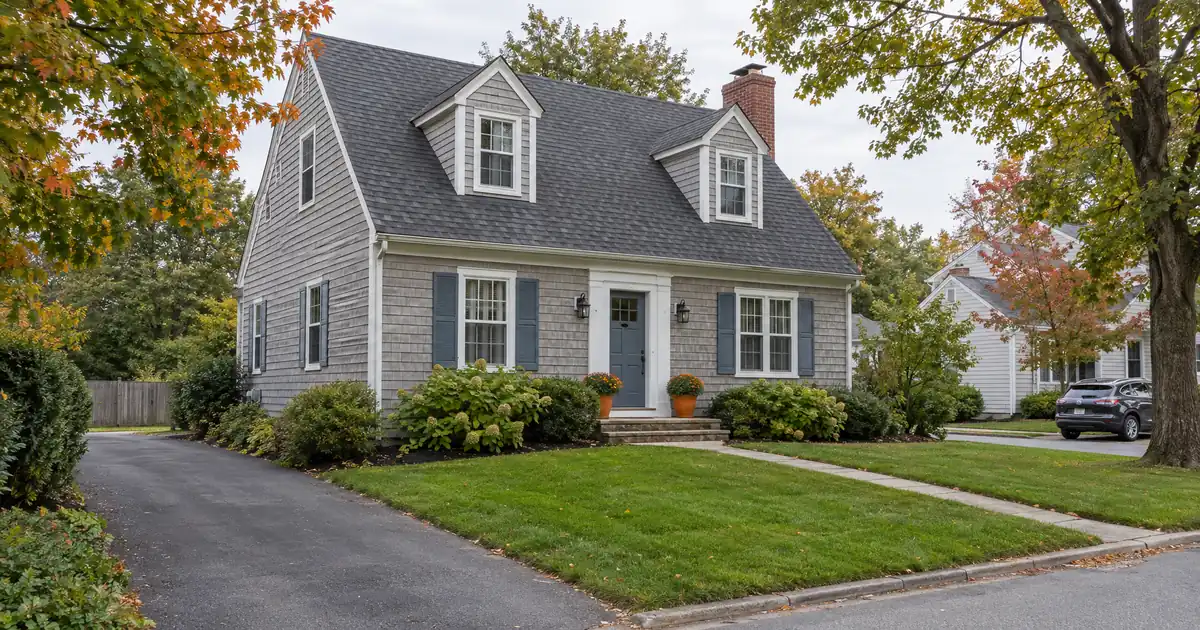
The Quick Read: Rent-qualified cash-outs, run one rental at a time, fit investors who hold property in LLCs, carry heavy personal debt, or need more than a $500,000 ceiling; a home equity line of credit (HELOC) fits an investor who holds a rental in their own name, wants to keep the existing first mortgage, and needs a modest, mostly one-time sum. Both tools pull equity out of a rental. They judge you on different things: one tests the property, the other tests you.
- A DSCR (debt service coverage ratio) cash-out measures a rental’s rent against its full monthly housing payment: principal, interest, taxes, insurance, and association dues, known together as PITIA.
- An investment-property HELOC rests on your credit, income, and debts. On this network the ceiling is 70% combined loan-to-value (CLTV, meaning the first mortgage plus the line, measured against value) and the line tops out at $500,000.
- A HELOC cannot be written on a rental titled to an LLC. A DSCR cash-out can be, subject to lender program eligibility.
- Each cash-out in a sequence is its own file with its own rent, value, and seasoning clock.
- Clearing 1.00 coverage is not the same as positive cash flow.
Here is the honest answer. If your rentals sit in LLCs, your personal debt ratios are already busy, or you want to pull equity from several properties one after another, rent-qualified cash-outs are usually the tool built for that job. If you own one or two rentals personally, like your current first mortgage, and want a modest pool of capital, a HELOC can make sense. Neither is better in the abstract. Title, scale, and what you do with the cash decide it.
Side-by-Side
The DSCR column reflects how most programs we place files with work through the wholesale network. The HELOC column reflects the investment-property line available through select partners in that same network. Both are subject to lender guidelines and full file review. This table compares structure only.
| Factor | DSCR cash-out | Investment HELOC |
|---|---|---|
| What gets tested | Rent vs. PITIA, plus guarantor credit | Your credit, income, and debts |
| Documentation | Lease or rent appraisal, entity papers | Personal income and debt file |
| Leverage and size | About 75% LTV on investment cash-out; up to $3,000,000 on standard programs | 70% CLTV; $25,000 to $500,000 |
| Title | Individual or LLC | Individual or revocable trust only |
| Existing first mortgage | Paid off and replaced | Stays in place |
| Funding and valuation | Lump sum; full appraisal and payoff file | At least 75% drawn at closing; valuation often automated |
| Reserves | Commonly around 6 months of PITIA; varies | Set by program; confirm up front |
| Property types | Manufactured homes, log homes, barndominiums not offered | Manufactured, co-ops, condotels, log homes not eligible |
One availability note. DSCR investor loans run across 41 markets, including Washington, D.C. The HELOC side is narrower: Lendmire’s HELOC placements cover its 16 full-service states only. Check your state before you build a plan around a line.
How Does a Sequence of Cash-Outs Actually Work?
A sequence is a series of separate loans, one per rental. Each property carries its own rent, appraised value, and seasoning clock. Seasoning is how long you have owned the property, usually counted from the recorded deed, and about 6 months is the common expectation. The only thing linking the files is you.
That last point trips people up. Splitting rentals across several LLCs does not make you a new borrower. Lenders look at the person standing behind the entities, and each lender sets its own cap on how much exposure it will carry on one guarantor. A guarantor is the person who signs personally behind the loan. So the chain has limits, but they come from lender guidelines, not from a legal cap on the number of cash-outs.
Here is the ordering logic we see work best across the network:
1. Start with the strongest file. Pick the rental with the most equity and the most coverage headroom. It has the best odds of surviving a lower-than-hoped appraisal.
2. Let weaker files wait. A recently purchased rental, or one with thin coverage, can sit until its clock runs or its rents rise.
3. Retest before every step. Each cash-out raises the balance on that property, which lowers its coverage. Run the new ratio before you order the appraisal, not after.
4. Count reserves once. The same liquid funds get tested on every file. Some lenders let cash-out proceeds count toward reserves on later files, but that is lender-specific. Confirm it per program.
5. Check existing prepayment terms. Paying off a loan early can carry a cost. Read the note before the file goes anywhere.
For more on ordering a portfolio, see Lendmire’s piece How to Sequence DSCR Cash-Outs Across a Rental Portfolio.
What Happens to Coverage With Every Pull?
Coverage falls with every cash-out, because the balance grows while the rent stays put. Run the math before each step. Say a rental covers its payment at roughly 1.35x today. These are modeled assumptions, not market data. After a cash-out near the 75% LTV ceiling on an investment rental, that same property could land closer to 1.10x. Still above 1.00. Thinner cushion. Exact terms depend on the lender’s guidelines, property type, leverage, and a full review of the borrower’s file.
On the next file, the numbers start from a different place. Maybe that rental is only at 1.15x today, and the same pull pushes it below 1.00. Now you are in different territory. Many select programs start at 1.00 coverage. A separate path through select lenders in the network takes coverage below 1.00, with leverage and terms adjusted. Different products, not one program with a sliding floor. Stronger coverage generally opens better pricing and leverage.
Credit matters alongside the ratio. Most programs want around a 660 score from the guarantor, a 620 floor exists in parts of the network, and 700 or better unlocks the strongest leverage tiers. Short-term rentals run tighter: cash-outs on short-term-rental collateral top out around 70% LTV, versus about 75% on standard long-term rentals, and those files typically expect a 640-plus score and about 12 months of hosting history. Rules for short-term rentals can vary by city, county, HOA, and property type, so confirm local rules before relying on projected rental income.
Then comes the trap. DSCR compares rent to PITIA only. Repairs, vacancy, management, utilities, and capital expenses sit outside the calculation. A rental can clear 1.00 and still lose money each month. If you chain three cash-outs and every property sits just above the floor, one bad quarter hurts. A larger down payment on a purchase can lift the ratio, but it never erases leverage caps, credit floors, reserve rules, or property eligibility. The strongest files have enough equity and enough rental coverage.
When Is DSCR Cash-Out Sequencing the Better Fit?
Sequencing fits an investor with several rentals, especially ones held in LLCs, who wants each property judged on its own income. Because qualification runs primarily on property-level rental income covering the payment, subject to lender guidelines, your personal debt-to-income ratio is not the main gate. Every new loan does not stack on the last one in the same way.
It fits best when:
- Your rentals sit in LLCs. An LLC cannot hold title on the equity line. DSCR programs generally lend to an LLC with a personal guarantor, per lender program requirements.
- You need more than $500,000. The investment line ends there. DSCR loans reach up to $3,000,000 on standard programs, with smaller balances available through select lenders on standard files, and above $2,500,000 the network generally holds to 30-year fixed structures.
- Your existing first mortgage is not worth protecting. A cash-out replaces it. If that loan has terms you love, you give them up. That is the main tradeoff.
- You want a known lump sum for a known purpose. A down payment on the next purchase or a rehab budget fits this shape.
- Your personal ratios are already stretched. A rent-based test sidesteps much of that.
The catch is cost and effort. A full refinance means an appraisal, title work, payoff, and a guarantor file every time. And the guarantee is personal: an LLC on title does not make the loan non-recourse to the person who signs behind it. For the title-seasoning side of the picture, Lendmire’s piece Delayed Financing vs Cash-Out Refinance for a Multi-LLC Rental Investor covers the recent-purchase case.
When Is a HELOC the Better Fit?
A HELOC fits an investor who owns a rental personally, wants to leave a good first mortgage alone, and needs a defined amount that tops out at $500,000. The line sits behind your existing loan, so the first mortgage and its terms stay in place.
Understand the structure first. A HELOC is an open-end line of credit. The Consumer Financial Protection Bureau describes a draw period (it gives 10 years as an example) followed by a repayment period that is often 10 or 20 years, with payments often significantly higher once repayment starts. On this network, an investment line runs a 5-year interest-only draw followed by a 25-year fully amortizing repayment. At least 75% of the line is drawn at closing. The line floats and never converts to fixed. So it is less of a flexible revolving tool than the name suggests.
Qualification looks like a personal loan file. The credit floor on an investment line is 700. Debt-to-income (DTI, your monthly debts against your monthly income) can reach 50%, tested on the interest-only payment at the maximum draw. Valuation is often automated at this size, commonly with no traditional appraisal. That is convenient. It also means the system will not capture value you just added with a renovation. You can request a full appraisal in any case.
Availability is the real friction. NerdWallet notes that lines on investment property are possible but the lender pool is smaller, borrowing limits are lower than on a primary home, and not every lender offers the product. It also describes a typical structure of a 10-year draw followed by repayment of up to 20 years. Our network’s investment structure is the 5-year/25-year version above, so treat market descriptions as context, not as our terms.
Mind the ceilings. A borrower can hold up to three lines, with combined exposure caps that vary by program from $750,000 to $2,000,000. A borrower who owns more than 15 financed properties is not eligible. For a multi-rental investor, that is the scaling wall. Each line is also a new personal application that adds to the debt stack your DTI is measured against.
Does Title Decide It for You?
Often, yes. On this network, a HELOC requires title in the individual borrower’s name or an inter vivos revocable living trust. LLCs, corporations, partnerships, and irrevocable, blind, or land trusts cannot hold title. If a rental already sits in an LLC, you have two options: change the vesting or use a DSCR cash-out.
Do not deed a property into or out of an LLC casually to fit the product. The federal due-on-sale law (Garn–St Germain, 12 U.S.C. §1701j-3) makes due-on-sale clauses enforceable, with limited exceptions. A transfer out of an LLC deserves the same attorney review. The cleaner route is often to vest in the LLC at the refinance closing, so the new loan and the new title arrive together. Have an attorney confirm for your file.
Can You Use Both on Different Rentals?
Yes, and for some investors it is the strongest structure. Picture an investor with four rentals. Two sit in LLCs, one is held personally with a first mortgage worth keeping, and one is a recent purchase still inside its seasoning window. The LLC rentals go through DSCR cash-outs in order of equity and coverage. The personally held rental gets a line behind its first mortgage. The recent purchase waits.
Two cautions. First, a drawn HELOC adds to your personal debt, which can show up in the guarantor review on later DSCR files. Second, the three-line and 15-property limits on the HELOC side still apply as you grow.
In multi-property plans, the sequencing problem usually shows up at the second file, not the first. The first appraisal is fine, then the second comes in lower or the coverage retest lands just under the program floor. Investors who plan a branch for that moment, a smaller pull or a different property, keep the plan alive. Those who treated file one’s numbers as a template for files two and three tend to stall.
Where Both Options Stumble
A few edges catch people on either side:
- Blanket and cross-collateralized structures differ from sequenced single-property loans. One failing property can put the others at risk, so release provisions matter.
- Property types are program-specific. Manufactured homes, log homes, and barndominiums are not offered on the DSCR side. The HELOC side also excludes co-ops, condotels, commercial, mixed-use, and agricultural zoning.
- Recent purchases may face seasoning rules. Exceptions are file-specific. Do not assume one applies.
- Existing liens and listing status matter. On the HELOC side, a property listed for sale, or listed within the past 60 days, is ineligible in NC, PA, TN, TX, and WA.
- Valuation can swing the outcome. A low appraisal on a cash-out shrinks the pull. An automated value on a HELOC can miss a rehab.
If your plan only works at the top of every ceiling, the plan is fragile. Build in cushion.
The Verdict
Pick the DSCR sequence if you hold several rentals in LLCs, need to scale past a $500,000 line, or do not want personal debt ratios to cap the plan. Expect heavier files and a replaced first mortgage. Pick the HELOC if you hold a rental personally, like your first mortgage, and need a defined sum within the $500,000 line size. Expect individual or revocable-trust title and a personal credit and income review.
This one is a genuine toss-up for investors with one or two personally titled rentals. The lighter file favors the line. The shape of the funding favors the cash-out. Run both through lender review before deciding, and let the strongest file win. The complete DSCR loans guide walks through the DSCR side in more depth.
Frequently Asked Questions
Is there a limit to how many DSCR cash-outs I can do in a row?
No law caps the count. Each lender sets its own guarantor exposure limit, and each property needs its own seasoning, equity, and coverage. The practical limit is usually the coverage retest on later files, not the number of loans.
Can I have a HELOC on one rental and a DSCR loan on another at the same time?
Yes, if the properties and titles fit each product. The line needs the rental in your name or a revocable trust. The DSCR loan can sit on an LLC-owned rental, subject to lender program eligibility. A drawn line still adds to your personal debts, so expect it to appear in the review.
Does a HELOC work on a rental held in an LLC?
Not on this network. LLCs cannot hold title on an investment line. Some lenders in the wider market may handle LLC-titled lines under specific requirements, but the lender pool is thin. A DSCR cash-out is the usual path for an LLC-owned rental.
Do cash-out proceeds count toward reserves on the next loan?
Sometimes. Reserves vary by lender, leverage, loan size, and transaction type, and are commonly around 6 months of PITIA. Some programs let proceeds satisfy part of the requirement. Confirm it per program, and count the same funds once across your files.
If my coverage clears 1.00, will the rental make money?
Not necessarily. The ratio compares rent to PITIA only. Vacancy, repairs, management, utilities, and capital expenses are outside it, so a rental can clear the test and still run at a loss.
Comparing Your Own Numbers
If you are weighing a string of cash-outs against a home equity line and want to see how the numbers work, Lendmire can help you compare options based on the property, the equity available, your credit profile, combined leverage, and your goals. Lendmire is a broker that arranges these loans through select lenders in its wholesale network. Every figure here is subject to lender guidelines and full file review, and nothing above is a commitment to lend.
Investors who plan the second and third files before they start the first tend to have the cleaner outcomes.
For how equity extraction works on an investment property, see Lendmire’s guide to cash-out refinance on an investment property.
About Lendmire
As a mortgage broker (NMLS# 2371349), Lendmire helps homeowners and real estate investors in its 16 full-service states open home equity lines of credit arranged through wholesale lenders. Lendmire is never the lender; line amounts, ceilings and terms are set by the lender under its guidelines. Scotsman Guide named Lendmire a Top Mortgage Workplace in both 2025 and 2026.
Get Started
Ready to find the right loan for you?
In about 30 seconds you can review financing options available for your investment property. No commitment required.
Informational only. Not a Loan Estimate, approval, or commitment to lend. Program availability and eligibility are subject to lender guidelines, credit approval, property review, and underwriting.
References
1. CFPB – What is a home equity line of credit (HELOC)?
2. NerdWallet – Can you get a HELOC on an investment property?
3. Cornell Law School LII – 12 U.S.C. §1701j-3
This article is part of Lendmire’s investment property HELOC program — full qualification details, guidelines, and scenarios live on the program page.
Related reading: Portfolio DSCR Loan vs. a DSCR Loan on Every Rental · How DSCR Financing Steps Up as a Rental Business Grows · Should a DSCR Investor Consolidate or Pick Where Each Cash-Out Goes?
Brandon Miller
Founder & CEO, Mortgage Loan Originator, Lendmire LLC
- Mortgage Loan Originator · NMLS# 1129696 · Verify on NMLS Consumer Access
- North Carolina Real Estate Broker · License# 343312 · Verify on NCREC
- North Carolina Insurance Producer · License# 19053198 · Property, Casualty, Life, Health · Verify on NAIC SBS
- Lendmire LLC · Firm NMLS# 2371349 · Verify firm licensure
Legal disclosures. Lendmire (NMLS# 2371349) is a state-licensed mortgage brokerage that arranges financing through wholesale lender relationships. Lendmire is not a direct lender, depository institution, or registered financial advisor. The discussion above is general informational content about real estate financing — it is not financial, legal, or tax advice, and readers should consult licensed professionals for guidance on their individual circumstances. Loan inquiries are subject to lender underwriting; this article does not represent a commitment to lend. Loan terms, rates, and qualification standards vary by borrower, property, and state, and are subject to change at any time. Equal Housing Opportunity. NMLS Consumer Access: nmlsconsumeraccess.org.