
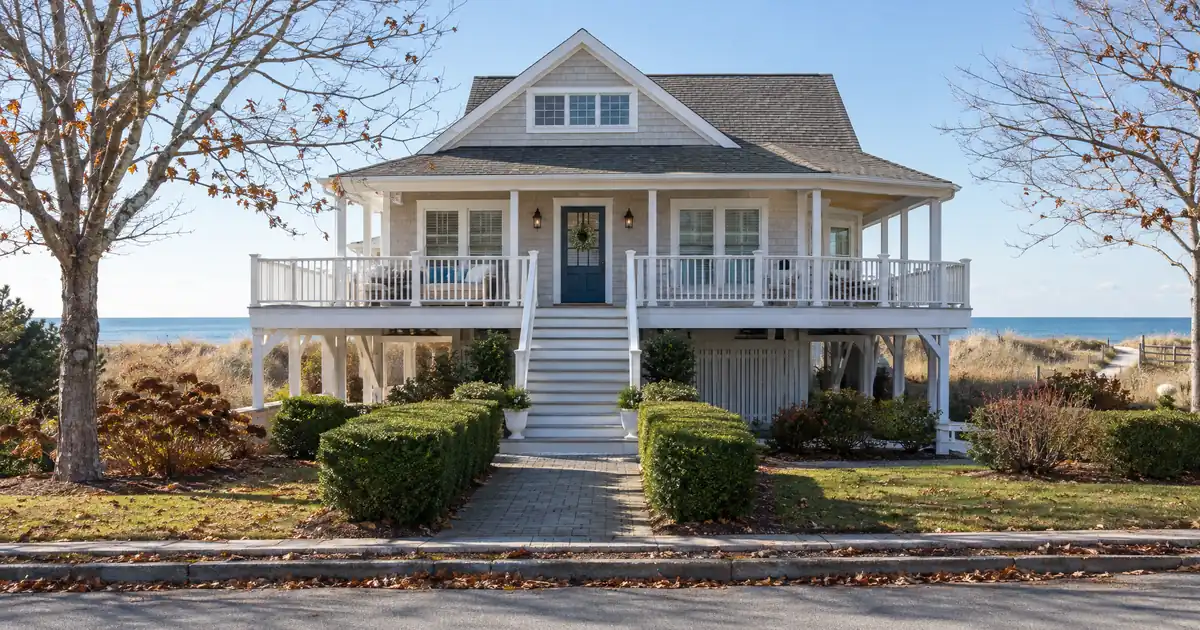
The Quick Read: A standalone loan puts one note on one property, so each Airbnb has to clear its own coverage test. A portfolio loan puts several rentals under one note and tests them together. That lets a stronger property offset a weaker one, but it also ties every property to the same lien and the same default risk.
- Standalone fits investors who want clean exits, staggered sales, or separate entities for each property.
- Portfolio fits investors who want one closing, one payment, and pooled coverage across several properties.
- Projected Airbnb income is an estimate, and a pool stacks that estimate across every door.
- Neither structure removes the credit, reserve, property-type, and short-term-rental legality checks.
The honest answer is that neither is better in the abstract. The right choice depends on how soon you might sell a property, how many doors you hold, and how much you trust each projection. The rest of this piece covers where the two structures differ and where each one fits. For the wider mechanics, Lendmire’s complete DSCR loans guide is the place to start.
Side-by-Side
The table below compares the two structures using ranges from the programs in Lendmire’s wholesale network. Every figure is a ceiling, a floor, or a typical range, and none is a quote. Qualification is subject to lender guidelines, and every file is underwritten individually.
| Factor | Standalone DSCR loan | Portfolio DSCR loan |
|---|---|---|
| Review basis | Each property’s own coverage | Pooled rent against pooled debt |
| Coverage floor | 1.00 on STR purchase and refinance | 1.00 on the pool |
| Property count | One property per note | 2 to 20 (30-year); 5+ (term loan) |
| Loan size | Up to $3,000,000 on standard programs | $300,000 to $5,000,000 (30-year) |
| Leverage ceiling | STR purchase up to 75%; STR refinance up to 70% | Up to 80% (30-year); up to 75% (term loan) |
| Credit floor | 640 for STR | 640; some structures want 680 or 720 |
| STR history | About 12 months of host experience | Per property, as the lender reviews it |
| Property types | Standard rental types | SFR, 2-4 unit, condo, townhome |
| Entity vesting | Individual or LLC | SPE or LLC required on some structures |
| Release of one property | Not applicable | Governed by the loan documents |
| Paperwork | Repeated for each loan | One consolidated file |
| Reserves | Vary by lender, leverage, and size | Held for taxes, insurance, and capex on the term loan |
Two cautions on the table. The leverage figures for the pool apply to the pool’s own structures, so a property run as a short-term rental may be reviewed under tighter terms than the ceiling shown. And the credit row mixes two programs on purpose, so read each cell against its column.
Key Terms Defined
Standalone DSCR loan: One note secured by one property, qualified on that property’s income covering that property’s payment.
Portfolio DSCR loan (also called a blanket loan or cross-collateralized loan): One note secured by several rentals. Here all three names mean the same thing. A bank’s portfolio loan, meaning a loan the bank keeps on its own books, is a different sense of the word.
Pooled coverage: Combined rent divided by combined debt service across every property in the pool.
Cross-collateralization: A structure where several properties secure one debt. Nav’s explainer on cross-collateralization notes that a cross-collateral clause can give the lender the right to seize the pledged collateral if payments stop.
Release clause: The loan term that lets you sell or remove one property from the pool, usually under conditions the lender sets.
Projected income: An estimate of what a property should earn as a short-term rental, used when no booking history exists.
How Projected Airbnb Income Gets Counted
Under both structures, a projection is an estimate that a lender weighs against the property, the market, and the borrower. The ratio itself is simple: income divided by PITIA, which is principal, interest, taxes, insurance, and any HOA dues. The structure only changes whether that division happens once per property or once for the whole pool.
Evidence for a purchase with no history usually comes in three forms. One is a projection from a third-party short-term-rental data service. Another is an appraiser’s or property manager’s rent opinion. The third is trailing platform history. Across the network, most programs want about 12 months of host or landlord experience on short-term-rental files, and a projection helps most where the borrower brings that track record. Lenders typically trim projected gross revenue before running the ratio, because short-term rentals cost more to operate than long-term leases. The size of the trim varies by lender.
A “1007 projection” often misleads investors. Fannie Mae’s appraiser update describes Form 1007 as documenting monthly market rent, and it notes the conventional guide says nothing on whether short-term income counts. McKissock, an appraisal education provider, adds that appraisers cannot simply multiply a nightly rate by 30 to fill the form. So a rent schedule on an Airbnb usually reflects long-term rent unless a separate short-term analysis sits beside it. Lendmire’s piece STR Projected Income Analysis vs Form 1007 for Airbnb DSCR Loans goes deeper on that split.
Short-term rental rules can vary by city, county, HOA, and property type, so investors should confirm local rules before relying on projected rental income. A rental that cannot legally operate as an Airbnb will not support the file under either structure.
One more point: clearing 1.00 is not the same as positive cash flow. The ratio measures rent against PITIA only. Repairs, vacancy, management, utilities, and furnishing costs sit outside it, and those costs run heavier on short-term rentals.
When a Standalone Loan Is the Better Fit
Standalone is usually the better fit when exits matter more than convenience. Each property carries its own note, its own lien, and its own payoff. Selling one door never requires a negotiation with a lender over a release.
Standalone tends to suit these investors:
- Investors who may sell within a few years. A flip-adjacent or appreciation-driven property should not share a lien with long holds.
- Investors with one or two Airbnbs. Many pool programs set minimum property counts and loan sizes that a small holding does not reach.
- Investors who keep each property in its own LLC. Separate notes keep the entities separate, subject to lender program eligibility.
- Investors with a strong property and a marginal one. A weak door failing alone is a clear signal, and it keeps the weak door from dragging down a good one.
- Investors buying on staggered timelines. A property that closes, gets furnished, and launches months after another has no business sharing a pool with it.
The cost is repetition. Each loan brings its own appraisal, rent evidence, entity package, and closing. On a standalone STR purchase, leverage typically tops out at 75% on the strongest files. On short-term-rental collateral, a standalone cash-out tops out around 70%, while standard long-term rentals can reach 75%. Both need coverage of at least 1.00 on the programs that handle STR files.
Standalone is also the cleaner choice when the projection is shaky. If the market is new to you, or the property has no comparable listings, a failed test on one door costs you one deal. In a pool, the same failure can cost you the whole structure.
When a Portfolio Loan Is the Better Fit
A portfolio loan is the better fit when you hold several rentals you intend to keep and want one payment, one closing, and coverage measured across the whole group. The network offers two structures, and they differ enough that you should know which one you mean.
The 30-year portfolio DSCR loan covers 2 to 20 properties under one note, with loan sizes from $300,000 to $5,000,000 and larger balances on review. Leverage runs up to 80% of value on a purchase or a rate-and-term refinance. Pooled coverage has a floor of 1.00, measured as combined rent against combined debt service. It offers fixed or adjustable rate types on a 30-year term, with an interest-only period available. Eligible property types are single-family, 2-4 unit, condo, and townhome. The exact numbers vary by lender and program and follow a full review of property, leverage, and credit.
The rental portfolio term loan is built for five or more rental properties or units, with loan sizes from $500,000 to $50,000,000 and leverage up to 75% of value. It uses fixed terms of 3, 5, 7, or 10 years with a balloon at maturity. It comes in recourse and non-recourse versions. A non-recourse loan looks to the real estate, with recourse limited to carve-outs such as fraud and bankruptcy, while a recourse loan carries a personal guarantee. Prepayment runs on yield maintenance, and reserves are held for taxes, insurance, and capital expenditures. Properties in several markets can sit under one loan. Small multifamily of five or more units is eligible only on this term structure, not on the 30-year portfolio loan or a standalone loan. Final terms depend on the lender’s guidelines, the property type, and the borrower’s complete credit picture.
Both structures share a few rules. The credit floor is typically 640, and some portfolio structures ask for 680 or 720. Every property still needs a lease or an appraiser-supported market rent. A weak property can sit in the pool, and underwriting tests the pooled coverage, the leverage and the terms. Cash-out on a portfolio loan never goes above 75% of the pooled value. Inside the first six months, the loan is also capped at 90% of total cost (purchase price plus documented improvements), 100% of total cost from six to twelve months, and the leverage ceiling still applies, so the loan is the lower of the two. After twelve months the appraised value alone is the basis, and a rate-and-term refinance is not subject to the cost-basis cap.
Portfolio loans make the most sense in these situations:
- A bulk purchase or a multi-property refinance where one closing replaces several.
- A portfolio near the limit of conventional property-count caps, where DSCR files are often the practical lane.
- Long holds with similar profiles, where blended coverage reflects reality.
- A mix of stronger and weaker doors where the group clears 1.00 even though one door would not.
The last point is the real draw and the real trap, and the next two sections cover why.
A Three-Property Walk-Through
This example is illustrative, with modeled ratios rather than sourced market data. Picture an investor with three short-term rentals, each tested on a lender-adjusted projection. Two doors cover their own payment at roughly 1.25x. The third, in a softer submarket, covers at about 0.85x.
Run as three standalone loans, the first two proceed on their own. The third fails its own test and needs a different structure, lower leverage, or a pass. Run as one portfolio loan, the pooled number depends on loan sizes. If the two strong doors carry most of the debt, the pool can land above 1.00 and the weak door rides along. Underwriting still tests the pooled coverage, the leverage and the terms.
Now stress the projection. Suppose the lender trims the soft door’s projection further, or a local rule change lowers its income. Standalone, you lose one deal. In the pool, the blended number drops, and it can pull the pooled coverage under the floor for all three. The pool’s strength is the same as its weakness: it depends on every projection being roughly right.
Seasonality works the same way. A pool averages busy and slow months across properties, which can smooth a lender’s view. But if all three doors share the same peak season or the same market, averaging hides the correlation instead of reducing it.
Where the Pool Gets Risky
The risk in a pool is concentration, and it shows up in three places.
Cross-collateralization. One note means one set of default terms. If the pool falls behind, the lender’s remedies can reach every property in it, as the Nav explainer on cross-collateral clauses notes. Some pools also carry cross-default language that links otherwise separate loans, so two pools can behave like one.
Release terms. Selling one door out of a pool is possible only if the documents allow it. Release terms are not standardized. The release price typically runs above the property’s allocated balance, and the remaining properties often have to keep covering the pool’s payment. Nav’s guidance is to secure a release clause up front, because a property tied to a blanket lien is much harder to sell without one. Partial releases, substitutions, and sales follow the loan documents and the lender’s release terms.
Personal guaranty. Recourse loans carry a personal guarantee. On the rental portfolio term loan, non-recourse structures exist, with carve-outs. Do not assume a pool isolates your personal exposure unless the documents say so.
Prepayment is the other exit cost. The rental portfolio term loan uses yield maintenance, so paying it off early is a negotiation with a real cost. A standalone loan lets you pay off one note without touching the others. Lendmire’s article Projected Airbnb Income vs Booking History on a Short-Term Rental DSCR Loan is a useful companion if the strength of your income evidence is the open question.
Some ineligible items fall outside either structure. Owner-occupied property, co-ops, mixed-use property, and commercial property are not eligible in the pool. Manufactured homes, log homes, and barndominiums are not offered on these programs.
Questions to Ask Before Choosing
A short list covers most of the decision:
1. How many properties will I realistically sell in the next few years, and are they on a different timeline from the rest?
2. If one door’s projection misses, can the pool still clear its floor?
3. Does the program accept projected income for each property, or only for some?
4. How are release prices set, and does the remaining pool have to pass a coverage test after a sale?
5. Is the note recourse or non-recourse, and what are the carve-outs?
6. Do I hold properties in separate entities that I want to keep separate?
7. Is a hybrid cleaner, with long holds pooled and sell-soon doors on standalone loans?
Many investors land on the hybrid. A property can sit in a blanket or on its own loan, but not both at once, so the work is assigning each door to the structure that matches its exit plan.
The Balanced Verdict
For one or two Airbnbs, or for any property you might sell on short notice, a standalone loan is usually the better structure. You pay for it in repeated paperwork and in making each property qualify alone. For several long-term holds with similar profiles, a portfolio loan can simplify the file and let pooled coverage do some of the work. The price is shared risk and a release process you have to negotiate.
The flip point is the projection. If you trust every projection and expect to hold every door, the pool is efficient. If one projection feels optimistic, standalone protects you from your own estimate.
If you are buying or refinancing a rental property and want to see how the numbers work, Lendmire can help you compare DSCR loan options based on the property income, credit profile, leverage, and investor goals.
Frequently Asked Questions
Can one property be in both a portfolio loan and a standalone loan?
No. A property secures one first-lien note, so it sits in the pool or on its own loan. The practical move is to assign different properties to each structure based on how long you plan to hold them.
Is a portfolio loan the same as a blanket loan?
In DSCR lending, yes: both mean one note secured by several rentals. A bank’s portfolio loan, meaning a loan the bank holds on its own books, is a different sense of the term. A batch of loans closed together, each with its own note, is not a blanket unless the documents cross-collateralize.
Does projected Airbnb income pool across properties?
On a portfolio loan, coverage is measured on the pooled rent and pooled debt service. A projected figure for each property feeds that total, subject to lender guidelines. A weak projection on one door lowers the pooled number for all of them.
Can I sell one property out of a pool?
Only as the loan documents allow. A release clause sets the terms, and the release price typically runs above the property’s allocated balance. The remaining properties generally still have to cover the pool’s debt service.
What if I only have two or three rentals?
The 30-year portfolio structure starts at two properties, but loan-size minimums apply and may not fit a small holding. Separate loans are often the practical route for small portfolios, and a mixed approach is common.
About Lendmire
A non-QM mortgage broker (NMLS# 2371349), Lendmire arranges DSCR financing for real estate investors in 41 markets — 40 states plus Washington, D.C. Because deals are underwritten primarily on property cash flow rather than personal income documentation, the structure suits self-employed buyers and entity-owned portfolios. Lendmire places loans through wholesale investor lenders; it is not a direct lender. Scotsman Guide named Lendmire a Top Mortgage Workplace in both 2025 and 2026.
Get Started
Ready to find the right loan for you?
In about 30 seconds you can review financing options available for your investment property. No commitment required.
Informational only. Not a Loan Estimate, approval, or commitment to lend. Program availability and eligibility are subject to lender guidelines, credit approval, property review, and underwriting.
References
1. Nav – Cross Collateralization
2. Fannie Mae – Appraiser Update
3. McKissock – Form 1007 and Short-Term Rental Appraisals
This article is part of Lendmire’s short-term rental loan program — full qualification details, guidelines, and scenarios live on the program page.
Related reading: Can BRRRR Rehabs Go in a DSCR Portfolio Loan Before Leasing? · How to Finance the Next Rentals Under a DSCR Portfolio Loan · Portfolio DSCR Loan vs Bank Portfolio Loan on What Each Verifies
Brandon Miller
Founder & CEO, Mortgage Loan Originator, Lendmire LLC
- Mortgage Loan Originator · NMLS# 1129696 · Verify on NMLS Consumer Access
- North Carolina Real Estate Broker · License# 343312 · Verify on NCREC
- North Carolina Insurance Producer · License# 19053198 · Property, Casualty, Life, Health · Verify on NAIC SBS
- Lendmire LLC · Firm NMLS# 2371349 · Verify firm licensure
Important disclosures. Lendmire (NMLS# 2371349) is a licensed mortgage brokerage. Lendmire is not a direct lender, depository institution, or financial advisor. All loan inquiries are subject to lender underwriting; this article does not constitute a commitment to lend. Rates, terms, and program guidelines are subject to change without notice and vary by borrower profile, property type, and state. Information in this article is general in nature and is not financial, legal, or tax advice. Equal Housing Opportunity. NMLS Consumer Access: nmlsconsumeraccess.org.