
The Quick Read: A DSCR HELOC suits an owner who wants to keep a first mortgage and reach equity through a second lien. A DSCR cash-out refinance suits an owner who wants one lump sum and is fine replacing the first loan. On a tower with a commercial floor, the building often decides the answer before the product does.
- A DSCR HELOC is a standalone second lien (or a first lien on a paid-off unit), qualified on the rent.
- A DSCR cash-out refinance pays off the old first mortgage and writes a new, larger one.
- The HELOC program in Lendmire’s network excludes mixed-use property and condotels, so a commercial floor is a real hurdle there.
- A cash-out lender reviews the same tower as a project-level risk and sets its own standard.
- Run the project check first. Pick the product second.
Debt service coverage ratio (DSCR) is a plain test: monthly rent divided by the monthly housing payment, including taxes, insurance and HOA dues. A unit that clears 1.0x has rent covering the full payment. Each lender sets its own minimum, and programs adjust leverage and terms around it.
The Honest Answer on Who Each Option Is For
The HELOC is for the investor who likes the first mortgage they already have. Maybe it is a long-held loan, or maybe refinancing means giving up terms worth keeping. They want a line against the equity and nothing else disturbed.
The cash-out refinance is for the investor with a known capital need. They want one lump sum, one new loan and one payment. They don’t mind replacing the old first mortgage.
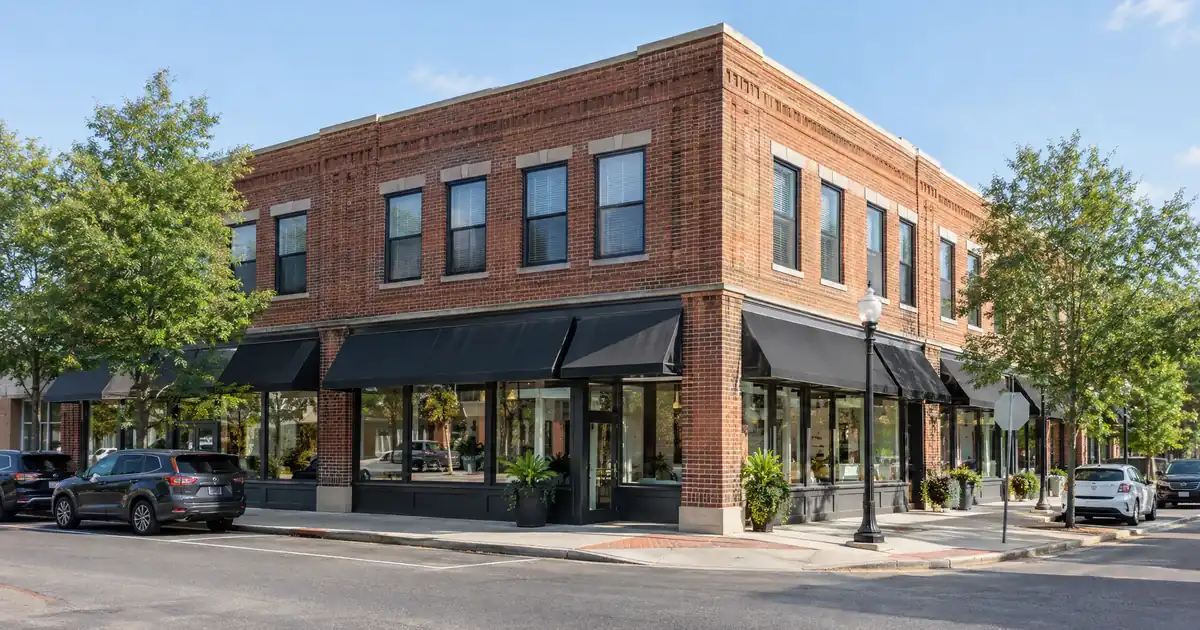
Then comes the tower. A residential unit sitting above a retail podium, a bank branch or an office floor is not an ordinary condo. The commercial space belongs to the project, not to your unit. Lenders ask about it before they look at your rent. Through Lendmire’s wholesale network, the cash-out lane tends to be more flexible on that question than the HELOC lane. That is a pattern, not a promise, and it all depends on the building.
Side-by-Side
The left column reflects the DSCR HELOC program in Lendmire’s wholesale network. The right column shows published industry norms for DSCR cash-out refinances, which vary by lender. Everything is subject to underwriting and lender guidelines.
| Factor | DSCR HELOC (network program) | DSCR cash-out (industry norms) |
|---|---|---|
| Lien position | Standalone 2nd lien, or 1st lien if paid off | New 1st lien replaces the old one |
| Review basis | Rent vs. a stress payment on the full line | Rent vs. the full monthly obligation |
| Minimum coverage | 1.10x | Varies; some select lenders go lower with adjusted terms |
| Personal income docs | Not calculated; lease, credit and valuation reviewed | Not the focus; entity papers, credit and appraisal reviewed |
| Entity vesting | LLC allowed; members sign as guarantors | LLC common, subject to program terms |
| Reserves | None required | Often required; proceeds may count |
| Seasoning | 6 months of ownership | Commonly some seasoning; varies |
| Mixed-use or commercial floor | Mixed-use excluded; project review needed | Project-level review; lender sets standards |
| Access to funds | Line, at least 80% drawn at closing | Lump sum at closing |
A few rows need explaining. Start with the 1.10x test: the lender counts rent against a fully amortizing payment on the entire credit limit at a stressed rate, not just the amount you draw. A big line on a modest rent can fail even if you only plan to borrow part of it. The rent counted is the lesser of the appraiser’s market rent (Form 1007) or the lease, and a lease must be in place.
What Each Product Actually Looks Like
The DSCR HELOC
Think of it as a second mortgage with a revolving feature. Lines start at $50,000. A second lien goes up to $500,000 at combined loan-to-value (CLTV) of 70%, with a 720 credit score or better. CLTV adds the first mortgage balance and the new line, then divides by value. A first lien, on a unit with no mortgage, reaches 75% loan-to-value (LTV) at 740 or better. It runs 70% at 700 to 739, and it drops to 65% on lines above $500,000, which run to $1,000,000. The exact numbers vary by lender and program and follow a full review of property, leverage, and credit.
The draw period is five years, interest-only on the drawn balance. Then a 25-year repayment period follows, for a 30-year maturity. The rate is variable. At least 80% of the line is drawn at closing, and later draws are at least $5,000. So it is a line in name, but mostly a lump sum in practice. (That surprises people who picture an empty line waiting for a rainy day.)
Other terms: no reserves, a six-month seasoning rule on any purchase or refinance, and borrower limits of five loans or $2,500,000 with the program. Valuation on lines to $400,000 is an automated valuation plus a property inspection report, or a full appraisal. Larger lines take a full interior appraisal. Appraisal waivers are not accepted. The program is offered in 16 states under Lendmire’s consumer licensing, and every figure here is subject to underwriting.
The DSCR Cash-Out Refinance
The lender orders an appraisal with a market-rent schedule, divides rent by the full payment (HOA dues included on a condo), and checks credit, identity and reserves. The cash-out raises the loan balance, and a higher balance lowers coverage. A unit that comfortably cleared 1.3x at purchase might look much thinner after a large cash-out. Illustratively, a drop to the neighborhood of 1.1x is entirely plausible.
Entity papers come with an LLC: articles, operating agreement, EIN letter, usually a good-standing certificate and a personal guaranty. Names on title, note and insurance must match. DSCR loans are generally recourse to the principals, so the LLC does not wall you off from the loan. For the file mechanics, Lendmire’s complete DSCR loans guide covers each document.
Why the Commercial Floor Changes the Answer
Whether a lender sees your tower as a condo or as a mixed-use property is the whole game. For a loose reference point, look at the agencies. The Fannie Mae Selling Guide caps nonresidential space at 35% of a project, and it excludes commercial parking from the count. The Freddie Mac Seller/Servicer Guide uses the same 35% test and counts commercial space even when a separate HOA governs it.
Those are agency limits. They don’t govern DSCR files, and private lenders set their own project standards. They do explain why a ground-floor retail podium gets a building labeled non-warrantable (not eligible for agency financing). That label is not a ban on private-capital lending.
How the space is measured also matters. A floor-area calculation decides it, not a label. National Condo Inspections explains that “mixed use” says little until someone measures the commercial share. It also flags that income the HOA earns from running a business, such as leasing space it owns, can be a separate eligibility issue.
Here is where the two products split on the same tower:
- DSCR HELOC: Mixed-use property and condotels are outside the network program. Second liens in this program top out at 70% CLTV, and that ceiling applies to non-warrantable condominiums as well. A tower with a commercial floor gets a close project review, and the exclusion makes this the harder lane. A building that is clearly residential with a small commercial footprint is a different question from a true mixed-use project. Either way, the lender decides after seeing the documents.
- DSCR cash-out: The lender treats the commercial space as one project-level risk factor next to others. Condotel-style operations, investor concentration, litigation and HOA finances are separate non-warrantable triggers, and a commercial floor often travels with one or more of them. A strong rent number does not rescue a weak building.
For the agency contrast, see conventional cash-out condo rules for a high-rise with a commercial floor.
When a DSCR HELOC Is the Better Fit
Choose the line when most of these are true:
- You want to keep the first mortgage. A HELOC leaves it in place. A cash-out resets it. If the existing first has terms worth protecting, that matters.
- The need is staged or uncertain. You may draw later, at $5,000 or more at a time. Remember the 80% drawn at closing, though.
- The unit has equity and rent to spare. Coverage is tested on the whole line at a stressed payment, so thin rent and a big line don’t mix.
- The building passes a project review. This is the sticking point on a commercial-floor tower, and a clean residential condo is far easier than a true mixed-use project.
- You’ve owned the unit at least six months. A rental bought or refinanced inside that window is not eligible.
- You want personal income left out of it. The rent qualifies the line. No traditional personal-income documentation, pay stubs or debt-to-income ratio come into it. The lease, the credit report and the valuation are all documented.
The vesting detail helps too. The LLC can stay on title, with members signing as guarantors, and a title holder who is not a borrower signs a non-borrowing owner acknowledgment. That is a smaller change than a refinance.
When a DSCR Cash-Out Refinance Is the Better Fit
Choose the refinance when most of these fit:
- You have a known amount to raise. One lump sum at closing, one loan to track.
- The tower is a poor fit for the HELOC lane. If the building is mixed-use or has other flags, a cash-out lender’s project review may be the only path. Select lenders in the network handle non-warrantable condos with adjusted leverage and terms.
- The first mortgage is not worth keeping. Maybe it is a short-term loan, or you want to consolidate. Replacing it costs nothing in lost terms.
- Your rent covers a larger loan. Cash-out coverage is measured on the new total payment, not a stress test on a line. On many files that is gentler than the HELOC test, though it depends on the lender.
- You want the entity file in order. DSCR loans are designed for non-owner-occupied investment properties. Because they are business-purpose investor loans, they are reviewed differently from a standard owner-occupied mortgage. LLC vesting is typical, subject to program terms.
- You are comparing sub-1.00 options. Select lenders in the network offer programs below 1.00 coverage, but leverage and terms adjust, so the structure changes.
Be careful with the vesting question. If the unit is LLC-held and you want a HELOC that needs a different title arrangement, changing vesting can raise due-on-sale, title and insurance questions with the existing first mortgage. Ask those questions before you move anything.
A Worked Comparison in Ratios
Say you own a unit in a high-rise with a small retail floor. It clears roughly 1.3x on the current first mortgage. All numbers here are illustrative assumptions, not sourced data, and each lender’s own calculation governs.
You want a line sized for a renovation. Under the HELOC test, the lender runs rent against a stress payment on the full line. Whether your first mortgage payment joins that calculation varies by lender, so the formula is theirs to confirm. A big line can pull coverage near or under 1.10x even when you plan to draw less.
Under a cash-out, the new, larger first mortgage replaces the old one. The test runs on that one payment, plus taxes, insurance and HOA dues. A large cash-out can take the same unit from 1.3x toward 1.1x, with room for the lender’s own floor, reserves and leverage cap.
Neither result says one product wins. They say sizing matters. Pull the number down by borrowing less and the file tends to improve under either path. Subject to lender guidelines, of course.
What Often Trips Up These Files
- Treating the commercial floor as a footnote. It is a project-level issue and decides lender choice. Get the commercial share and the building documents early.
- Assuming no personal income docs means no documents. Entity papers, a lease, credit and a valuation are all reviewed.
- Counting on short-term-rental income. The rent figure usually comes from a long-term market rent schedule.
- Ignoring carry. A line keeps charging interest on the drawn balance if the unit sits vacant. Model vacancy before you size anything.
- Forgetting the first mortgage after a cash-out. Replacing it is a real tradeoff, not a footnote.
The reality check on typical bank HELOCs: NerdWallet lists credit, debt-to-income, equity, reserves and proof of long-term tenants as the usual investment-property HELOC factors. The network’s DSCR HELOC works differently: it qualifies primarily on property-level rental income covering the stress payment, with a 720 minimum on a second lien and 700 on a first lien, subject to lender guidelines. Tax treatment varies; consult a qualified professional.
The Verdict
Run the building check before you pick a product. If the tower is clean and mostly residential, the HELOC is worth a serious look when you want to keep the first mortgage. If the commercial floor makes the building mixed-use, or you want a lump sum and a fresh first lien, cash-out is usually the more workable path. When both work, the choice comes down to the first mortgage you keep or lose.
Frequently Asked Questions
Can I get a DSCR HELOC if my condo tower has a commercial floor?
It depends on the building. The network program excludes mixed-use property and condotels, so a true mixed-use tower is a hurdle. A mostly residential condo with a small commercial footprint gets a project review, and eligibility is up to the lender. Gather your HOA documents first.
Does strong rent coverage override a problem building?
No. Rent proves the unit can carry the debt, but it says nothing about the project. Commercial share, investor concentration, litigation and HOA finances are reviewed separately. A strong ratio helps leverage and terms once the building clears.
Can my LLC take out a DSCR HELOC?
Yes, subject to program terms. The LLC can stay on title on an investment property, and its members sign as guarantors. A title holder who is not a borrower signs an acknowledgment. The line is never offered on your own home or a second home.
Is a DSCR HELOC a revolving line I can draw whenever I want?
Partly. You get five years of interest-only on the drawn balance, then a 25-year repayment period. Pricing and terms come with the lender’s HELOC disclosures.
How do I know how much of my building is commercial?
It is a floor-area measurement, not a label. Ask the HOA or management company for the project documents and the condo questionnaire, and have the lender confirm how the space is counted. A parking garage may be treated differently under agency rules, but private lenders set their own.
Next Step
If you are considering a home equity line on a rental property and want to see how the numbers work, Lendmire can help you compare DSCR HELOC options based on the property, the rent, the equity available, credit profile, combined leverage, and your goals. Lendmire is a broker that works through select lenders in its wholesale network, and approval is subject to underwriting.
Whatever you choose, get the commercial-floor measurement in hand before you spend a dollar on appraisals. A tower that fails one lender’s project review may still fit another lender’s standards, so it helps to confirm project eligibility early.
Investors weighing their equity options can start with Lendmire’s guide to cash-out refinance on an investment property.
About Lendmire
Lendmire — NMLS# 2371349 — is a mortgage broker that arranges home equity lines of credit in its 16 full-service states through wholesale lenders, on primary residences, second homes and investment properties. Every line is subject to the lender’s guidelines and full underwriting. Scotsman Guide named Lendmire a Top Mortgage Workplace in both 2025 and 2026.
Get Started
Ready to find the right loan for you?
See your offer in seconds. No credit pull, no obligation.
Informational only. Not a Loan Estimate, approval, or commitment to lend. Program availability and eligibility are subject to lender guidelines, credit approval, property review, and underwriting.
References
1. Fannie Mae Selling Guide, Ineligible Projects
2. Freddie Mac Seller/Servicer Guide 5701.3
3. National Condo Inspections, Commercial Space Ratio
4. NerdWallet
This article is part of Lendmire’s DSCR HELOC program — full qualification details, guidelines, and scenarios live on the program page.
Related reading: DSCR HELOC vs DSCR Cash-Out Refinance at 70% Loan-to-Value With a 735 Credit Score · DSCR HELOC vs Cash-Out Refinance for a First Rental · DSCR HELOC for Landlords Weighing a Rental Cash-Out Refinance
Brandon Miller
Founder & CEO, Mortgage Loan Originator, Lendmire LLC
- Mortgage Loan Originator · NMLS# 1129696 · Verify on NMLS Consumer Access
- North Carolina Real Estate Broker · License# 343312 · Verify on NCREC
- North Carolina Insurance Producer · License# 19053198 · Property, Casualty, Life, Health · Verify on NAIC SBS
- Lendmire LLC · Firm NMLS# 2371349 · Verify firm licensure
Required disclosures. Lendmire (NMLS# 2371349) operates as a licensed mortgage broker, not a direct lender or depository. The discussion in this article is general in nature and should not be relied upon as financial, legal, or tax advice — every investment scenario is unique and should be reviewed by a qualified professional. Any loan inquiry is subject to lender underwriting, and this article is not a commitment to lend or a guarantee of approval. Mortgage rates, loan terms, and program guidelines vary by borrower, property, and state, and may change without notice. Equal Housing Opportunity. Verify licensure at NMLS Consumer Access.