
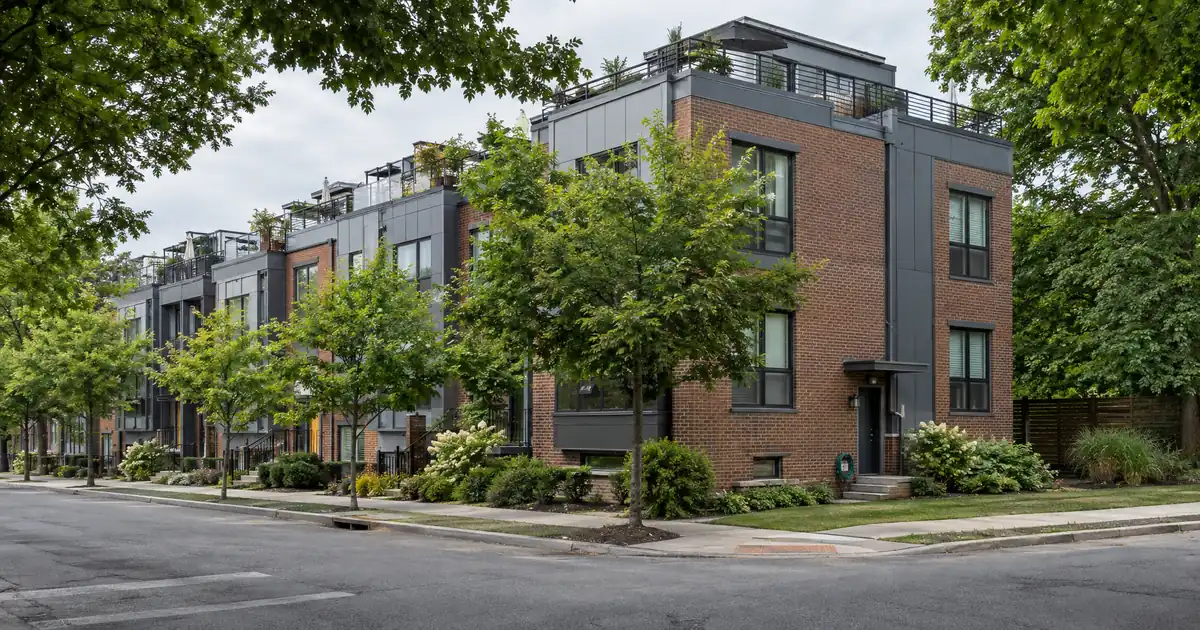
The Quick Read: A DSCR lender treats legal rental use as a gate that sits apart from the income math. It confirms that nightly rentals are allowed at the exact unit, under local rules and the building’s own documents, before it counts any short-term rental income. If that proof is missing, the file usually falls back to long-term rent or stalls.
- The lender checks three layers: local law, the recorded building documents, and its own evidence standard.
- A condotel is defined by how the building operates (front desk, hotel licensing, rental pool, owner-use limits), not by its marketing name.
- On a short-term-rental purchase, leverage tops out at 75% LTV on the strongest files, with a 640 credit score and a 1.00 coverage floor as typical program settings.
- A rental pool’s revenue split and high association dues can pull coverage below 1.00 even when gross bookings look strong.
- Gather the legality documents before you spend money on an appraisal. Exact terms depend on the lender’s guidelines, property type, leverage, and a full review of the borrower’s file.
Short-term rental rules can vary by city, county, HOA, and property type, so investors should confirm local rules before relying on projected rental income.
Short-Term Rental Calculator
Run the STR numbers in your market
Rate source: Freddie Mac 30-yr average via FRED® — Federal Reserve Bank of St. Louis · effective Oct 15, 2026
Prefilled with starting assumptions — enter your nightly rate, occupancy, taxes, and insurance for a more accurate picture.
Short-term rental income is documented with a 12-month history or a market data report. Program parameters update from Lendmire’s centralized guideline source.
As of Oct 15, 2026 · General Freddie Mac market benchmark, not a Lendmire loan offer. Nightly rate, occupancy, taxes, and insurance are editable estimates. Qualifying income for short-term rentals varies by program — some use appraisal market rent, others use documented STR history or projections — and is confirmed in underwriting. Not a Loan Estimate, approval, or commitment to lend. Program availability and eligibility are subject to lender guidelines, credit approval, property review, and underwriting.
What “Legal Rental Use” Means on a Condotel
Legal rental use means the unit may lawfully be rented by the night at that address, today, under every rule that applies to it. Three separate bodies answer that question. The city or county controls zoning, licensing, and registration. The association controls the declaration, bylaws, and any rental program. The lender controls what it will accept as proof.
A condotel is a condo building run in part like a hotel. The traits that matter to underwriting are operational:
- a front desk or guest registration services
- a hotel or motel license or registration
- mandatory rental pooling or revenue sharing
- limits on how much the owner can use the unit personally
A residence sitting above a hotel brand, or a tower marketed near a resort, often does not meet that test. Lenders usually treat those buildings as non-warrantable condos, which is a different box with different questions. Plenty of non-warrantable condos are fine for DSCR investor loans. Some lenders still decline condotels outright.
DSCR loans are designed for non-owner-occupied investment properties. Because they are business-purpose investor loans, they are reviewed differently from a standard owner-occupied mortgage.
Key Terms Defined
DSCR (debt service coverage ratio): The unit’s rent divided by its full monthly obligation: principal, interest, taxes, insurance, and association dues.
PITIA: Principal, interest, taxes, insurance, and association dues, the full monthly obligation the rent has to cover.
LTV (loan-to-value): The loan amount as a percentage of the property’s value or price.
Rental pool: An arrangement where unit owners share bookings and revenue through a single manager, usually with the manager keeping a cut.
Declaration: The recorded document that sets the building’s rules, including any rental limits.
Non-warrantable condo: A condo project that falls outside standard agency criteria because of things like investor concentration, new construction, or commercial space.
Opt-out unit: A unit in a pooled building whose owner may stay out of the rental program, if the declaration allows it.
Why Legality and Coverage Are Two Separate Tests
Legality asks whether you may rent nightly. Coverage asks whether the income pays the bill. A unit can pass one and fail the other.
The coverage test divides the unit’s rent used for lender review by PITIA. On a condotel, association dues tend to be heavy because they fund staffing and shared amenities. The manager’s share can also take a large bite out of gross revenue. Both pull the coverage number down.
Clearing 1.00 does not mean positive cash flow. The calculation ignores repairs, vacancy, management, utilities, and capital costs. A condotel owner with a 1.15 ratio can still lose money in a slow season.
Many select programs start at a 1.00 floor on a short-term-rental purchase, and stronger ratios open better pricing and leverage. A separate select-lender path takes coverage below 1.00, with leverage and terms adjusted. Neither path helps if the rental use itself is not legal. A strong pro forma on an unpermitted unit is a number with nothing behind it.
The Layered Check, Step by Step
The check runs in a set order. Each step can end the file, so the cheap steps come first.
| Layer | Who issues it | What the lender wants |
|---|---|---|
| Zoning and use | City or county | Nightly rental allowed at the address |
| Permit or registration | City, county, or operator | Active license tied to the unit |
| Tax account | Local tax office | Lodging-tax registration, if required |
| Declaration and bylaws | Association | Rental language that allows nightly stays |
| Rental program terms | Manager or association | Pool or management agreement, exit terms |
| Condo questionnaire | Association | Signed answers on pooling and occupancy |
Step 1: Classify the building. The lender sends the association a project questionnaire. It asks whether pooling is mandatory, whether the building has hotel licensing or a front desk, and whether owners face occupancy limits. Associations often do not know how a lender will label them, which is why the questionnaire exists. The lender is evaluating the project, not just the unit.
Step 2: Check local legality for the specific address. This covers the zoning designation, the permit, whether the permit transfers on a sale, and any registration the city requires. Municipal permission is documented property by property. It is never assumed from a listing or a neighbor’s activity.
Step 3: Read the private documents. The lender reads the declaration, bylaws, and rental restrictions. On a condotel it also reads the pool or management agreement, the master insurance policy, and the association budget and reserves. Here is the catch: the association’s rules control no matter what the loan file says. A clean DSCR file does not override a rental cap the association enforces.
Step 4: Establish the income evidence. On a purchase, the usual support is an appraiser’s short-term-rent analysis, with an appraiser’s long-term rent schedule as the fallback. Fannie Mae’s forms list names the two appraisal forms most often attached: Form 1007, the single-family comparable rent schedule, and Form 1025, the small residential income property appraisal report. If the seller has hosting history, platform or pool statements can add support.
Step 5: Run coverage. The lender divides the qualifying income by PITIA, with dues included.
Step 6: Final gates. The lender confirms project health, reserves, entity documents, and title. Reserves vary by lender, leverage, loan size, and transaction type. Many files carry around 6 months of PITIA, and larger loans step up from there.
What the Evidence Packet Looks Like
Think of the packet as the answer sheet the lender checks your claim against. Building it before you make an offer is the single most useful habit on this kind of purchase. Lendmire’s piece How to Prove Legal STR Use on a Condotel to a DSCR Lender goes deeper on each document.
| Document | Issuer | What it must show |
|---|---|---|
| Zoning or use confirmation | City or county | Nightly rental permitted at the address |
| Active permit or license | City or operator | Current status, holder, and transfer terms |
| Declaration and bylaws | Association | No ban or cap blocking nightly stays |
| Completed questionnaire | Association | Pooling, front desk, and occupancy answers |
| Pool or management agreement | Manager | Revenue split, term, and owner exit rights |
| Master insurance summary | Insurer or association | Coverage that fits the project’s use |
A live listing is not on that list. A seller can advertise a unit that has no valid permit, and platforms do not verify local legality for the lender. Treat an existing listing as a lead to investigate, not as proof.
Why Condotels Land With Non-Agency Lenders
This is the one place agency rules matter, and only as background. Fannie Mae’s Selling Guide lists projects managed and operated as hotels or motels as ineligible, even when each unit has its own owner. It also treats a hotel or motel license or registration as a condo-hotel trait.
Those rules do not govern a DSCR file. They explain why condotel buyers end up with non-QM investor lenders, and why the lender pool for these buildings is smaller than for an ordinary condo. Program terms come from the lenders themselves.
Where the General Rule Breaks
The layered check is the norm. These edge cases bend it.
Mandatory pool with no opt-out. Treatment varies by program. Some lenders decline when the pool is mandatory or when the owner cannot occupy the unit. Others will go ahead after a closer read of the management agreement.
Long agreements with limited exit. Management contracts that run a long time, or that block you from changing managers, worry some lenders. Exit and notice terms get read closely.
Optional versus mandatory participation. Optional programs give the owner control. Mandatory programs give the lender a single income source to read. Unit-level rent verification matters more when participation is voluntary.
The opt-out trap. Buying an opt-out unit and renting it independently can violate the declaration. The loan file might look fine while the building’s rules say otherwise.
Mixed legality. The city may allow short-term rentals while the association bans them, or the reverse. Both layers must say yes.
Permit cliffs. A license may not transfer on a sale, may be capped, or may be scarce. A permit held by the seller or the operator does not automatically belong to you. A permit holder that does not match the buyer’s vesting entity is a red flag.
Hotel in the name. Some programs decline projects with Hotel or Motel in the complex name, whatever the actual operation.
Owner use. DSCR loans fund non-owner-occupied investments. Heavy personal use of the unit points toward a different loan type, and pool agreements may cap owner nights as well.
Project exclusions. Some programs exclude condotel or hotel-managed projects from standard short-term-rental financing altogether. Others set a minimum unit size or require a full kitchen.
DSCR vs. conventional financing
There are two common ways to finance an investment property, and they qualify you differently — here’s how investors weigh them.
Why investors choose it
- Qualifies on the property’s rental income — no personal tax returns, W-2s, or pay stubs needed to document income.
- No personal debt-to-income ceiling to clear, so existing mortgages and obligations don’t cap your borrowing the same way.
- Can be closed in an LLC, keeping the property inside a business entity.
- Built for scaling — not held to the limit on number of financed properties that conventional financing applies.
- Underwriting centers on the deal: generally qualifies when the rent covers the payment, a 1.00x coverage ratio being a common baseline (confirmed in underwriting).
- Designed specifically for investment property, including long-term and, where the program allows, short-term rentals.
Where it’s strong
- Often the lowest ongoing financing cost for a buyer who fully qualifies on personal income — a fit for a first property or a cost-first purchase.
Trade-offs for investors
- Requires full personal income documentation and must fit within a debt-to-income limit — salary, existing debts, and other mortgages all count.
- Typically held in your personal name rather than a business entity.
- Caps how many financed properties you can carry, which can become a ceiling as a portfolio grows.
- Evaluates you as a borrower as much as the property, which usually means more paperwork.
How investors usually choose: a first or single property often optimizes for the lowest financing cost; portfolio builders often optimize for leverage, vesting in an LLC, and scaling past conventional caps. The right answer depends on your goals, the property, and current guidelines — both paths run through select lenders in Lendmire’s wholesale network, with eligibility and terms confirmed in underwriting.
Three Worked Scenarios
These are hypothetical, expressed as ratios and outcomes rather than dollars.
A clean pass. Picture a buyer under contract on a unit in a pooled building. The city confirms nightly rental is allowed at the address. The declaration permits it, the permit transfers on sale, and the questionnaire comes back clean. The appraiser’s short-term-rent analysis supports coverage near 1.2x after dues. The legality gate opens and the deal works to the usual reserve and credit review, subject to lender guidelines.
A conditional pass. Say a buyer has strong coverage on paper, but the permit is pending a transfer and the association’s questionnaire is incomplete. The file does not fail. It waits. The lender may hold the short-term income out of the calculation until the documents arrive. If they do not, the file may be underwritten on long-term rent, which could land well under the short-term ratio.
A fail. Consider a unit where the city allows nightly rental but the declaration bans stays under a minimum length. The strong short-term projection is irrelevant. The buyer has three options: seek a written determination from the association, renegotiate with the seller, or walk away before spending on appraisal and legal review. Some programs allow qualifying on supported long-term rent, but a building that restricts rentals can cap that path too.
Across the wholesale network Lendmire places files with, the condotel files that stall tend to stall on the association’s paperwork, not on the borrower’s credit. The borrower’s profile is usually the easy part. The documents belong to someone else.
What Happens to Coverage When a Pool Takes a Share
A rental pool changes the income side of the ratio in two ways. The manager keeps a portion of gross revenue, and the owner receives the rest. The lender counts the owner’s share, not the gross. Pool arrangements vary widely in how large that share is, so the agreement itself is the number that matters.
Then add the dues. On a condotel they cover staffing, amenities, and often utilities that a standard condo would leave to the owner. That raises PITIA, which lowers the ratio.
Lenders also tend to haircut short-term revenue, treating it as more volatile than a long-term lease. A building with a heavy pool split, high dues, and a haircut can land below 1.00. Select lenders in the network will look at coverage below 1.00, with leverage and terms adjusted. A larger down payment lowers the monthly obligation and can lift the ratio, but it does not erase credit floors, reserve rules, or property eligibility.
The practical fix is to run two ratios before you offer: one on short-term income net of the pool split, and one on supported long-term rent. If the second one falls well short, you know your fallback is weak.
Purchase Versus Refinance
On a refinance, the property has an operating history. Platform statements or pool statements show what the unit actually earned, and the lender can read them directly. On a purchase, there is often no history under your ownership. Legality evidence carries more weight because the income is a projection.
Network programs for short-term rentals typically allow purchase leverage up to 75% LTV on the strongest files. Refinance and cash-out on short-term-rental collateral typically top out at 70%. Expect a 640 minimum credit score and a coverage floor of 1.00 on a purchase. Refinances carry their own 1.00 floor as a separate program setting. Lenders usually want about 12 months of landlord or host experience. Standard programs run up to $3,000,000. All of this is subject to lender guidelines, and condotels often sit at the more conservative end of each range.
What the Investor Decision Looks Like
Here is the practical order of operations before you commit.
1. Ask the seller’s agent for the permit, the declaration, and the pool agreement before you write an offer.
2. Confirm with the city or county that nightly rental is allowed at that address.
3. Request the association’s questionnaire answers early.
4. Run coverage twice, on short-term income and on long-term rent.
5. Spend on the appraisal only after legality documents are in hand.
6. Read the exit terms of any pool agreement before you rely on a rent figure.
If you are weighing the lender side first, Lendmire’s article How to Prove Legal STR Use to a DSCR Lender Before Appraisal covers the sequence in more detail. For the wider picture of how these loans work, see the complete DSCR loans guide.
The decision usually comes down to a trade. A condotel can offer a ready-made rental operation. In return you accept a smaller lender pool, tighter leverage, and rental economics controlled by a manager. Whether that trade makes sense depends on your reserves, your tolerance for a coverage ratio that sits near the floor, and how well the pool agreement protects you.
Tax treatment can depend on how the funds are used and how the property is held; investors should keep clear records and speak with a qualified tax professional before relying on any deduction.
Frequently Asked Questions
Is a live Airbnb listing proof the unit can be rented legally?
No. A listing shows that someone is advertising the unit, not that the city, the association, and the permit all allow it. Lenders look for the permit, the declaration language, and the association’s answers. Treat an active listing as a reason to ask for those documents.
Does being in a rental pool mean the rental use is legal?
Not by itself. The pool shows the building runs a rental program, but the unit still needs local permission and has to meet the lender’s property-type rules. A unit can be legal to rent and still fall outside a lender’s condotel limits, or the reverse.
Can I buy an opt-out unit and rent it myself?
Only if the declaration allows it. Some buildings let owners stay out of the pool but still restrict independent nightly rentals. Read the declaration and ask the association in writing before you rely on opt-out income. A loan file does not override the building’s own rules.
What happens if the legality check fails?
The file usually has three paths. Some programs allow qualifying on supported long-term rent. You can seek a written determination from the city or association. Or you can renegotiate or walk away. Long-term rent often produces a much lower ratio than short-term income, so check that number before you count on the fallback.
Who pays for the verification?
It varies by file. The borrower typically pays for the appraisal and any title work, and the association may charge a fee for questionnaire answers. Ask early which fees apply, since the documents come from several different parties.
Next Step
If you are buying or refinancing a rental property and want to see how the numbers work, Lendmire can help you compare DSCR loan options based on the property income, credit profile, leverage, and investor goals. Lendmire is a broker that arranges financing through select lenders in its wholesale network across 41 markets, including Washington, D.C. Eligibility on any condotel file is subject to lender guidelines and is not a commitment to lend.
About Lendmire
As a DSCR and non-QM mortgage broker, Lendmire — NMLS# 2371349 — connects investors with wholesale lending channels across 41 markets, including Washington, D.C. The property’s rental income, not the borrower’s tax returns, is central to lender review, which works for self-employed operators and portfolios beyond four financed properties. Scotsman Guide named Lendmire a Top Mortgage Workplace in both 2025 and 2026.
Get Started
Ready to find the right loan for you?
In about 30 seconds you can review financing options available for your investment property. No commitment required.
Informational only. Not a Loan Estimate, approval, or commitment to lend. Program availability and eligibility are subject to lender guidelines, credit approval, property review, and underwriting.
References
1. Fannie Mae Selling and Servicing Guide Forms
2. Fannie Mae Selling Guide, B4-2.1-03 Ineligible Projects
This article is part of Lendmire’s short-term rental loan program — full qualification details, guidelines, and scenarios live on the program page.
Related reading: How to Get a DSCR Projection Report for a Condotel Airbnb · How to Get an STR Projection Report With No Local Rental History · How to Document Legal STR Use for Your First DSCR Loan
Brandon Miller
Founder & CEO, Mortgage Loan Originator, Lendmire LLC
- Mortgage Loan Originator · NMLS# 1129696 · Verify on NMLS Consumer Access
- North Carolina Real Estate Broker · License# 343312 · Verify on NCREC
- North Carolina Insurance Producer · License# 19053198 · Property, Casualty, Life, Health · Verify on NAIC SBS
- Lendmire LLC · Firm NMLS# 2371349 · Verify firm licensure
Compliance and disclosures. Lendmire (NMLS# 2371349) is a licensed mortgage broker and is not a direct lender, depository institution, financial advisor, or tax professional. Content in this article is general market analysis and educational information — not financial, legal, or tax advice for any specific situation. Lendmire does not guarantee loan approval; every transaction is subject to underwriting by the funding lender. Mortgage pricing and loan program guidelines are subject to change at any time without notice and vary by borrower characteristics, property type, and state regulations. Lendmire complies with Equal Housing Opportunity. Licensure verification: NMLS Consumer Access.