
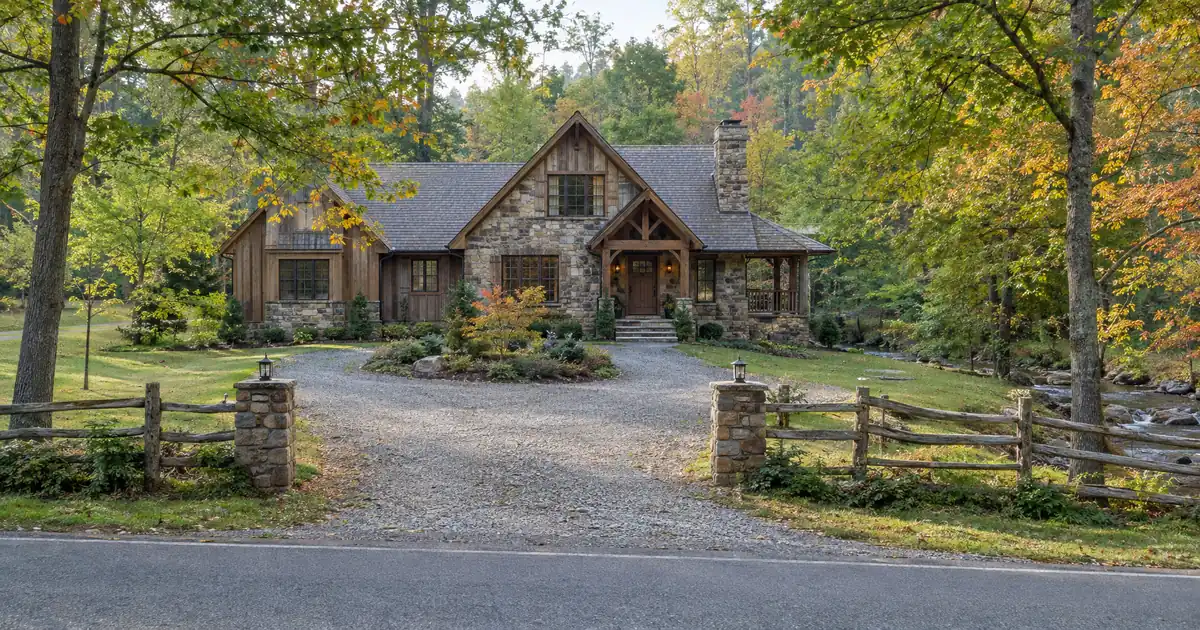
The Quick Read: The loan amount on a rural cabin refinance is set by the lowest of three tests: a leverage cap applied to the appraised value, a rental coverage test, and the property screens that decide whether the cabin is eligible at all. Whichever test gives the smallest number sets the loan, subject to lender guidelines.
- On a cash-out refinance of a standard long-term rental, leverage typically tops out around 75% of appraised value.
- On a short-term-rental cabin, cash-out leverage typically tops out around 70%, and a refinance sits around the same level.
- Rental coverage (rent divided by the full monthly housing payment) usually needs to reach about 1.00 on select programs, and stronger ratios open better terms.
- Log homes, manufactured homes and barndominiums are not offered in the network, so construction type can end the file before any math starts.
- A thin appraisal in a rural area can shrink the loan more than the cabin’s rent does.
A rural cabin is a harder file than a suburban rental. The comparable sales are sparse, the rent evidence is thin, and the property type gets a closer look. None of that makes the loan impossible. It does mean you should understand how the number gets built before you order an appraisal.
DSCR Cash-Out Calculator
Run the cash-out numbers in your market
Rate source: Freddie Mac 30-yr average via FRED® — Federal Reserve Bank of St. Louis · effective Oct 29, 2026
Prefilled with starting assumptions — enter your property’s value, balance, taxes, and insurance for a more accurate picture.
Program parameters update from Lendmire’s centralized guideline source. Taxes and insurance are editable estimates.
As of Oct 29, 2026 · General Freddie Mac market benchmark, not a Lendmire loan offer. Property value, balance, taxes, and insurance are editable estimates. Maximum loan-to-value varies by lender, program, property type, and seasoning. Not a Loan Estimate, approval, or commitment to lend. Program availability and eligibility are subject to lender guidelines, credit approval, property review, and underwriting.
What Is a Rural Cabin Refinance Under DSCR?
A DSCR refinance on a cabin replaces your current loan with a new one underwritten mostly on the cabin’s rental income. The lender asks whether the rent covers the payment. It does not ask about your paycheck. The loan is reviewed primarily on property-level rental income covering the payment, subject to lender guidelines, with credit and reserves still reviewed.
The cabin must be a non-owner-occupied investment property. DSCR loans are designed for investment properties and reviewed differently from a standard owner-occupied mortgage. If you use the cabin as a weekend retreat and rent it only now and then, the file may not fit this product at all. We come back to that below.
For the broader mechanics of how these loans work, see Lendmire’s complete DSCR loans guide.
Key Terms Defined
DSCR (debt service coverage ratio): The qualifying monthly rent divided by the full monthly housing payment. A ratio of 1.00 means rent equals the payment.
PITIA: Principal, interest, taxes, insurance and any association dues. This is the full payment the rent has to cover.
LTV (loan-to-value): The loan balance as a percentage of the appraised value.
Appraised value: The value the appraiser reports. On a refinance, this sets your LTV, not what you paid for the cabin.
Form 1007: The appraisal exhibit that estimates market rent for a single-family home. Form 1025 does the same job for two-to-four-unit properties.
Cash-out refinance: A refinance where you take cash back at closing. A no-cash-out refinance (often called rate-and-term) only pays off the old loan and costs.
Seasoning: The waiting period between an earlier event, such as a purchase or prior refinance, and the new loan. Cash-out refinances commonly expect about six months.
Reserves: Liquid funds left after closing, counted in months of PITIA.
The Three Limits That Set Your Loan Amount
Think of the loan as a bucket with three holes. The water level sits at the lowest hole.
Limit one: leverage. The lender applies a percentage cap to the appraised value. On a cash-out refinance of a standard investment rental, most programs in the network top out around 75%. On a no-cash-out refinance of an investment property, select programs reach higher, up to 85%. Once you take cash back, the file becomes a cash-out and the 75% ceiling applies. A payoff-only refinance of a bridge or hard-money note usually counts as no-cash-out.
Limit two: coverage. The lender divides rent used for lender review by PITIA. Many select programs start at 1.00. A separate select-lender path takes coverage below 1.00, with leverage and terms adjusted. Stronger ratios, often in the 1.20 range and up, tend to open better pricing and leverage.
Limit three: eligibility overlays. These screens run before income matters. They cover construction type, acreage, rural designation, occupancy and short-term-rental status. A cabin that fails one of them has no loan amount at all.
A bigger cushion on one limit never erases the others. Strong equity does not waive credit floors, reserve rules or property eligibility. The strongest files clear both the equity test and the rental coverage test.
Gates Before Sizing: Does the Cabin Even Qualify?
Most rural cabin problems show up at the gate, not in the math. Here is what lenders in the network check first.
| Gate | What the lender checks | What can fail the file |
|---|---|---|
| Construction | Frame-built, year-round capable | Log, manufactured, barndominium |
| Occupancy | Non-owner-occupied rental | Personal use as a second home |
| Acreage | Land size against program limit | Acreage over the cap |
| Access | Road, water, septic | Undocumented shared road or well |
| Rentability | Legal to rent as intended | HOA or local ban on nightly stays |
Construction. Log homes, manufactured homes (single- and double-wide) and barndominiums are not offered in the network’s DSCR programs. This catches many people holding a cabin. A frame-built, year-round-capable cabin is reviewed individually, and a true log structure is a different story.
Acreage. Many programs set an acreage ceiling at a handful of acres, and five acres or fewer is a common limit. Land beyond the limit is generally carved out of the value used for LTV, or it makes the property ineligible. A price that bundles in extra land can therefore appraise short of what you expected.
Rural flags. A rural label alone does not disqualify a cabin. What matters is whether the appraiser can find comparable sales and whether rent is provable. Some lenders add their own rural overlays, so a file that fits one program may not fit another. This is where comparing many lenders helps.
Insurability and legality. A cabin that cannot be insured for rental use will not close. Short-term rental rules can vary by city, county, HOA, and property type, so investors should confirm local rules before relying on projected rental income.
How Rent Gets Proven on a Cabin
How the lender counts rent depends on whether you run the cabin as a long-term rental or a nightly rental.
Long-term rental with a lease. The lender generally uses the lower of the signed lease or the appraiser’s market rent from Form 1007. Your lease does not set the number alone.
Long-term rental, vacant. The lender uses the Form 1007 market rent only.
Short-term rental. Programs in the network expect about 12 months of hosting history. Proof comes from platform payouts, property-manager statements or bank deposits that trace to the cabin. Underwriting looks at the full twelve months, so slow winters count against the average. Expect a credit score around 640 or higher on these files. Final terms depend on the lender’s guidelines, the property type, and the borrower’s complete credit picture.
The appraisal rent schedule has a real weakness here. Form 1007 rests on long-term lease comparables. HousingWire reports that the form was not designed to support short-term rental income. Class Valuation makes the same point and warns that running an STR through a 1007 can produce an artificially low coverage ratio.
In practice, the same cabin can clear 1.00 on booking history and fall short on a 1007. That is why you pick the income method before the appraisal gets ordered, not after.
How Rural Valuation Shapes the Loan
Value drives LTV, so a cautious appraisal hits proceeds first. A low rent figure lowers coverage. Both can shrink the loan.
Rural appraisals work with fewer sales. Appraisal Services of Oregon notes that appraisers in these areas rely on limited comparable sales, wider search distances, supported adjustments and more professional judgment. The same page makes a point many owners miss: a barn or shop does not necessarily add its construction cost to the value.
So if you spent heavily on outbuildings, a deck or a new well, do not assume the appraisal will credit that spending dollar for dollar. Improvements may support a higher appraised value, depending on comps and underwriter review.
Well, septic and road access also get reviewed. Documents that help include well logs and water tests, septic records, and a recorded road maintenance agreement if the road is shared. Pulling these together before the appraisal avoids delays and surprise conditions.
Worked Example: Two Cabins, Two Different Limits
The inputs below are modeled assumptions, not market data. The point is to see which limit binds.
| Item | Cabin A | Cabin B |
|---|---|---|
| Income path | Long-term lease | Long-term lease |
| Transaction | Cash-out | Cash-out |
| Leverage cap | 75% of value | 75% of value |
| Coverage at 75% | About 1.3x | About 0.9x |
| Binding limit | Leverage | Coverage |
Cabin A (value-limited): The rent comfortably covers the payment even at full leverage. Coverage is not the problem. The 75% cash-out ceiling on the appraised value sets the loan. If the appraisal comes in low, the loan shrinks with it. Each figure is subject to lender guidelines and a complete review of property type, leverage, and credit.
Cabin B (rent-limited): At 75% leverage, the rent falls short of the payment, with coverage around 0.9x. Leverage is not the binding limit here, because the coverage test fails first. Leverage, reserves, and pricing vary by lender and program; the final terms follow the full file review.
Cabin B’s owner has three levers. The first is to borrow less, so the payment drops and coverage rises toward 1.00. The second is to document stronger rent. The third is to ask about the separate select-lender path that takes coverage below 1.00, with leverage and terms adjusted. Qualification stays subject to lender guidelines, credit approval and property review.
Notice what a rising loan does to coverage. Each step up in leverage raises the payment, so the ratio drops. A cabin that shows roughly 1.2x at a modest loan can slide toward 1.00 at the 75% ceiling. More cash-out means less margin.
DSCR vs. conventional financing
There are two common ways to finance an investment property, and they qualify you differently — here’s how investors weigh them.
Why investors choose it
- Qualifies on the property’s rental income — no personal tax returns, W-2s, or pay stubs needed to document income.
- No personal debt-to-income ceiling to clear, so existing mortgages and obligations don’t cap your borrowing the same way.
- Can be closed in an LLC, keeping the property inside a business entity.
- Built for scaling — not held to the limit on number of financed properties that conventional financing applies.
- Underwriting centers on the deal: generally qualifies when the rent covers the payment, a 1.00x coverage ratio being a common baseline (confirmed in underwriting).
- Designed specifically for investment property, including long-term and, where the program allows, short-term rentals.
Where it’s strong
- Often the lowest ongoing financing cost for a buyer who fully qualifies on personal income — a fit for a first property or a cost-first purchase.
Trade-offs for investors
- Requires full personal income documentation and must fit within a debt-to-income limit — salary, existing debts, and other mortgages all count.
- Typically held in your personal name rather than a business entity.
- Caps how many financed properties you can carry, which can become a ceiling as a portfolio grows.
- Evaluates you as a borrower as much as the property, which usually means more paperwork.
How investors usually choose: a first or single property often optimizes for the lowest financing cost; portfolio builders often optimize for leverage, vesting in an LLC, and scaling past conventional caps. The right answer depends on your goals, the property, and current guidelines — both paths run through select lenders in Lendmire’s wholesale network, with eligibility and terms confirmed in underwriting.
Short-Term Rental Cabins Get a Lower Ceiling
Nightly-rental cabins are priced as higher-risk income. On a short-term-rental cabin, cash-out and refinance leverage typically sits around 70%, while a standard long-term rental cash-out can reach 75%. Expect a credit score around 640 or higher, about 12 months of hosting history, and a coverage floor of 1.00.
The trade-off is real. STR income can be much higher than long-term rent, which helps coverage. But the lower leverage ceiling means less cash out. Whether that trade works depends on how strong the booking history is and how much cash you need.
For owners with several cabins, Lendmire’s piece How to Refinance a Rural Cabin STR Portfolio When Lenders Won’t Touch It covers the multi-property side.
Converting a Second-Home Cabin to a DSCR Loan
A second-home loan generally does not count rental income. To use DSCR, the cabin has to become a rental in fact, and the loan is rewritten as an investment-property loan. That includes a business-purpose and non-occupancy certification.
Two points trip people up. First, putting the cabin in an LLC does not turn personal use into business use. The test is whether you actually use it yourself. Second, if the cabin is mostly a family retreat with occasional rentals, a second-home loan or a bank-statement program may fit better. Titling a cabin in an LLC is possible on many programs, subject to program terms.
Reserves, Credit and Seasoning
The loan amount is only part of qualifying. These items sit alongside it.
- Credit: A 620 floor exists in parts of the network, most programs want around 660, and 700 or higher unlocks the strongest leverage tiers.
- Reserves: Commonly around six months of PITIA. Conservative no-cash-out files at modest leverage under $1,500,000 can see reserves waived. Larger loans typically step up to about nine months. These vary by lender, leverage, loan size and transaction type.
- Seasoning: About six months is the common expectation on a cash-out refinance. Own the cabin longer, and more doors open.
- Loan size: Standard programs run up to $3,000,000. Most cabin loans fall far below that.
A Practitioner Note on Rural Files
Across the wholesale network Lendmire places files with, rural cabin refinances rarely fail on credit. They stall on three things: an appraisal built on too few comparables, rent evidence that conflicts between the lease, the 1007 and the booking record, and a property feature, such as log construction or excess acreage, that screens the file out. Fixing those before the application costs far less than fixing them after a low appraisal.
Clearing 1.00 Does Not Mean the Cabin Cash-Flows
The coverage test compares rent to PITIA only. Repairs, vacancy, management, utilities and capital costs sit outside the calculation. A cabin can clear 1.00 and still lose money after a cold winter and a new roof.
Rural cabins carry more of these costs than most rentals: long driveways, wells, septic systems and wood-stove or propane heating. Run your own budget beyond the lender’s ratio before you take cash out.
What to Do If the Number Comes Up Short
Here is the practical ladder, in rough order of effort.
1. Borrow less. Lower leverage lifts coverage and often fixes both the ratio and the reserve picture.
2. Pick the stronger income method. If the cabin books well, use the STR path with its history. If rent comps are thin, document a lease at a market level.
3. Challenge the appraisal. If it came in cautious, a reconsideration with better comparables is the usual remedy.
4. Wait for seasoning or hosting history. Six months of ownership or a full twelve months of bookings can change which programs are open.
5. Ask about the sub-1.00 path. Coverage below 1.00 is available through select lenders in the network, with leverage and terms adjusted.
6. Switch products. If the cabin is mostly personal use, a second-home or bank-statement loan may be the better fit than DSCR.
Watch prepayment-penalty terms too. Taking cash out and refinancing again within a year or two can trigger a penalty on some programs, so ask about the length before you commit.
Frequently Asked Questions
Can a log cabin get a DSCR refinance?
Not through the network’s DSCR programs. Log homes, manufactured homes and barndominiums are not offered. A frame-built cabin that looks like a log cabin is reviewed individually, so the construction method matters more than the style.
How much acreage is too much?
It varies by lender, but many programs set the limit at a small number of acres, and five or fewer is a common ceiling. Extra land is generally carved out of the value used for LTV, or it makes the property ineligible. Check the acreage before you apply.
Does seasonal income hurt my coverage?
On a short-term-rental file, underwriting looks at a full twelve months of history, so slow months pull the average down. Winter vacancy at a summer cabin counts. A cabin with steady year-round bookings usually shows a stronger ratio.
Can I refinance a cabin I only use myself?
Not as a DSCR loan. These loans are for non-owner-occupied rentals. If you use the cabin as a second home, a second-home program may fit. To use DSCR, the cabin has to operate as a rental.
Does a big down payment fix a weak coverage ratio?
Lower leverage reduces the payment, which can lift coverage. It does not erase credit floors, reserve rules or eligibility screens. A cabin that is ineligible stays ineligible however much equity you hold.
Next Steps
If you are buying or refinancing a rental property and want to see how the numbers work, Lendmire can help you compare DSCR loan options based on the property income, credit profile, leverage and investor goals. Lendmire is a mortgage broker arranging DSCR investor loans through select lenders in its wholesale network, across 41 markets including Washington, D.C. All terms are subject to lender guidelines, and nothing here is a commitment to lend.
About Lendmire
Lendmire (NMLS# 2371349) is a DSCR-focused mortgage broker that helps arrange investor financing across 41 markets, including Washington, D.C., through wholesale and investor-lending channels. DSCR eligibility is generally reviewed by the lender around the property’s rental income rather than personal income documentation, subject to lender guidelines — which works for self-employed investors, LLC operators, and portfolios above four financed properties. Scotsman Guide named Lendmire a Top Mortgage Workplace in both 2025 and 2026.
Get Started
Ready to find the right loan for you?
See your offer in seconds. No credit pull, no obligation.
Informational only. Not a Loan Estimate, approval, or commitment to lend. Program availability and eligibility are subject to lender guidelines, credit approval, property review, and underwriting.
References
1. HousingWire: Short-term rentals are breaking the appraisal playbook
2. Class Valuation: Appraisal Form 1007 and short-term rentals
3. Appraisal Services of Oregon: Acreage and rural property appraisals
This article is part of Lendmire’s DSCR loan program — full qualification details, guidelines, and scenarios live on the program page.
Related reading: Can You Refinance a Rental With a DSCR Loan and No Tax Returns? · How a Portfolio DSCR Lender Sizes a Loan Without Tax Returns · Can a DSCR Lender Change Your Ratio After Prequalification?
Brandon Miller
Founder & CEO, Mortgage Loan Originator, Lendmire LLC
- Mortgage Loan Originator · NMLS# 1129696 · Verify on NMLS Consumer Access
- North Carolina Real Estate Broker · License# 343312 · Verify on NCREC
- North Carolina Insurance Producer · License# 19053198 · Property, Casualty, Life, Health · Verify on NAIC SBS
- Lendmire LLC · Firm NMLS# 2371349 · Verify firm licensure
Disclosures. The information presented in this article is general market commentary, not financial, legal, or tax advice. Lendmire is a mortgage brokerage (NMLS# 2371349) — not a direct lender or depository institution — and loan placement is subject to lender underwriting. Nothing in this content represents a commitment to lend. Loan terms, pricing, and program availability vary based on borrower qualifications, property characteristics, and state of subject property, and are subject to change at any time. Lendmire complies with Equal Housing Opportunity requirements. Consumer access: nmlsconsumeraccess.org.