
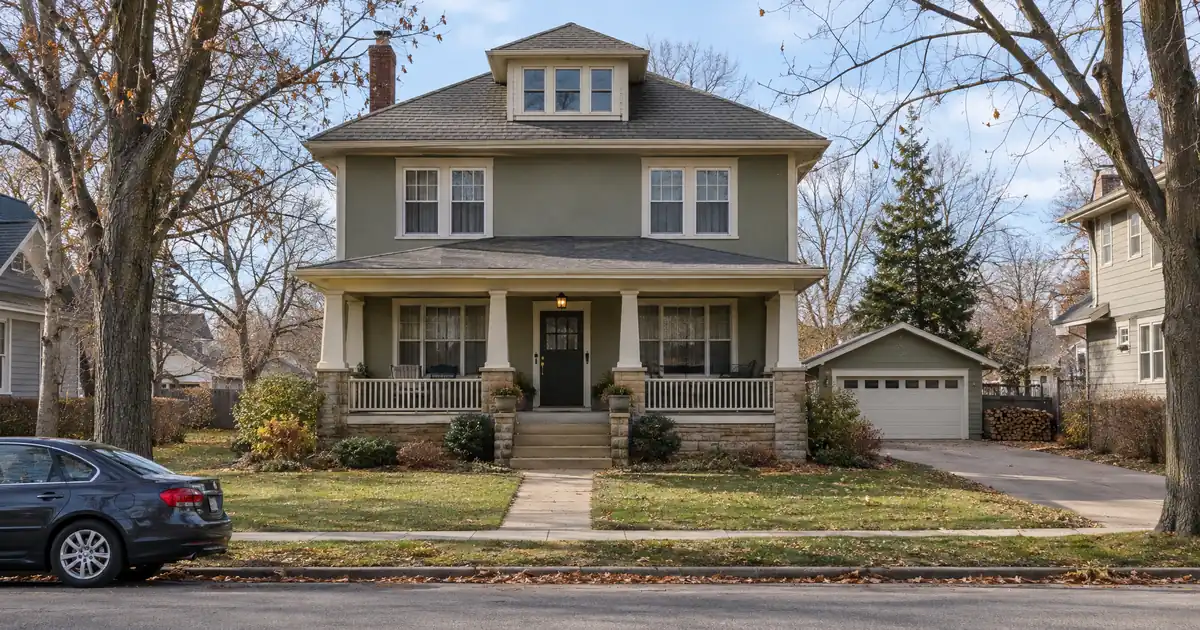
The Quick Read: Your home state is not an underwriting input on a DSCR loan. The lender qualifies the file primarily on the property’s rental income covering its full payment, subject to lender guidelines, and the property’s location changes only the inputs: appraised rent, taxes, insurance, and property type.
- The formula is identical in every state: monthly rent divided by PITIA (principal, interest, taxes, insurance, and association dues).
- The lender typically uses the lower of the signed lease and the appraiser’s market rent.
- Taxes and insurance are where three markets pull apart most.
- Clearing 1.00 does not mean positive cash flow.
- Purchases typically run 75%–80% LTV, subject to lender guidelines.
Picture a first-time investor in one state eyeing a duplex in another. The question is simple: does the lender treat that rental differently? Mostly no. The paperwork and the numbers are what shift. This walkthrough covers the mechanics, three market archetypes, and the edge cases. For the full program picture, Lendmire’s complete DSCR loans guide covers the basics.
Key Terms Defined
DSCR (debt service coverage ratio): monthly rent divided by the full monthly property payment. A result of 1.00 means rent equals the payment.
PITIA: principal, interest, taxes, insurance, and association dues. This is the payment the rent has to cover.
LTV (loan-to-value): the loan amount as a percentage of the property’s value.
Reserves: liquid cash a lender wants you to hold after closing, commonly around 6 months of PITIA.
Market rent: what an appraiser concludes the property would rent for on the open market.
Seasoning: the waiting period between buying a property and refinancing it.
Does Where You Live Matter to a DSCR Lender?
No. Your residence is not scored. The lender looks at the property: its value, its expected rent, and its overall quality as an investment. Across Lendmire’s wholesale network, the file is built around the asset, not around your address.
What does matter is the property’s state. A given program may not be offered in every state, and some terms, such as prepayment penalty rules (a fee for paying the loan off early), can differ by the property’s state. Credit still counts, along with reserves and entity paperwork. Review details sit with each lender and depend on credit approval and property review.
Your absence also doesn’t block the file. The lender orders the appraisal, and a local licensed appraiser inspects the property. You do not need to be there.
How Does Underwriting Treat the Rental, Step by Step?
Underwriting follows the same sequence in every state. Only the numbers inside each step change.
1. Property screen. The lender confirms the property is a non-owner-occupied investment property and that the state is in its footprint. DSCR loans are designed for investment properties. Because they are business-purpose loans, they are reviewed differently from a standard owner-occupied mortgage.
2. Appraisal and rent schedule. The appraiser documents market rent. For a one-unit rental, that is typically a rent schedule on the Fannie Mae 1007 form. Fannie Mae’s appraiser guidance describes that form as documenting estimated monthly market rent for one-unit investment properties and condos. For 2–4 units, the report is typically the 1025 form with rents by unit. Only the form names are borrowed here. DSCR guidelines come from the lenders in the network.
3. Pick the rent. Most programs use the lower of the signed lease and the appraiser’s market rent. A vacant property is qualified on market rent alone. A listing-site asking rent carries no weight.
4. Build PITIA. Taxes and insurance come from the property’s jurisdiction. This is where markets diverge.
5. Compute the ratio. Rent divided by PITIA gives the coverage number. Credit score, property type, and loan size then decide which leverage tier the file lands in.
6. Entity and business-purpose documents. Expect entity paperwork and a business-purpose acknowledgment. Holding title in an LLC is common, subject to lender program eligibility.
Four inputs decide most outcomes: appraised rent, the tax and insurance lines, the value (which drives LTV), and credit tier.
Three Markets, One Scenario
Hold everything constant and change only the location. Say you buy a stabilized single-family rental at 75% LTV on a purchase, with the same credit score and the same appraised rent in each of three markets. Only the taxes and insurance change. The ratios below are directional, modeled for illustration, not market data. Terms depend on the lender’s guidelines, the property type, the leverage, and a full review of the credit profile.
| Factor | Low-cost market | High-tax market | Catastrophe-exposed market |
|---|---|---|---|
| Tax load in PITIA | Light | Heavy | Moderate |
| Insurance load in PITIA | Light | Moderate | Heavy |
| Coverage, same rent | Roughly 1.3x | Roughly 1.0x | Roughly 0.95x |
| Lender reaction | Strongest tier | Clears at the floor | Leverage and terms adjusted |
The spread in taxes is real. The Tax Foundation reports that effective rates on owner-occupied property in its 2023 data run from among the highest in the country in New Jersey to among the lowest in Hawaii. Insurance varies just as sharply. Insurance.com reports that Florida’s average premium sits far above the national average. Those are owner-occupied averages, and investor assessments and landlord policies vary, so treat them as a sense of the spread.
The low-cost market. Taxes and insurance take a small bite of rent. The same rent clears with room to spare, which can open stronger pricing and leverage tiers.
The high-tax market. Same rent, same loan, but taxes sit heavy in the denominator. A rental that looked strong on a listing site can drop to the 1.00 range. This is a genuine toss-up for investors. Higher rents often come with higher taxes, so check the whole PITIA, not just the sticker price.
The catastrophe-exposed market. Insurance becomes the swing factor. The ratio can fall below 1.00 even when the rent looks healthy. In that case 1.00 is where many select programs start, and a separate select-lender path takes coverage below 1.00 with leverage and terms adjusted. Both tests have to pass: enough equity and enough rental coverage.
One pattern from broker-level deal flow: insurance quotes on files in exposed regions move more than almost any other line. A coverage ratio that worked on an early estimate can slip once the real quote arrives. Getting the actual insurance quote in early prevents surprises.
Where the Rules Bend: Edge Cases
Short-term rentals. Fannie Mae’s guidance says the form 1007 is not designed to estimate a nightly fee, and its Selling Guide is silent on short-term rental income, per the same appraiser update. Lenders that accept them use a different track built on booking data. In the network, short-term rental purchases go to 75% LTV, refinances around 70%, and cash-out 70% on short-term-rental collateral. Expect a 640+ score and about 12 months of hosting history. Coverage floors are 1.00 on purchases and refinances. Short-term rental rules can vary by city, county, HOA, and property type, so confirm local rules before relying on projected income. The exact numbers vary by lender and program and follow a full review of property, leverage, and credit.
Leases above or below market. An above-market lease adds little. A below-market lease, say an inherited tenant, can cap your rent used for lender review even if the unit could rent for more.
2–4 units. The 1025 report carries unit-level rents. Some lenders also want an additional rent schedule on already-leased small multifamily.
Ineligible property types. Manufactured homes (single- and double-wide), log homes, and barndominiums are not offered in the network’s DSCR programs.
Refinances. Seasoning is a separate clock from the lease. Cash-out refinances top out around 75% LTV on most programs, with about 6 months of seasoning the common expectation. If you hold rentals across several states, Lendmire’s piece Can One DSCR Lender Cash Out Your Rentals in Three States? walks through that side.
The Trap: 1.00 Is Not Cash Flow
DSCR compares rent to PITIA and nothing else. Repairs, vacancy, management fees, utilities, and capital expenses sit outside the formula. A property at 1.00 covers its payment and has nothing left over.
Remote owners should feel this most. You will likely pay a property manager and cannot swing a hammer yourself. Build your own budget on top of the lender’s number.
Landlord-law differences also affect your operating risk, not the DSCR math. Eviction notice periods and timelines differ by state. One investor blog, Cashflow Rentals, notes that such timelines are practice ranges and not legal guarantees. Confirm local rules with a local attorney.
What Does the Lender Want From a Remote Owner? A Pre-Offer Checklist
Most of this is good practice. A few items are real underwriting conditions.
1. Confirm the property’s state is in the lender’s footprint. Lendmire arranges DSCR investor loans across 41 markets, including Washington, D.C., and your broker can check this first.
2. Set up your entity. If you buy in an LLC, expect to register it where required and provide good-standing paperwork.
3. Line up management. Not always required, but a remote owner without it carries real operating risk.
4. Check credit and reserves. Programs want around 660 on most files, and 620 exists in parts of the network. 700+ unlocks the strongest leverage tiers. Reserves commonly run about 6 months of PITIA, stepping up to about 9 months above $1,500,000, and conservative files can see them waived.
5. Get the real insurance quote. Do this before you commit to the price.
6. Expect the appraisal. It sets rent and value. Your own estimate does not.
A bigger down payment can lower the payment and lift the coverage ratio. It never erases credit floors, reserve rules, or property eligibility. For a file spread across states, Lendmire’s article How to Cash Out Multi-State Rentals After a DSCR Lender Cap covers the next step.
Loan sizes run roughly up to $3,000,000 on standard programs. Tax treatment varies; consult a qualified professional.
Frequently Asked Questions
Do I have to live in the same state as the rental?
No. Your residence is not an underwriting factor. The property’s state and the lender’s footprint matter, along with the property’s value, rent, and your credit. Terms such as prepayment rules can still differ by the property’s state.
Who orders the appraisal when I’m out of state?
The lender does. A local licensed appraiser inspects the property and documents market rent, so you do not need to be there. That market rent, compared with any signed lease, usually sets the qualifying figure.
Can I buy in an LLC in another state?
Often yes, subject to lender program eligibility. Expect entity documents and possibly registration in the property’s state. Your broker can confirm what a specific lender wants before you commit.
How is a vacant rental treated?
It is qualified on the appraiser’s market rent alone, since there is no lease to compare. Once a tenant is placed, the lower of the lease and market rent typically applies on later refinances.
Does a 1.00 ratio mean the property cash flows?
No. It means rent equals PITIA. Maintenance, vacancy, management, and utilities come out of what is left, which at 1.00 is nothing.
If you are buying or refinancing a rental property and want to see how the numbers work, Lendmire can help you compare DSCR loan options based on the property income, credit profile, leverage, and investor goals. Programs change, every file is underwritten individually, and nothing here is a commitment to lend.
Cross-state investing rewards the buyer who prices taxes and insurance first and the listing rent last.
About Lendmire
Lendmire is a non-QM mortgage brokerage (NMLS# 2371349) arranging DSCR investor loans in 41 markets, including Washington, D.C., through wholesale and investor-lending channels. DSCR loans are evaluated by the lender on rental income rather than personal income, subject to lender guidelines — a fit for LLC-owned portfolios, self-employed investors, and operators scaling beyond conventional loan caps. Recognized as a Scotsman Guide Top Mortgage Workplace in 2025 and 2026.
Get Started
Ready to find the right loan for you?
In about 30 seconds you can review financing options available for your investment property. No commitment required.
Informational only. Not a Loan Estimate, approval, or commitment to lend. Program availability and eligibility are subject to lender guidelines, credit approval, property review, and underwriting.
References
1. Fannie Mae Appraiser Update, June 2024
2. Tax Foundation: Property Taxes by State and County
3. Insurance.com: States Where Home Insurance Is Unaffordable
4. Cashflow Rentals: Landlord-Friendly States
This article is part of Lendmire’s DSCR loan program — full qualification details, guidelines, and scenarios live on the program page.
Related reading: How a Blanket DSCR Lender Sizes the Coverage Cushion Above the Floor · Does a DSCR Lender Require a Permit Before Closing in a Capped STR Market? · How to Consolidate LLC Rentals Into One Portfolio DSCR Loan
Brandon Miller
Founder & CEO, Mortgage Loan Originator, Lendmire LLC
- Mortgage Loan Originator · NMLS# 1129696 · Verify on NMLS Consumer Access
- North Carolina Real Estate Broker · License# 343312 · Verify on NCREC
- North Carolina Insurance Producer · License# 19053198 · Property, Casualty, Life, Health · Verify on NAIC SBS
- Lendmire LLC · Firm NMLS# 2371349 · Verify firm licensure
Compliance and disclosures. Lendmire (NMLS# 2371349) is a licensed mortgage broker and is not a direct lender, depository institution, financial advisor, or tax professional. Content in this article is general market analysis and educational information — not financial, legal, or tax advice for any specific situation. Lendmire does not guarantee loan approval; every transaction is subject to underwriting by the funding lender. Mortgage pricing and loan program guidelines are subject to change at any time without notice and vary by borrower characteristics, property type, and state regulations. Lendmire complies with Equal Housing Opportunity. Licensure verification: NMLS Consumer Access.