
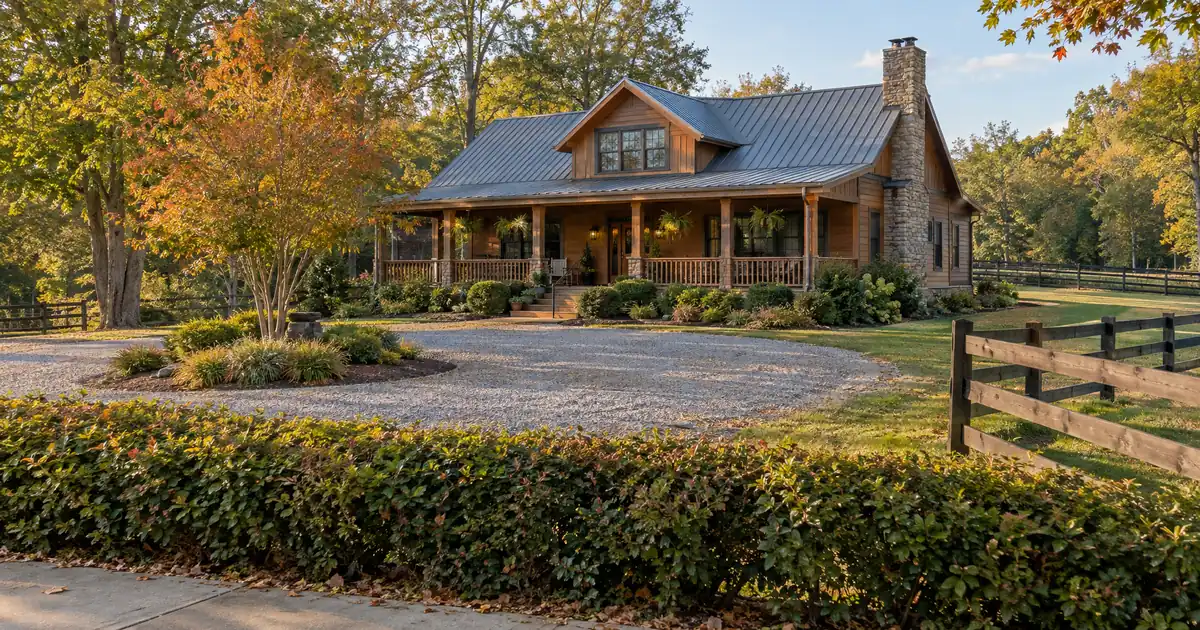
The Quick Read: The policy that clears underwriting on a rural cabin is written for nightly guest use, carries dwelling coverage sized to replacement cost, includes guest liability that fits the property’s hazards, and adds loss-of-rents protection, with the mortgagee clause and named insured matching the loan, subject to lender guidelines.
- A standard homeowners policy is the wrong form once guests pay nightly.
- A policy labeled landlord or rental is not automatically a short-term rental policy.
- The insurance premium sits inside PITIA, so it moves the coverage ratio.
- Log-built cabins are not offered in the network’s DSCR programs, so confirm construction type first.
- Get a real quote before the coverage analysis is locked, not after.
Key Terms Defined
DSCR: the debt service coverage ratio, meaning the property’s rent divided by its monthly PITIA.
PITIA: principal, interest, taxes, insurance and any association dues, which together form the monthly obligation the rent must cover.
Loss of rents: coverage that replaces booking income while a covered loss keeps the cabin off the market.
Declarations page: the insurer’s summary of the named insured, property address, coverage limits, deductibles and mortgagee.
Mortgagee clause: the wording that names the lender as a protected party on the policy.
Replacement cost: what it costs to rebuild the structure today, which can differ sharply from purchase price or market value.
Short-Term Rental Calculator
Run the STR numbers in your market
Rate source: Freddie Mac 30-yr average via FRED® — Federal Reserve Bank of St. Louis · effective Oct 15, 2026
Prefilled with starting assumptions — enter your nightly rate, occupancy, taxes, and insurance for a more accurate picture.
Short-term rental income is documented with a 12-month history or a market data report. Program parameters update from Lendmire’s centralized guideline source.
As of Oct 15, 2026 · General Freddie Mac market benchmark, not a Lendmire loan offer. Nightly rate, occupancy, taxes, and insurance are editable estimates. Qualifying income for short-term rentals varies by program — some use appraisal market rent, others use documented STR history or projections — and is confirmed in underwriting. Not a Loan Estimate, approval, or commitment to lend. Program availability and eligibility are subject to lender guidelines, credit approval, property review, and underwriting.
Why a Homeowners Policy Fails on a Rented Cabin
A standard homeowners policy is built for an owner who lives in the home. Once the cabin is rented for money, most carriers treat it as a business activity. The Insurance Information Institute reports that homeowners insurance typically does not cover commercial activities, including short-term renting. It also warns that failing to tell the insurer can lead to denied claims, reduced liability coverage, higher deductibles or cancellation.
Nationwide makes the same point: a vacation property rented out is probably not covered by a homeowners policy, and the owner’s personal umbrella or liability policy generally does not step in either. A cabin that family and friends borrow for free is a different case, because a carrier is unlikely to classify that as a rental.
For a DSCR file, this is a collateral problem. The lender needs to know a loss will be paid. A policy that the insurer can deny on a business-use ground does not protect the loan.
Which Policy Forms Actually Work
Most nightly-rental cabins land on one of three structures. The right one depends on how the cabin is used and who owns it.
| Policy form | Fit for full-time STR | Main risk |
|---|---|---|
| Homeowners with STR endorsement | Only if limits match use | Owner-occupied form, thin guest liability |
| Landlord or dwelling-fire form | Only with STR endorsement | Assumes long-term tenants |
| Dedicated STR or commercial form | Built for nightly use | Higher premium, fewer carriers |
A dwelling-fire policy, which some carriers call a landlord policy, is the usual form when the owner does not live in the property. Many carriers will endorse it for short-term use. Without that endorsement, nightly guests can fall outside what it covers.
True STR insurance is typically a commercial-form policy for a furnished property rented by the night. It includes general liability that follows guests off the property and income protection based on what the property actually earns. Landlord forms generally lack loss-of-revenue protection, so downtime from a covered loss goes uninsured.
Some carriers also offer hybrid policies that cover both long-term and short-term use. That helps an investor who may switch strategies later.
The Three Coverages the File Needs
Across the wholesale network, lenders look at the same three coverage lines on a short-term rental.
Dwelling coverage. This is the rebuild money. Lenders typically compare it to the loan amount or insurable value. Rural and remote cabins create a replacement-cost problem, because rebuilding far from suppliers and crews often costs more than the purchase price suggests. An under-insured cabin leaves a gap the borrower and the lender both carry.
Guest liability. Cabins with hot tubs, fire pits, water access, steep stairs or long emergency-response times typically need higher limits than a plain house. The limit should fit the hazards on the property, and an umbrella layer is worth pricing where the carrier allows it.
Loss of rents or business income. This line ties directly to the coverage ratio. If the cabin burns and cannot be booked for months, this coverage keeps income flowing during the rebuild. STR-grade income protection pays on what the property earns up to a chosen limit. Landlord-form wording usually pays a fair rental value for a set period, which fits a nightly cabin poorly.
Host-protection programs offered by booking platforms are not a substitute. They are not a policy the lender can name as mortgagee, so they do not satisfy the insurance condition on the file.
How the Premium Feeds the Coverage Ratio
Insurance is the I in PITIA, so a higher premium raises the denominator of the DSCR. A rural cabin that needs an STR endorsement or a commercial form can carry a premium well above what a plain landlord quote suggested. The coverage ratio built on the old quote then drops.
Here is the sequence that protects the number. Get a real quote on the correct policy form first. Then run the coverage ratio with that premium in it.
For short-term rentals, programs in the network typically allow up to 75% LTV on a purchase and up to 70% on a refinance or cash-out on short-term-rental collateral. They typically expect a credit score of 640 or higher and about 12 months of hosting history. On select programs, the coverage floor is 1.00 for both purchases and refinances. Loan sizes run up to $3,000,000 on standard programs. Reserves vary by lender, leverage, loan size and transaction type, and are commonly around 6 months of PITIA. All of this is subject to lender guidelines and individual underwriting.
Clearing 1.00 is not the same as positive cash flow. DSCR compares rent to PITIA only. Repairs, vacancy, management, utilities and capital expenses all sit outside the calculation, and a cabin with seasonal gaps feels them more.
Say a high wildfire-area premium pulls a file below 1.00. Coverage below 1.00 is available through select lenders in the network, with leverage and terms adjusted. A larger down payment can lift the ratio by lowering the payment. It does not erase leverage caps, credit floors, reserve rules or property eligibility.
DSCR loans are designed for non-owner-occupied investment properties. Because they are business-purpose investor loans, they are reviewed differently from a standard owner-occupied mortgage. The file qualifies primarily on property-level rental income covering the payment, subject to lender guidelines.
Where the Rule Breaks on a Rural Cabin
Log construction. Log homes are not offered in the network’s DSCR programs, and neither are manufactured homes or barndominiums. A cabin-style house built with conventional framing is a different property from a log-built one. Confirm construction type before you chase insurance, because no policy fixes an ineligible property.
Wildfire. Some policies in fire-prone mountain areas exclude wildfire or carry it with a separate, higher deductible, as one Smoky Mountain agency explains. AirDNA’s guide adds that some natural disasters may be excluded and need separate policies. A large wildfire deductible does not change the premium line, but it changes how much a borrower carries after a loss.
Cabin perils. Freeze and pipe burst, snow load, septic and well systems, remote logistics and long vacancy between bookings all shape cabin underwriting. Vacancy clauses matter on a cabin that sits empty between guests. Read them before binding.
Flood and lost income. The lender orders a flood determination from the federal maps, and listings, quotes and appraisal comments do not replace it. FEMA states that flood insurance is required in a Special Flood Hazard Area with a government-backed mortgage, and that some lenders require it outside high-risk areas. DSCR loans are not agency products, so the requirement on these files comes from lender policy and the loan documents. For contrast only, the agency selling guide ties its own requirement to the federal flood determination form. A standard flood policy also excludes loss of rental income. A borrower can satisfy the flood condition and still have no income protection.
Rural designation. Many strong STR cabins appraise as rural. Rural eligibility is lender-specific, and a rural label can mean lower leverage or tighter terms with lenders unfamiliar with short-term rentals. The brokerage’s guide on DSCR loans for rural investment properties covers that side of the file. Rural cabins also tend to have thin long-term-rent comps, so the appraisal and the insurance quote can both shift the economics.
Second-home and primary programs. Investors sometimes ask whether a second-home loan avoids all this. Those programs typically limit how many days a year the property can be rented, which is why a full-time rural STR cabin usually lands in DSCR.
The Insurability Check Before You Go Under Contract
Run this list before making an offer.
1. Confirm the cabin is conventional construction and not log-built, manufactured or a barndominium.
2. Ask a carrier or independent agent whether the property can be insured for nightly rental at all.
3. Check the fire protection class, distance to a station and hydrant, heating sources such as wood stoves, roof material, and any hot tub or deck.
4. Get a written quote on the correct STR form with dwelling, liability and loss-of-rents lines shown.
5. Check the flood zone and ask about wildfire exclusions and separate deductibles.
6. Run the coverage ratio with the real premium before the file goes to a lender.
An independent agency that places with several carriers helps on hard-to-place cabins. A captive agent can only offer one carrier’s appetite.
DSCR vs. conventional financing
There are two common ways to finance an investment property, and they qualify you differently — here’s how investors weigh them.
Why investors choose it
- Qualifies on the property’s rental income — no personal tax returns, W-2s, or pay stubs needed to document income.
- No personal debt-to-income ceiling to clear, so existing mortgages and obligations don’t cap your borrowing the same way.
- Can be closed in an LLC, keeping the property inside a business entity.
- Built for scaling — not held to the limit on number of financed properties that conventional financing applies.
- Underwriting centers on the deal: generally qualifies when the rent covers the payment, a 1.00x coverage ratio being a common baseline (confirmed in underwriting).
- Designed specifically for investment property, including long-term and, where the program allows, short-term rentals.
Where it’s strong
- Often the lowest ongoing financing cost for a buyer who fully qualifies on personal income — a fit for a first property or a cost-first purchase.
Trade-offs for investors
- Requires full personal income documentation and must fit within a debt-to-income limit — salary, existing debts, and other mortgages all count.
- Typically held in your personal name rather than a business entity.
- Caps how many financed properties you can carry, which can become a ceiling as a portfolio grows.
- Evaluates you as a borrower as much as the property, which usually means more paperwork.
How investors usually choose: a first or single property often optimizes for the lowest financing cost; portfolio builders often optimize for leverage, vesting in an LLC, and scaling past conventional caps. The right answer depends on your goals, the property, and current guidelines — both paths run through select lenders in Lendmire’s wholesale network, with eligibility and terms confirmed in underwriting.
What to Hand the Lender
Each document does a different job at a different stage.
| Document | Stage | What it must show |
|---|---|---|
| Quote | Pre-offer | Correct form, limits, premium |
| Binder | Pre-closing | Coverage in force, mortgagee named |
| Declarations page | Final file | Insured, address, use, limits, mortgagee |
The usual kickbacks are mechanical. The named insured does not match the vesting on the loan. The occupancy or use classification says owner-occupied or long-term rental. The mortgagee clause is missing or wrong. The loss-of-rents line is absent. A renewal lapsed, or the carrier quietly non-renewed the policy. If the cabin is held in an LLC, the policy needs to name that entity, subject to lender program eligibility.
The file also carries booking history, appraisal methodology and proof the property can legally operate as a rental. Short-term rental rules can vary by city, county, HOA, and property type, so investors should confirm local rules before relying on projected rental income.
If a Carrier Declines the Cabin
A decline is not the end of the file, but it changes the sequence. Ask for the reason in writing, because a decline for a fixable item such as a wood stove or roof age reads differently from a decline for the area. Then go to the specialty market through an independent agency.
A policy from a surplus-lines or specialty carrier can still meet the lender’s conditions if it carries the three coverage lines and names the mortgagee. Expect the underwriter to read it closely. Do not assume a state-backed insurer of last resort satisfies the file on its own, because such plans can be limited to named perils and may carry no liability coverage. Pair one with a separate policy that covers guest liability and lost income, and ask the lender before relying on that structure.
If an owner is refinancing an existing cabin rental, the same insurance conditions apply. The brokerage’s piece on refinancing a rural cabin Airbnb into a DSCR cash-out loan shows how that file gets built. The network’s complete DSCR loans guide covers how coverage ratios, leverage and reserves interact across programs.
Tax treatment can depend on how the funds are used and how the property is held; investors should keep clear records and speak with a qualified tax professional before relying on any deduction.
Frequently Asked Questions
Can I use my homeowners policy with an STR endorsement?
Sometimes, but only if the endorsement is actually added and the cabin’s use matches its limits. Homeowners forms assume an owner lives there, so guest liability can run thin and loss-of-rents protection is often missing. Most lenders in the network look for a form built for non-owner-occupied nightly rental.
Does a landlord policy satisfy a DSCR lender on an Airbnb cabin?
Usually not on its own. A landlord or dwelling-fire policy assumes long-term tenants and generally lacks loss-of-revenue protection. Some carriers will endorse it for short-term use, and then it can work. Ask for the endorsement in writing.
Does flood insurance cover lost bookings?
No. A standard flood policy excludes loss of rental income, so a borrower can meet a lender’s flood condition and still have no income protection. That coverage has to come from the STR policy, if the carrier offers it for the peril.
Is insurance included in the DSCR calculation?
Yes. The premium is the I in PITIA, so a higher premium lowers the coverage ratio. That is why a real quote on the correct form should come before the coverage analysis. A file that falls below 1.00 can still be reviewed through select lenders in the network, with leverage and terms adjusted.
Will a log cabin qualify if I find the right policy?
No. Log homes are not offered in the network’s DSCR programs, regardless of insurance. A conventionally built cabin-style home is a different property type, so confirm construction before spending time on quotes.
Next Step
If you are buying or refinancing a rental property and want to see how the numbers work, Lendmire can help you compare DSCR loan options based on the property income, credit profile, leverage, and investor goals. As a broker with DSCR programs across 41 markets, including Washington, D.C., it arranges financing through select lenders in its wholesale network, and every file is underwritten individually. Programs change, and nothing here is a commitment to lend.
Remote cabins reward the investor who treats the insurance quote as a file input rather than an afterthought, because the premium, the deductible structure and the policy form all show up in the coverage ratio.
About Lendmire
A DSCR-focused mortgage broker, Lendmire (NMLS# 2371349) places investor financing across 41 markets — 40 states plus Washington, D.C. — with DSCR eligibility generally reviewed by the lender on property cash flow instead of tax returns, subject to lender guidelines. Scotsman Guide named Lendmire a Top Mortgage Workplace in 2025 and 2026.
Get Started
Ready to find the right loan for you?
In about 30 seconds you can review financing options available for your investment property. No commitment required.
Informational only. Not a Loan Estimate, approval, or commitment to lend. Program availability and eligibility are subject to lender guidelines, credit approval, property review, and underwriting.
References
1. Insurance Information Institute via Business Wire — Short-Term Rentals and Homeowners Insurance
2. Nationwide — Vacation Rental Insurance
3. ASI — Hidden Insurance Costs for Smoky Mountain Cabin Owners
4. AirDNA — Short-Term Rental Insurance
5. FEMA NFIP FloodSmart — Flood Insurance Eligibility
6. Fannie Mae Selling Guide B7-3-06 — Flood Insurance Requirements
This article is part of Lendmire’s short-term rental loan program — full qualification details, guidelines, and scenarios live on the program page.
Related reading: Does a Rural Appraisal Hurt a DSCR Loan? · How to Qualify for a DSCR Loan in Tennessee · How to Qualify for a DSCR Loan in California
Brandon Miller
Founder & CEO, Mortgage Loan Originator, Lendmire LLC
- Mortgage Loan Originator · NMLS# 1129696 · Verify on NMLS Consumer Access
- North Carolina Real Estate Broker · License# 343312 · Verify on NCREC
- North Carolina Insurance Producer · License# 19053198 · Property, Casualty, Life, Health · Verify on NAIC SBS
- Lendmire LLC · Firm NMLS# 2371349 · Verify firm licensure
Important disclosures. Lendmire (NMLS# 2371349) is a licensed mortgage brokerage. Lendmire is not a direct lender, depository institution, or financial advisor. All loan inquiries are subject to lender underwriting; this article does not constitute a commitment to lend. Rates, terms, and program guidelines are subject to change without notice and vary by borrower profile, property type, and state. Information in this article is general in nature and is not financial, legal, or tax advice. Equal Housing Opportunity. NMLS Consumer Access: nmlsconsumeraccess.org.