
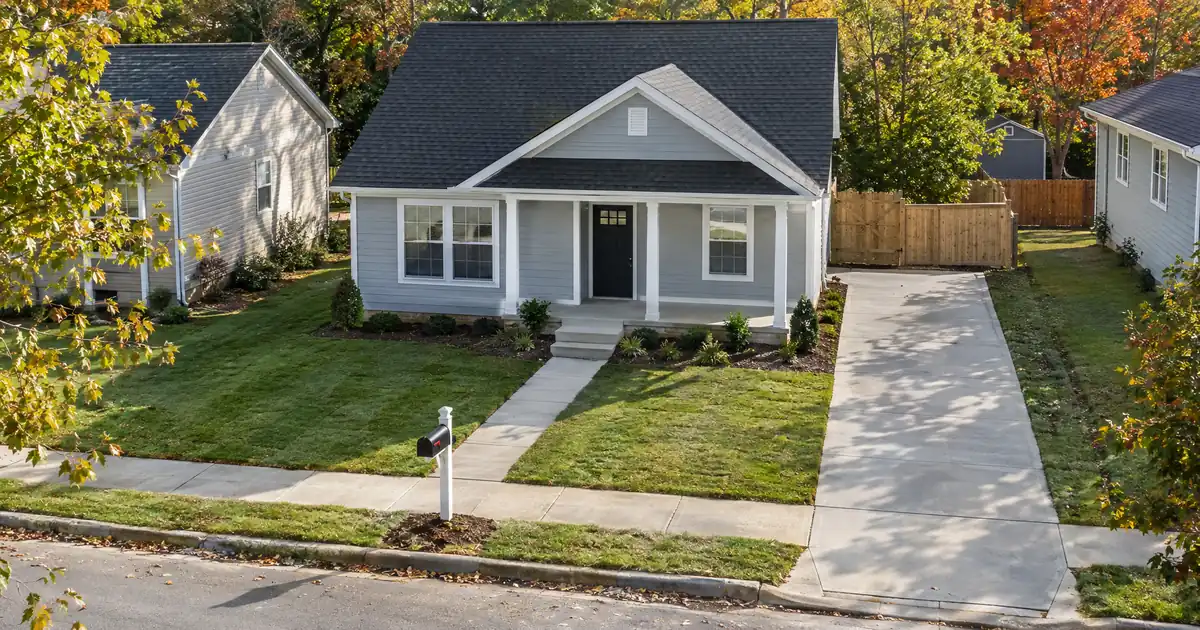
The Quick Read: For a vacant rental in poor condition, hard money is usually the acquisition tool, and a DSCR loan is usually the long-term takeout once the property is finished and rentable. DSCR financing qualifies primarily on property-level rental income covering the payment, subject to lender guidelines, so the house has to be rent-ready first.
- Vacancy alone does not rule out a DSCR purchase. Unrentable condition does.
- Hard money sizes on cost, after-repair value (ARV), rehab scope, and exit plan.
- Rehab funds on hard money release in draws against completed work.
- Many investors buy with hard money, renovate, then refinance into DSCR financing.
- Every figure below varies by lender, property, and experience, and nothing here is a commitment to lend.
The honest answer is about who each loan serves. DSCR financing is for the investor holding a finished rental. Hard money is for the investor who needs short-term capital to buy a property that isn’t a rental yet. A vacant, damaged house usually needs the second before it can use the first.
What this loan actually costs to carry.
Hard money is sized against the project and priced by time. Enter the deal and see how much the program will lend, the cash required at closing, the carry while you hold it, and what is left at the exit.
Leverage tiers on the current program: 85% with fewer than 2, 90% with 2 or more, 93% with 5 or more completed projects — every tier capped at 75% of after-repair value. Loan amounts up to $5,000,000, larger by exception; terms of 6 to 18 months, interest-only, no prepayment penalty. The rehab portion funds in draws against completed work, not at closing.
Program parameters shown update from Lendmire’s centralized guideline source. Rate, points, and months are editable assumptions, not quoted terms.
Cost cap sets the loan · positive spread
Illustrative estimate only — not a quote, Loan Estimate, approval, or commitment to lend. Rate, points, and months are editable assumptions. Hard money is business-purpose financing for real estate investors, not a consumer mortgage. Leverage on the current program tops out at 93% of project cost for investors with a documented track record, capped at 75% of after-repair value, with rehab funding up to 100% of the documented budget released in draws; actual terms vary by lender, borrower experience, property, and exit. Lendmire is a mortgage broker, not a lender.
Side-by-Side
The DSCR column reflects what most programs in Lendmire’s wholesale network look for. The hard money column reflects the parameters Lendmire places on business-purpose files, which vary by lender, property, and experience.
| Factor | DSCR Loan | Hard Money |
|---|---|---|
| Review basis | Property rent vs. payment | Asset value, plan, exit |
| Property condition | Rent-ready, habitable | Distressed is workable |
| Documentation | Appraisal with rent schedule | Contract, scope, budget, ARV |
| Rehab funding | None after closing | Draws against completed work |
| Term structure | Long-term, 30-year fixed spine | 6-18 months, interest-only |
| Purchase leverage | Typically 75%-80% LTV | Up to 93% of project cost, capped at 75% of ARV |
| Credit | Most want about 660 | 620 minimum, extra conditions below 660 |
| Entity vesting | LLC common, per program terms | Entity documents typical |
| Best fit | Hold a stabilized rental | Buy, fix, then sell or refinance |
Hard money’s top tier is reserved for experienced investors with several documented completed projects. First-time investors qualify at the lower leverage tiers. DSCR purchase leverage also moves with credit: select high-leverage programs reach 85% LTV on a purchase at roughly a 700+ score. Each figure is subject to lender guidelines and a full review of property type, leverage, and credit.
Why Condition Decides the Loan
A DSCR file needs a property that can be rented on day one. The appraiser gives an opinion of value and an opinion of market rent. On a one-unit property, the rent opinion typically sits on the Fannie Mae Form 1007, the single-family comparable rent schedule. With no lease in place, coverage rests on that market-rent figure. Condition feeds into it because comparable rents get adjusted for age and condition.
Here is the catch. A house with no kitchen, an active roof leak, or no working heat has no credible market rent today. A DSCR file generally cannot close on repairs promised afterward.
Appraisers describe condition on a six-step scale. The UAD condition definitions and the Fannie Mae Selling Guide describe C5 as obvious deferred maintenance needing significant repairs. C6 is damage severe enough to affect safety, soundness, or structural integrity, and one C6 component rates the whole dwelling C6. Those are agency rating definitions only. They don’t govern DSCR loans. Across the network, most DSCR programs apply their own rent-ready standard, and a C5 or C6 property generally sits outside it.
A simple ladder helps:
| Repair level | Typical path |
|---|---|
| Cosmetic (paint, floors, fixtures) | Often straight to DSCR if rent-ready |
| Moderate (kitchen, baths, some systems) | Hard money first, DSCR takeout after |
| Structural or habitability problems | Hard money, then a full rehab before any takeout |
The middle row is where investors get it wrong. They underestimate how much work separates “ugly” from “rentable” in an appraiser’s eyes.
When a DSCR Loan Is the Better Fit
DSCR financing wins when the property can be rented now. That includes a vacant house that needs only light cosmetic work.
- The property is rent-ready. A clean, vacant purchase can underwrite on the appraiser’s market rent with no lease.
- You plan to hold. A long-term structure, with a 30-year fixed as the spine, suits a rental that has to cash-flow for years.
- Your income is hard to document. The file leans on the property, though credit still matters. Most programs want around 660, and 700+ unlocks the strongest leverage tiers.
- You want one closing, not two. Starting with hard money means paying closing costs twice.
Coverage still has limits as a measure. DSCR compares rent to the full housing payment only. Clearing 1.00 is not the same as positive cash flow, because repairs, vacancy, management, utilities, and capex sit outside the calculation. Also, 1.00 is where many select programs start. A separate select-lender path goes below 1.00, with leverage and terms adjusted.
Reserves matter too. They vary by lender, leverage, loan size, and transaction type, and are commonly around 6 months of PITIA.
When Hard Money Is the Better Fit
Hard money wins when the property can’t pass a rent-ready test. It is also the tool for a flip with no hold plan.
- The house is unrentable today. Hard money sizes on as-is value, ARV, rehab scope, and exit. It does not turn on rent.
- You need rehab money. Up to 100% of the rehab budget can fund in draws against completed work. That is a rehab-budget figure, never a purchase LTV.
- You plan to sell. For a flip, hard money is often the whole financing.
- Your income picture is complicated. Underwriting stays asset-based: property, plan, and exit.
The tradeoff is the clock. Terms run 6 to 18 months, interest-only, with no multi-year option on the current program. The bridge must outlast the rehab, the lease-up, the seasoning period, the appraisal, and underwriting. A permit delay can eat the buffer. If it does, the exit gets rushed.
There is no true 100% purchase program either. High leverage is measured against project cost, and every tier is capped at 75% of ARV. The ARV cap often binds first on a deeply discounted house.
The Two-Loan Sequence
Many investors run both loans on one deal. Lendmire brokers that path, from the hard money purchase through the DSCR takeout.
1. Buy with hard money, using the contract, scope of work, budget, and ARV support.
2. Complete the rehab as draws release against finished work.
3. Lease the property and gather rent evidence.
4. Order the DSCR appraisal with its market-rent opinion.
5. Refinance into long-term DSCR financing and pay off the bridge.
Cash-out DSCR refinances on standard rentals top out around 75% LTV across most of the network, with about 6 months of seasoning as the common expectation. Seasoning can run from the recorded deed, not from rehab completion. Short-term rental collateral runs lower: cash-out is capped at 70% there, and the file expects about 12 months of hosting history. Seasoning rules vary by lender, so plan the exit before you buy.
Lenders also review a few things at takeout: habitability, insurance, and rent evidence. A bridge that matures before those pieces exist is a real risk.
Costs Nobody Models
The coverage ratio ignores the vacancy period. Taxes, insurance, utilities, and bridge interest all run while the house sits empty during rehab. Budget for them separately.
Run a worked scenario with illustrative numbers. Say you buy a vacant house at a deep discount, using a cost-based loan at the middle leverage tier. The ARV cap checks out, the rehab budget draws in stages, and the finished house appraises with a market rent that covers the payment at roughly 1.2x. That is the clean outcome. Now stress it. The rehab overruns, the appraisal comes in light, and coverage lands near 1.00 or below. Sub-1.00 coverage is available through select lenders in the network, with leverage and terms adjusted. Don’t plan around that as a rescue. It is a fallback.
Other fallbacks include paying down the bridge with cash, extending the bridge, or selling. Each costs something.
Decision Rules
- Rent-ready, holding: DSCR financing.
- Moderate or heavy repairs, then holding: hard money first, DSCR takeout.
- Moderate or heavy repairs, then selling: hard money alone.
- Habitability or structural problems: hard money and a full rehab before any lender sees it as a rental.
Some property types are not offered at all. Manufactured homes, log homes, and barndominiums are not offered in the network’s DSCR programs.
DSCR loans are designed for non-owner-occupied investment properties. Because they are business-purpose investor loans, they are reviewed differently from a standard owner-occupied mortgage. The business-purpose exemption in Regulation Z turns on how the loan is used, not just the property type.
Tax treatment varies; consult a qualified professional.
Key Terms Defined
- ARV (after-repair value): The estimated value of the property once renovations are finished.
- Seasoning: The waiting period before a property or loan is eligible for a certain refinance.
- Draw: A release of rehab funds after a portion of the work is completed.
- Takeout: The longer-term loan that pays off a short-term bridge.
- Market rent: The appraiser’s opinion of what the property would rent for today.
Balanced Verdict
If the house can be rented as it stands, a DSCR loan is the cleaner path. If it can’t, hard money buys the time and the rehab capital, and a DSCR refinance becomes the destination. Neither loan fixes a bad deal. For more on how the long-term side works, see Lendmire’s complete DSCR loans guide. For a related look at the short-term side, read Lendmire’s piece Hard Money vs. Bank Loan Requirements for a Rental Purchase.
Frequently Asked Questions
Is a DSCR loan the same as hard money?
No. A DSCR loan is long-term rental financing that qualifies primarily on property-level rental income covering the payment, subject to lender guidelines. Hard money is short-term, interest-only, asset-based financing sized on cost, ARV, and the exit plan. They serve different stages of a deal.
Can I buy a vacant property with a DSCR loan?
Yes, if it is rent-ready. With no lease, the file rests on the appraiser’s market-rent opinion. Vacancy by itself is not the problem. A property that can’t be lived in or rented as it stands is.
Can I use a DSCR loan for a fixer-upper?
Only for light cosmetic work on a property that is already rentable. A DSCR loan doesn’t fund repairs after closing. Heavier rehab generally needs hard money first, with rehab funding released in draws against completed work.
Can I refinance hard money into a DSCR loan?
Often, yes, once the property is finished, leased, and appraised. Cash-out on a standard rental tops out around 75% LTV across most of the network, with about 6 months of seasoning common. Terms vary by lender, property, and experience.
What if I pay for repairs in cash?
Cash repairs can keep you out of a bridge, but you still need a rentable property before DSCR underwriting. The tradeoff is liquidity. Paying cash ties up capital you might otherwise use for the next purchase.
If you are buying, rehabbing, or refinancing an investment property on a short timeline and want to see how the numbers work, Lendmire can help you compare hard money options based on the project, the exit plan, leverage, and your goals. Reach the team at 828-256-2183 or request a quote.
About Lendmire
Lendmire (NMLS# 2371349) is a DSCR-focused mortgage broker that helps arrange investor financing across 41 markets, including Washington, D.C., through wholesale and investor-lending channels. DSCR eligibility is generally reviewed by the lender around the property’s rental income rather than personal income documentation, subject to lender guidelines. That suits self-employed investors, LLC operators, and portfolios above four financed properties. Scotsman Guide named Lendmire a Top Mortgage Workplace in both 2025 and 2026.
Get Started
Ready to find the right loan for you?
See your offer in seconds. No credit pull, no obligation.
Informational only. Not a Loan Estimate, approval, or commitment to lend. Program availability and eligibility are subject to lender guidelines, credit approval, property review, and underwriting.
References
2. UAD Condition & Quality Definitions
This article is part of Lendmire’s hard money loan program — full qualification details, guidelines, and scenarios live on the program page.
Related reading: Can You Get a DSCR Loan on a Whitefish Vacation Rental? · Escrow Waiver vs Full Escrow on a DSCR Rental Loan · Can a Jumbo DSCR Loan Cover a Two-to-Four-Unit Rental?
Brandon Miller
Founder & CEO, Mortgage Loan Originator, Lendmire LLC
- Mortgage Loan Originator · NMLS# 1129696 · Verify on NMLS Consumer Access
- North Carolina Real Estate Broker · License# 343312 · Verify on NCREC
- North Carolina Insurance Producer · License# 19053198 · Property, Casualty, Life, Health · Verify on NAIC SBS
- Lendmire LLC · Firm NMLS# 2371349 · Verify firm licensure
Disclosure information. Lendmire is a state-licensed mortgage brokerage under NMLS# 2371349. Lendmire is not a depository institution, direct lender, or financial advisor — all loans referenced are placed through wholesale lender partners and are subject to each lender's underwriting standards. This article is provided for general informational purposes and is not a commitment to lend, nor does it constitute financial, legal, or tax advice. Loan programs, terms, rates, and qualification standards change without notice and depend on borrower profile, property type, and the state in which the subject property is located. Equal Housing Opportunity provider. NMLS Consumer Access: nmlsconsumeraccess.org.