
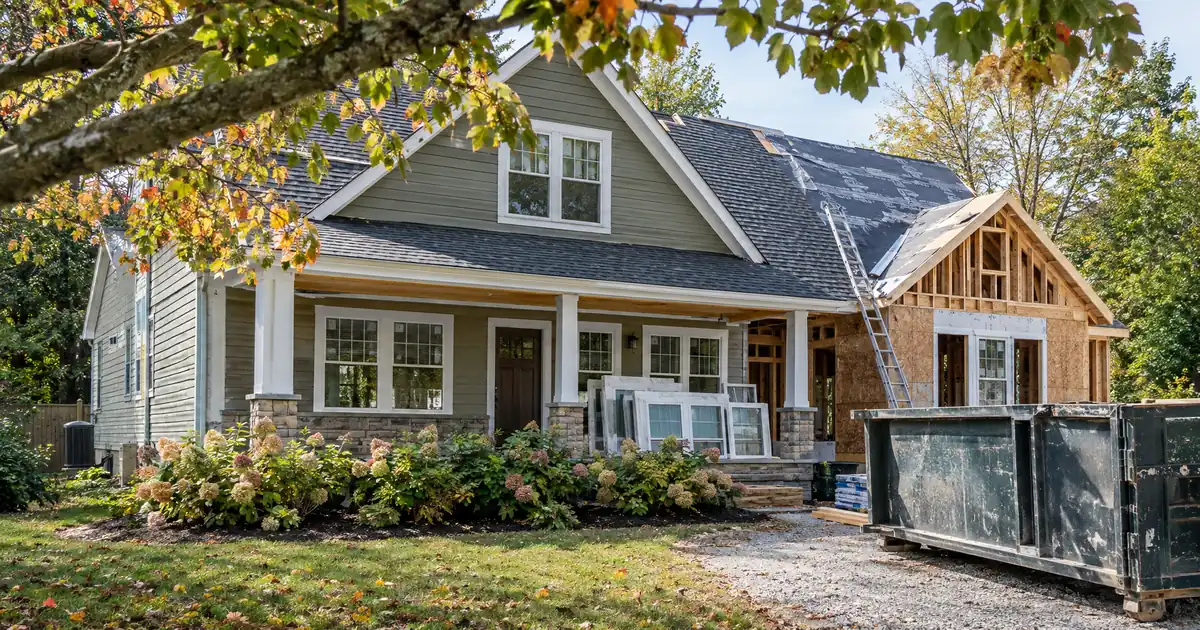
The Quick Read: A rental that needs real repairs usually starts with hard money, which lends against the project and the exit plan, and then moves to a DSCR loan once the property is rentable, because a DSCR loan is reviewed primarily on property-level rental income covering the payment, subject to lender guidelines.
- Hard money funds the work. A DSCR loan generally does not release rehab draws.
- A DSCR loan wants a property that can be rented as it sits.
- Hard money is short-term and interest-only, so the exit plan matters as much as the purchase.
- Light cosmetic work can fit a DSCR loan. Structural, safety, or habitability problems usually point to hard money first.
Here is the honest version of who each option is for. A DSCR loan suits an investor who wants long-term financing on a rental that is ready for a tenant. Hard money suits an investor who is buying a property that is not ready, has a repair budget, and has a clear plan to sell or refinance. Neither product is better in the abstract. They solve different problems at different points in the life of the same building.
What this loan actually costs to carry.
Hard money is sized against the project and priced by time. Enter the deal and see how much the program will lend, the cash required at closing, the carry while you hold it, and what is left at the exit.
Leverage tiers on the current program: 85% with fewer than 2, 90% with 2 or more, 93% with 5 or more completed projects — every tier capped at 75% of after-repair value. Loan amounts up to $5,000,000, larger by exception; terms of 6 to 18 months, interest-only, no prepayment penalty. The rehab portion funds in draws against completed work, not at closing.
Program parameters shown update from Lendmire’s centralized guideline source. Rate, points, and months are editable assumptions, not quoted terms.
Cost cap sets the loan · positive spread
Illustrative estimate only — not a quote, Loan Estimate, approval, or commitment to lend. Rate, points, and months are editable assumptions. Hard money is business-purpose financing for real estate investors, not a consumer mortgage. Leverage on the current program tops out at 93% of project cost for investors with a documented track record, capped at 75% of after-repair value, with rehab funding up to 100% of the documented budget released in draws; actual terms vary by lender, borrower experience, property, and exit. Lendmire is a mortgage broker, not a lender.
Lendmire is a mortgage broker that arranges both kinds of financing through select lenders in its wholesale network, across 41 markets, including Washington, D.C. That is why this comparison treats them as tools, not rivals. The sections below show how each one views a property with repair needs, and how the two connect. Pricing is left to the calculator, so none of the comparison rests on cost.
Side-by-Side
The DSCR column reflects typical programs across the wholesale network. The hard money column shows typical industry ranges, which vary by lender, property, and experience.
| Factor | DSCR Loan | Hard Money |
|---|---|---|
| Review basis | Rent covering the payment | Project cost, after-repair value, exit plan |
| Documentation | Appraisal with rent schedule, entity papers, reserves | Contract, scope of work, budget, exit plan |
| Property condition | Must be rentable as it sits | Can be unfinished; the work is the plan |
| Funds repairs? | Generally no rehab draws | Rehab budget released in draws |
| Property types | Investment rentals; some types not offered | Non-owner-occupied 1-4 units |
| Entity vesting | LLC common, subject to program terms | LLC with a personal guaranty is common |
| Structure | Long-term; 30-year fixed is the spine | Short-term, interest-only, 6-18 months |
| Reserves | Commonly around 6 months of PITIA | Varies; cash to float early costs is common |
PITIA stands for principal, interest, taxes, insurance, and association dues. It is the full monthly housing payment that a DSCR loan measures rent against.
What “Needs Repairs” Means to Each Lender
The word “repairs” covers a wide range, and the two products draw the line in different places. A DSCR lender asks one question first: can someone live here and pay rent today? A hard money lender asks a different one: what will this property be worth when the work is done, and how will you repay us?
Think of three levels of work:
- Cosmetic. Paint, flooring, fixtures, and landscaping. A DSCR appraisal can often accept a dated but livable home. Where exactly the line falls is set lender by lender.
- Moderate. A kitchen, a bathroom, or an aging system that still works. This is a gray zone. Some lenders accept it as is, and others want it finished first.
- Heavy. A roof, mechanical systems, water intrusion, or missing components. The appraiser rates the property’s condition, and a serious problem anywhere can sink the whole rating. This is hard money territory.
A DSCR appraisal generally cannot be completed “subject to” future repairs. Across our wholesale network, the property has to be rentable when the appraiser walks through. Also, a DSCR loan does not hold back money for the work. The lender funds the loan on the property as it stands.
When a DSCR Loan Is the Better Fit
A DSCR loan is the better fit when the property is already rentable, or needs only light cosmetic work you can pay for out of pocket. It also fits when you plan to hold the property for years and want a structure that does not force a sale or refinance on a deadline.
Here is how the numbers typically look across the network, always subject to lender guidelines and varying by borrower, property, and loan scenario:
- Leverage. Most DSCR purchase files on an investment property land at 75% to 80% LTV. Select high-leverage DSCR programs go as low as 15% down on a purchase, with roughly a 700 or better score. LTV, or loan-to-value, is the loan balance divided by the property’s value.
- Cash-out refinance. It tops out around 75% LTV on an investment property across most of the network. About 6 months of seasoning is the common expectation. Seasoning is the waiting period a lender wants after you buy before it will refinance.
- Coverage. A coverage ratio of 1.00 is where select programs start, and stronger ratios open better pricing and leverage. Coverage below 1.00 is available through select lenders in the network, with leverage and terms adjusted. These are separate paths, not one program with a moving floor.
- Credit. A 620 floor exists in parts of the network. Most programs want around 660, and 700 or better unlocks the strongest leverage tiers.
- Loan size. Standard loans run up to $3,000,000 on standard programs (smaller balances available through select lenders). Above $2,500,000, the network generally holds to 30-year fixed structures.
Reserves are cash you keep on hand after closing. They vary by lender, leverage, loan size, and transaction type. Around 6 months of PITIA is common, and loans above $1,500,000 typically step up to about 9 months. Conservative rate-term files at modest leverage can see reserves waived.
A DSCR loan also has limits worth knowing before you shop. Manufactured homes (single- and double-wide), log homes, and barndominiums are not offered in the network. A larger down payment can lift the coverage ratio, but it never erases credit floors, reserve rules, or property eligibility. The strongest files clear both tests: enough equity and enough rental coverage.
Finally, clearing 1.00 does not mean the property cash flows. The ratio compares rent to PITIA only. Repairs, vacancy, management, utilities, and capital expenses all sit outside the calculation. A property can clear the number and still lose money on a bad month.
For the full picture of how these loans work, see Lendmire’s complete DSCR loans guide.
When Hard Money Is the Better Fit
Hard money is the better fit when the property cannot be rented yet, the repair scope is real, and you have a plan to exit. It lends against the asset and the project. The lender reviews your purchase contract, your scope of work, your budget, and the after-repair value, which is what the property should be worth when the work is finished.
The typical structure, which varies by lender, property, and experience, looks like this:
- Fix-and-flip leverage. Lenders size the loan against project cost, tiered by completed projects. That is roughly 93% of project cost at 5 or more completed projects, 90% of project cost at 2 or more, and 85% of project cost with fewer than 2. Every tier is capped at 75% of after-repair value. The top tier is reserved for experienced investors.
- Bridge purchase without rehab. Up to 80% of the purchase price.
- Refinance. Cash-out and rate-term refinances go up to 65% of value.
- Rehab funds. Up to 100% of the rehab budget is released in draws against completed work. This is a rehab-budget figure, not a purchase loan-to-value. There is no true 100% purchase program.
- Loan size. Up to $5,000,000, with larger loans by exception.
- Term. 6 to 18 months, interest-only, with no prepayment penalty.
- Credit. A 620 minimum score, with additional conditions below 660. First-time investors qualify at the lower leverage tiers.
Because draws pay for work already completed, you may need cash to cover the early costs. Plan for that gap before you buy. Hard money is still underwritten on the asset, the plan, and the exit, so it is not a blanket promise of approval.
The tradeoff is the clock. A 6 to 18 month interest-only loan has to be repaid, so the property must be sold or refinanced by maturity. If the rehab runs long, the appraisal comes in low, or the rents do not cover a long-term loan, the balance is still due. Hard money is a poor choice for sitting on a rental for years.
The Handoff From Hard Money to a DSCR Loan
Many investors refinance out of hard money into long-term DSCR financing once the property is stabilized, and Lendmire brokers that path. The part most investors miss is that you should plan the DSCR exit before you take the short-term loan.
Before you buy, run four checks:
1. Rent. Will the finished property’s market rent cover the full payment on the loan you expect to get? Many select programs start at a coverage ratio of 1.00.
2. Condition. Will the property reach a condition the appraiser can rate as rentable, with no open safety or habitability items?
3. Value. Will the appraisal support the balance you need to pay off? A low appraisal can leave you bringing cash to the table.
4. Seasoning and paperwork. Check the lender’s waiting period, and gather the lease, payoff statement, insurance, entity documents, and proof of reserves.
The two-loan route has costs a single DSCR loan does not. You pay for two closings, and you carry the property through the rehab and lease-up. Add those carrying costs to your budget before comparing the routes.
If your repair scope is light and you can fund it in cash, a single DSCR loan may be cleaner. For a deeper look at how packages with repairs behave, see Lendmire’s piece Hard Money vs. Portfolio DSCR Loan for a Rental Package With Repairs.
Both Are Business-Purpose Loans
DSCR loans are designed for non-owner-occupied investment properties. Because they are business-purpose investor loans, they are reviewed differently from a standard owner-occupied mortgage. Hard money loans are business-purpose too. Under CFPB Regulation Z, credit to acquire, improve, or maintain non-owner-occupied rental property is treated as business purpose. That treatment does not apply if the owner expects to occupy the property for more than 14 days during the coming year.
Business purpose does not mean paperwork-free. As legal commentary on business-purpose lending points out, these loans still need a documented purpose, such as a business-purpose affidavit. Expect to sign one on either product. Vesting in an LLC is common for both, subject to lender program eligibility.
The Verdict
Choose by the condition of the property in front of you.
- Rentable today, or only light cosmetic work: a DSCR loan is usually the cleaner, longer-lasting choice.
- Not rentable, with real repairs: hard money is built for the rehab phase. A DSCR loan generally will not fund it.
- Heavy rehab and a long hold: use hard money for the work, then refinance into a DSCR loan once the property is rent-ready and the coverage ratio holds.
- Weak rent coverage after repairs: reconsider the deal. Neither loan fixes a property that does not earn enough.
Frequently Asked Questions
Can a DSCR loan pay for the repairs on a rental?
Generally no. A DSCR loan funds against the property as it stands, and across the network it does not release rehab draws or holdbacks. If the work is light, you can pay for it in cash before or after closing. If the work is substantial, hard money is the tool built to fund it.
Can I refinance a hard money loan into a DSCR loan?
Often, yes. That is a common plan once repairs are finished and the property is leased. The refinance depends on the rent covering the payment, the appraisal supporting the balance, your credit, your reserves, and the lender’s seasoning rules. If the new loan cannot cover the full payoff, the difference is still due at maturity.
How bad can the repairs be before a DSCR loan is off the table?
Cosmetic work is usually fine. Safety, habitability, and structural problems are what trip the appraisal, and the exact line is a lender-by-lender call. When in doubt, ask for the program guidelines before you make an offer.
Does a 1.00 coverage ratio mean the property cash flows?
No. The ratio compares rent to PITIA only. Vacancy, repairs, management, utilities, and capital expenses sit outside it. Treat the number as an eligibility test, then budget the rest separately.
How much cash do I need for hard money on a rental that needs repairs?
It varies by lender, property, and experience. Fix-and-flip leverage is sized on project cost, and fewer completed projects mean a lower tier, so you bring more of your own cash. Rehab money arrives in draws against finished work, so keep extra cash on hand to cover early costs.
Next Step
If you are buying, rehabbing, or refinancing an investment property and want to see how the numbers work, Lendmire can help you compare hard money options based on the project, the exit plan, leverage, and your goals. You can also request a quote at 828-256-2183. Nothing here is a commitment to lend, and every file is underwritten individually.
About Lendmire
A DSCR-focused mortgage broker, Lendmire (NMLS# 2371349) places investor financing across 41 markets — 40 states plus Washington, D.C. — with DSCR eligibility generally reviewed by the lender on property cash flow instead of tax returns, subject to lender guidelines. Scotsman Guide named Lendmire a Top Mortgage Workplace in 2025 and 2026.
Get Started
Ready to find the right loan for you?
See your offer in seconds. No credit pull, no obligation.
Informational only. Not a Loan Estimate, approval, or commitment to lend. Program availability and eligibility are subject to lender guidelines, credit approval, property review, and underwriting.
References
1. CFPB, Regulation Z §1026.3, Exempt transactions
2. Lexology, Beware of “Business Purpose”
This article is part of Lendmire’s hard money loan program — full qualification details, guidelines, and scenarios live on the program page.
Related reading: Can You Get a DSCR Loan on a Vacant Rental With No Lease? · Can You Refinance a Rental With a DSCR Loan Right After Buying It? · How to Get a DSCR Loan on a Rental Needing Repairs
Brandon Miller
Founder & CEO, Mortgage Loan Originator, Lendmire LLC
- Mortgage Loan Originator · NMLS# 1129696 · Verify on NMLS Consumer Access
- North Carolina Real Estate Broker · License# 343312 · Verify on NCREC
- North Carolina Insurance Producer · License# 19053198 · Property, Casualty, Life, Health · Verify on NAIC SBS
- Lendmire LLC · Firm NMLS# 2371349 · Verify firm licensure
Legal disclosures. Lendmire (NMLS# 2371349) is a state-licensed mortgage brokerage that arranges financing through wholesale lender relationships. Lendmire is not a direct lender, depository institution, or registered financial advisor. The discussion above is general informational content about real estate financing — it is not financial, legal, or tax advice, and readers should consult licensed professionals for guidance on their individual circumstances. Loan inquiries are subject to lender underwriting; this article does not represent a commitment to lend. Loan terms, rates, and qualification standards vary by borrower, property, and state, and are subject to change at any time. Equal Housing Opportunity. NMLS Consumer Access: nmlsconsumeraccess.org.