
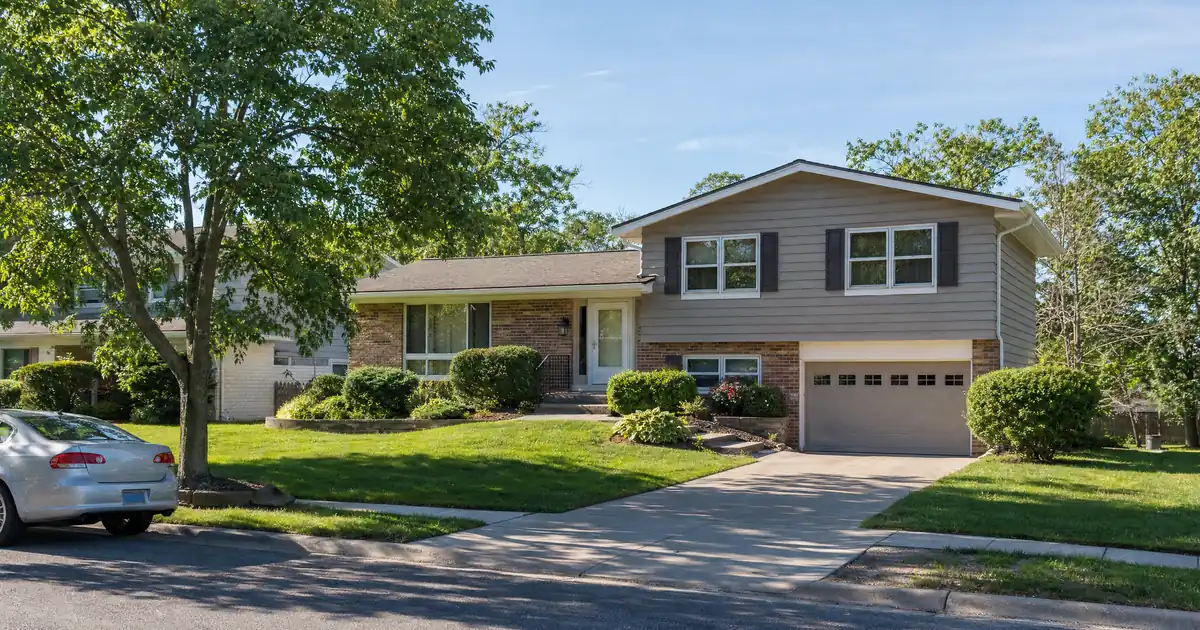
The Quick Read: Yes, in practical terms — DSCR loans exist as business-purpose investment loans, and that classification works the same way in every state, plus Washington, D.C. DSCR loans are available in every state as a loan type, but what actually changes from state to state is which lenders are licensed to write one in that state, how much leverage a given program allows, and whether extra legal wrinkles — prepayment penalty rules, mostly — attach to your specific deal.
DSCR Calculator
Run the numbers in your market
Rate source: Freddie Mac 30-yr average via FRED® — Federal Reserve Bank of St. Louis · effective Jul 30, 2026
Prefilled with starting assumptions — enter your own rent or nightly figures, taxes, insurance, and HOA for a more accurate picture.
Program parameters update from Lendmire’s centralized guideline source. Taxes and insurance are editable estimates.
As of Jul 30, 2026 · General Freddie Mac market benchmark, not a Lendmire loan offer. Rent, nightly rate, occupancy, taxes, and insurance are editable estimates. Short-term rental figures are estimates only and vary significantly by season, property type, management approach, and local short-term-rental rules — confirm local regulations before relying on them. Qualifying income for short-term rentals varies by program — some use appraisal market rent, others use documented STR history or projections — and is confirmed in underwriting. Not a Loan Estimate, approval, or commitment to lend. Program availability and eligibility are subject to lender guidelines, credit approval, property review, and underwriting.
There’s no federal agency issuing a “DSCR charter” the way there is for FHA or VA loans. No single rulebook says a lender must offer DSCR financing in Nevada or Vermont. Instead, DSCR loans are financed through private, non-QM channels — non-QM meaning a loan that doesn’t fit the standard conventional mortgage box — and each lender in that space decides its own state footprint. The real answer to “is it available everywhere” is that the loan concept travels nationwide, but the lender roster serving any one state does not.
Key Terms Defined
DSCR (debt-service coverage ratio): a ratio comparing a property’s monthly rent to its monthly housing payment — rent divided by the payment, expressed as a number like 1.10x or 0.95x.
LTV (loan-to-value): the percentage of the property’s price or appraised value the loan covers; the rest is the down payment or existing equity.
Non-QM: short for “non-qualified mortgage” — a loan that sits outside the standard conforming-mortgage rulebook, which is where nearly all DSCR lending lives.
Business-purpose loan: a loan made to acquire or improve a property for investment, not for the borrower to live in — this is the classification DSCR loans fall under.
Seasoning: the length of time a borrower has owned or held a property before a lender will consider it for a cash-out refinance.
Reserves: liquid funds a lender wants left over after closing, usually measured in months of the property’s PITIA — principal, interest, taxes, insurance, and any association dues.
How This Actually Plays Out, State by State
Here’s the mechanical reality: a DSCR loan gets classified as business-purpose first, then underwritten on the property’s income, then routed through whatever lender is licensed and willing to work in that state. Separate gates, not one.
DSCR loans are designed for non-owner-occupied investment properties. Because they are business-purpose investor loans, they are reviewed differently from a standard owner-occupied mortgage — the credit is going toward a rental, not a home the borrower lives in, and that framing is exactly what separates an investor loan from a consumer mortgage in the eyes of the lenders who fund it. It’s also why the underwriting path looks so different from the one a homeowner would experience.
Step two is rent documentation. Instead of pay stubs and traditional personal-income documentation, an appraiser typically completes a rent schedule — the same style of form the industry has widely adopted for single-family and small multifamily rentals — and that appraised or leased rent becomes the number divided into the monthly payment to produce the DSCR.
Step three is entity vesting. Most DSCR borrowers close title in an LLC. The lender documents formation paperwork and an EIN, and separately takes a personal guaranty from the owners — closing in an entity doesn’t remove personal recourse, it just changes how the credit is classified for underwriting purposes. Investors comparing an LLC purchase against buying in their own name should read Lendmire’s breakdown on “What Is a DSCR Loan” before assuming vesting choice changes eligibility.
Step four — the one that actually decides availability — is licensing. Some states require a mortgage broker or lender license to originate business-purpose loans at all; others don’t. That single fact is why one lender covers 30 states and another covers 45, even though both are writing the identical loan product.
Lendmire (NMLS# 2371349) arranges DSCR loans by placing files with lenders inside its wholesale network across 40 states plus Washington, D.C. — 41 markets total — and that footprint exists precisely because licensing, not loan mechanics, is what gates access market by market.
Which States Carry Extra Restrictions or Overlays?
A handful of states show up again and again as harder to access or more tightly capped — but “harder to access” almost never means the loan is unavailable, it means fewer lenders are licensed there or a program applies tighter leverage. The table below separates the two different reasons a state can look different.
| State(s) | What’s Different | Practical Impact |
|---|---|---|
| CT, FL, IL, NJ | No program-level overlay — the standard leverage and loan-size limits apply | Purchase LTV up to 80% (85% at most) and loan amounts up to $3,000,000, the same as every other state |
| AZ, CA, NV, ND, SD, UT, VT | State statutes restrict who can broker or make business-purpose loans without a license | Fewer licensed lenders active in-state — a smaller lender pool, not a smaller eligible property list |
| Any state, for STR files | Not a state restriction at all — it’s an appraisal methodology issue | Standard rent-schedule forms can understate short-term rental income regardless of where the property sits |
That middle row is the one most investors get backwards. A state requiring a broker license doesn’t mean DSCR financing is banned there — it means the licensed lender roster is thinner, so shopping around matters more, and a national broker’s coverage becomes a real advantage rather than a marketing line.
Prepayment penalty enforceability adds its own layer, separate from availability. Some states limit how a penalty can attach to a business-purpose loan against an LLC borrower, and others leave more room. This isn’t a reason a loan gets declined — it changes the real cost of an early payoff or refinance, so it’s worth confirming with the lender for the property’s specific state before locking in loan terms.
The Leverage and Program Variations That Actually Exist
Across a wholesale network, DSCR programs aren’t one product — they’re a spread of leverage tiers, coverage floors, and structures that shift by lender, credit profile, and property type. Most purchase files land at 75%-80% LTV, meaning 20%-25% down, and a few high-leverage programs push to 85% LTV for borrowers with roughly a 700+ credit score. Actual terms depend on the specific lender’s guidelines, the property in question, and a full review of the borrower’s file.
Cash-out refinances top out lower — generally around 75% LTV across most of the network — and lenders commonly want about six months of ownership seasoning before they’ll consider pulling equity out. On the coverage side, 1.00 is where a number of select programs set their floor, meaning rent roughly matches the payment; that’s a floor for specific programs, never a blanket industry standard, and ratios above 1.00 tend to open better pricing and higher leverage. A few lenders in the network will still review coverage below 1.00, though leverage and terms typically adjust when they do — this isn’t the mainstream path, but it exists for the right file.
Credit requirements follow a similar spread: a 620 floor shows up in parts of the network, most programs prefer around 660, and 700+ is usually what unlocks the strongest leverage tiers. Reserve requirements vary by lender, leverage, and loan size — commonly around six months of PITIA, with conservative rate-and-term files at modest leverage under $1,500,000 sometimes seeing reserves waived, and loans above that threshold typically stepping up to roughly nine months.
Loan sizes on standard programs run up to about $3,000,000, and above roughly $2,500,000 the network generally holds to 30-year fixed structures rather than adjustable terms. The spine of DSCR lending nationwide is the 30-year fixed structure, but extended-term options (40-year amortization) and interest-only periods are available through select lenders, and adjustable-rate structures exist for investors who specifically want them.
Short-term rental files run a tighter version of the same math: purchase up to 75% LTV, refinance and cash-out closer to 70%, generally a 640+ credit score, roughly 12 months of hosting history, and a 1.00 coverage floor. Short-term rental rules can also vary by city, county, HOA, and property type, so confirming local rules before relying on projected rental income matters more here than almost anywhere else in the file.
One honest observation from working files across a wide lender roster: the down payment and the coverage ratio are two separate tests, and a bigger down payment only fixes one of them. Putting more money down lowers the payment and can lift the DSCR into a stronger tier — but it never overrides a leverage cap, a credit floor, a reserve requirement, or a property-type restriction. The strongest files clear both hurdles at once: enough equity in the deal and rent that genuinely covers the payment. Terms vary by lender guidelines, property type, leverage, credit profile, and full file review.
Where the Short-Term Rental Math Actually Breaks
This is the real edge case in “is it available everywhere,” and it has nothing to do with state licensing. The standard single-family rent schedule appraisers use for long-term rentals was never built for short-term rental income, and using it anyway produces a distorted number no matter what state the property sits in.
DSCR vs. conventional financing
Two common ways to finance an investment property in this market. They qualify you differently — here’s how investors weigh them.
Why investors choose it
- Qualifies on the property’s rental income — no personal tax returns, W-2s, or pay stubs needed to document income.
- No personal debt-to-income ceiling to clear, so existing mortgages and obligations don’t cap your borrowing the same way.
- Can be closed in an LLC, keeping the property inside a business entity.
- Built for scaling — not held to the limit on number of financed properties that conventional financing applies.
- Underwriting centers on the deal: generally qualifies when the rent covers the payment, a 1.00x coverage ratio being a common baseline (confirmed in underwriting).
- Designed specifically for investment property, including long-term and, where the program allows, short-term rentals.
Where it’s strong
- Often the lowest ongoing financing cost for a buyer who fully qualifies on personal income — a fit for a first property or a cost-first purchase.
Trade-offs for investors
- Requires full personal income documentation and must fit within a debt-to-income limit — salary, existing debts, and other mortgages all count.
- Typically held in your personal name rather than a business entity.
- Caps how many financed properties you can carry, which can become a ceiling as a portfolio grows.
- Evaluates you as a borrower as much as the property, which usually means more paperwork.
How investors usually choose: a first or single property often optimizes for the lowest financing cost; portfolio builders often optimize for leverage, vesting in an LLC, and scaling past conventional caps. The right answer depends on your goals, the property, and current guidelines — both paths run through select lenders in Lendmire’s wholesale network, with eligibility and terms confirmed in underwriting.
Fannie Mae’s own appraiser guidance confirms this directly: the standard rent schedule calls for an “Indicated Monthly Market Rent,” and it would be incorrect for an appraiser to pull short-term comparables and multiply a nightly rate by 30 to estimate that figure, per Fannie Mae’s Appraiser Update. Appraisal continuing-education provider McKissock reinforces the same point — the form values real property only, and business income like short-term rental revenue falls outside its scope. Appraisal QC firm Class Valuation puts the practical consequence plainly: relying on that form for a DSCR file in a short-term rental market often produces an artificially low ratio that doesn’t reflect how the property actually performs.
The takeaway for an investor: the “availability” question on a short-term rental deal isn’t state licensing at all. It’s whether the lender’s underwriting policy will accept platform-derived income data or an income approach instead of forcing short-term cash flow through a form built for a different purpose. That distinction matters more than which state the property sits in.
Property Types No Lender in the Network Will Touch
State licensing gaps aside, there’s a shorter and much simpler list — property types that aren’t offered under DSCR programs anywhere, regardless of state. Manufactured homes, both single- and double-wide, aren’t offered. Log homes aren’t offered. Barndominiums aren’t offered. These aren’t “harder to finance” or subject to a stricter overlay — they fall outside these programs entirely, and no amount of state-shopping changes that.
What This Means for an Investor Buying Across State Lines
An investor building a multi-state portfolio should treat availability and terms as two separate questions, not one. The loan concept doesn’t change from state to state — the roster of licensed lenders and the leverage a given program allows absolutely do.
The practical checklist looks like this: confirm the broker or lender is actually licensed to originate in the property’s state, not just headquartered somewhere convenient; confirm that the program’s standard leverage and loan-size limits apply (no state carries its own overlay, New Jersey, Connecticut, Illinois, and Florida included); and check whether prepayment penalty enforceability differs there before assuming an early payoff or refinance will cost what it did on the last deal. For investors specifically buying outside their home market, Lendmire’s guide to financing out-of-state rental property walks through how lender licensing and remote closings typically work together.
Worth knowing, briefly: the reason a business-purpose loan gets underwritten so differently from a primary-residence mortgage traces back to how federal consumer-lending rules define personal versus business credit, as outlined in Regulation Z. That’s background, not a deal-specific concern — it doesn’t change execution state to state, and most investors never need to think about it beyond knowing it’s the reason the paperwork looks different from a homeowner’s mortgage.
None of this changes the underlying logic — rent versus payment, documented through an appraisal rather than a paycheck. It changes who can execute that logic, on what terms, in each state. Investors who want the full mechanics of qualification, leverage, and coverage math should start with Lendmire’s complete DSCR loans guide, which lays out the underwriting logic this article assumes.
Tax treatment can depend on how loan funds are used and how the property is titled; investors should keep clear records and speak with a qualified tax professional before relying on any deduction.
Loan approval is never guaranteed, and nothing here is a commitment to lend. Every scenario described here is subject to lender approval and to borrower, property, and program guidelines that can change. This article is general information, not financial, legal, or tax advice.
Frequently Asked Questions
Do I need a different lender for every state I invest in?
Not necessarily, but it’s common on a multi-state portfolio. A single broker working with a wide wholesale network — rather than one direct lender — can usually place a file with whichever licensed lender covers that state, which is often simpler than researching a new lender relationship for every deal.
Are DSCR loans legal in states that don’t require a lender license?
Yes — the absence of a state licensing requirement doesn’t restrict the loan type, it just means more lenders can operate there without applying for one. The loan’s business-purpose classification is the same whether the state requires licensing or not.
Does Washington, D.C. Get treated differently from the states?
Not typically. D.C. Functions as its own licensing jurisdiction, similar to a state, and it’s commonly included in a lender’s coverage footprint rather than excluded from it.
Do prepayment penalties work the same way in every state?
No. Enforceability against an LLC borrower can differ by state, and some states limit how a penalty is structured on certain non-owner-occupied loans. This affects the cost of an early payoff or refinance, not whether the loan is available in the first place.
Can I get a DSCR loan on a short-term rental in any state?
Generally, yes, subject to lender guidelines — the bigger variable isn’t the state, it’s whether the lender’s underwriting accepts short-term rental income data instead of a long-term rent schedule that wasn’t built for that purpose. Confirming that upfront matters more than confirming state coverage.
If you’re comparing DSCR loan options across state lines, Lendmire can help you check leverage, coverage, and lender fit for the property’s specific state — reach the team at 828-256-2183 or request a quote to see how a file like yours typically structures.
About Lendmire
Lendmire (NMLS# 2371349) is a non-QM DSCR mortgage broker, not a direct lender. Rather than underwriting and funding loans itself, Lendmire places each investor’s file with lenders inside its wholesale network, which spans 40 states plus Washington, D.C. — 41 markets total. That structure is what allows the same DSCR loan logic — rent measured against payment — to be matched with whichever licensed lender in the network fits a given state, leverage need, and property type. Scotsman Guide named Lendmire a Top Mortgage Workplace in both 2025 and 2026.
Get Started
Ready to find the right loan for you?
In about 30 seconds you can review financing options available for your investment property. No commitment required.
Informational only. Not a Loan Estimate, approval, or commitment to lend. Program availability and eligibility are subject to lender guidelines, credit approval, property review, and underwriting.
References
1. Fannie Mae — Appraiser Update, June 2024
2. McKissock Learning — Form 1007 & Its Impact on Short-Term Rental Appraisals
3. Class Valuation — Understanding the 1007 Appraisal and Short-Term Rentals
4. Consumer Financial Protection Bureau — Regulation Z, Exempt Transactions, 12 CFR § 1026.3
This article is part of Lendmire’s DSCR loan program — full qualification details, guidelines, and scenarios live on the program page.
Related reading: DSCR Cash Out Refinance Anacortes Washington State · DSCR Cash Out Refinance Issaquah Washington State · DSCR Cash Out Refinance Pullman Washington State
Brandon Miller
Founder & CEO, Mortgage Loan Originator, Lendmire LLC
- Mortgage Loan Originator · NMLS# 1129696 · Verify on NMLS Consumer Access
- North Carolina Real Estate Broker · License# 343312 · Verify on NCREC
- North Carolina Insurance Producer · License# 19053198 · Property, Casualty, Life, Health · Verify on NAIC SBS
- Lendmire LLC · Firm NMLS# 2371349 · Verify firm licensure
Disclosure information. Lendmire is a state-licensed mortgage brokerage under NMLS# 2371349. Lendmire is not a depository institution, direct lender, or financial advisor — all loans referenced are placed through wholesale lender partners and are subject to each lender's underwriting standards. This article is provided for general informational purposes and is not a commitment to lend, nor does it constitute financial, legal, or tax advice. Loan programs, terms, rates, and qualification standards change without notice and depend on borrower profile, property type, and the state in which the subject property is located. Equal Housing Opportunity provider. NMLS Consumer Access: nmlsconsumeraccess.org.