
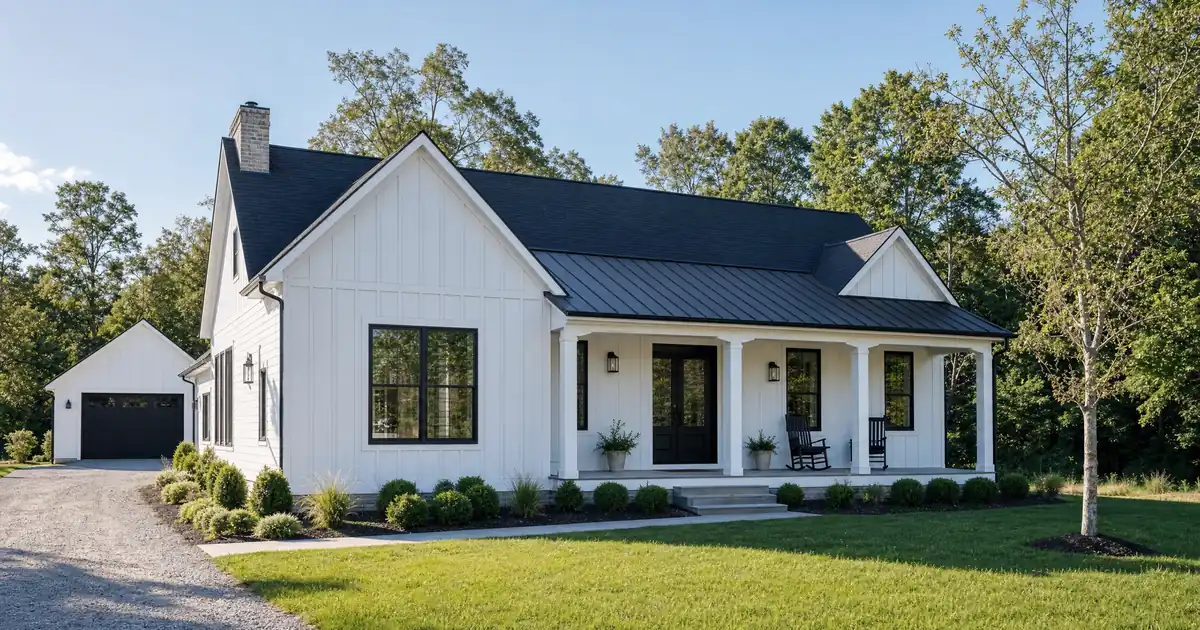
The Quick Read: No — a standard DSCR loan can’t fund the purchase-and-rehab phase of a flip. DSCR underwriting qualifies a property on the rent it can currently produce, and a vacant, mid-gut rehab has no rent to point to. What a DSCR loan can do is take out the flip once the work is finished, the unit is rentable, and a lease or market-rent opinion exists to support the payment.
What this loan actually costs to carry in your market.
Hard money is sized against the project and priced by time. Enter the deal and see how much the program will lend, the cash required at closing, the carry while you hold it, and what is left at the exit.
Leverage tiers on the current program: up to 85% of project cost with fewer than two completed projects, 90% with two or more, 93% with five or more — every tier capped at 75% of after-repair value. Loan amounts up to $5,000,000, larger by exception; terms of 6 to 18 months, interest-only, no prepayment penalty. The rehab portion funds in draws against completed work, not at closing.
Program parameters shown update from Lendmire’s centralized guideline source. Rate, points, and months are editable assumptions, not quoted terms.
Cost cap sets the loan · positive spread
Illustrative estimate only — not a quote, Loan Estimate, approval, or commitment to lend. Rate, points, and months are editable assumptions. Hard money is business-purpose financing for real estate investors, not a consumer mortgage. Leverage on the current program tops out at 93% of project cost for investors with a documented track record, capped at 75% of after-repair value, with rehab funding up to 100% of the documented budget released in draws; actual terms vary by lender, borrower experience, property, and exit. Lendmire is a mortgage broker, not a lender.
The “why” matters here, because it determines exactly when a flip can convert into a DSCR-financed rental — and what has to be true first.
Key Terms Defined
- DSCR (debt-service coverage ratio): the number that compares a property’s rental income to its total monthly housing obligation — if rent covers the payment, the ratio clears 1.00.
- PITIA: principal, interest, taxes, insurance, and association dues — the full monthly obligation used on the bottom half of the DSCR calculation.
- ARV (after-repair value): the projected value of a property once renovation work is complete, the basis fix-and-flip lenders use to size a rehab loan.
- LTC (loan-to-cost): a fix-and-flip lender’s leverage measured against total project cost (purchase plus rehab budget), not against current or future value.
- Bridge loan (hard money loan): short-term financing built to fund acquisition and rehab, typically underwritten on the deal’s cost basis and exit plan rather than existing rental income.
- Seasoning period: the waiting or stabilization window a lender requires after a purchase or renovation before it will consider a cash-out or rate-and-term refinance.
- Market rent opinion: an appraiser’s documented estimate of achievable rent for a property, generally rendered through a rent schedule attached to the appraisal.
Why Can’t DSCR Underwriting Fund a Rehab?
Because DSCR loans qualify on a property’s income, not its potential — and a property under renovation has no income to qualify on. The debt-service coverage ratio only exists once there’s a number to put on one side of it: an existing lease, or an appraiser’s opinion of market rent for a property that’s actually in rentable condition. A home missing a kitchen, gutted down to the studs, or sitting vacant mid-rehab can’t generate that number. No rent, no ratio, no file.
This isn’t a lender being conservative — it’s the math itself breaking down. DSCR is rent divided by PITIA. If the numerator doesn’t exist yet, there’s nothing to divide. Fix-and-flip and bridge lenders solve a completely different underwriting problem: they size the loan against the deal’s cost basis (purchase plus rehab budget, an LTC framework) or against the projected after-repair value, and they release funds in draws as work completes. None of that appears anywhere in a DSCR file, because a DSCR file was never built to track construction progress — it was built to confirm that rent, as it exists today, covers the payment.
What Does DSCR Underwriting Actually Require?
A DSCR file is built around four things: an appraisal with a rent schedule attached, a lease or market-rent opinion, entity and vesting paperwork if the property sits in an LLC, and verified reserves. There’s no renovation budget, no draw schedule, and no after-repair-value opinion anywhere in the stack.
The appraisal is the backbone. For one-unit rentals, that typically means a comparable rent schedule (the industry commonly references Fannie Mae’s Form 1007 framework as a documentation concept, even though DSCR loans themselves aren’t sold to the agencies); for two-to-four-unit properties, a small residential income analysis serves a similar purpose. Fannie Mae’s own guidance is explicit that an appraiser can only render a market-rent opinion when the property isn’t currently rented but is otherwise in rentable condition — a home mid-gut simply doesn’t meet that bar, agency or non-agency. Lenders working DSCR files in Lendmire’s wholesale network apply the same logical test even though the loans themselves are non-agency, business-purpose products: no appraiser is going to certify market rent on a home with no working bathroom.
Reserves get verified next — commonly around six months of PITIA on most files, though loans above roughly $1.5 million typically step that requirement up toward nine months, and conservative rate-and-term deals at modest leverage under $1.5 million sometimes see reserves waived entirely. Loan sizing across the network generally runs up to $3,000,000 on standard programs, with smaller balances available through select lenders. Anything above about $2.5 million typically settles into a 30-year fixed structure rather than a shorter or adjustable term. None of that changes based on renovation status — it’s a separate axis of the underwriting entirely.
DSCR Loan vs. Fix-and-Flip Loan: The Structural Differences
| Factor | DSCR Loan | Fix-and-Flip / Bridge Loan |
|---|---|---|
| is reviewed on | Current or achievable market rent | Purchase cost + rehab budget, or ARV |
| Term structure | 30-year fixed spine (40-year, IO, ARM available via select lenders) | Short-term, interest-only |
| Funding pattern | Single disbursement at closing | Staged draws against rehab progress |
| Property condition | Must be rentable now | Can be vacant, distressed, mid-renovation |
| Typical leverage | Up to 93% of project cost for investors with 5+ completed projects (90% at 2+), capped at 75% of after-repair value | Tied to cost or ARV, not rent |
| Coverage requirement | 1.00 baseline on select programs | Not applicable — no rent test |
The two products aren’t competing for the same deal at the same moment. One funds the phase where the property has no income; the other funds the phase where it does. Investors who understand this from the outset structure the deal in sequence rather than discovering mid-project that their exit financing doesn’t fit the property’s current condition. A more detailed side-by-side of these mechanics lives in Lendmire’s DSCR loan vs. fix-and-flip loan breakdown.
How Does the Bridge-to-DSCR Pathway Work?
The pathway runs in four phases: acquire with short-term rehab financing, complete the renovation, let the property season and lease up, then refinance into a DSCR loan once rent exists to underwrite. Trade coverage of the non-QM market describes this exact pivot as increasingly common — with flip exits less certain than they once were, investors are “penciling out the ‘flip’ portion as a debt-service coverage ratio rental loan as a flexible exit,” reasoning that optionality benefits both sides of the transaction.
Phase one is acquisition and rehab, financed through a bridge or hard-money structure sized against cost or ARV — this is the phase a DSCR loan structurally cannot touch. Phase two is the renovation itself, funded in draws as work completes. Phase three is stabilization: the unit gets leased (or, for a single-family conversion, a market-rent opinion becomes obtainable), and the file sits through a seasoning window — commonly around six months in Lendmire’s network — before a refinance gets underwritten. Phase four is the DSCR refinance itself, which pays off the bridge debt and converts the property into a long-term hold, typically capped near 75% LTV on the cash-out side across most of the network.
The market backdrop makes this pivot more than theoretical. ATTOM’s 2025 year-end flipping report shows 297,045 single-family homes and condos were flipped nationally — the fewest since 2020, down 3.9% from 309,050 the year before — with flips falling to 7.4% of all home sales from a slightly higher share prior. Profitability compressed alongside volume: the typical flip netted $65,981 in gross profit, down from $77,000, for a 25.5% return on investment, the lowest recorded rate since 2008. With margins that thin, more investors are choosing (or being pushed toward) the rental exit rather than forcing a sale, and market tracking coverage of fix-and-flip profitability notes that roughly half of current non-QM origination volume is now DSCR-driven business-purpose lending.
A Worked Example: Flip to Rental in Sequence
Picture an investor acquiring a distressed duplex using a bridge loan sized against the rehab budget and projected after-repair value — no rent involved in that underwriting at all. Renovation runs several months; once both units are turned over and leased, the appraiser can finally support a market rent for each side of the duplex.
At that point the file shifts to DSCR underwriting entirely. Assuming the combined leases support a rent used for lender review that comfortably covers the refinance payment, the property might clear somewhere in the 1.15x-to-1.25x coverage range at a purchase-equivalent leverage point in the 75% LTV band — a ratio strong enough on most files to support standard pricing tiers rather than a compensating-factor structure. The bridge loan gets paid off, the investor holds a long-term rental instead of a one-time sale, and — if equity supports it — some of that value can later be recycled through a cash-out refinance to fund the next acquisition, a strategy Lendmire’s guide to pulling cash out to buy more deals walks through in more depth.
Across files like this, a recurring pattern shows up: the deals that season cleanly are the ones where the investor priced the rehab conservatively enough that the finished rent, not just the resale math, was part of the original underwriting plan — treating the rental exit as a real Plan B from day one rather than a scramble after the flip stalls.
Is My Property Rent-Ready or Still a Rehab?
Run through this before assuming either loan type applies:
- Is there a working kitchen and at least one functioning bathroom? If not, DSCR underwriting has nothing to point to yet.
- Is the unit currently leased, or could an appraiser reasonably support a market-rent opinion today? If yes, DSCR financing becomes possible; if no, it isn’t.
- Has meaningful time passed since acquisition or completion of major work? Most DSCR refinances in the network expect a seasoning period, commonly around six months, before underwriting proceeds.
- Is the property held in an LLC? Entity vesting is workable on DSCR files, subject to lender program eligibility, but adds a documentation step the bridge-loan phase doesn’t require.
- Does the completed property’s projected rent look like it will clear a 1.00 coverage ratio at the leverage the investor wants? If it’s close or below, that’s worth stress-testing before committing to the refinance timeline.
What If DSCR Comes in Low After the Rehab Is Finished?
A finished flip that doesn’t cash-flow cleanly on the refinance isn’t automatically dead — it just needs a different structure. Select lenders in Lendmire’s network review sub-1.00 coverage scenarios, though those typically come paired with reduced leverage and stronger compensating factors: more equity, higher credit, or additional reserves rather than a lower bar across the board. A no-ratio option is available for DSCR below 1.00 with stronger credit or higher down payment; qualification on that path rests on credit and equity rather than a rent-coverage calculation.
Restructuring with an interest-only period, available through select lenders in the network, is another lever some investors use, since it lowers the qualifying payment used in the ratio and can lift a borderline file over the line. None of this is guaranteed; every scenario is subject to lender approval, appraisal support, and program guidelines, and review details are subject to lender overlays that shift by credit tier and property type.
Where Else Does the General Rule Bend?
A few edge cases sit outside the standard purchase-versus-refinance framework entirely. Short-term rental income can support a DSCR file, but the network generally wants roughly 12 months of hosting history, a 640-plus credit profile, and purchase leverage capped near 75% LTV (refinance and cash-out closer to 70%) — meaningfully tighter than a standard long-term-rental file. Short-term rental rules can also vary by city, county, HOA, and property type, so investors should confirm local rules before relying on projected nightly income as part of the underwriting story.
Overlay states matter too. In Connecticut, Florida, Illinois, and New Jersey, purchase leverage on most DSCR files caps closer to 75% LTV rather than the 80% ceiling available elsewhere, and loan amounts in those states generally top out near $2 million — worth factoring in if a flip’s finished value lands in one of those markets.
Property type is a hard stop rather than a soft one in a few categories: manufactured homes (single- and double-wide), log homes, and barndominiums aren’t offered on DSCR programs in this network at all, regardless of how well the rent underwrites. A flip involving one of those structures needs a different long-term exit plan from the start, because DSCR financing simply isn’t on the menu for that property type. And DSCR loans generally apply to non-owner-occupied investment property — a flip an investor intends to live in afterward moves into a different lending category altogether, since DSCR is a business-purpose product reviewed differently from an owner-occupied mortgage.
Common Misconceptions Worth Correcting
“DSCR and fix-and-flip loans are competing products — I pick one.” They’re not competitors; they’re sequential tools for different phases of the same property’s life. One funds the phase with no rent, the other funds the phase with rent.
“Since DSCR skips personal income verification, it should work for my flip too.” The no-personal-income-documentation feature of DSCR loans applies to the borrower’s finances, not the property’s condition. Qualification still runs primarily on property-level rental income covering the payment, subject to lender guidelines — a vacant, mid-gut property fails that test no matter how strong the borrower’s income looks.
DSCR vs. conventional financing
Two common ways to finance an investment property in this market. They qualify you differently — here’s how investors weigh them.
Why investors choose it
- Qualifies on the property’s rental income — no personal tax returns, W-2s, or pay stubs needed to document income.
- No personal debt-to-income ceiling to clear, so existing mortgages and obligations don’t cap your borrowing the same way.
- Can be closed in an LLC, keeping the property inside a business entity.
- Built for scaling — not held to the limit on number of financed properties that conventional financing applies.
- Underwriting centers on the deal: generally qualifies when the rent covers the payment, a 1.00x coverage ratio being a common baseline (confirmed in underwriting).
- Designed specifically for investment property, including long-term and, where the program allows, short-term rentals.
Where it’s strong
- Often the lowest ongoing financing cost for a buyer who fully qualifies on personal income — a fit for a first property or a cost-first purchase.
Trade-offs for investors
- Requires full personal income documentation and must fit within a debt-to-income limit — salary, existing debts, and other mortgages all count.
- Typically held in your personal name rather than a business entity.
- Caps how many financed properties you can carry, which can become a ceiling as a portfolio grows.
- Evaluates you as a borrower as much as the property, which usually means more paperwork.
How investors usually choose: a first or single property often optimizes for the lowest financing cost; portfolio builders often optimize for leverage, vesting in an LLC, and scaling past conventional caps. The right answer depends on your goals, the property, and current guidelines — both paths run through select lenders in Lendmire’s wholesale network, with eligibility and terms confirmed in underwriting.
“Rising DSCR volume means fewer people are flipping.” Not quite. Much of the growth reflects flippers being pushed toward the rental exit by thinner margins rather than investors abandoning flipping outright. a market source reports DSCR origination volume grew more than 50% year-over-year, becoming the largest share of non-qualified mortgage production — a shift tied directly to flip economics compressing, not to flipping disappearing. Financing activity backs this up: HousingWire’s coverage of the flipping data shows the share of 2025 flips funded with investor financing ticked up year over year, reinforcing the shift toward financed deals rather than all-cash flips.
For readers weighing whether to sell a finished rehab or hold it as a rental, the fuller math on cap rates, cash-on-cash return, and long-term equity growth versus a one-time taxed sale is covered in more depth in Lendmire’s complete DSCR loans guide.
Frequently Asked Questions
Can you use a DSCR loan for a flip?
Not for the purchase-and-rehab phase — a DSCR loan needs current or achievable rent to underwrite, and a vacant rehab has none. Once the work is done and the unit is rent-ready, refinancing that same property into a DSCR loan is a standard bridge-to-DSCR move.
What can you use a DSCR loan for?
Purchasing or refinancing a non-owner-occupied rental property where the qualifying basis is the property’s rent rather than the borrower’s personal income documentation. That includes single-family rentals, small multifamily, and — subject to stricter credit and history requirements — short-term rental properties.
Why use a DSCR loan?
Because qualification runs primarily on the property’s rental income covering the payment rather than traditional personal-income documentation or W-2 documentation, which suits self-employed investors, portfolio owners past the point where conventional financing caps out, and entity-held properties (subject to lender program eligibility).
What happens if the DSCR comes in below 1.00 after a rehab is finished?
The file isn’t automatically disqualified. Select lenders in the network review sub-1.00 coverage structures, typically with reduced leverage and stronger compensating factors like added reserves or higher credit, and an interest-only restructure through select lenders can also help lift the ratio.
How long do I have to wait before refinancing a finished flip into a DSCR loan?
Most DSCR refinances in Lendmire’s network expect a seasoning period of roughly six months after acquisition or major renovation before underwriting proceeds, though exact timing depends on the lender, the leverage requested, and the property’s documentation.
About Lendmire
Lendmire (NMLS# 2371349) works as a broker, placing DSCR investor loans through select lenders across a wholesale network spanning 40 states plus Washington, D.C. — 41 markets total. Investors weighing a flip-to-rental pivot, or lining up the refinance step ahead of time, can reach Lendmire at 828-256-2183 or request a quote to see how a given property’s rent and leverage position line up against current program guidelines. Scotsman Guide named Lendmire a Top Mortgage Workplace in both 2025 and 2026.
Tax treatment can depend on how proceeds are used and how the property is held; investors should keep clear records and speak with a qualified tax professional before relying on any deduction or exchange strategy.
If a rehab is nearing completion and the exit plan is still up in the air, Lendmire can help compare DSCR loan structures based on the property’s projected rent, the investor’s credit profile, available leverage, and the broader goals for the portfolio — before the seasoning clock even starts.
Loan approval is never guaranteed, and nothing here is a commitment to lend. All scenarios described are subject to lender approval and to borrower, property, and program guidelines, which can change without notice. This article is provided for general informational purposes only and does not constitute financial, legal, or tax advice.
Get Started
Ready to find the right loan for you?
In about 30 seconds you can review financing options available for your investment property. No commitment required.
Informational only. Not a Loan Estimate, approval, or commitment to lend. Program availability and eligibility are subject to lender guidelines, credit approval, property review, and underwriting.
References
1. Fannie Mae Selling Guide – Rental Income (B3-3.8-01)
2. ATTOM – 2025 Year-End U.S. Home Flipping Report
3. Scotsmanguide.com — Fix and Flip Investors Are Still Bleeding
4. Scotsmanguide.com — Dscr Lending is Surging
5. HousingWire – Home flipping volume falls to 5-year low, margins hit 2008 levels
This article is part of Lendmire’s hard money loan program — full qualification details, guidelines, and scenarios live on the program page.
Related reading: Fix-and-flip Loan Denied Because The ARV Came In Too Low · 100% Fix And Flip Loans · Hard Money Lending- How It Works
Brandon Miller
Founder & CEO, Mortgage Loan Originator, Lendmire LLC
- Mortgage Loan Originator · NMLS# 1129696 · Verify on NMLS Consumer Access
- North Carolina Real Estate Broker · License# 343312 · Verify on NCREC
- North Carolina Insurance Producer · License# 19053198 · Property, Casualty, Life, Health · Verify on NAIC SBS
- Lendmire LLC · Firm NMLS# 2371349 · Verify firm licensure
Compliance and disclosures. Lendmire (NMLS# 2371349) is a licensed mortgage broker and is not a direct lender, depository institution, financial advisor, or tax professional. Content in this article is general market analysis and educational information — not financial, legal, or tax advice for any specific situation. Lendmire does not guarantee loan approval; every transaction is subject to underwriting by the funding lender. Mortgage pricing and loan program guidelines are subject to change at any time without notice and vary by borrower characteristics, property type, and state regulations. Lendmire complies with Equal Housing Opportunity. Licensure verification: NMLS Consumer Access.