
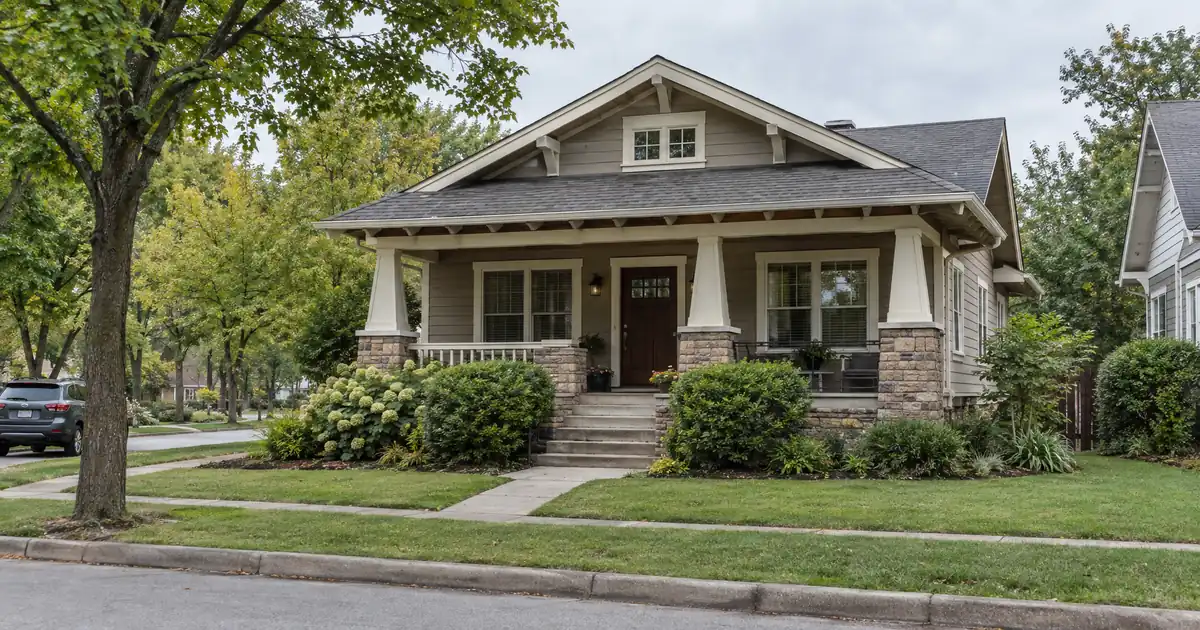
The Quick Read: A DSCR loan is reviewed for a rental property primarily on the property’s rental income covering its monthly payment, subject to lender guidelines. Across our wholesale network, most purchase files land at 75%-80% LTV, with credit around 660 or better. Statesboro (a university town) and Hinesville (an Army town) are two different rent-demand engines, and the appraiser’s rent number, not your hoped-for rent, drives both.
Market Snapshot
A quick read on the investor landscape — figures come from the cited sources below. Confirm current property-level numbers before underwriting.
DSCR Calculator
Run the numbers in Georgia
Rate source: Freddie Mac 30-yr average via FRED® — Federal Reserve Bank of St. Louis · effective Sep 24, 2026
Prefilled with starting assumptions — enter your own rent or nightly figures, taxes, insurance, and HOA for a more accurate picture.
Program parameters update from Lendmire’s centralized guideline source. Taxes and insurance are editable estimates.
As of Sep 24, 2026 · General Freddie Mac market benchmark, not a Lendmire loan offer. Rent, nightly rate, occupancy, taxes, and insurance are editable estimates. Short-term rental figures are estimates only and vary significantly by season, property type, management approach, and local short-term-rental rules — confirm local regulations before relying on them. Qualifying income for short-term rentals varies by program — some use appraisal market rent, others use documented STR history or projections — and is confirmed in underwriting. Not a Loan Estimate, approval, or commitment to lend. Program availability and eligibility are subject to lender guidelines, credit approval, property review, and underwriting.
| Metric | Detail |
|---|---|
| Typical rents | $935 median gross rent (2019–2023) (U.S. Census QuickFacts) |
| Employment | 25,500+ employed (AJC, Fort Stewart) |
Key Takeaways
- The DSCR ratio is monthly rent divided by PITIA: principal, interest, taxes, insurance, and any HOA dues.
- Purchase leverage typically runs 75%-80% LTV. Cash-out tops out around 75%.
- Coverage of 1.00 is where select programs start. Stronger ratios open better pricing and leverage.
- Clearing 1.00 does not mean the property produces positive cash flow.
- The appraiser’s market rent usually sets the number that counts.
What Is a DSCR Loan, in Plain English?
A DSCR loan is an investor mortgage that asks one question: does the rent cover the payment? Your W-2s and traditional personal-income documentation are not the center of the file. The qualification runs on the property’s income, alongside credit, reserves, and equity.
That is not the same as “no verification.” The lender still pulls your credit, checks the source of your down payment, and confirms value, title, and insurance. Skipping personal income documentation is different from skipping underwriting.
DSCR loans are designed for non-owner-occupied investment properties. Because they are business-purpose investor loans, they are reviewed differently from a standard owner-occupied mortgage. For the full picture, see the complete DSCR loans guide.
How Does Underwriting Treat a Rental, Step by Step?
Underwriting is a sequence, and each step can move the outcome.
Step 1: The formula. Most programs divide gross qualifying monthly rent by PITIA. Some lenders use a different version, such as net operating income over principal and interest. That choice can swing the ratio noticeably, so confirm the method before you apply. Interest-only structures may measure against interest, taxes, insurance, and dues instead.
Step 2: The rent number. The appraiser completes a rent schedule. That is Form 1007 for single-family and Form 1025 for two-to-four units. On a vacant purchase, that schedule is the only rent evidence. When a lease exists, many programs use the lower of the lease or the market rent.
Step 3: The appraisal does two jobs. It sets value, which drives LTV. It also sets market rent, which drives coverage. A soft rent schedule can sink the ratio even when the price is right.
Step 4: The grid. Lenders combine coverage, credit, LTV, loan size, and property type into a pricing and leverage grid. The headline “up to 80%” is the standard ceiling of that grid, not a promise, and select programs reach 85% with roughly 700+ credit.
Step 5: Reserves and documents. Expect a credit report, seasoned bank statements showing the source of your down payment and reserves, the appraisal, entity documents if you close in an LLC (subject to lender program eligibility), and government ID.
What Do the Numbers Look Like Across a Wholesale Network?
Here are the ranges we see most often. They are typical, not universal, and every file is underwritten individually.
| Factor | Typical range |
|---|---|
| Purchase LTV | 75%-80% (select programs reach 85% with roughly 700+ credit) |
| Cash-out LTV | Up to about 75% on standard rentals |
| Credit | 620 floor in parts of the network; most want about 660; 700+ unlocks top leverage |
| Coverage | 1.00 is where select programs start |
| Loan size | Up to $3,000,000 on standard programs |
| Reserves | Commonly about 6 months of PITIA; about 9 months above $1,500,000 |
Reserves flex. Conservative rate-and-term files at modest leverage under $1,500,000 can see reserves waived on some programs. Cash-out files usually carry the heavier requirement.
A bigger down payment helps in two ways. It lowers the monthly obligation, which lifts the ratio. It also improves LTV. But it never erases credit floors, reserve rules, or property eligibility. The strongest files clear both tests: enough equity and enough rental coverage.
Where Do Statesboro and Hinesville Fit?
Think of these two markets as illustrations of demand engines, not as a forecast for either.
Statesboro is a university engine. Census QuickFacts shows a July 2023 population estimate of 34,452 and 12,065 households. Georgia Southern’s housing page says on-campus housing was at full capacity for the fall term and points late applicants off campus. That supports student demand.
Here is the catch. Student-style, per-bedroom leasing may not show up in a monthly-lease rent schedule. The appraiser builds rent from leased comparables. A listing-site asking rent is not appraised rent. Midtown Statesboro and Historic Downtown properties should be modeled on what comparable whole-unit leases actually show.
Hinesville is a military engine. The AJC, citing Army figures, reports Fort Stewart employs more than 25,500 people and supports about 15,000 active-duty soldiers. Housing allowances give many tenants a steady rent source, and military lease clauses are common.
But the lender still relies on the appraiser’s rent and the lease. Steady demand does not raise your ratio. Model lease breaks and relocation turnover in your vacancy and reserve assumptions instead.
Which Structures and Variations Exist?
The spine is the 30-year fixed. Beyond that, select lenders in the network offer 40-year terms and interest-only periods, and ARM structures exist for investors who want them. Above $2,500,000, the network generally holds to 30-year fixed structures.
Cash-out refinance. Most files expect about 6 months of seasoning, and leverage tops out around 75%. This is how many investors recycle equity into the next purchase.
Short-term rentals. Purchase leverage tops out at 75%, with refinance around 70% and cash-out at 70% on short-term-rental collateral. Expect a 640+ score and about 12 months of hosting history. Coverage starts at 1.00 for purchases and, separately, 1.00 for refinances. Short-term rental rules can vary by city, county, HOA, and property type, so investors should confirm local rules before relying on projected rental income. These specifics are subject to lender guidelines and a full review of property, leverage, and credit.
Entity ownership. Many investors close in an LLC, subject to lender program eligibility. Most DSCR loans also carry a personal guarantee.
Where Does the General Rule Break?
These are the named edge cases that trip up first-time buyers.
- Coverage below 1.00. Available through select lenders in the network, with leverage and terms adjusted. Expect more equity and heavier reserves.
- No-ratio loans. Available only through select lenders, generally for borrowers who already own a primary residence.
- Below-market legacy tenant. Underwriting sees today’s rent, not what the unit could rent for after turnover. Older duplexes with inherited leases hit this often.
- Heavy rehab. A refinance is reviewed on stabilized rent, so the lease should be in place first. Heavy structural rehab usually falls outside standard DSCR programs.
- Owner occupancy. If you will live in the property, DSCR is generally the wrong product.
- Insurance and tax surprises. Both sit inside PITIA. A high premium or special assessment can push a file under the line.
- Ineligible property types. Manufactured homes (single- and double-wide), log homes, and barndominiums are not offered through these programs.
Does Clearing 1.00 Mean Positive Cash Flow?
No. This is the most common misunderstanding. DSCR compares rent to PITIA only. Repairs, vacancy, management, utilities, and capital expenses sit outside the calculation.
Picture a duplex that clears 1.00 with a thin margin. One vacancy or one roof repair can turn it cash-negative. The ratio gets you the loan. Your own budget tells you whether the deal is any good.
DSCR vs. conventional financing
Two common ways to finance an investment property in this market. They qualify you differently — here’s how investors weigh them.
Why investors choose it
- Qualifies on the property’s rental income — no personal tax returns, W-2s, or pay stubs needed to document income.
- No personal debt-to-income ceiling to clear, so existing mortgages and obligations don’t cap your borrowing the same way.
- Can be closed in an LLC, keeping the property inside a business entity.
- Built for scaling — not held to the limit on number of financed properties that conventional financing applies.
- Underwriting centers on the deal: generally qualifies when the rent covers the payment, a 1.00x coverage ratio being a common baseline (confirmed in underwriting).
- Designed specifically for investment property, including long-term and, where the program allows, short-term rentals.
Where it’s strong
- Often the lowest ongoing financing cost for a buyer who fully qualifies on personal income — a fit for a first property or a cost-first purchase.
Trade-offs for investors
- Requires full personal income documentation and must fit within a debt-to-income limit — salary, existing debts, and other mortgages all count.
- Typically held in your personal name rather than a business entity.
- Caps how many financed properties you can carry, which can become a ceiling as a portfolio grows.
- Evaluates you as a borrower as much as the property, which usually means more paperwork.
How investors usually choose: a first or single property often optimizes for the lowest financing cost; portfolio builders often optimize for leverage, vesting in an LLC, and scaling past conventional caps. The right answer depends on your goals, the property, and current guidelines — both paths run through select lenders in Lendmire’s wholesale network, with eligibility and terms confirmed in underwriting.
What Does the Investor Decision Look Like in Practice?
Run this checklist before you fall in love with a property.
1. Estimate market rent from leased comparables, not asking prices. 2. Confirm the coverage ratio using the lender’s formula, not just yours. 3. Check LTV against your cash. Then check reserves separately, because they are a separate test. 4. Look at the prepayment penalty against your hold period. If you might sell or refinance within a few years, the structure matters a lot. That is especially true for a military-cycle investor who may sell around a relocation wave. 5. Stress-test vacancy, insurance, and repairs on top of the ratio.
Consider an investor buying a Statesboro fourplex at 75% LTV whose appraised rents support coverage in the low-1.2 range. That file has room to absorb a soft appraisal. A file sitting at the floor does not. Terms vary by lender guidelines, property type, leverage, credit profile, and full file review.
Compare DSCR with your other options honestly. It is different from conventional financing, not easier. Read DSCR vs. conventional before choosing. If you are still building your first portfolio, Lendmire’s guide for renters who want to become real estate investors covers how to start.
Key Terms Defined
PITIA: Principal, interest, taxes, insurance, and association dues, the full monthly obligation on the property.
LTV (loan-to-value): The loan amount divided by the property’s value, expressed as a percentage.
Reserves: Liquid savings, counted in months of PITIA, that you hold after closing.
Seasoning: The waiting period a lender wants between buying a property and refinancing it.
Form 1007 / Form 1025: Appraiser rent schedules for single-family homes and for two-to-four unit properties.
Non-QM: A mortgage that falls outside standard consumer-mortgage rules, often because it is reviewed on the asset rather than the borrower’s income.
Prepayment penalty: A fee for paying the loan off early, usually within the first few years.
Tax treatment can depend on how the funds are used and how the property is held; investors should keep clear records and speak with a qualified tax professional before relying on any deduction. This article is general education, not legal or tax advice, so consult a qualified attorney or CPA about your own situation.
If you are buying or refinancing a rental property and want to see how the numbers work, Lendmire can help you compare DSCR loan options based on the property income, credit profile, leverage, and investor goals. Lendmire is a mortgage broker arranging DSCR financing through select lenders in its wholesale network across 41 markets, including Washington, D.C. Reach the team at 828-256-2183. Nothing here is a commitment to lend.
Frequently Asked Questions
Can I use a DSCR loan in both Statesboro and Hinesville?
Yes, the same program logic applies to both. Nothing in the network’s leverage tiers changes by market, and there is no state-specific LTV overlay. What differs is the appraiser’s rent and each property’s own numbers.
Will my student-housing rent count toward the ratio?
Only what the appraiser can support from leased comparables. Per-bedroom rents may not translate into a whole-unit schedule. Model the property on comparable whole-unit leases and treat any higher figure as upside.
What if the rent doesn’t cover the payment?
Coverage below 1.00 is available through select lenders in the network, with leverage and terms adjusted. Expect a larger down payment and heavier reserves. Eligibility depends on the property, the borrower, and current lender guidelines.
Do DSCR lenders check credit?
Yes. Every program pulls credit. The floor is 620 in parts of the network, most programs want around 660, and 700+ unlocks the strongest leverage.
Can I buy in an LLC?
Many investors do, subject to lender program eligibility. Expect entity documents and, on most loans, a personal guarantee.
About Lendmire
As a DSCR and non-QM mortgage broker, Lendmire — NMLS# 2371349 — connects investors with wholesale lending channels across 41 markets, including Washington, D.C. The property’s rental income, not the borrower’s tax returns, is central to lender review, an approach that suits self-employed operators and portfolios beyond four financed properties. Scotsman Guide named Lendmire a Top Mortgage Workplace in both 2025 and 2026.
Get Started
Ready to find the right loan for you?
In about 30 seconds you can review financing options available for your investment property. No commitment required.
Informational only. Not a Loan Estimate, approval, or commitment to lend. Program availability and eligibility are subject to lender guidelines, credit approval, property review, and underwriting.
References
1. U.S. Census QuickFacts, Statesboro
2. Atlanta Journal-Constitution, Fort Stewart
3. Georgia Southern University Housing
This article is part of Lendmire’s DSCR loan program — full qualification details, guidelines, and scenarios live on the program page.
Related reading: Cash Out Refinance Investment Property Hinesville Georgia · Cash Out Refinance Investment Property Statesboro Georgia · DSCR Cash Out Refinance Statesboro Georgia
Guides: DSCR Loans in Hinesville, GA · DSCR Loans in Georgia
Brandon Miller
Founder & CEO, Mortgage Loan Originator, Lendmire LLC
- Mortgage Loan Originator · NMLS# 1129696 · Verify on NMLS Consumer Access
- North Carolina Real Estate Broker · License# 343312 · Verify on NCREC
- North Carolina Insurance Producer · License# 19053198 · Property, Casualty, Life, Health · Verify on NAIC SBS
- Lendmire LLC · Firm NMLS# 2371349 · Verify firm licensure
Compliance and disclosures. Lendmire (NMLS# 2371349) is a licensed mortgage broker and is not a direct lender, depository institution, financial advisor, or tax professional. Content in this article is general market analysis and educational information — not financial, legal, or tax advice for any specific situation. Lendmire does not guarantee loan approval; every transaction is subject to underwriting by the funding lender. Mortgage pricing and loan program guidelines are subject to change at any time without notice and vary by borrower characteristics, property type, and state regulations. Lendmire complies with Equal Housing Opportunity. Licensure verification: NMLS Consumer Access.