
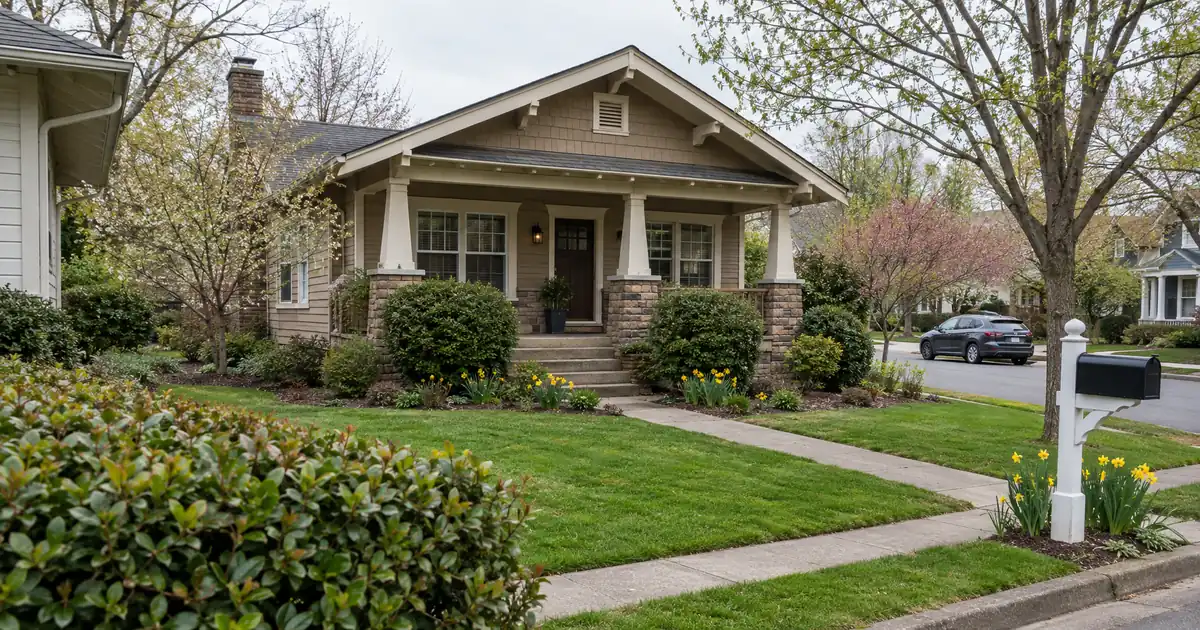
The Quick Read: A DSCR refinance qualifies primarily on property-level rental income covering the payment, subject to lender guidelines, so a storm-damaged rental usually has to be repaired, rentable and appraisable before it refinances. Most DSCR products carry no standard post-closing repair holdback. The repair money normally comes from insurance proceeds, cash or a short-term bridge loan.
- Rent has to cover the full monthly obligation, and higher post-storm insurance raises that obligation.
- Insurance claim money and a repair escrow are two different pots, and they sit with different parties.
- Cash-out refinances top out around 75% LTV on a rental, and about 6 months of seasoning is the common expectation.
- Clearing 1.00 coverage is not the same as positive cash flow. Repairs and deductibles sit outside the test.
- Documentation of the loss, the repairs and the re-lease often decides the file.
How Does a DSCR Refinance Treat Storm Damage?
A DSCR lender underwrites the rent the property can earn today, so damage that stops a tenant from moving in stops the refinance. Across the wholesale network, most programs want the unit safe, insurable and rent-ready. Light cosmetic wear is rarely an issue. Structural damage, a failed roof or water intrusion is.
DSCR Cash-Out Calculator
Run the cash-out numbers in your market
Rate source: Freddie Mac 30-yr average via FRED® — Federal Reserve Bank of St. Louis · effective Oct 15, 2026
Prefilled with starting assumptions — enter your property’s value, balance, taxes, and insurance for a more accurate picture.
Program parameters update from Lendmire’s centralized guideline source. Taxes and insurance are editable estimates.
As of Oct 15, 2026 · General Freddie Mac market benchmark, not a Lendmire loan offer. Property value, balance, taxes, and insurance are editable estimates. Maximum loan-to-value varies by lender, program, property type, and seasoning. Not a Loan Estimate, approval, or commitment to lend. Program availability and eligibility are subject to lender guidelines, credit approval, property review, and underwriting.
DSCR loans are designed for non-owner-occupied investment properties. Because they are business-purpose loans, they are reviewed differently from a standard owner-occupied mortgage. The file turns on the property: its condition, its insurance and its rent.
Here is the catch. A repair escrow does not erase the repair problem. Where any lender allows a holdback, it still has to understand whether the home is safe, insurable and able to produce the rent used for lender review. A holdback adds timing and paperwork. It does not replace finished work.
For the full program picture, see the complete DSCR loans guide.
Key Terms Defined
DSCR: the debt service coverage ratio, found by dividing monthly rent by the monthly PITIA.
PITIA: principal, interest, taxes, insurance and any HOA dues, the full monthly obligation in the ratio.
Repair escrow (holdback): money set aside from a new loan to pay for repairs after closing.
Loss draft (claim proceeds): insurance money paid after a covered loss, usually controlled by the existing lender.
Loss-of-rents coverage: insurance that replaces rent while a covered event makes the unit unlivable.
As-is versus subject-to-repair value: an appraisal of the property in current condition versus its value assuming repairs are finished.
Seasoning: the time an owner has held the property before a cash-out refinance is considered.
Where Is Your Property Today?
Your starting condition sets the path. The table below shows the usual route for each stage.
| Stage | Likely path | First move |
|---|---|---|
| Storm-exposed, undamaged | Standard refinance | Update insurance review |
| Damaged, open claim | Repair first | Get repair plan and bids |
| Repairs underway | Wait or bridge | Document each draw |
| Repaired and re-leased | DSCR refinance | Assemble the storm file |
The usual route is to repair first, using insurance proceeds, cash or a bridge loan, then refinance once the unit is rentable and appraisable. Investors who want a related look at what damage does to the numbers can read Lendmire’s piece How to Refinance a Storm-Hit Rental After Higher Costs Sink Its DSCR.
Two Pots of Money: Claim Proceeds Versus a Repair Escrow
Insurance proceeds and a new-loan repair escrow are different things, and mixing them up causes most of the confusion.
The first pot is the insurance claim, controlled by your existing lender. The second is a repair escrow on the new loan, if a lender offers one at all. In our experience placing these files, the second pot is the rarer one.
How claim proceeds typically move
The check is usually payable to both owner and lender, which gives the lender control. A federal Administration for Community Living tip sheet describes the typical servicer pattern: it holds the funds, releases portions as work is completed, monitors progress and pays the final funds after inspection.
Servicers commonly want a repair plan and contractor bids before they release money. A disaster-recovery fact check explains the feasibility test behind this. Funds go to repairs if repair is economically feasible and the lender’s security is not lessened. Otherwise the lender may apply proceeds to the loan balance.
For contrast only, the Fannie Mae Servicing Guide sets out a tiered release schedule with plan review and inspections. That is an agency servicing rule. It does not govern a DSCR loan, whose servicing follows its own note and security instrument. The same fact check notes that private mortgages do not get the same protections.
Total loss and no-rebuild
If repair is not feasible, the lender may apply the proceeds to the debt. There is then nothing to refinance. Investors facing that branch should talk to the existing lender first.
What Does a DSCR Lender Require on a Storm-Affected Rental?
Expect three things: a current appraisal reflecting condition, a rent figure and proof of insurance. Program details vary by lender, borrower and property.
Appraisal and rent. The appraiser reports condition and market rent. A unit with open damage often cannot support the rent the ratio needs. After a loss, the unit needs a new lease or an appraiser-supported market rent to count fully again. Vacant or uninhabitable units are a common stumbling block.
Insurance. Proof of coverage with the right mortgagee clause is standard. If the property sits in a mapped flood zone, flood coverage is expected. Contract terms can require wind, flood and rent-loss coverage even where law does not.
Leverage and credit. On a cash-out refinance of an investment property, the ceiling is around 75% LTV across most of the network, with about 6 months of seasoning common. Credit floors start near 620 in parts of the network, most programs want around 660, and 700+ unlocks the strongest tiers. Reserves are commonly around 6 months of PITIA, stepping up to about 9 months above $1,500,000. Coverage of 1.00 is where select programs start. A separate select-lender path takes coverage below 1.00, with leverage and terms adjusted. All of this is subject to lender guidelines and individual underwriting.
Manufactured homes, log homes and barndominiums are not offered in these programs, storm or no storm.
DSCR vs. conventional financing
There are two common ways to finance an investment property, and they qualify you differently — here’s how investors weigh them.
Why investors choose it
- Qualifies on the property’s rental income — no personal tax returns, W-2s, or pay stubs needed to document income.
- No personal debt-to-income ceiling to clear, so existing mortgages and obligations don’t cap your borrowing the same way.
- Can be closed in an LLC, keeping the property inside a business entity.
- Built for scaling — not held to the limit on number of financed properties that conventional financing applies.
- Underwriting centers on the deal: generally qualifies when the rent covers the payment, a 1.00x coverage ratio being a common baseline (confirmed in underwriting).
- Designed specifically for investment property, including long-term and, where the program allows, short-term rentals.
Where it’s strong
- Often the lowest ongoing financing cost for a buyer who fully qualifies on personal income — a fit for a first property or a cost-first purchase.
Trade-offs for investors
- Requires full personal income documentation and must fit within a debt-to-income limit — salary, existing debts, and other mortgages all count.
- Typically held in your personal name rather than a business entity.
- Caps how many financed properties you can carry, which can become a ceiling as a portfolio grows.
- Evaluates you as a borrower as much as the property, which usually means more paperwork.
How investors usually choose: a first or single property often optimizes for the lowest financing cost; portfolio builders often optimize for leverage, vesting in an LLC, and scaling past conventional caps. The right answer depends on your goals, the property, and current guidelines — both paths run through select lenders in Lendmire’s wholesale network, with eligibility and terms confirmed in underwriting.
How Storm Costs Move the Ratio
Rent stays the same, but PITIA does not. Insurance is part of PITIA, and an annual flood premium is divided by 12 and added to it. A larger premium lowers the coverage number even when the lease holds.
Run the numbers on a rental that cleared roughly 1.25x before the storm. If post-loss premiums and a new flood requirement push the monthly obligation up by a fifth, the same rent covers about 1.04x. The property did not change, and the file is now close to the floor. Premiums, deductibles and non-renewal can all move the denominator. These figures are modeled assumptions, not market data.
During downtime, the picture shifts again. Loss-of-rents coverage can replace income while the unit is down, but a lender typically wants a lease or appraiser-supported rent once it is back. Pooled loans on several houses can behave differently when one is down.
One more limit, stated plainly. DSCR compares rent to PITIA only. Clearing 1.00 is not positive cash flow. Repairs, deductibles, vacancy, management and utilities all sit outside the calculation.
The Storm File: What to Hand the Underwriter
Documentation often decides the outcome. A strong storm file generally includes:
- Claim records and payout records
- The adjuster’s estimate and contractor scope
- Contractor invoices and permits
- Before-and-after photos
- A completion certificate or re-inspection where one exists
- The new lease, or a market-rent appraisal
- Current insurance evidence, with flood where required
A short repair narrative tying these together helps. Underwriters want to confirm repairs were done properly and nothing unsafe remains. A general contractor can also coordinate communication among owner, lender and subcontractors on larger claims.
Bridge First, Then Refinance
When a property needs real repairs before it rents at market, finish those first. The common sequence is a short-term bridge or cash for the work, then a DSCR refinance once the unit is rentable.
Timing risk is real. Repairs, re-leasing and any seasoning window all add carry cost. And a refinance leans on an appraisal you do not control. Repairs do not always add much appraised value, though a completed improvement may support a higher value depending on comps and underwriter review.
For a storm-damaged purchase, the same logic applies. Plan the repair money separately, because the permanent loan will not usually supply it.
Where the General Rule Breaks
- Escrowed repairs. Some lenders may escrow certain repairs, but roof and structural work is often excluded. Treat a holdback as a lender-specific exception, not a feature.
- State rules on held proceeds. Some states regulate how held loss-draft funds are handled. Rules differ, so they are a reason to read your existing loan documents.
- Excess proceeds. Surplus funds can sometimes go to the borrower, but the check typically still needs both endorsements.
- A pending claim. A claim pause does not generally erase the payment obligation on the existing loan.
- Condos and non-renewal. A non-renewed policy or a master-policy gap can stall a file even after repairs.
Frequently Asked Questions
Can I refinance a damaged rental with a DSCR loan?
Usually not while the damage is open. Lenders want the unit safe, insurable and able to produce the rent used for lender review. Most investors repair first, then refinance. Eligibility depends on lender guidelines, the appraisal and underwriting.
Does a DSCR loan include a repair escrow?
Most DSCR products do not carry a standard post-closing repair holdback. Fix-and-flip draw loans are a different product. A few lenders may consider structures for minor items, but roof and structural repairs generally have to be finished first.
Who controls my insurance claim check?
Typically the existing lender, who is named as a co-payee. The servicer commonly releases funds in stages as work is completed and inspected, and often asks for a repair plan and bids first.
How do higher flood and wind premiums affect my DSCR?
They raise PITIA while rent stays flat, so the coverage ratio falls. A property near 1.25x can slip close to 1.00x after a premium jump. Get fresh insurance quotes before applying.
Does a 1.00 DSCR mean the property cash flows?
No. The ratio compares rent to PITIA only.
If you are buying or refinancing a rental property and want to see how the numbers work, Lendmire can help you compare DSCR loan options based on the property income, credit profile, leverage, and investor goals. Terms vary by lender and are not a commitment to lend.
About Lendmire
As a non-QM mortgage broker (NMLS# 2371349), Lendmire facilitates DSCR investor loans across 41 markets, including Washington, D.C. DSCR eligibility is generally reviewed around property-level rental income instead of personal income documentation, subject to lender guidelines, serving LLC-structured portfolios and self-employed borrowers who don’t fit conventional boxes. A two-time Scotsman Guide Top Mortgage Workplace (2025, 2026).
Get Started
Ready to find the right loan for you?
In about 30 seconds you can review financing options available for your investment property. No commitment required.
Informational only. Not a Loan Estimate, approval, or commitment to lend. Program availability and eligibility are subject to lender guidelines, credit approval, property review, and underwriting.
References
1. ACL tip sheet: Homeowners Access Insurance Benefits after a Disaster
2. Truck and Tools disaster fact check
3. Fannie Mae Servicing Guide B-5-01
This article is part of Lendmire’s DSCR loan program — full qualification details, guidelines, and scenarios live on the program page.
Related reading: How to Refinance a Hard Money Flip Into a DSCR Loan Early · DSCR Seasoning and Lease Requirements for a Newly Leased Rental · DSCR Refinance on a Tenant Payment Plan vs After Eviction
Brandon Miller
Founder & CEO, Mortgage Loan Originator, Lendmire LLC
- Mortgage Loan Originator · NMLS# 1129696 · Verify on NMLS Consumer Access
- North Carolina Real Estate Broker · License# 343312 · Verify on NCREC
- North Carolina Insurance Producer · License# 19053198 · Property, Casualty, Life, Health · Verify on NAIC SBS
- Lendmire LLC · Firm NMLS# 2371349 · Verify firm licensure
Compliance and disclosures. Lendmire (NMLS# 2371349) is a licensed mortgage broker and is not a direct lender, depository institution, financial advisor, or tax professional. Content in this article is general market analysis and educational information — not financial, legal, or tax advice for any specific situation. Lendmire does not guarantee loan approval; every transaction is subject to underwriting by the funding lender. Mortgage pricing and loan program guidelines are subject to change at any time without notice and vary by borrower characteristics, property type, and state regulations. Lendmire complies with Equal Housing Opportunity. Licensure verification: NMLS Consumer Access.