
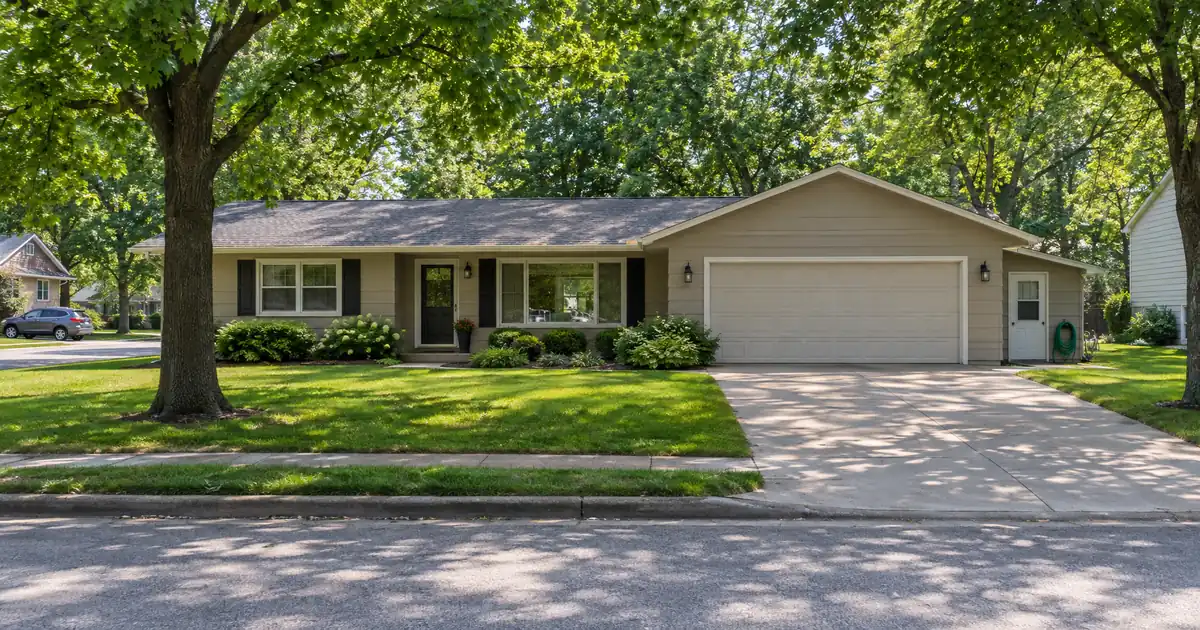
The Quick Read: A DSCR refinance replaces your old loan by testing whether the rental’s income covers its payment, while a bank portfolio loan stays on the lender’s books and tests you as a borrower, so the better choice depends on whether the property’s rent or your personal balance sheet tells the stronger story. Your lender leaving does not automatically force a move. The timing of your loan’s maturity does.
- A DSCR refinance suits landlords whose rent is strong and whose personal tax returns understate their finances.
- A bank portfolio loan suits landlords with deep liquidity, clean statements, and a real banking relationship.
- Losing a lender mostly stops new lending, and your existing note generally keeps its payment, maturity, and prepayment terms.
- Refinance pressure is real when a balloon, an interest-only period, or a reset is coming due.
- Both options are reviewed subject to lender guidelines, and neither is a commitment to lend.
Here is the honest answer on who each option is for. A DSCR refinance is for the landlord whose properties carry the file. Your DSCR (debt service coverage ratio) is the monthly rent divided by the full monthly payment, meaning principal, interest, taxes, insurance, and any HOA dues. A portfolio loan, in the bank sense, is a mortgage the lender keeps instead of selling, which gives that lender room to set its own rules. Experian notes that holding the loan gives a lender more flexibility on underwriting and terms. Bankrate adds that requirements vary widely because each lender writes its own.
One wrinkle: the word portfolio also describes a DSCR product. One note secured by several rentals is a portfolio DSCR loan, also called a blanket or cross-collateralized loan. That is a different thing from the bank portfolio loan described above, which is simply a mortgage the lender keeps instead of selling. A later section covers it.
Side-by-Side
The table below puts a DSCR refinance next to a bank portfolio loan. The second column reflects published industry norms, which vary bank to bank. The first column reflects how DSCR files typically run across Lendmire’s wholesale network, subject to lender guidelines.
| Factor | DSCR refinance | Bank portfolio loan |
|---|---|---|
| Review basis | Rent against the full payment | The borrower’s whole financial picture |
| Documentation | Appraisal, rent support, entity papers | Personal financials, often tax returns |
| Property types | SFR, 2-4 unit, condo, townhome | Set by the bank’s own policy |
| Entity vesting | LLC title common, per program terms | Varies by bank |
| Reserves | Often around 6 months of PITIA | Bank-specific, often a liquidity review |
| Structure | Usually one loan per property | Single note or blanket, bank’s choice |
| Timeline | Set by appraisal and file completeness | Set by the bank’s credit process |
| Guaranty | Check it on every program | Often a personal guarantee |
PITIA means principal, interest, taxes, insurance, and association dues, the full monthly obligation on the property. Manufactured homes, log homes, and barndominiums are not offered on these DSCR programs.
Does Losing a Lender Force You to Refinance?
Usually not right away. When a lender exits the market or stops originating, your existing note generally stands. The payment, the maturity date, and the prepayment terms stay as written. What usually stops is new activity: credit lines, pending applications, and loan modifications.
A refinance becomes a necessity when the note itself is about to change. Three triggers matter most:
- A balloon payment, which is a large final payoff due at maturity.
- An interest-only period that is about to expire.
- A rate reset that would reshape the payment.
If none of those is near, you have time to compare options carefully. If one is near, start early. A refinance is a new loan, not a conversion of the old one, and the new lender must pay off the old note in full. A balloon does not block that. The payoff just has to be arranged before the maturity date.
The real question is what the old loan costs you to leave. Read the note for prepayment terms first. Then compare that cost to the benefit of the new structure.
When a DSCR Refinance Is the Better Fit
A DSCR refinance is the stronger path when the properties are stronger than your paperwork. This is common for landlords who own many doors, use heavy write-offs, or run income through several entities. Their tax returns look thin even when their rent rolls look solid.
A DSCR loan is reviewed primarily on property-level rental income covering the payment, subject to lender guidelines. Personal income documents are not the center of the file. The appraisal, the lease, entity papers, credit, and reserves are.
Here is how the numbers typically run across the network, as guideline ranges rather than promises:
- Leverage: on a cash-out refinance of an investment rental, most of the network tops out around 75% LTV. Loan to value, or LTV, is the loan balance divided by the property’s appraised value. About 6 months of seasoning, meaning ownership time since the recorded deed, is a common expectation on cash-out.
- Coverage: 1.00 is where many select programs start, and stronger ratios open better leverage and pricing. A separate select-lender path takes coverage below 1.00, with leverage and terms adjusted.
- Credit: a 620 floor exists in parts of the network. Most programs want around 660, and 700 or higher unlocks the strongest leverage tiers.
- Loan size: standard programs run up to $3,000,000, and above $2,500,000 the network generally holds to 30-year fixed structures.
- Reserves: commonly around 6 months of PITIA. Conservative rate-and-term files at modest leverage under $1,500,000 can see reserves waived, while larger loans typically step up to about 9 months.
- Structure: the spine is the 30-year fixed. Extended terms and interest-only periods are available through select lenders in the network.
Two cautions belong here. First, the appraiser’s market-rent opinion drives coverage, and it can override the lease. A lease at a higher number does not guarantee the file uses it. Second, DSCR compares rent to PITIA only. Clearing 1.00 does not mean the property produces positive cash flow, because repairs, vacancy, management, utilities, and capital expenses sit outside the calculation.
A larger down payment can lower the payment and lift the ratio. It never erases leverage caps, credit floors, reserve rules, or property eligibility. The strongest files clear both tests: enough equity and enough rental coverage.
Entity vesting is another point in favor. LLC title is common on DSCR loans, subject to program terms. For a closer look at how a straight refinance differs from pulling cash out, see Lendmire’s guide Straight Refinance vs Cash-Out on a Portfolio DSCR Loan for a Landlord.
When a Portfolio Loan Is the Better Fit
A bank portfolio loan is the stronger path when you, not the property, are the best part of the file. Picture a landlord with large cash balances, steady personal income, and years of deposits at one institution. A bank that holds its own loans can weigh all of that, and it can write terms that fit.
It also fits properties that DSCR programs do not cover. Owner-occupied buildings and mixed-use buildings fall outside the DSCR programs described here. Co-ops and commercial property do too. A bank deciding case by case can sometimes work with them.
Flexible is not the same as lenient. A portfolio lender still has minimum standards and still needs internal approval. Bankrate also notes that some lenders keep the option to sell a portfolio loan later, so standards still apply. Forbes-style summaries often tie these loans to smaller community banks and credit unions. In practice, any institution that keeps its own loans can offer one.
Here is what to weigh before choosing the bank route after a lender exit:
- Relationship dependence. Flexibility rests on the relationship and the bank’s current policy. A bank may renew, reprice, or decline at maturity.
- Maturity risk. Many bank notes carry short terms or balloons. You may face another refinance in a few years.
- Documentation. Expect personal financials, guarantor statements, and property financials.
- Repeat exposure. Replacing one lender-held relationship with another can recreate the problem you are trying to leave.
The strongest argument for a bank is a landlord who already has the relationship and the liquidity. The strongest argument against it is replacing one lender’s policy risk with another’s.
What If Portfolio Means Blanket?
Plenty of landlords use portfolio to mean one loan over several rentals. That is a portfolio DSCR loan. It differs from a bank’s portfolio loan, which is simply a loan the bank keeps. Lendmire arranges blanket DSCR structures through its network, and they come in two forms. All figures below are program ceilings or floors, subject to lender guidelines.
| Feature | 30-year portfolio DSCR loan | Rental portfolio term loan |
|---|---|---|
| Size of pool | 2 to 20 properties | 5 or more rentals or units |
| Loan size | $300,000 to $5,000,000 | $500,000 to $50,000,000 |
| Leverage | Up to 80% on purchase and rate-and-term | Up to 75% of value |
| Structure | 30-year term, interest-only available | Fixed 3, 5, 7, or 10 years, balloon at maturity |
| Coverage test | 1.00 floor on the pool | Reviewed on the pool |
Both structures measure coverage on pooled rents against pooled debt service. Stronger properties can offset weaker ones. A rental below 1.00 can sit in the pool, though underwriting tests the pooled coverage, the leverage, and the terms. That same feature can hide a weak door that would sink a standalone file.
Cash-out on a portfolio loan never exceeds 75% of the pooled value. Credit floors on the portfolio programs start at 640, and some structures want 680 or 720. Small multifamily of five or more units is eligible only inside the rental portfolio term loan. The term loan also offers recourse and non-recourse versions. A non-recourse loan looks to the real estate, with recourse limited to carve-outs such as fraud and bankruptcy.
The trade-off is cross-collateralization. Every property secures the whole note, so a default reaches the entire pool. Selling one property usually means a partial release, and the release price runs above that property’s allocated balance. Ask for the release terms before you sign. Many investors mix approaches: separate notes for properties they may sell, and a blanket loan for the ones they plan to hold.
Edge Cases Before You Move Anything
Do not move title into an LLC early. Federal law protects certain transfers from due-on-sale clauses, but a transfer into an LLC is not among them. Johnson Legal explains that the protection does not cover those transfers, so the lender could call the loan. The safer sequence is to vest title in the LLC at the refinance closing, subject to lender program eligibility. A recent deed can also raise seasoning questions.
Business-purpose status helps both options. DSCR loans are designed for non-owner-occupied investment properties. Because they are business-purpose investor loans, they are reviewed differently from a standard owner-occupied mortgage. Federal Truth in Lending rules exempt credit extended primarily for a business purpose, as laid out in CFPB Regulation Z § 1026.3. That applies to a bank’s business-purpose loan too, so it does not separate the two choices.
Do not assume DSCR means non-recourse. Check the guaranty on any program before you commit.
Count the notes and the liens. If someone offers you a portfolio loan, confirm whether it is one note or several, and whether the properties cross-collateralize.
Lendmire’s complete DSCR loans guide covers qualification step by step.
The Balanced Verdict
Choose the DSCR refinance when your rent roll is your best asset. It fits landlords with many properties, heavy deductions, or entity-held title who want the loan judged on the real estate. It asks for sound credit, reserves, and an appraisal that supports the rent.
Choose a bank portfolio loan when your finances are your best asset. It fits landlords with strong liquidity, a long banking relationship, or a property type the DSCR programs do not cover. It asks for more paperwork and more trust in one institution’s future policy.
Consider a blanket DSCR loan when you hold several similar rentals and want fewer notes. Just price the cross-collateral risk and the release terms.
Landlords with strong properties and strong finances can use both. The practical test is simple. Ask which story you would rather have underwritten, and which loan you would rather face at maturity.
Key Terms Defined
Portfolio loan (bank sense): a mortgage a lender originates and keeps on its own books instead of selling.
Portfolio DSCR loan: one note secured by several rentals, also called a blanket or cross-collateralized loan.
Seasoning: the waiting period a lender wants after you buy a property before it will do a cash-out refinance.
Cross-collateralization: a structure where every property in the pool secures the whole loan.
Frequently Asked Questions
Does my existing loan change if my lender leaves the market?
Generally not. The payment, maturity date, and prepayment terms in your note usually stay as written. What typically ends is new lending, such as credit lines and modifications. Read the note and check the maturity date before deciding anything.
Can a portfolio loan be refinanced into individual DSCR loans?
Often, yes, subject to lender guidelines. Each property would be tested on its own rent, value, and leverage. A weak property that a blanket pool masked may need more equity or lower leverage on its own.
Do portfolio loans need more documentation than DSCR loans?
Bank portfolio loans typically lean on personal financials, guarantor statements, and property financials, though each bank sets its own list. A DSCR file leans on the appraisal, rent support, entity papers, credit, and reserves.
Does clearing 1.00 mean my rental cash flows?
No. DSCR compares rent to the full payment only. Repairs, vacancy, management, utilities, and capital expenses sit outside the calculation, so a property can clear 1.00 and still run thin.
Should I refinance a good existing loan just because the lender is leaving?
Not necessarily. If the loan has a long maturity and workable terms, the note generally stands. Refinance when a balloon, interest-only expiry, or reset is near, or when you need a different structure.
Next Step
If you are buying or refinancing a rental property and want to see how the numbers work, Lendmire can help you compare DSCR loan options based on the property income, credit profile, leverage, and investor goals. Reach the team at 828-256-2183 or through the quote request page.
About Lendmire
Lendmire (NMLS# 2371349) is a DSCR-focused mortgage broker that helps arrange investor financing across 41 markets, including Washington, D.C., through wholesale and investor-lending channels. DSCR eligibility is generally reviewed by the lender around the property’s rental income rather than personal income documentation, subject to lender guidelines — which works for self-employed investors, LLC operators, and portfolios above four financed properties. Scotsman Guide named Lendmire a Top Mortgage Workplace in both 2025 and 2026.
Get Started
Ready to find the right loan for you?
See your offer in seconds. No credit pull, no obligation.
Informational only. Not a Loan Estimate, approval, or commitment to lend. Program availability and eligibility are subject to lender guidelines, credit approval, property review, and underwriting.
References
1. Experian
3. Johnson Legal — Be Cautious When Transferring Title of Mortgaged Property
4. CFPB — Regulation Z § 1026.3
This article is part of Lendmire’s DSCR loan program — full qualification details, guidelines, and scenarios live on the program page.
Related reading: DSCR Cash-Out Refinance vs Bridge Loan on a Fourplex · How Much Escrow a DSCR Lender Collects on a Rental Loan · Can an Heir Qualify for a DSCR Loan Without Landlord Experience?
Brandon Miller
Founder & CEO, Mortgage Loan Originator, Lendmire LLC
- Mortgage Loan Originator · NMLS# 1129696 · Verify on NMLS Consumer Access
- North Carolina Real Estate Broker · License# 343312 · Verify on NCREC
- North Carolina Insurance Producer · License# 19053198 · Property, Casualty, Life, Health · Verify on NAIC SBS
- Lendmire LLC · Firm NMLS# 2371349 · Verify firm licensure
Important disclosures. Lendmire (NMLS# 2371349) is a licensed mortgage brokerage. Lendmire is not a direct lender, depository institution, or financial advisor. All loan inquiries are subject to lender underwriting; this article does not constitute a commitment to lend. Rates, terms, and program guidelines are subject to change without notice and vary by borrower profile, property type, and state. Information in this article is general in nature and is not financial, legal, or tax advice. Equal Housing Opportunity. NMLS Consumer Access: nmlsconsumeraccess.org.