
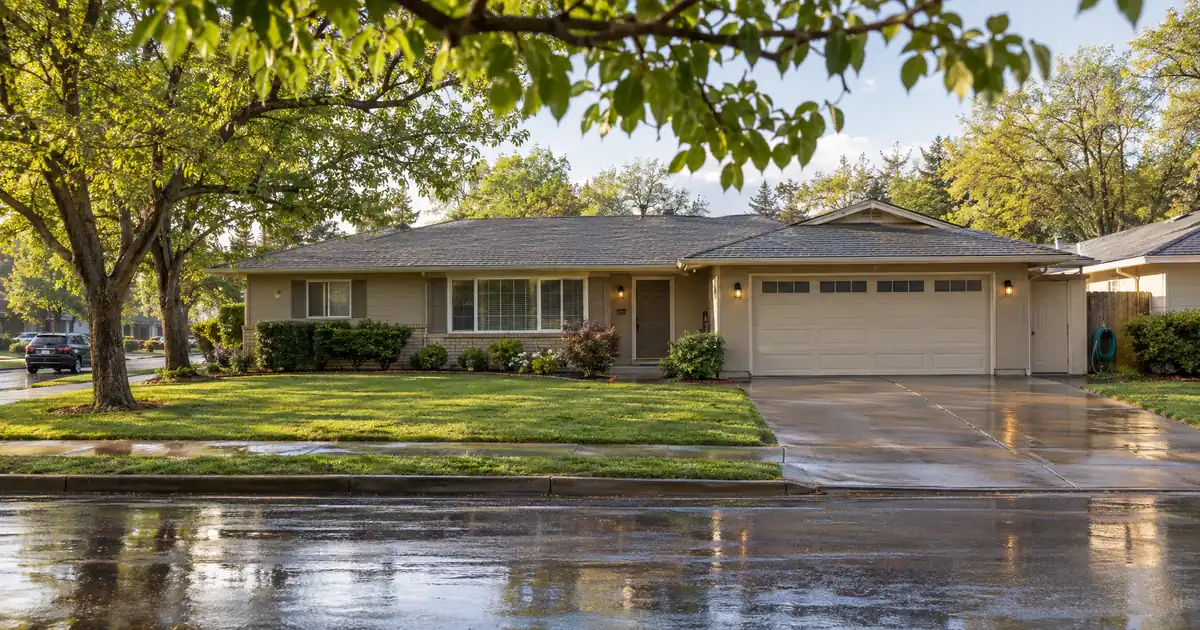
The Quick Read: DSCR loans are built for properties that can be rented the day the loan funds, so condition is reviewed alongside rent. Rent-ready means safe, habitable and functional, not renovated, and the appraiser’s condition call and rent opinion decide whether a first purchase moves forward or stalls on repairs.
- Light cosmetic wear, such as dated paint or tired flooring, generally passes.
- Safety, habitability, missing systems and structural problems typically must be fixed before funding.
- A property needing real rehab usually needs a short-term bridge loan first, then a DSCR refinance.
- Most purchase files across the network land at 75%-80% LTV on an investment property, subject to lender guidelines.
- Clearing the coverage test is not the same as positive cash flow.
A first-time buyer often assumes a DSCR loan only looks at rent. It doesn’t. The property is the underwriting file, and the lender wants proof that the income exists now, not after a rehab. Lendmire, a DSCR-focused mortgage broker arranging investor loans through select lenders in its wholesale network, sees this trip up newer investors more than almost any other file issue. The complete DSCR loans guide covers the full program picture. This piece covers one slice: what rent-ready actually means and how it gets tested.
DSCR Calculator
Run the numbers in your market
Rate source: Freddie Mac 30-yr average via FRED® — Federal Reserve Bank of St. Louis · effective Oct 15, 2026
Prefilled with starting assumptions — enter your own rent or nightly figures, taxes, insurance, and HOA for a more accurate picture.
Program parameters update from Lendmire’s centralized guideline source. Taxes and insurance are editable estimates.
As of Oct 15, 2026 · General Freddie Mac market benchmark, not a Lendmire loan offer. Rent, nightly rate, occupancy, taxes, and insurance are editable estimates. Short-term rental figures are estimates only and vary significantly by season, property type, management approach, and local short-term-rental rules — confirm local regulations before relying on them. Qualifying income for short-term rentals varies by program — some use appraisal market rent, others use documented STR history or projections — and is confirmed in underwriting. Not a Loan Estimate, approval, or commitment to lend. Program availability and eligibility are subject to lender guidelines, credit approval, property review, and underwriting.
What Does “Rent-Ready” Mean on a DSCR Loan?
Rent-ready means a tenant could move in without major work. The home is safe, livable and functional, with working systems and no serious deferred maintenance. It does not mean updated, staged or renovated.
There is no federal or agency rulebook that defines the term for DSCR. These are non-QM investor loans, and each program writes its own condition rule. Across the network, the common thread is consistent: the property should be rentable at closing. Dated finishes pass. A missing furnace, a failed roof or active mold does not.
Why do lenders care? Because the loan is reviewed primarily on property-level rental income covering the payment, subject to lender guidelines. If the home can’t be rented today, the income being measured is hypothetical.
First-Time Buyer vs. First-Time Investor
A first-time rental buyer is buying an investment property, not a home to live in. DSCR loans are designed for non-owner-occupied investment properties. Because they are business-purpose investor loans, they are reviewed differently from a standard owner-occupied mortgage.
Landlord experience is not universally required. Some programs prefer ownership history or a mortgage record, and some lenders work with renters who are buying their first property. A thinner track record usually shows up as stronger credit expectations or more reserves, not as an automatic no. Most programs want a score around 660, a 620 floor exists in parts of the network, and 700+ unlocks the strongest leverage tiers.
How Underwriting Treats Condition, Step by Step
The process runs in a predictable order. Knowing it helps a first-timer see where a deal can slip.
1. Eligibility screen. The property must be an investment property with an eligible type. Manufactured homes (single- and double-wide), log homes and barndominiums are not offered in the network’s DSCR programs.
2. Appraisal ordered. The appraisal does two jobs. It sets value, and it produces a market-rent opinion. Those come from separate forms: a rent schedule (Form 1007) for single-family and one-unit condos, and an operating income form for two to four units (Form 1025).
3. Condition scoring. Appraisers rate condition on a C1 to C6 scale borrowed from the agency world. DSCR programs use it as a measuring stick only; they are not agency loans.
4. Underwriter review. Cosmetic wear passes. Safety, habitability and structural items typically must be cured before funding.
5. Rent set for the ratio. On a vacant purchase, the appraiser’s market rent is the number. If the unit is leased, the file typically uses the lower of the lease or market rent.
6. Coverage test. The ratio is monthly rent divided by the full monthly housing obligation: principal, interest, taxes, insurance and any HOA dues.
The coverage threshold matters too. A 1.00 ratio is where many select programs start, and stronger ratios open better pricing and leverage. A separate select-lender path takes coverage below 1.00, with leverage and terms adjusted.
The C1 to C6 Scale in Plain English
The scale is a vocabulary, and it helps to learn the rungs. McKissock, an appraiser-education provider, describes C4 as modest wear and minor deferred maintenance with the property fully functional. C5 means noticeable deferred maintenance and significant repair needs. C6 covers serious deferred maintenance that may affect structural integrity or safety.
For contrast only, Fannie Mae’s Selling Guide defines C6 as deficiencies affecting safety, soundness or structural integrity, and rates the whole dwelling C6 if any portion is. That is an agency delivery rule. It does not govern DSCR files, and McKissock notes Freddie Mac is stricter still. DSCR programs set their own thresholds.
Here is the practical read. C4 is the safe zone. C5 is the cliff, and programs differ on it: some treat it as ineligible until improved, others may proceed once the called-out repairs are completed. C6 is a stop sign.
What Passes, What Gets Fixed, What Disqualifies
| Condition | Typical treatment | Examples |
|---|---|---|
| Cosmetic wear | Generally passes | Old paint, worn flooring |
| Functional or safety gap | Fix before funding | Missing smoke detectors, broken windows |
| Major deficiency | Not rent-ready | Failed roof, mold, no working systems |
Treat this as a pattern, not a promise. Each program draws its own line, and the appraiser’s report is what puts a property in a bucket.
When an Appraisal Flags Repairs
Appraisers can report value “subject to” completion of repairs, meaning the number assumes the work gets done. Fannie Mae’s Form 1025 carries that same subject-to-completion assumption language. On a DSCR file, a subject-to report typically means a completion re-inspection before funding.
A first-timer then has four real options:
- Complete the repairs and have them re-inspected.
- Ask the seller to cure the safety items, ideally before the appraisal is ordered.
- Renegotiate the price using the appraiser’s findings.
- Walk away, if the repair scope is larger than the deal can bear.
Use the inspection period to get ahead of this. A contractor quote in hand before the appraisal is far better than a surprise after it.
When the Property Isn’t Rent-Ready
A DSCR loan does not fund a rehab. If the deal needs real work, the usual structure is two loans: a short-term bridge or hard-money purchase, then a DSCR refinance once the property is rentable. Investors then often run a cash-out refinance, which tops out around 75% LTV on a standard rental, with about six months of seasoning commonly expected. Confirm any seasoning rule before buying, since lenders differ.
| Path | Best for | Main tradeoff |
|---|---|---|
| Rent-ready purchase with DSCR | First-timers wanting one loan | Higher purchase price, less upside |
| Bridge loan, then DSCR refinance | Buyers comfortable managing a rehab | Two loans, carry cost, appraisal risk |
The bridge route suits an investor with repair experience and cash to spare. For a true first purchase, a rent-ready property is usually the cleaner choice. The flip point is if you already have a trusted contractor and a deal priced low enough to absorb delays.
Key Terms Defined
Rent-ready: A property that is safe, habitable and functional enough to rent at closing.
DSCR: The debt service coverage ratio, which compares rent to the full monthly housing obligation.
PITIA: Principal, interest, taxes, insurance and association dues, the payment side of the ratio.
Market rent: The appraiser’s opinion of what the unit would rent for, used on vacant purchases.
Subject-to report: An appraisal whose value assumes listed repairs get completed.
Seasoning: The time an investor holds a property before certain refinance options apply.
DSCR vs. conventional financing
There are two common ways to finance an investment property, and they qualify you differently — here’s how investors weigh them.
Why investors choose it
- Qualifies on the property’s rental income — no personal tax returns, W-2s, or pay stubs needed to document income.
- No personal debt-to-income ceiling to clear, so existing mortgages and obligations don’t cap your borrowing the same way.
- Can be closed in an LLC, keeping the property inside a business entity.
- Built for scaling — not held to the limit on number of financed properties that conventional financing applies.
- Underwriting centers on the deal: generally qualifies when the rent covers the payment, a 1.00x coverage ratio being a common baseline (confirmed in underwriting).
- Designed specifically for investment property, including long-term and, where the program allows, short-term rentals.
Where it’s strong
- Often the lowest ongoing financing cost for a buyer who fully qualifies on personal income — a fit for a first property or a cost-first purchase.
Trade-offs for investors
- Requires full personal income documentation and must fit within a debt-to-income limit — salary, existing debts, and other mortgages all count.
- Typically held in your personal name rather than a business entity.
- Caps how many financed properties you can carry, which can become a ceiling as a portfolio grows.
- Evaluates you as a borrower as much as the property, which usually means more paperwork.
How investors usually choose: a first or single property often optimizes for the lowest financing cost; portfolio builders often optimize for leverage, vesting in an LLC, and scaling past conventional caps. The right answer depends on your goals, the property, and current guidelines — both paths run through select lenders in Lendmire’s wholesale network, with eligibility and terms confirmed in underwriting.
How Condition Connects to Coverage and Cash
The rent opinion sets the ratio, and the ratio shapes loan size. A weak rent opinion on a first purchase can reduce proceeds. Credit and leverage matter here too. Most files land at 75%-80% LTV on a purchase, and select high-leverage programs reach 85% LTV with roughly a 700+ score.
Reserves run commonly around six months of PITIA, and they rise to about nine months above $1,500,000. First-time investors are typically asked for more cushion, so budget reserves and repairs before you go house-hunting.
One caution. Clearing 1.00 is not positive cash flow. The calculation compares rent to PITIA only. Repairs, vacancy, management, utilities and capex all sit outside it. A larger down payment can lift the ratio, but it never erases leverage caps, credit floors, reserve rules or property eligibility. The strongest files clear both tests: enough equity and enough rental coverage.
Variations by Property Type
Two- to four-unit properties use the operating income form for rent, and the report covers each unit. Condos add a wrinkle: HOA rental restrictions can decide whether the unit works at all, so read the rules before offering. Short-term rentals change the meaning of rent-ready to listing-ready, often furnished. Purchase leverage tops out at 75% LTV for short-term rental collateral, with a 640+ score and about 12 months of hosting history expected, plus a 1.00 coverage floor on purchases.
Lendmire’s piece How Short-Term Rental Loans Work for the First-Time Vacation Rental Buyer goes deeper there.
Common First-Timer Mistakes
- Assuming rent-ready means renovated, and overpaying for finishes.
- Skipping a pre-offer walk-through of systems, roof and safety items.
- Counting on an after-repair value estimate; the lender orders its own appraisal.
- Forgetting that the rent figure comes from the appraisal, not the buyer.
- Budgeting for the down payment but not for repairs and reserves.
Frequently Asked Questions
Does rent-ready mean the property has to be renovated?
No. It means safe, habitable and functional. Dated kitchens, old paint and worn flooring generally pass, while missing systems, broken windows or structural defects do not.
Can a first-time buyer use a DSCR loan on a fixer-upper?
Not directly. The loan assumes the property can be rented at closing, so a project property typically needs a bridge loan first, then a DSCR refinance after the work is done.
What if the appraisal flags repairs?
The report may be written subject to completion of the repairs, which usually means a re-inspection before funding. You can complete the work, ask the seller to cure it, renegotiate, or walk away.
Does a vacant property qualify?
Yes, in most cases. The appraiser’s market rent supplies the income figure on a vacant purchase, so condition and the rent opinion carry more weight.
Do I need landlord experience?
Not universally. Some programs prefer ownership or mortgage history, but a first purchase can work with solid credit, enough reserves and adequate equity, subject to lender guidelines.
If you are buying or refinancing a rental property and want to see how the numbers work, Lendmire can help you compare DSCR loan options based on the property income, credit profile, leverage, and investor goals. Reach the team at 828-256-2183 or request a quote. Tax treatment varies; consult a qualified professional.
For a first-time buyer, a more affordable repair is the one found before the appraiser finds it.
About Lendmire
Lendmire, NMLS# 2371349, is a non-QM mortgage broker serving real estate investors in 41 markets, including Washington, D.C., through DSCR investor loan programs. Qualification is generally reviewed around the subject property’s rental income, not the borrower’s W-2 history — a practical fit for LLC-titled portfolios and self-employed investors. All scenarios remain subject to lender review and program guidelines. Two consecutive Scotsman Guide Top Mortgage Workplace recognitions (2025, 2026).
Get Started
Ready to find the right loan for you?
In about 30 seconds you can review financing options available for your investment property. No commitment required.
Informational only. Not a Loan Estimate, approval, or commitment to lend. Program availability and eligibility are subject to lender guidelines, credit approval, property review, and underwriting.
References
1. McKissock: Understanding Appraisal Condition Ratings C1 to C6
2. Fannie Mae Selling Guide: Property Condition and Quality of Construction
This article is part of Lendmire’s DSCR loan program — full qualification details, guidelines, and scenarios live on the program page.
Related reading: Asset Depletion vs Bank Statements vs DSCR for a Luxury Rental Buyer · Does a DSCR Lender Use IO or Amortizing Payments on a 2-4 Unit Rental? · How a Luxury Rental DSCR Loan Works in New Hampshire
Brandon Miller
Founder & CEO, Mortgage Loan Originator, Lendmire LLC
- Mortgage Loan Originator · NMLS# 1129696 · Verify on NMLS Consumer Access
- North Carolina Real Estate Broker · License# 343312 · Verify on NCREC
- North Carolina Insurance Producer · License# 19053198 · Property, Casualty, Life, Health · Verify on NAIC SBS
- Lendmire LLC · Firm NMLS# 2371349 · Verify firm licensure
Important disclosures. Lendmire (NMLS# 2371349) is a licensed mortgage brokerage. Lendmire is not a direct lender, depository institution, or financial advisor. All loan inquiries are subject to lender underwriting; this article does not constitute a commitment to lend. Rates, terms, and program guidelines are subject to change without notice and vary by borrower profile, property type, and state. Information in this article is general in nature and is not financial, legal, or tax advice. Equal Housing Opportunity. NMLS Consumer Access: nmlsconsumeraccess.org.