
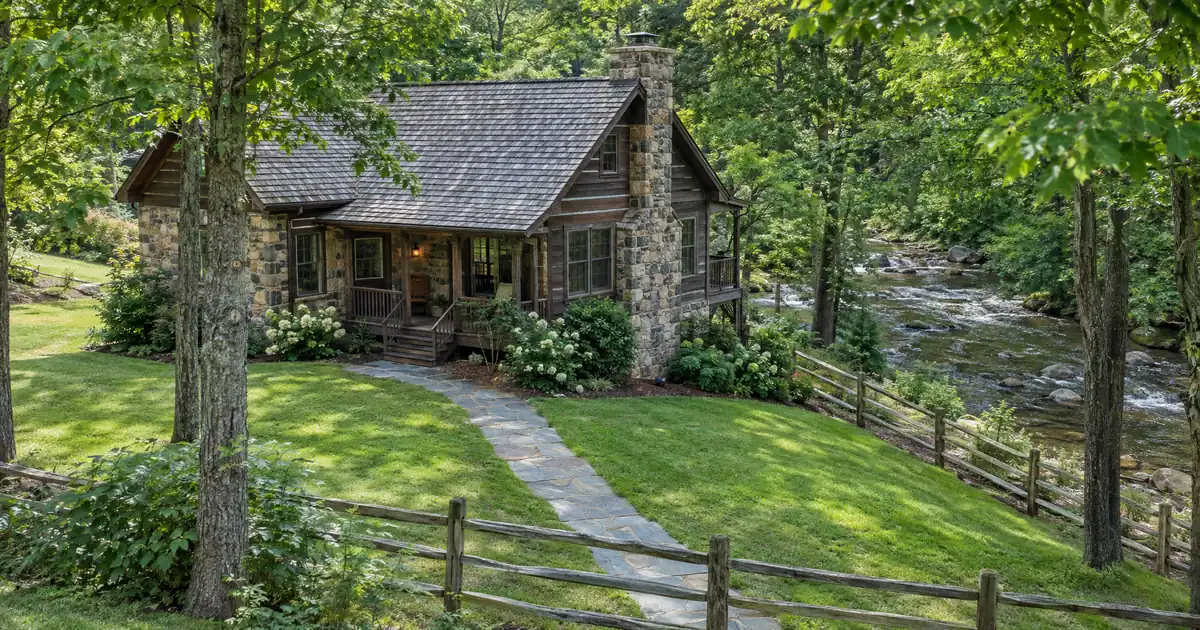
The Quick Read: A DSCR lender tests a cabin or rural short-term rental twice: first the collateral, meaning acreage, construction type, and legal rental use, and only then the income, meaning whether documented rent covers the full monthly payment on the loan, subject to lender guidelines. DSCR, short for debt service coverage ratio, compares rent to that payment.
- The property gate comes first. A cabin can fail on land or construction even when the rent is strong.
- Log homes, manufactured homes, and barndominiums are not offered through the network’s DSCR programs.
- Short-term rental purchases typically reach up to 75% LTV on the strongest files. Refinances and cash-outs on short-term rental collateral top out around 70%.
- Expect a 640 minimum credit score and about 12 months of hosting experience on most short-term rental files.
- Clearing the coverage ratio is not the same as making a profit.
What Is a Collateral Limit, Exactly?
A collateral limit is a rule about the property itself, not about you or the rent. It says which kinds of land and structures a lender will accept as security for the loan.
Short-Term Rental Calculator
Run the STR numbers in your market
Rate source: Freddie Mac 30-yr average via FRED® — Federal Reserve Bank of St. Louis · effective Oct 15, 2026
Prefilled with starting assumptions — enter your nightly rate, occupancy, taxes, and insurance for a more accurate picture.
Short-term rental income is documented with a 12-month history or a market data report. Program parameters update from Lendmire’s centralized guideline source.
As of Oct 15, 2026 · General Freddie Mac market benchmark, not a Lendmire loan offer. Nightly rate, occupancy, taxes, and insurance are editable estimates. Qualifying income for short-term rentals varies by program — some use appraisal market rent, others use documented STR history or projections — and is confirmed in underwriting. Not a Loan Estimate, approval, or commitment to lend. Program availability and eligibility are subject to lender guidelines, credit approval, property review, and underwriting.
Most investors expect the rent to do all the talking. It doesn’t. Across the wholesale network of DSCR lenders, the property is screened before anyone looks at coverage. Acreage, construction type, rural classification, and whether short-term rental use is permitted at the address all come first.
There is no single rulebook for this. DSCR loans are investor loans, so each program sets its own collateral screen. That is why one lender’s cabin is another lender’s decline. Most programs we place files with share the same broad concerns, and the details differ at the edges.
The complete DSCR loans guide covers the basics of how these loans work.
Key Terms Defined
Collateral: the property that secures the loan. If the loan isn’t repaid, the lender looks to it.
LTV (loan-to-value): the loan amount as a percentage of the property’s appraised value or price.
PITIA: principal, interest, taxes, insurance, and any association dues. This is the full monthly obligation that rent is measured against.
Acreage limit: the most land a program will accept with a residential property before it treats the file as a land or farm deal.
Seasoning: a waiting period between two events, such as buying a property and refinancing it.
Hosting history: the record of running a property as a short-term rental, shown through platform or property-manager statements.
Form 1007 and Form 1025: appraisal forms that estimate market rent. The 1007 covers one-unit investment properties. The 1025 covers 2-4 units.
How Does Underwriting Treat a Rural Cabin, Step by Step?
The deal works through the same order almost every time. Knowing the order tells you where a deal can stop.
1. Property screen. The lender checks acreage, construction type, zoning or rural classification, and the property’s use. This is where agricultural properties, working farms, and certain cabin types drop out.
2. Legality check. The lender wants evidence that short-term rental use is permitted locally and by any HOA. Short-term rental rules can vary by city, county, HOA, and property type, so investors should confirm local rules before relying on projected rental income.
3. Income evidence. On a refinance, the lender looks for about 12 months of actual platform or property-manager history. On a purchase, the file typically relies on an appraiser’s rental analysis or a market-data projection.
4. Appraisal. The appraiser delivers a value and a rent opinion. The value sets your LTV.
5. Coverage test. Rent used for lender review is divided by PITIA. The short-term rental floor is 1.00 on purchases. On refinances, the floor is also 1.00.
6. Haircuts. Some programs discount short-term rental income before testing coverage. The size of the discount differs by lender, so the same cabin can show different ratios in different programs.
The leverage numbers are narrower than on a long-term rental. A short-term rental purchase typically tops out at 75% LTV on the strongest files. Short-term rental refinances and cash-outs top out around 70%. Most files want a 640 score or better, and loan sizes run up to $3,000,000 on standard programs. All of this is subject to lender guidelines, credit approval, and property review.
Lendmire’s piece How Short-Term Rental DSCR Experience Rules Work for Rural Cabin Loans walks through the hosting-history side of this sequence.
Why Do Lenders Limit Acreage and Rural Collateral?
Lenders limit rural collateral because it is harder to value and harder to sell. Those two problems drive almost every rule you will meet.
Appraisal difficulty. Rural markets have fewer comparable sales and fewer comparable rentals. An appraiser may have to stretch the search area or adjust heavily. A lender can’t rest a loan on a value that depends on many adjustments.
Classification. A property with a lot of land can look like a farm, a ranch, or a land holding instead of a house. Farm-type income and working agricultural features move a file out of residential investor lending altogether.
Liquidity. If the borrower stops paying, the lender has to sell the property. Rural parcels often take longer to sell and draw a smaller buyer pool.
Acreage limits therefore vary by program. Some set a maximum acreage. Others accept more land but weigh it differently in the appraisal. The practical advice is to pull the acreage and zoning from county records before you go under contract, then ask the lender how it treats land beyond the residential footprint.
Cabin Construction: In, Gray, or Out
How a cabin is built matters as much as where it sits. The market sorts cabins into three rough tiers.
| Tier | Typical examples | Network position |
|---|---|---|
| Out | Log homes, manufactured homes, barndominiums | Not offered |
| Gray | A-frames, kit cabins, log-sided homes | Case by case |
| Usually in | Frame-built cabins, lake houses | Standard review |
The “out” tier is firm. Log homes, single- and double-wide manufactured homes, and barndominiums are not offered through the network’s DSCR programs. Strong rent does not change that.
The gray tier is where files get interesting. Whether a home is a true log cabin or a house built in log style is sometimes a judgment call. A lender may ask for the construction details, photos, and the appraiser’s description before it decides.
If you own or want a gray-zone cabin, present it the way the underwriter will read it. Gather the framing type, the exterior material, the foundation, and the heating source. Ask the lender to review the property type before you spend money on an appraisal.
How Short-Term Rental Collateral Differs From a Long-Term Rental
Short-term rental collateral gets tighter terms than a long-term rental on the same house. The lender is underwriting a business with seasonal income, not a lease.
| Factor | Short-term rental | Long-term rental |
|---|---|---|
| Purchase LTV | Up to 75% | Most files 75%-80% |
| Cash-out LTV | Up to 70% | Around 75% |
| Minimum score | 640 | 620 floor in parts, most want 660 |
| Experience | About 12 months hosting | Less emphasis |
In plain terms, a cash-out on short-term rental collateral tops out around 70%, while a cash-out on a standard long-term rental tops out around 75%. A refinance on short-term rental collateral also sits at about 70%. Treat these as typical ranges from select lenders, not promises.
Rent is the other difference. A long-term rental has a lease. A short-term rental has nightly pricing, seasonal occupancy, and income that depends on how well the host runs the business. Lenders handle that uncertainty with lower leverage, hosting-history requirements, and sometimes income discounts.
Why the Appraisal Can Understate a Good Cabin
The appraisal form is part of the problem for short-term rentals. Rural cabins feel it most.
Fannie Mae’s appraiser update describes Form 1007 as the way an appraiser documents estimated monthly market rent on a single-family investment property. It is an agency form, and DSCR underwriting borrows it. DSCR loans are not bound by agency eligibility rules, so the form is a tool, not a rulebook.
The catch is that the 1007 measures monthly rent from comparable rentals. It was not built for nightly pricing. HousingWire reports that policy leaders say the form isn’t designed for short-term rental income. It adds that forcing nightly income onto it can produce artificially low ratios. The same article says appraisers are encouraged to decline assignments that would require distorting the form.
Two practical points follow. First, the lender decides what income counts, not the appraiser. McKissock makes the same point in its explanation of how lenders weigh income from all sources. Second, a 1007-style rent opinion usually reflects long-term rent, which often understates what a well-run cabin earns. That is why a narrative short-term rental analysis, or documented booking history, matters on these files.
DSCR vs. conventional financing
There are two common ways to finance an investment property, and they qualify you differently — here’s how investors weigh them.
Why investors choose it
- Qualifies on the property’s rental income — no personal tax returns, W-2s, or pay stubs needed to document income.
- No personal debt-to-income ceiling to clear, so existing mortgages and obligations don’t cap your borrowing the same way.
- Can be closed in an LLC, keeping the property inside a business entity.
- Built for scaling — not held to the limit on number of financed properties that conventional financing applies.
- Underwriting centers on the deal: generally qualifies when the rent covers the payment, a 1.00x coverage ratio being a common baseline (confirmed in underwriting).
- Designed specifically for investment property, including long-term and, where the program allows, short-term rentals.
Where it’s strong
- Often the lowest ongoing financing cost for a buyer who fully qualifies on personal income — a fit for a first property or a cost-first purchase.
Trade-offs for investors
- Requires full personal income documentation and must fit within a debt-to-income limit — salary, existing debts, and other mortgages all count.
- Typically held in your personal name rather than a business entity.
- Caps how many financed properties you can carry, which can become a ceiling as a portfolio grows.
- Evaluates you as a borrower as much as the property, which usually means more paperwork.
How investors usually choose: a first or single property often optimizes for the lowest financing cost; portfolio builders often optimize for leverage, vesting in an LLC, and scaling past conventional caps. The right answer depends on your goals, the property, and current guidelines — both paths run through select lenders in Lendmire’s wholesale network, with eligibility and terms confirmed in underwriting.
Where the General Rule Breaks
The collateral screen has predictable edge cases. These are the ones that catch investors.
Thin rural comps. A rural market may have too few comparable rentals or active listings for a projection to mean much. Data-based estimates get speculative when few short-term rentals operate nearby. The fix is evidence: competing comps to dispute a low appraisal, and actual booking history where you have it.
Two-to-four-unit cabin clusters. A cluster of cabins on one parcel can be a small multifamily property. Those typically use Form 1025, which McKissock explains differs from the 1007 because it covers duplexes, triplexes, and fourplexes. The monthly-lease assumption still applies, so a short-term rental narrative still helps.
Seasonality. Underwriting looks at a full 12 months. A cabin that books solid in summer and goes quiet in winter carries that slow season in its average. A ski cabin and a lake cabin can post the same peak and very different annual coverage.
Owner-use cabins. DSCR loans are designed for non-owner-occupied investment properties. Because they are business-purpose investor loans, they are reviewed differently from a standard owner-occupied mortgage. A cabin you use as your own getaway isn’t a business-purpose investment, and holding it in an LLC doesn’t change that. Titling a rental in an LLC can work, subject to lender program eligibility.
Access and utilities. Year-round road access, a working well, and a sound septic system are common screens on remote properties. A cabin that is hard to reach in winter can draw extra questions.
Insurance. Remote properties can be harder to insure, and a short-term rental use may need the right policy. Raise this early, because a coverage problem can stall a file after you’ve paid for an appraisal.
Tax treatment can depend on how the funds are used and how the property is held; investors should keep clear records and speak with a qualified tax professional before relying on any deduction.
Worked Example: Three Cabins, Same Price
Run the numbers on three cabins listed at the same price. Every rent and coverage input below is a modeled assumption, not market data.
Cabin A. A frame-built lake cabin on a modest parcel. Short-term rentals are allowed, and the buyer has 12 months of hosting history. Assuming a full-year average rent that covers PITIA with room to spare, coverage clears roughly 1.25x at 75% LTV on a purchase. The file stays inside the typical short-term rental limits. It still needs a 640 score and lender review.
Cabin B. A log-built mountain cabin with strong summer bookings. The coverage math may look fine, but it never gets tested. Log homes are not offered through the network’s DSCR programs, so the file stops at the property screen.
Cabin C. A frame-built cabin in a thin rural market. The appraisal and projection come in low, and the full-year average, including a slow winter, lands near 0.95x. That is under the 1.00 floor on short-term rental purchases.
Cabin C still has paths. The investor can dispute the appraisal with competing comps and bring actual booking records. A larger down payment can lower the loan balance and lift the coverage number. A separate select-lender path takes coverage below 1.00 with leverage and terms adjusted. Select lenders in the network also offer extended terms and interest-only periods. Lendmire’s piece 30-Year vs Interest-Only Short-Term Rental DSCR Loan on a Rural Cabin covers that tradeoff. Whether any of this works depends on lender guidelines, credit approval, and property review.
Notice what a bigger down payment can’t do. It doesn’t erase a leverage cap, a credit floor, or a property-type exclusion. The strongest files clear both tests: enough equity and enough rental coverage.
What a Passed Ratio Doesn’t Tell You
Clearing 1.00 means rent equals the monthly obligation. It does not mean the cabin makes money.
DSCR compares rent to PITIA and nothing else. Cleaning, management fees, utilities, supplies, vacancy, repairs, and big-ticket replacements all sit outside the calculation. A short-term rental has more of these costs than a long-term lease. A cabin at 1.10x can still lose cash in a slow year.
Treat the ratio as the lender’s test, then run your own operating budget. Two questions help. What does the cabin earn in its slowest three months? What do you owe if a major system fails in the off-season?
Before You Go Under Contract
Most failures on rural short-term rental files are avoidable. Do these checks before you commit.
- Confirm the acreage and zoning from county records.
- Confirm the construction type, and avoid log, manufactured, and barndominium structures.
- Confirm that short-term rental use is allowed locally and by any HOA.
- Confirm year-round access, water, and septic.
- Line up 12 months of hosting history if you refinance, or a hosting record if you buy.
- Get the insurance question answered before the appraisal.
Then ask every lender two questions. What is your acreage and construction screen? What happens if the appraisal or rental analysis comes in low?
If the cabin misses, don’t force it. Look at a different property type, lower leverage, or a different loan structure.
Frequently Asked Questions
Can a rural cabin get a DSCR loan at all?
Often yes, if it passes the property screen. A frame-built cabin on a reasonable parcel with legal short-term rental use is typically reviewable. Log homes, manufactured homes, and barndominiums are not offered through the network’s DSCR programs. Approval is subject to lender guidelines, credit, and property review.
How much can I borrow on a short-term rental cabin?
On a purchase, leverage typically reaches up to 75% LTV on the strongest files. On a refinance or cash-out on short-term rental collateral, it tops out around 70%. Loan sizes run up to $3,000,000 on standard programs. A 640 minimum credit score is typical.
Does the appraiser decide how much income counts?
No. The appraiser gives a value and a rent opinion, and the lender decides which income to use. If the opinion rests on a long-term rent form, it can understate a strong cabin. Booking history and a narrative rental analysis help.
Does strong rent override a big parcel or log construction?
No. The property screen comes first. A cabin that fails on construction type or acreage never gets to the coverage test, no matter how well it books.
Does 1.00 coverage mean the cabin cash-flows?
No. It means rent equals PITIA. Operating costs and vacancy sit outside the ratio, so a cabin can clear 1.00 and still run at a loss.
Next Steps
If you are buying or refinancing a rental property and want to see how the numbers work, Lendmire can help you compare DSCR loan options based on the property income, credit profile, leverage, and investor goals. As a mortgage broker, Lendmire arranges financing through select lenders in its wholesale network across 41 markets, including Washington, D.C. An illustrative calculator on the site can give you a rough sense of coverage before you talk to anyone.
Cabin country rewards investors who check the land and the structure before they fall for the rent projection.
About Lendmire
Lendmire is a non-QM mortgage brokerage (NMLS# 2371349) arranging DSCR investor loans in 41 markets, including Washington, D.C., through wholesale and investor-lending channels. DSCR loans are evaluated by the lender on rental income rather than personal income, subject to lender guidelines — a fit for LLC-owned portfolios, self-employed investors, and operators scaling beyond conventional loan caps. Recognized as a Scotsman Guide Top Mortgage Workplace in 2025 and 2026.
Get Started
Ready to find the right loan for you?
In about 30 seconds you can review financing options available for your investment property. No commitment required.
Informational only. Not a Loan Estimate, approval, or commitment to lend. Program availability and eligibility are subject to lender guidelines, credit approval, property review, and underwriting.
References
1. Fannie Mae – Appraiser Update
2. HousingWire – Short-Term Rentals Are Breaking the Appraisal Playbook
3. McKissock Learning – Form 1007 and Short-Term Rental Appraisals
This article is part of Lendmire’s short-term rental loan program — full qualification details, guidelines, and scenarios live on the program page.
Related reading: How Super Jumbo DSCR Occupancy and Term Rules Work on a 2-4 Unit Rental · How DSCR Short-Term Rental Refinance Conditions Work for a Rural Cabin Airbnb · How DSCR Short-Term Rental Loan Entity and Guaranty Requirements Work
Brandon Miller
Founder & CEO, Mortgage Loan Originator, Lendmire LLC
- Mortgage Loan Originator · NMLS# 1129696 · Verify on NMLS Consumer Access
- North Carolina Real Estate Broker · License# 343312 · Verify on NCREC
- North Carolina Insurance Producer · License# 19053198 · Property, Casualty, Life, Health · Verify on NAIC SBS
- Lendmire LLC · Firm NMLS# 2371349 · Verify firm licensure
Required disclosures. Lendmire (NMLS# 2371349) operates as a licensed mortgage broker, not a direct lender or depository. The discussion in this article is general in nature and should not be relied upon as financial, legal, or tax advice — every investment scenario is unique and should be reviewed by a qualified professional. Any loan inquiry is subject to lender underwriting, and this article is not a commitment to lend or a guarantee of approval. Mortgage rates, loan terms, and program guidelines vary by borrower, property, and state, and may change without notice. Equal Housing Opportunity. Verify licensure at NMLS Consumer Access.