
The Quick Read: Rarely on the super jumbo ladder itself, because that ladder is written for 1-4 units, while a 5-to-10-unit building is commercial multifamily; a revocable family trust is usually easy to place as the borrower, yet the unit count and loan size decide whether any program exists. The trust changes the paperwork. The building changes the loan.
- The super jumbo ladder, with loans from $150,000 to $10,000,000, covers 1-4 units. Five or more units moves the file into a narrower specialty tier.
- A revocable trust that the grantor controls is the easiest trust to place. Irrevocable and land trusts need pre-clearance.
- A real person still signs a personal guaranty. A trust does not remove that exposure.
- At five units, the file is judged on net operating income, not gross rent. A building can look fine on rent and still fail on that test.
- Deeding a financed 5-10 unit building into a trust after closing carries due-on-sale risk with no statutory shield.
What Does “Super Jumbo” Mean at Five Units?
Super jumbo means a loan above the standard program ceiling. It has no official definition. Across the wholesale network, the standard DSCR program stops at $3,000,000, and the super jumbo ladder carries qualified investors past it, up to $10,000,000. DSCR, or debt service coverage ratio, is the property’s income measured against its debt payment.
DSCR Calculator
Run the numbers in your market
Rate source: Freddie Mac 30-yr average via FRED® — Federal Reserve Bank of St. Louis · effective Oct 15, 2026
Prefilled with starting assumptions — enter your own rent or nightly figures, taxes, insurance, and HOA for a more accurate picture.
Program parameters update from Lendmire’s centralized guideline source. Taxes and insurance are editable estimates.
As of Oct 15, 2026 · General Freddie Mac market benchmark, not a Lendmire loan offer. Rent, nightly rate, occupancy, taxes, and insurance are editable estimates. Short-term rental figures are estimates only and vary significantly by season, property type, management approach, and local short-term-rental rules — confirm local regulations before relying on them. Qualifying income for short-term rentals varies by program — some use appraisal market rent, others use documented STR history or projections — and is confirmed in underwriting. Not a Loan Estimate, approval, or commitment to lend. Program availability and eligibility are subject to lender guidelines, credit approval, property review, and underwriting.
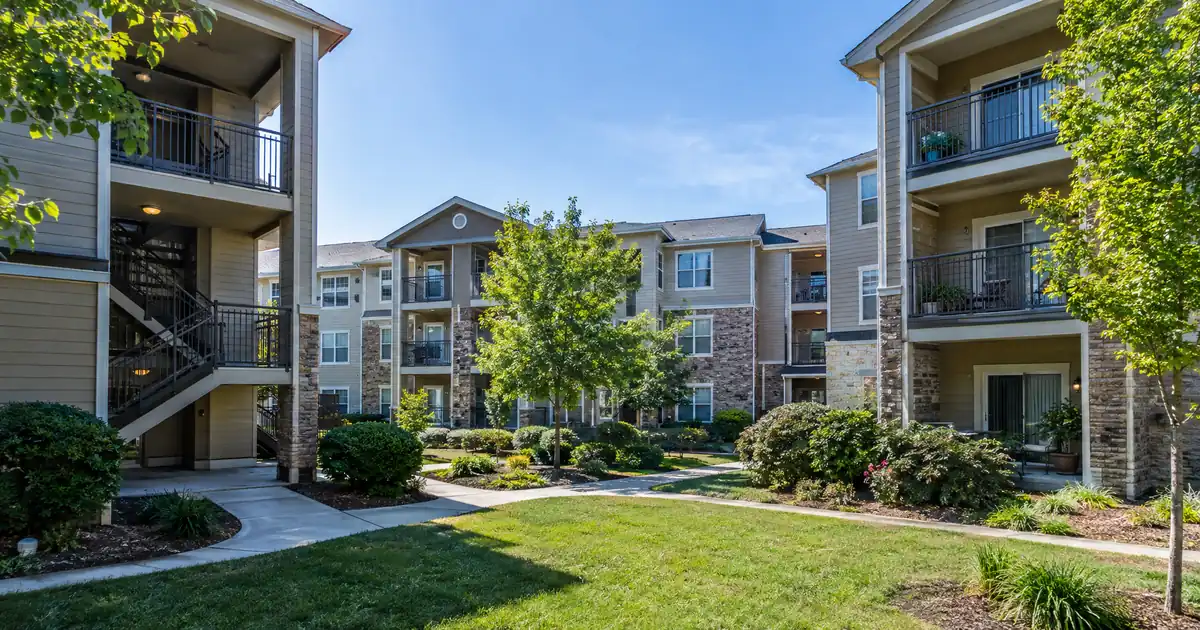
Here is the catch. That ladder is built for 1-4 units. A building with five or more units is commercial multifamily, and price has nothing to do with it. A luxury duplex stays residential. A modest 6-unit building does not.
Why does the line sit at five? Residential DSCR loans are built to be pooled and sold to investors, and 5+ unit loans generally do not fit that structure. Some lenders extend a DSCR-style program to roughly 8-10 units. Others stop at four. Many offer nothing there at all.
So the honest answer has two halves. Trusts are fine in most programs. The 5-10 unit tier is thin, and it varies lender by lender.
Does the Trust or the Building Decide Eligibility?
The building decides far more than the trust does. Vesting sets who owns the property and who signs. It does not change how the property qualifies. The lender reads the signing entity, the property income, the credit of the guarantor, and the loan size.
| Question | Entity question | Property and size question |
|---|---|---|
| Who signs the note? | Yes | No |
| Who guarantees? | Yes | No |
| Is the program offered at 5-10 units? | No | Yes |
| Which formula measures coverage? | No | Yes |
| Which appraisal is ordered? | No | Yes |
| Is a trust certification required? | Yes | No |
Most programs we place files with accept trust vesting. Where a 5+ unit program exists, the file is reviewed mainly on property-level income covering the payment, subject to lender guidelines. Entity paperwork slows a file down. It rarely kills one.
Which Trust Types Work?
A revocable trust, where the grantor keeps control, is the easiest to place. Most programs want that control. Everything else gets more friction.
| Trust type | Who signs | Guarantor | Friction |
|---|---|---|---|
| Revocable, grantor-trustee | Trustee | The grantor | Low |
| Revocable, independent trustee | Trustee | Person with credit and liquidity | Moderate |
| Irrevocable | Trustee | Needs pre-clearance | High |
| Land trust | Per program | Needs pre-clearance | High |
| Trust holding a property LLC | Per program | Per program | Heaviest |
The guarantor should be the person who holds the credit and liquidity and who has authority to bind the vesting. In a revocable trust, that is usually the grantor-trustee. If the trustee and the wealthy beneficiary are different people, expect a longer conversation. A co-trustee may also need to sign, so ask the estate attorney early.
Irrevocable trusts bring a second problem. A change of beneficiary can create a transfer the lender never approved.
What About Layered Structures?
Keep the chain short. A revocable trust that holds title directly is the cleanest path. A trust that owns a single property LLC is the heaviest document load, and programs differ on whether they accept it at all, subject to program eligibility.
Layered chains are a different story. Trust, then holding company, then property LLC: that is not accommodated. Entity vesting is welcome across the network, but only without stacked entities.
Families often want both tools. A revocable trust helps with probate avoidance, incapacity planning, and privacy. An LLC is the usual choice for liability separation. A revocable trust gives no lawsuit protection. Many high-net-worth investors use both, but they usually hold them in separate properties or at separate levels, not chained for one loan.
How Is Coverage Calculated on 5-10 Units?
On 1-4 units, the lender divides gross monthly rent by the full monthly obligation: principal, interest, taxes, insurance, and any HOA dues. At five units, the formula changes to net operating income against annual debt service. Net operating income is rent after vacancy and operating expenses. The file also adds a rent roll, leases, and an income-approach appraisal.
Taxes and insurance move out of the debt side and into expenses. That is the shift that surprises people.
Run the numbers on a modeled assumption, not program terms. Say a building clears roughly 1.30x on gross rent. After vacancy, management, repairs, taxes, and insurance come out, coverage on net operating income might land near 1.05x. Same building. Different test.
Expectations are also typically higher on commercial-style files than the 1.00 that select programs accept on 1-4 units. On the 1-4 side, coverage of 1.00 earns full leverage. Coverage from 0.75 to 0.99 is a real path through select programs to $2,000,000, but LTV and terms adjust, subject to underwriting.
The appraisal changes too. The residential forms for rent schedules and small income properties sit on the 1-4 side. At five units, the appraiser typically values the building on its income.
What Does the 1-4 Unit Ladder Look Like?
If your building is actually a fourplex or smaller, the ladder applies. On a purchase of an investment property at coverage of 1.00 or higher, leverage steps down with size: up to 80% on loans to $1,000,000, 75% through $3,000,000, and 65% on loans from $3,000,000 to $4,000,000. Above $4,000,000, it runs around 60% and every request is reviewed case by case before submission, with no cash-out.
The top cell in each band needs a stronger score than the floor. The program floor is 660, and it moves to 700 above $3,000,000. A lower score takes a lower leverage cell in the same band. Two appraisals are required above $2,000,000. Reserves typically run six months on the subject property, subject to underwriting.
Those numbers describe 1-4 units. Do not carry them to a 7-unit building. The honest read on a 5-10 unit file is that leverage, credit floors, and reserves depend on the program that exists for it, and that program is set lender by lender.
Which Documents Do You Gather First?
Collect these before you go under contract.
| Document | Purpose |
|---|---|
| Trust certification or agreement | Shows the trustee can encumber the property |
| Current deed | Shows how title reads today |
| Rent roll and leases | Supports net operating income |
| Operating statements | Verify expenses and vacancy |
| Guarantor financials | Shows credit and liquidity |
A certification of trust is a short statement that stands in for the full trust agreement. The Uniform Trust Code lets a trustee provide one instead of handing over the whole instrument. State versions differ, and a recipient may still ask for excerpts naming the trustee and the power to act. Do not assume uniformity.
Reconcile the rent roll against leases, ledgers, and deposits before anyone else does. A rent roll that does not match is a common reason these files stall.
What Is the Right Order of Operations?
1. Confirm a program exists at your unit count. Ask first. Everything else depends on it.
2. Confirm the trust type. Revocable, irrevocable, or land trust decides how much pre-clearance you need.
3. Pre-clear the entity. Do this before the contract or the appraisal, not after.
4. Name the guarantor. Pick the person with credit, liquidity, and authority to bind the vesting.
5. Order the income-approach appraisal once the program is confirmed.
6. Close in the chosen vesting from day one. Names on the deed, title policy, insurance, and loan documents must match.
Lendmire’s piece on vesting requirements for a family office or multi-member trust walks through the entity side in more depth. For the broader picture, the complete DSCR loans guide covers how coverage ratios, leverage, and reserves fit together.
Can You Deed the Building Into the Trust After Closing?
Don’t plan on it. Federal law protects some transfers into a family trust from triggering a due-on-sale clause. That protection is narrow. The statute’s trust exception covers loans on residential property with fewer than five dwelling units. A 5-10 unit building falls outside it.
So a financed 7-unit building deeded into a trust after closing has no statutory shield. The lender can call the loan. Even where the exception applies, it only restrains acceleration of an existing loan. It does not force a lender to make a new loan to a trustee, as Bay Legal explains in its overview of moving a home out of trust after a refinance.
The deed also does not move the loan. A trust or an LLC does not make a loan non-recourse by itself. The simple fix is to vest correctly at purchase or refinance.
DSCR loans are designed for non-owner-occupied investment properties. Because they are business-purpose investor loans, they are reviewed differently from a standard owner-occupied mortgage. The CFPB’s commentary notes that a creditor decides case by case whether a transaction is primarily for a business purpose. The loan’s purpose does that work, not the trust label.
DSCR vs. conventional financing
There are two common ways to finance an investment property, and they qualify you differently — here’s how investors weigh them.
Why investors choose it
- Qualifies on the property’s rental income — no personal tax returns, W-2s, or pay stubs needed to document income.
- No personal debt-to-income ceiling to clear, so existing mortgages and obligations don’t cap your borrowing the same way.
- Can be closed in an LLC, keeping the property inside a business entity.
- Built for scaling — not held to the limit on number of financed properties that conventional financing applies.
- Underwriting centers on the deal: generally qualifies when the rent covers the payment, a 1.00x coverage ratio being a common baseline (confirmed in underwriting).
- Designed specifically for investment property, including long-term and, where the program allows, short-term rentals.
Where it’s strong
- Often the lowest ongoing financing cost for a buyer who fully qualifies on personal income — a fit for a first property or a cost-first purchase.
Trade-offs for investors
- Requires full personal income documentation and must fit within a debt-to-income limit — salary, existing debts, and other mortgages all count.
- Typically held in your personal name rather than a business entity.
- Caps how many financed properties you can carry, which can become a ceiling as a portfolio grows.
- Evaluates you as a borrower as much as the property, which usually means more paperwork.
How investors usually choose: a first or single property often optimizes for the lowest financing cost; portfolio builders often optimize for leverage, vesting in an LLC, and scaling past conventional caps. The right answer depends on your goals, the property, and current guidelines — both paths run through select lenders in Lendmire’s wholesale network, with eligibility and terms confirmed in underwriting.
When Is This the Wrong Product?
Sometimes a trust-held 5-10 unit building belongs elsewhere. Portfolio bank loans, community-bank commercial loans, credit unions, and agency or life-company loans all serve this size. They weigh borrower financials and net worth more heavily than a DSCR file does.
Expect different terms. Commercial-style loans commonly bring prepayment penalties, balloons, and shorter terms. Recourse is common. Non-recourse tends to show up only at larger sizes. Lenders at 5-20 units are fewer, and term ranges run wide.
Mixed-use buildings add another wrinkle. Eligibility depends on the residential share and the quality of the leases.
There is a real tradeoff here. If your family wants the speed of a rent-based file, a 1-4 unit property fits the ladder cleanly. If you want the 7-unit building, you are choosing a commercial-style review, and that is fine, as long as you choose it deliberately.
Where Do Families Go Wrong?
- Assuming the ladder scales. Super jumbo DSCR at 5-10 units may use a different formula, a different appraisal, and a different program, or no program.
- Using gross rent to judge the deal. The lender will use net operating income.
- Believing a trust shields you. It does not. A personal guaranty typically still applies.
- Deeding after closing. No statutory cover exists at five units or more.
- Skipping pre-clearance on irrevocable or land trusts. Surprises show up at the worst moment.
- Expecting vesting to change approval. It decides who signs, not whether the property qualifies.
Business-purpose loans also do not produce standardized consumer disclosures, so comparing offers takes work. Line up the terms yourself.
Key Terms Defined
Super jumbo: a loan above the standard program ceiling, with no official definition. Each lender sets its own line.
Commercial multifamily: a building with five or more units. Unit count sets this, not price.
Net operating income: rent collected after vacancy and operating expenses, before debt service.
Revocable trust: a trust the grantor can change or cancel, which keeps the grantor in control.
Personal guaranty: a signed promise by a real person to repay if the borrower does not.
Certification of trust: a short statement of the trust’s key facts, used in place of the full agreement.
Not Legal or Tax Advice
This article is general education, not legal or tax advice. Trust law varies by state, and a transfer or vesting choice can have consequences you cannot see from outside the file. Tax treatment varies; consult a qualified professional. Speak with an attorney or CPA about your own situation before you sign anything.
Frequently Asked Questions
Can a revocable family trust be the borrower on a DSCR loan?
Often yes. A revocable trust the grantor controls is the easiest trust to place across the network. Expect a trust certification or the agreement, plus a personal guaranty from the person with credit and liquidity. Programs differ, and every file is underwritten individually.
Does a 7-unit building qualify for the super jumbo ladder?
Not on the ladder as written. That ladder covers 1-4 units. A 7-unit building is commercial multifamily, which runs through a narrower specialty tier that varies by lender. Whether one is offered depends on the program, and any terms are subject to underwriting.
Does the trust change how my property qualifies?
No. The trust determines who owns the property and who signs. Qualification runs primarily on property-level rental income covering the payment, subject to lender guidelines. On 5+ units, that means net operating income against annual debt service.
Who guarantees the loan when the trustee is not the main beneficiary?
The guarantor should be the person with the credit, the liquidity, and the authority to bind the vesting. If those are different people, pre-clear the structure before the contract. A trust does not remove personal exposure, and a real person still signs.
Can an irrevocable or land trust borrow on a 5-10 unit building?
Rarely, and only with pre-clearance. Most programs want a revocable trust where the grantor keeps control. A change of beneficiary in an irrevocable trust can create an unprotected transfer, so ask before you commit to the contract.
If you are buying or refinancing a high-balance rental property and want to see how the numbers work, Lendmire can help you compare super jumbo DSCR loan options based on the property income, the loan balance, credit profile, leverage, and investor goals. It arranges business-purpose investor financing through select lenders in its wholesale network across 41 markets, including Washington, D.C. Reach the team at 828-256-2183. Nothing here is a commitment to lend.
A trust-held 5-10 unit building rewards the family that asks the program question first and the trust question second.
Lendmire’s self-employed mortgages page presents both super jumbo programs, bank statement and DSCR, side by side.
About Lendmire
Lendmire — NMLS# 2371349 — is a DSCR and non-QM mortgage brokerage with investor loan programs in 41 markets, including Washington, D.C. DSCR eligibility is commonly reviewed by the lender around property-level rent rather than personal income documentation, subject to lender guidelines, and the brokerage helps arrange financing for LLC-owned portfolios beyond conventional financed-property limits. Recognized by Scotsman Guide as a Top Mortgage Workplace in 2025 and 2026.
Get Started
Ready to find the right loan for you?
In about 30 seconds you can review financing options available for your investment property. No commitment required.
Informational only. Not a Loan Estimate, approval, or commitment to lend. Program availability and eligibility are subject to lender guidelines, credit approval, property review, and underwriting.
References
2. 12 U.S.C. §1701j-3 (govinfo)
3. Bay Legal: Home Out of Trust After Refinance
4. CFPB Regulation Z comment on §1026.3
This article is part of Lendmire’s super jumbo DSCR loan program — full qualification details, guidelines, and scenarios live on the program page.
Related reading: How a Super Jumbo DSCR Lender Documents a Family-Held Pool · How Super Jumbo DSCR Lenders Treat a Family Trust Guarantor · Super Jumbo DSCR vs Private Bank for a Family LLC With a Trustee
Brandon Miller
Founder & CEO, Mortgage Loan Originator, Lendmire LLC
- Mortgage Loan Originator · NMLS# 1129696 · Verify on NMLS Consumer Access
- North Carolina Real Estate Broker · License# 343312 · Verify on NCREC
- North Carolina Insurance Producer · License# 19053198 · Property, Casualty, Life, Health · Verify on NAIC SBS
- Lendmire LLC · Firm NMLS# 2371349 · Verify firm licensure
Required disclosures. Lendmire (NMLS# 2371349) operates as a licensed mortgage broker, not a direct lender or depository. The discussion in this article is general in nature and should not be relied upon as financial, legal, or tax advice — every investment scenario is unique and should be reviewed by a qualified professional. Any loan inquiry is subject to lender underwriting, and this article is not a commitment to lend or a guarantee of approval. Mortgage rates, loan terms, and program guidelines vary by borrower, property, and state, and may change without notice. Equal Housing Opportunity. Verify licensure at NMLS Consumer Access.