
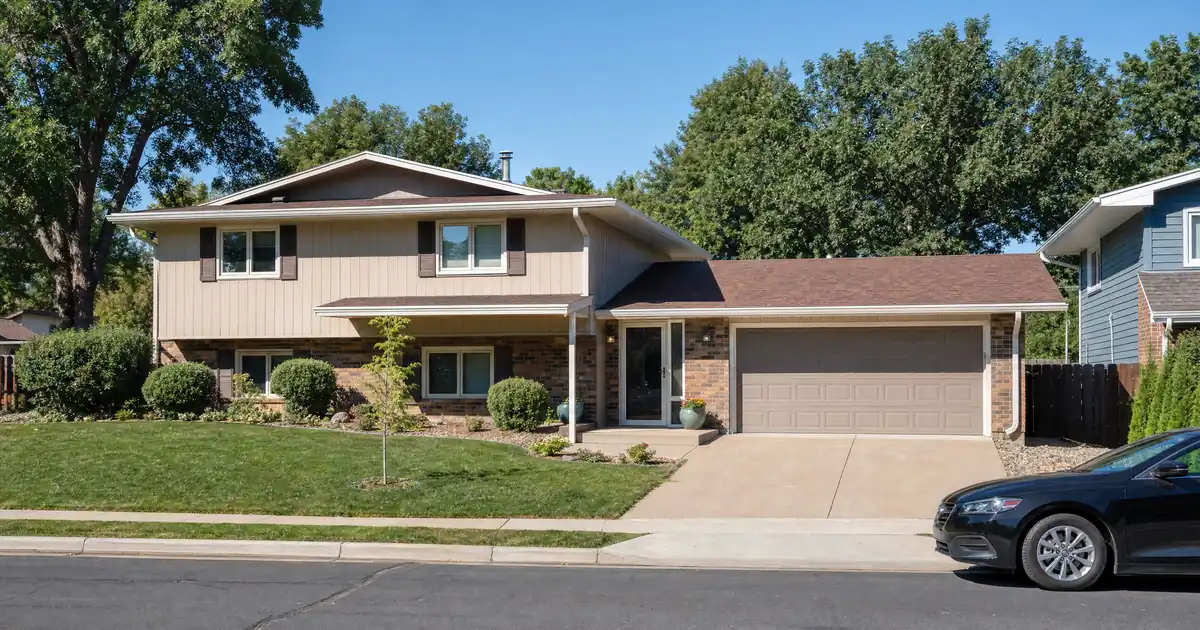
FHA House Hack Vs DSCR Rental Purchase — The Quick Read: FHA house hacking is for someone who plans to live in the property and wants HUD’s low down payment to help buy a small multi-unit building. DSCR financing is for someone who has no intention of living there and wants the loan to qualify on the property’s rent instead of a paycheck. One requires occupancy and personal income documentation; the other requires neither. Pick based on where you’re going to sleep tonight, not which loan sounds cooler on a podcast.
Both paths get compared constantly because they solve overlapping problems — buying a small residential building and using rental income to make the numbers work. But they sit on opposite sides of a line drawn by the government itself: occupancy. That line changes everything downstream — who can borrow, how the property is titled, what documents get pulled, and what happens the day you decide to move out.
DSCR Calculator
Run the numbers in your market
Rate source: Freddie Mac 30-yr average via FRED® — Federal Reserve Bank of St. Louis · effective Aug 13, 2026
Prefilled with local estimates — enter your own rent or nightly figures, taxes, insurance, and HOA for a more accurate picture.
Program parameters update from Lendmire’s centralized guideline source. Taxes and insurance are editable estimates.
As of Aug 13, 2026 · General Freddie Mac market benchmark, not a Lendmire loan offer. Rent, nightly rate, occupancy, taxes, and insurance are editable estimates. Short-term rental figures are estimates only and vary significantly by season, property type, management approach, and local short-term-rental rules — confirm local regulations before relying on them. Qualifying income for short-term rentals varies by program — some use appraisal market rent, others use documented STR history or projections — and is confirmed in underwriting. Not a Loan Estimate, approval, or commitment to lend. Program availability and eligibility are subject to lender guidelines, credit approval, property review, and underwriting.
Key Terms Defined
House hacking — buying a small multi-unit property (or a single-family with a rentable room or accessory unit), living in one part, and renting out the rest to offset the mortgage.
DSCR (debt-service coverage ratio) — a ratio comparing the property’s monthly rent to its full monthly obligation (principal, interest, taxes, insurance, and any HOA dues, often shortened to PITIA). A ratio of 1.00 means rent matches the payment dollar-for-dollar; it does not mean the property is generating extra cash after repairs, vacancy, or management costs.
Self-sufficiency test — a rule that applies only to FHA purchases of 3-4 unit buildings, requiring the property’s estimated fair market rent, minus a vacancy/maintenance haircut, to cover the entire monthly payment on its own — even the portion tied to the unit the owner lives in for free.
Non-owner-occupied — a property the borrower does not live in and does not intend to live in; this is the category DSCR loans are built for.
Business-purpose loan — a loan made for investment or rental purposes rather than for a personal residence. DSCR loans are business-purpose loans, and that classification is part of why they’re underwritten so differently from FHA. DSCR loans are designed for non-owner-occupied investment properties. Because they are business-purpose investor loans, they are reviewed differently from a standard owner-occupied mortgage.
Key Takeaways
- FHA house hacking requires you to move in within 60 days of closing and stay for a defined period — it is not built for pure rental purchases.
- DSCR loans skip personal income documentation entirely and qualify the deal on the property’s rent versus its payment.
- FHA allows 1-4 unit properties; 3-4 unit purchases face a stricter “self-sufficiency” rent test that 2-unit purchases avoid.
- DSCR loans can close directly into an LLC, subject to program eligibility; FHA loans require a natural person as borrower, occupying the home.
- The two aren’t really competitors — many investors use FHA first, then transition to DSCR once the occupancy period ends.
The Core Difference: Who the Loan Is Underwriting
FHA underwrites the person who’s going to live there; DSCR underwrites the property and what it rents for. That single distinction explains almost every other difference between the two — documentation, entity vesting, portfolio limits, even the appraisal.
HUD’s consolidated rulebook for FHA lending, the Single Family Housing Policy Handbook 4000.1, lays out the occupancy standard plainly: at least one borrower must occupy the property within 60 days of signing and intend to stay for a minimum period. That’s not a suggestion — it’s the foundation the entire loan sits on. FHA was built to help individuals become homeowners, not to finance rental portfolios, so it makes sense that the loan follows the person.
DSCR loans flip that logic. There’s no federal agency that “owns” DSCR the way HUD owns FHA — it’s a non-QM product priced by private lenders and sold into private-label securitizations. The lender’s real question isn’t “can this person afford the payment personally?” It’s “does the rent this property generates cover the payment?” That’s the entire qualification exercise. If the answer’s yes, the borrower’s W-2 history, traditional personal-income documentation, and personal debt load mostly stay out of the file.
Side-by-Side
| Factor | FHA House Hack | DSCR Rental Purchase |
|---|---|---|
| Review basis | Personal income, credit, and (on 3-4 units) property self-sufficiency test | Property rental income vs. PITIA — DSCR ratio |
| Occupancy requirement | Must occupy within 60 days, stay a minimum period | Non-owner-occupied; borrower does not live there |
| Documentation | Standard personal income docs, plus rental income docs if used | No personal income documentation required |
| Property types | 1-4 unit residential | Long-term rentals, short-term rentals, multi-family, subject to program eligibility |
| Entity vesting | Natural person only — no LLC closings | Can close in an LLC, subject to program eligibility |
| Portfolio limits | Practically one FHA loan at a time absent an exception | No hard portfolio cap across the network |
| Typical leverage | Low down payment for owner-occupants (FHA minimums apply) | Most files run 75%-80% LTV; select high-leverage programs reach 85% with strong credit |
| Reserve expectations | Varies by lender overlay | Commonly around 6 months of PITIA; can step up near 9 months on larger loans |
| Credit reporting | Reports to personal credit like any mortgage | Loans closed to an entity generally aren’t reported to personal credit bureaus |
When FHA House Hacking Is the Better Fit
FHA makes the most sense for someone who needs a place to live anyway and wants rental income from the other units to shrink the personal cost of housing. If you’re going to occupy the property regardless, FHA’s low down payment structure and rental-income offset can make a multi-unit purchase reachable in a way a pure investment loan never will be — because DSCR isn’t even an option here; you don’t qualify for it if you’re the one living there.
The 2-unit purchase is the easiest entry point. A duplex avoids the stricter self-sufficiency test that 3-4 unit properties face, so the underwriting leans more on your personal qualification with some rental-income credit added in, rather than a hard test where the whole property’s fair market rent (minus a vacancy/maintenance haircut) has to cover the full payment on its own. That self-sufficiency math gets harder fast on 3-4 unit deals — it’s a real ceiling for buyers who were hoping the rental income alone would carry the file.
FHA also fits the buyer who doesn’t yet have — or doesn’t want to tie up — the larger down payment that non-owner-occupied financing typically requires. Because the loan is personally underwritten and owner-occupied, it opens the door at a lower capital bar than most investment-purpose products.
Where FHA gets restrictive: it’s built for one property, one primary residence, at a time. HUD’s own guidance is explicit that FHA insurance isn’t meant to be “a vehicle for obtaining investment properties,” and outside a documented exception — job relocation of more than 100 miles, an increase in family size, or a similar HUD-recognized circumstance — you generally can’t just repeat the FHA house-hack strategy on a second property while the first FHA loan is still outstanding. There’s also no LLC path at closing. FHA borrowers are natural persons, full stop, which means the personal liability shield investors often want for rental property isn’t there from day one.
If the plan from the outset is “buy it, never live there, rent every unit out” — FHA isn’t a fit. That’s the DSCR conversation.
When DSCR Rental Purchase Is the Better Fit
DSCR is the better fit the moment occupancy leaves the picture — if you’re not living there, DSCR is usually where the conversation should start. Once occupancy is off the table, DSCR removes the personal-income documentation requirement entirely and lets the property’s own numbers carry the file, which is exactly the mechanism serious portfolio investors rely on to keep scaling.
Across a wholesale network of DSCR lenders, most purchase files land at 75%-80% loan-to-value, meaning 20%-25% down. A handful of high-leverage programs reach 85% LTV — 15% down — for borrowers with roughly a 700-plus credit score. On the credit side, a 620 floor exists in parts of the network, but most programs want closer to 660, and the strongest leverage tiers open up around 700 and above. Loan sizes on standard programs run up to about $3,000,000, with above $2,500,000 files generally structured as 30-year fixed loans rather than adjustable options.
The coverage math itself: DSCR is simply monthly rent divided by the full monthly obligation. A ratio of 1.00 is where select programs set their floor — not an industry-wide standard, just a starting point for specific programs — and stronger ratios tend to open better leverage and pricing tiers. It’s worth being precise here: clearing 1.00 means the rent matches the payment. It does not mean the property is cash-flow positive after repairs, vacancy, management fees, and capital expenses — those sit entirely outside the DSCR formula. A property at exactly 1.00 can still lose money in a rough month if the roof needs work.
Reserve requirements vary by lender, leverage, and loan size, but a common expectation across the network is roughly 6 months of PITIA in reserve. Conservative rate-term refinances at modest leverage under $1,500,000 sometimes see reserves waived; loans above that size often step up to around 9 months. None of this is universal — it’s a range, and every file gets underwritten on its own facts.
Short-term rentals qualify at a 1.00 coverage threshold on purchase and refinance at reduced maximum leverage, and require a 12-month income history or market data report at most lenders. Entity vesting is one of DSCR’s biggest structural advantages — most lenders in the network will close directly to an LLC, subject to lender program eligibility, without requiring the entity to have an existing operating history. That’s the liability separation FHA simply can’t offer, since FHA requires the borrower to close and hold title personally.
The portfolio-scale advantage is real too. Conventional agency financing typically caps borrowers around 6-10 financed properties; DSCR loans carry no such hard ceiling across the network, which is the entire reason investors moving past their third or fourth door tend to migrate here.
Not every property type qualifies, though. Manufactured homes — single- or double-wide — along with log homes and barndominiums, fall outside these DSCR programs entirely. That’s a hard eligibility line, not a “harder to finance” gray area, and it’s worth checking before falling in love with a listing.
DSCR vs. conventional financing
Two common ways to finance an investment property in this market. They qualify you differently — here’s how investors weigh them.
Why investors choose it
- Qualifies on the property’s rental income — no personal tax returns, W-2s, or pay stubs needed to document income.
- No personal debt-to-income ceiling to clear, so existing mortgages and obligations don’t cap your borrowing the same way.
- Can be closed in an LLC, keeping the property inside a business entity.
- Built for scaling — not held to the limit on number of financed properties that conventional financing applies.
- Underwriting centers on the deal: generally qualifies when the rent covers the payment, a 1.00x coverage ratio being a common baseline (confirmed in underwriting).
- Designed specifically for investment property, including long-term and, where the program allows, short-term rentals.
Where it’s strong
- Often the lowest ongoing financing cost for a buyer who fully qualifies on personal income — a fit for a first property or a cost-first purchase.
Trade-offs for investors
- Requires full personal income documentation and must fit within a debt-to-income limit — salary, existing debts, and other mortgages all count.
- Typically held in your personal name rather than a business entity.
- Caps how many financed properties you can carry, which can become a ceiling as a portfolio grows.
- Evaluates you as a borrower as much as the property, which usually means more paperwork.
How investors usually choose: a first or single property often optimizes for the lowest financing cost; portfolio builders often optimize for leverage, vesting in an LLC, and scaling past conventional caps. The right answer depends on your goals, the property, and current guidelines — both paths run through select lenders in Lendmire’s wholesale network, with eligibility and terms confirmed in underwriting.
An honest note from working DSCR files day to day: the properties that clear underwriting the smoothest usually clear both tests at once — enough equity in the deal and rent that comfortably covers the payment. A file with 25% down but a coverage ratio barely scraping 1.00 tends to draw more scrutiny than one with slightly less equity but rent that clears the payment with real room to spare. Down payment size and rental coverage aren’t substitutes for each other; they’re two separate hurdles a strong file clears together.
The Transition: From House Hack to Rental Portfolio
Most investors don’t pick one path forever — they start with FHA and graduate into DSCR. You buy the duplex, live in one side for the required occupancy period, then move out and either keep the FHA loan in place as a rental or refinance the equity into a DSCR structure that fits a pure investment property. That refinance conversation often overlaps with cash-out planning; Lendmire’s guide on when it makes sense to refinance a rental property walks through the timing question in more detail.
One caution worth stating plainly: transferring an FHA-financed property into an LLC while the FHA loan is still outstanding can trigger due-on-sale exposure, and moving out before satisfying the occupancy commitment carries its own compliance risk. None of that is a DSCR problem — it’s an FHA-specific wrinkle tied to how that loan was structured from day one.
For a full walkthrough of how DSCR mortgage broker review actually works — the ratio, the documentation, the property types — Lendmire’s complete DSCR loans guide covers the mechanics in depth. And for readers weighing DSCR specifically against FHA on a rental purchase, the dedicated comparison at DSCR loan vs FHA loan for rental property goes deeper on that specific matchup.
A Related Fork: Rental Arbitrage and Life-Stage Timing
Two adjacent questions come up constantly alongside this one. First: if you don’t want to buy at all yet, is renting a property and subleasing it (rental arbitrage) a workable alternative to either financing path? Lendmire’s breakdown of rental arbitrage vs. DSCR loans lays out where arbitrage fits and where it runs into limits DSCR financing doesn’t have.
Second: younger buyers and newly married couples sometimes ask whether it makes more sense to buy a rental property first and a personal home second. That question — and how it interacts with FHA’s owner-occupancy requirement — gets its own treatment in newlyweds buying a rental before a house.
Tax treatment can depend on how the funds are used and how the property is held; investors should keep clear records and speak with a qualified tax professional before relying on any deduction.
Frequently Asked Questions
Can I use a DSCR loan if I plan to live in one unit of the property?
No — DSCR loans are built for non-owner-occupied properties, so a genuine house hack where you occupy a unit doesn’t fit this product. If you intend to live there, FHA, conventional, or another owner-occupied loan is the appropriate path; DSCR becomes relevant once you’re not living in the property at all.
Does a DSCR loan require any personal income documentation?
Standard loan paperwork still gets completed, but DSCR lender review runs primarily on the property’s rental income covering the payment, subject to lender guidelines — not on W-2s, traditional personal-income documentation, or a debt-to-income calculation. That’s the core structural difference from FHA underwriting, which relies heavily on the borrower’s personal financial picture.
What happens to my FHA loan if I move out before the occupancy period ends?
Moving out early can create compliance issues since FHA financing is built around continued owner-occupancy, and HUD does recognize limited exceptions like job relocation more than 100 miles away or an increase in family size. Outside a documented exception, ending occupancy early is a real risk worth discussing with a knowledgeable loan professional before you act, not after.
Can I close a DSCR loan in an LLC to protect myself from personal liability?
Many lenders in the network will close DSCR loans directly to an LLC, subject to program eligibility, often without requiring the entity to have prior operating history. FHA does not allow this — FHA borrowers must be natural persons who personally occupy the property, so the liability separation DSCR offers isn’t available on an FHA-financed house hack.
Is a DSCR ratio of 1.00 considered “cash flowing”?
Not quite — a 1.00 ratio means rent equals the full monthly payment, nothing more. Repairs, vacancy periods, property management fees, and capital expenses all sit outside that calculation, so a property clearing 1.00 can still run a loss in months where those other costs show up.
About Lendmire
Lendmire (NMLS# 2371349) is a mortgage broker that arranges DSCR investor loans through select lenders across a wholesale network spanning 41 markets, including Washington, D.C. Investors weighing FHA against DSCR on a specific property can call 828-256-2183 or request a quote to see how the property’s rent and the buyer’s credit profile line up against current program guidelines. Scotsman Guide named Lendmire a Top Mortgage Workplace in both 2025 and 2026.
Loan approval is never guaranteed, and nothing here is a commitment to lend. All scenarios described are subject to lender approval and to borrower, property, and program guidelines, which can change. This article is general information, not financial, legal, or tax advice.
For deeper background on the mechanics discussed here, see HUD.gov — Mortgagee Letter 2025-22 (2026 Loan Limits).
Get Started
Ready to find the right loan for you?
In about 30 seconds you can review financing options available for your home or investment property. No commitment required.
Informational only. Not a Loan Estimate, approval, or commitment to lend. Program availability and eligibility are subject to lender guidelines, credit approval, property review, and underwriting.
References
1. HUD — Single Family Housing Policy Handbook 4000.1
2. HUD.gov — Mortgagee Letter 2025-22 (2026 Loan Limits)
This article is part of Lendmire’s DSCR loan program — full qualification details, guidelines, and scenarios live on the program page.
Related reading: FHA House Hacking An Airbnb Vs A DSCR Purchase · Does Down Payment Assistance Work With DSCR Loans? · Can I Refinance A FHA Loan On Investment Property?
Brandon Miller
Founder & CEO, Mortgage Loan Originator, Lendmire LLC
- Mortgage Loan Originator · NMLS# 1129696 · Verify on NMLS Consumer Access
- North Carolina Real Estate Broker · License# 343312 · Verify on NCREC
- North Carolina Insurance Producer · License# 19053198 · Property, Casualty, Life, Health · Verify on NAIC SBS
- Lendmire LLC · Firm NMLS# 2371349 · Verify firm licensure
Disclosures. The information presented in this article is general market commentary, not financial, legal, or tax advice. Lendmire is a mortgage brokerage (NMLS# 2371349) — not a direct lender or depository institution — and loan placement is subject to lender underwriting. Nothing in this content represents a commitment to lend. Loan terms, pricing, and program availability vary based on borrower qualifications, property characteristics, and state of subject property, and are subject to change at any time. Lendmire complies with Equal Housing Opportunity requirements. Consumer access: nmlsconsumeraccess.org.