
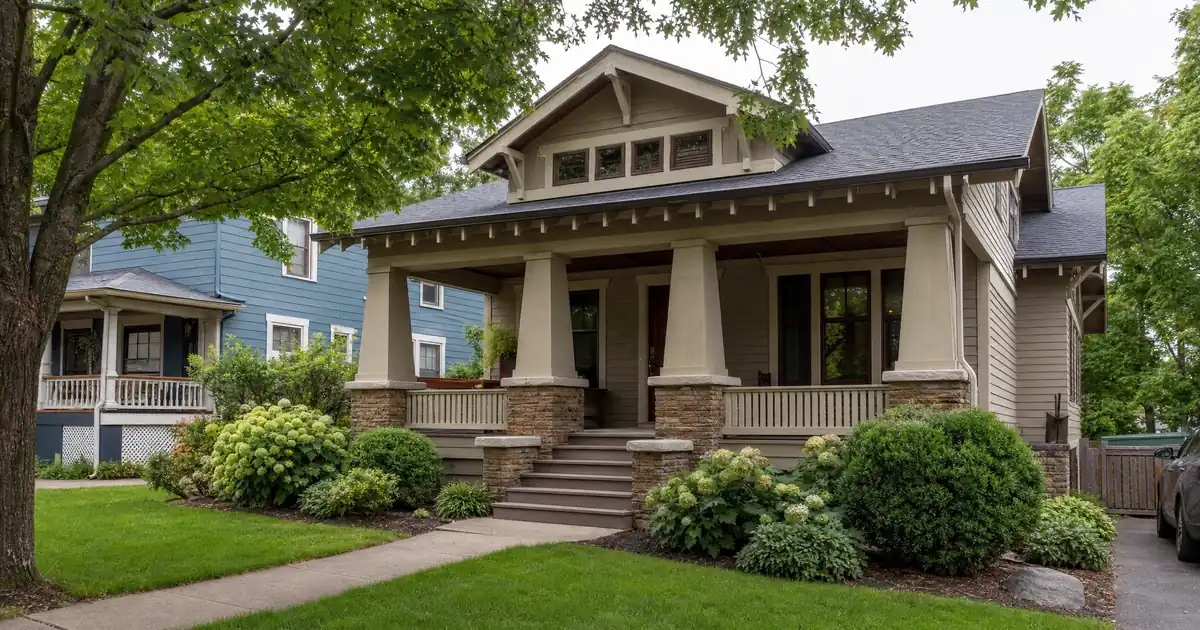
Rentvesting in the US — The Quick Read: Rentvesting means you rent the home you live in. At the same time, you buy an investment property somewhere else — often a market with lower prices or better rent-to-price ratios than your own city. The property you buy is never owner-occupied. So lenders treat it as a business-purpose investment loan, not a standard owner-occupant mortgage. That’s why DSCR financing tends to fit best. DSCR loans qualify you mainly on the property’s rental income, not your personal income. Rentvesting also doesn’t reset your eligibility for future first-time-homebuyer programs. And you don’t have to buy where you live.
Key Takeaways
- Rentvesting is a strategy, not a loan product — but the loan behind it is almost always classified as an investment/non-owner-occupied mortgage.
- Small investors, the group most rentvestors fall into, made up roughly 63% of all investor home purchases nationally, and bought at a median price of $330,000 versus the overall market median of $440,000 — evidence that “buy where it’s affordable” is a real, current pattern, not a niche idea (HousingWire).
- DSCR loans qualify primarily on the target property’s rent-to-payment ratio, not the borrower’s traditional employment income or personal debt-to-income math.
- Owning a rental property doesn’t cost you first-time-homebuyer status later — that test is about your primary residence, not your investment portfolio.
- Leverage, credit, and reserve requirements shift depending on whether the property is a standard long-term rental, a short-term rental, or a cash-out refinance — they are not one-size-fits-all. Exact terms depend on the lender’s guidelines, property type, leverage, and a full review of the borrower’s file.
Key Terms Defined
DSCR (debt service coverage ratio) — This ratio compares a property’s monthly rental income to its monthly PITIA (principal, interest, taxes, insurance, and any association dues). A ratio of 1.00 means the rent covers the payment exactly. It says nothing about repairs, vacancy, or management costs.
DSCR Calculator
Run the numbers in your market
Rate source: Freddie Mac 30-yr average via FRED® — Federal Reserve Bank of St. Louis · effective Aug 13, 2026
Prefilled with local estimates — enter your own rent or nightly figures, taxes, insurance, and HOA for a more accurate picture.
Program parameters update from Lendmire’s centralized guideline source. Taxes and insurance are editable estimates.
As of Aug 13, 2026 · General Freddie Mac market benchmark, not a Lendmire loan offer. Rent, nightly rate, occupancy, taxes, and insurance are editable estimates. Short-term rental figures are estimates only and vary significantly by season, property type, management approach, and local short-term-rental rules — confirm local regulations before relying on them. Qualifying income for short-term rentals varies by program — some use appraisal market rent, others use documented STR history or projections — and is confirmed in underwriting. Not a Loan Estimate, approval, or commitment to lend. Program availability and eligibility are subject to lender guidelines, credit approval, property review, and underwriting.
PITIA — This is the full monthly housing bill on a mortgage: principal, interest, taxes, insurance, and association dues, if you have them. It’s the bottom number in the DSCR calculation.
Non-QM (non-qualified mortgage) — This is a category of home loans, including most DSCR products, that sit outside the standard “qualified mortgage” rules built around personal income paperwork.
Business-purpose loan — This is a mortgage on a property the borrower won’t live in. Lenders make it for investment, not personal housing. This label is what lets a lender underwrite the loan based on the property’s income instead of the borrower’s.
LTV (loan-to-value) — This is the loan amount shown as a percentage of the property’s purchase price or appraised value. An 80% LTV purchase means you put 20% down. Every figure here changes by lender and program — guidelines, property type, leverage, and credit profile all play a role.
Rentvesting vs. Renting-Only vs. Traditional Homeownership vs. House Hacking
Rentvesting sits in a specific spot on the spectrum. You keep the flexibility of renting where you live. But you take on landlord duties and an investment loan somewhere else. The table below lines it up against the three strategies people most often confuse it with.
| Factor | Rentvesting | Renting Only | Traditional Homeownership | House Hacking |
|---|---|---|---|---|
| Upfront cost | Investment down payment, own market | Security deposit only | Owner-occupant down payment | Owner-occupant down payment |
| Flexibility to relocate | High — you’re a tenant locally | Highest | Low — tied to one home | Low — you live in the property |
| Landlord duties | Yes, remotely | None | None | Yes, on-site |
| Typical loan type | Investment/DSCR | N/A | Conventional/FHA/VA | Owner-occupant (2-4 unit) |
| Tax treatment | Schedule E on the rental | N/A | Primary-residence rules | Mixed — owner unit vs. rental units |
Rentvesting comes down to one split. Your personal housing decisions run on one track. Your investment decisions run on another. That split is also what trips people up on financing, because lenders underwrite the two tracks in completely different ways.
How Underwriting Actually Treats a Rentvested Property
A lender always classifies a rentvested property as non-owner-occupied. That single label changes how the lender documents and prices the file, starting with the very first application question.
The occupancy box on the application drives everything that follows — pricing, down payment, and how the file gets documented. A genuine rentvestor answers it honestly: investment property, not a primary residence, because they rent their own home somewhere else. There’s no gray area here to manage. That’s actually a structural advantage over borrowers trying to game the occupancy question.
DSCR loans are built for non-owner-occupied investment properties. Lenders review them differently than a standard owner-occupied mortgage because they count as business-purpose investor loans.
That different review comes down to one thing: the property’s income drives the decision, not the borrower’s. DSCR compares monthly gross rent to monthly PITIA. A ratio above 1.00 means the rent covers the payment with room left over on paper. It does not mean the property is cash-flow positive once you factor in repairs, vacancy, management fees, utilities, and capital expenses. Those costs sit outside the DSCR math entirely. Newer rentvestors often make one common mistake: they assume a clean ratio means “the property makes money.”
To document the income figure, lenders use the same appraisal tools that conventional lending uses — borrowed just for their appraisal function, not their agency eligibility rules. The Fannie Mae Selling Guide describes two standard forms an appraiser uses to set market rent: the Single-Family Comparable Rent Schedule (Form 1007) and the Small Residential Income Property Appraisal Report (Form 1025). Fannie Mae’s own documentation for Form 1007 confirms the form’s purpose: it gives the lender an independent market-rent figure, not the borrower’s leasing pitch. Across the network, DSCR files generally compare that appraised market-rent figure against the actual lease (or trailing short-term rental income, where it applies). The lender typically uses whichever number is lower.
Leverage, credit, and reserves round out the file. None of these get replaced by a strong DSCR ratio — a rentvestor still has to clear each test on its own. More on those numbers below.
Tax treatment runs on a totally separate track. Rental income and losses flow through Schedule E on your personal return. This is subject to passive-activity rules and IRS record-keeping requirements. So keep clean records, and talk to a qualified tax professional before you assume any deduction applies to your situation.
The Financing Structures Available to Rentvestors
Most rentvested purchases land somewhere between 75% and 80% LTV — that’s 20% to 25% down — on a standard DSCR program. Select high-leverage options reach 85% LTV for borrowers with a 700-plus credit score. Coverage requirements, credit floors, and property eligibility vary quite a bit by structure, and it helps to know where each one bends. Final terms depend on lender guidelines, property type, leverage, and the borrower’s full credit picture.
Purchase leverage and credit. Some parts of the network go as low as a 620 credit floor. But most programs are built around 660, and the strongest leverage tiers open up around 700-plus. A bigger down payment lowers the monthly obligation and can lift the DSCR ratio. But it never overrides a credit floor or a leverage cap. The strongest files clear both tests — the equity test and the rental-coverage test — not just one.
Cash-out refinancing. Say you already own a rental and want to pull equity for your next rentvesting purchase. You’re generally looking at a ceiling near 75% LTV, with roughly six months of seasoning as the common expectation across the network. If you’re weighing whether to tap an existing property to fund a new one, read Lendmire’s breakdown of when it makes sense to refi a rental property before you decide.
Coverage ratio floors. A DSCR of 1.00 is where select programs start — it’s a floor for specific programs, not a universal industry rule. Stronger ratios typically unlock better pricing and leverage. Some lenders in the network will consider files below 1.00, but leverage and terms adjust to match.True no-ratio qualification — where no coverage ratio is calculated at all — is available through select lenders in the network, generally for borrowers who already own a primary residence, with leverage and terms adjusted to match and every file subject to lender guidelines.
Short-term rentals. STR-financed rentvesting purchases generally top out at 75% LTV. Refinance and cash-out deals cap closer to 70%. Short-term rentals qualify at a 1.00 coverage threshold on purchase and refinance at reduced maximum leverage, and require a 12-month income history or market data report at most lenders. Lendmire’s DSCR loan guidance for Airbnb-style properties covers this in more depth.
Loan sizes and terms. Standard programs generally run up to $3,000,000. Loans above $2,500,000 typically hold to 30-year fixed structures. Reserves vary by lender, leverage, loan size, and transaction type — commonly landing around six months of PITIA. Conservative rate-and-term files under $1,500,000 at modest leverage can sometimes skip reserves entirely, while loans above that threshold often step up to around nine months. The 30-year fixed is the backbone of most files. But extended 40-year terms, interest-only periods, and ARM structures are available through select lenders for investors who want them.
Where financing doesn’t stretch. Manufactured homes (single- and double-wide), log homes, and barndominiums fall outside these DSCR programs entirely. They’re not “harder to finance” — they’re simply not offered. Investment-property HELOC lines cap at $500,000 total, with no higher tier above that. A handful of states — Connecticut, Florida, Illinois, and New Jersey — carry overlays that generally cap purchase LTV near 75% and loan amounts around $2,000,000.
Say you want to fund a down payment using equity from an existing property, rather than doing a straight cash-out refinance. It’s worth comparing what banks offer home equity loans on rental property against taking out a home equity loan to buy a rental property. Both paths solve the same problem in different ways. The right choice depends on how much equity you have and how your new purchase is structured.
Where the General Rule Breaks
The idea that DSCR loans qualify you on property income holds true most of the time. But a handful of situations bend that rule in ways worth knowing before you assume the standard playbook applies.
Rentvesting doesn’t reset your first-time-homebuyer clock. HUD’s governing definition, codified at 24 CFR 92.2, sets a three-year lookback tied specifically to principal residence ownership — not any real estate ownership. So a rentvestor who has only ever owned investment property, and never a home they lived in, can still qualify as a first-time homebuyer under that definition when they eventually buy a place to call home. This is probably the single most underused fact for renters weighing whether to wait and save or buy an investment property now.
Cash-out proceeds have to stay business-purpose. DSCR files skip personal ability-to-repay paperwork because the loan is classified for business use. If cash-out proceeds from a rental refinance end up funding personal spending rather than your next investment purchase, that use can undercut the business-purpose classification the file was built on. Keep proceeds tied to investment activity — your next down payment, renovations on another rental, portfolio growth — and the file stays clean.
Short-term rentals get documented differently than long-term leases. Instead of pulling a single lease amount, STR files generally weigh trailing income history against the appraiser’s market-rent opinion. The hosting-history requirement (roughly 12 months) exists for a simple reason: projected income on a brand-new listing is harder to verify than a track record.
Sub-1.00 coverage doesn’t mean no financing exists. Select lenders in the network will consider DSCR files where the rent doesn’t fully cover the payment on paper. But that flexibility comes with a trade-off — adjusted leverage and terms. Lower LTV, stronger credit, or extra reserves are the common trade-offs. Treat this as an option to discuss with a broker, not a guaranteed path.
A Worked Example: Running the Ratio on a Rentvested Property
Picture a rentvestor comparing two similarly priced rentals in two different markets, each listed near $300,000. Using modeled assumptions rather than actual lease terms, Property A’s expected market rent produces a coverage ratio near 0.94. Property B’s expected rent produces a ratio closer to 1.20.
At 80% LTV, both properties clear standard leverage and credit requirements on paper. But Property A’s sub-1.00 modeled coverage would likely route the file toward the network’s sub-1.00 structures. That means reduced leverage, stronger credit, or added reserves. Property B’s 1.20 ratio would likely qualify on a standard program instead, opening up pricing and leverage advantages that Property A can’t reach. Neither ratio alone tells the investor whether the property actually cash-flows once vacancy, maintenance, and management get factored in — that’s a separate calculation the DSCR number doesn’t cover. These specifics depend on lender guidelines and a full review of property, leverage, and credit.
Lendmire’s DSCR versus conventional investment loan comparison walks through how that coverage math stacks up against a personal-income-based loan, for investors also weighing a conventional route.
In practice, files with heavy short-term-rental exposure often come in tight on long-term-rent assumptions. But they clear comfortably once trailing twelve-month hosting income gets factored in. That’s why pulling both a long-term rent comp and an actual STR income history before you submit a file tends to produce a cleaner underwriting outcome than relying on one number alone.
Is Rentvesting Right for You?
Rentvesting tends to fit an investor who values flexibility over where they live more than building equity in their own home right now. It also fits someone who has enough savings to fund an investment down payment separately from their monthly rent. It tends to fit less well for someone who needs the forced-savings discipline of a mortgage payment, or who isn’t ready to manage a property they’ve never lived in, even remotely.
Ask yourself a few honest questions before you commit. Can the down payment come from savings without touching an emergency fund, or would it require pulling equity from an existing property? Is there a market where rent-to-price ratios support a coverage ratio near or above 1.00 on realistic rent assumptions? Are you ready for landlord responsibilities on a property in another market — screening tenants, handling maintenance calls, budgeting for vacancy — without living nearby? And does your plan account for the fact that DSCR lender review and your personal cash flow are two different tests, both of which need to work?
Short-term rental rules can vary by city, county, HOA, and property type. So confirm local rules before you rely on projected STR income to underwrite a rentvesting purchase.
Lendmire (NMLS# 2371349) arranges DSCR investor loans through a wholesale network spanning 40 states plus Washington, D.C. Lendmire works with investors weighing exactly this kind of decision: whether a given rental market, property, and personal financial picture line up for a DSCR structure or a different financing path entirely. For a fuller breakdown of how the qualification model works end to end, check out Lendmire’s complete DSCR loans guide. And if you’re weighing whether to buy investment property before ever owning a primary residence, Lendmire’s piece on whether to buy a rental property before your first home covers that decision directly.
Loan approval is never guaranteed, and nothing here is a commitment to lend. Every scenario described here depends on lender approval and on the borrower’s, property’s, and program’s specific guidelines. This article is general information only. It isn’t financial, legal, or tax advice — talk with a qualified professional before you make a purchase, refinance, or tax decision.
If you’re comparing a rentvesting purchase against other financing paths and want to see how the numbers actually work, Lendmire can help you compare DSCR loan options based on the property’s income, your credit profile, available leverage, and your broader investment goals. Reach Lendmire at 828-256-2183 or request a quote to start that conversation.
Frequently Asked Questions
Is rentvesting legal in the US?
Yes. There’s nothing illegal about renting your own home while owning investment property elsewhere. It’s simply a financing and lifestyle strategy, not a regulated program. The legal exposure only shows up if a borrower misrepresents intended occupancy on a loan application — that’s a separate issue from honestly declaring a property as an investment from the start.
Do I need a special type of loan to rentvest?
Not a special loan exactly, but your investment property’s loan will be classified and priced differently than a standard owner-occupied mortgage. Because the property is non-owner-occupied, lenders underwrite it as a business-purpose investment loan. DSCR programs — which qualify you on the property’s rental income rather than your personal income paperwork — are often the more natural fit. This is especially true for self-employed borrowers or anyone with income that’s harder to document conventionally.
Can I still use first-time-homebuyer programs later if I rentvest first?
Generally, yes. HUD’s first-time-homebuyer test looks at whether you’ve owned a principal residence in the past three years, not whether you’ve owned investment property. So someone who has only ever owned rentals, and never a home they lived in, can typically still qualify as a first-time homebuyer when they eventually buy a primary residence.
What happens if my rental property sits vacant while I’m renting elsewhere?
Vacancy is a real risk that sits entirely outside the DSCR calculation, since that ratio is based on the property’s rent-to-payment math, not actual collected income month to month. Investors should budget separately for vacancy periods. A strong DSCR on paper doesn’t guarantee the unit stays occupied.
Is a DSCR loan the only way to finance a rentvested property?
No. Some investors use a cash-out refinance or a home equity line on an existing property to fund the down payment on the new one. Then they finance the purchase itself with a DSCR loan or another investment-property product. The right combination depends on how much equity is available, the target property’s coverage ratio, and your credit profile.
Program availability, loan terms, and eligibility depend on lender guidelines, credit approval, property review, and full underwriting. This article is educational and is not a loan offer or commitment to lend.
About Lendmire
Lendmire is a non-QM mortgage broker (NMLS# 2371349) that arranges DSCR financing for real estate investors in 41 markets — 40 states plus Washington, D.C. Lenders underwrite these deals mainly on property cash flow rather than personal income paperwork. That structure suits self-employed buyers and entity-owned portfolios well. Lendmire places loans through wholesale investor lenders; it is not a direct lender. Scotsman Guide named Lendmire a Top Mortgage Workplace in both 2025 and 2026.
Get Started
Ready to find the right loan for you?
In about 30 seconds you can review financing options available for your home or investment property. No commitment required.
Informational only. Not a Loan Estimate, approval, or commitment to lend. Program availability and eligibility are subject to lender guidelines, credit approval, property review, and underwriting.
References
1. HousingWire — “Investor Home Purchases 2025”
2. Fannie Mae Selling Guide — Rental Income (B3-3.8-01)
3. Fannie Mae — Form 1007 Documentation
This article is part of Lendmire’s DSCR loan program — full qualification details, guidelines, and scenarios live on the program page.
Related reading: Renters Can Be Real Estate Investors · Can You Get A DSCR Loan While Renting? · Should I Buy A Rental Property Before My First Home?
Brandon Miller
Founder & CEO, Mortgage Loan Originator, Lendmire LLC
- Mortgage Loan Originator · NMLS# 1129696 · Verify on NMLS Consumer Access
- North Carolina Real Estate Broker · License# 343312 · Verify on NCREC
- North Carolina Insurance Producer · License# 19053198 · Property, Casualty, Life, Health · Verify on NAIC SBS
- Lendmire LLC · Firm NMLS# 2371349 · Verify firm licensure
Legal disclosures. Lendmire (NMLS# 2371349) is a state-licensed mortgage brokerage that arranges financing through wholesale lender relationships. Lendmire is not a direct lender, depository institution, or registered financial advisor. The discussion above is general informational content about real estate financing — it is not financial, legal, or tax advice, and readers should consult licensed professionals for guidance on their individual circumstances. Loan inquiries are subject to lender underwriting; this article does not represent a commitment to lend. Loan terms, rates, and qualification standards vary by borrower, property, and state, and are subject to change at any time. Equal Housing Opportunity. NMLS Consumer Access: nmlsconsumeraccess.org.