
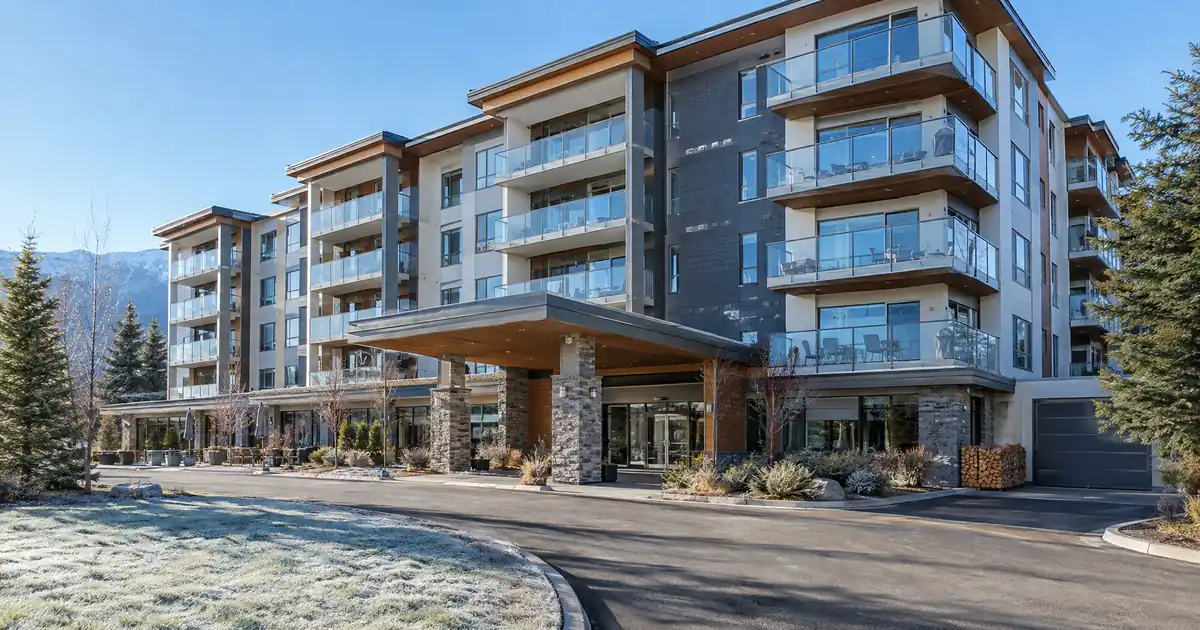
The Quick Read: A condotel is financed through a non-agency route, and a DSCR short-term rental loan is the investor path built for it. Through select lenders in Lendmire’s wholesale network, the file qualifies primarily on property-level rental income covering the payment, subject to lender guidelines. The building’s rental program and project documents matter as much as the borrower.
- Purchase leverage on short-term rental collateral tops out at 75% LTV, and refinance and cash-out run up to 70%.
- Expect a 640+ credit score and about 12 months of host experience on most files.
- Coverage starts at 1.00 on both purchases and refinances in the programs that fit this property.
- Loans run up to $3,000,000 on standard programs.
- The project (hotel operation, rental pool, HOA financials) is reviewed alongside the borrower.
What Makes a Property a Condotel?
A condotel is a deeded condominium unit inside a building that runs like a hotel. The title looks like any condo. The operating agreement is what changes the file.
Short-Term Rental Calculator
Run the STR numbers in your market
Rate source: Freddie Mac 30-yr average via FRED® — Federal Reserve Bank of St. Louis · effective Oct 15, 2026
Prefilled with starting assumptions — enter your nightly rate, occupancy, taxes, and insurance for a more accurate picture.
Short-term rental income is documented with a 12-month history or a market data report. Program parameters update from Lendmire’s centralized guideline source.
As of Oct 15, 2026 · General Freddie Mac market benchmark, not a Lendmire loan offer. Nightly rate, occupancy, taxes, and insurance are editable estimates. Qualifying income for short-term rentals varies by program — some use appraisal market rent, others use documented STR history or projections — and is confirmed in underwriting. Not a Loan Estimate, approval, or commitment to lend. Program availability and eligibility are subject to lender guidelines, credit approval, property review, and underwriting.
Look for these traits:
- A front desk and housekeeping.
- A central reservation system.
- A rental program or rental pool sitting on top of the deed.
- Governing documents that cap owner use.
One point trips up buyers: a condotel is not a timeshare or fractional interest. The buyer owns a unit with normal title. Lendmire’s piece How to Get a Short-Term Rental Loan on a Condotel Airbnb covers how that structure plays out on a listing.
A second point matters for the file. A condo in a residential building that an owner lists on a booking platform is a short-term rental condo, not a condotel. The financing path differs. Project documents decide which one a reviewer sees, not the listing photos.
Why Do Standard Mortgages Stop at the Door?
Agency loans exclude these projects whatever the borrower brings. Fannie Mae’s Selling Guide lists projects that operate as hotels or motels among its ineligible types. Freddie Mac’s Guide lists condominium hotels and similar transient housing the same way.
That is the whole contrast. A strong pre-approval does not fix a project-level exclusion. Investors find this out late, often after a conventional pre-approval has already been issued. DSCR programs fill the gap because they review the property and the project directly.
How Does DSCR Underwriting Treat a Condotel?
DSCR divides the property’s qualifying rental income by the full housing payment: principal, interest, taxes, insurance, and association dues. For a condotel, the income side is short-term rental income, not a long-term lease. The loan is reviewed primarily on property-level rental income covering the payment, subject to lender guidelines.
Here is how the deal works, step by step.
1. Confirm the project type. The reviewer wants to see the front desk, the rental program, and deeded units.
2. Collect project documents. Expect the condo questionnaire, HOA budget, master insurance, the rental-pool or hotel-management agreement, and the declaration and bylaws. Incomplete questionnaires are a common reason these files stall.
3. Choose the income evidence. Trailing 12-month statements from the hotel operator or booking platform are the cleanest. A market-based projection, such as an AirDNA-type report, is the fallback when there’s no history. A long-term rent appraisal is a third option. Platform statements, booking history, bank deposits, and tax records are the usual documentation.
4. Order the appraisal. The value appraisal on a condo unit follows a condo form. The standard rent schedules, Form 1007 and Form 1025, are built around monthly lease rents. They don’t fit nightly income. An appraisal vendor, Class Valuation, argues the 1007 can understate short-term rental performance and produce an artificially low ratio.
5. Calculate coverage. Qualifying income over PITIA gives the ratio. Across the wholesale network, the programs that fit this property start at 1.00 on both purchases and refinances.
6. Check permissibility. Short-term rental rules can vary by city, county, HOA, and property type, so investors should confirm local rules before relying on projected rental income.
7. Close in the right vesting. Business-purpose loans often allow LLC vesting, subject to lender program eligibility. Borrowers usually sign a business-purpose affidavit and a short-term rental rider.
How Do Lenders Count the Income?
Guidelines differ on source hierarchy and haircuts, and that difference moves the ratio more than anything else in the file. Across the network, some lenders default to a market projection when no actual rent exists. Others take the lowest figure when income is documented from more than one source. Many discount a projection before counting it.
| Income source | What you supply | What can go wrong |
|---|---|---|
| Operator statements | Trailing 12 months | Short history, gaps |
| Platform history | Statements, deposits | Self-managed mismatch |
| Market projection | Third-party report | Discounted or capped |
| Long-term rent appraisal | Appraiser’s schedule | Understates nightly income |
Securitization due-diligence exhibits show the same split in real files. A large national bank ABS-15G exhibit describes a file where the market-report figure divided by PITIA came in below 1.0, and where the guideline fell back on that report when no actual rent was provided. These are redacted, lender-specific illustrations, not a rule for every program.
What Does a Worked Coverage Test Look Like?
Run the numbers on a condotel purchase at 75% LTV with 25% down. Assume the operator’s trailing statements support qualifying income that covers the full payment, taxes, insurance, and dues at roughly 1.15x. That clears the 1.00 floor in the programs that fit this property. These are modeled assumptions, not market data. Exact terms depend on the lender’s guidelines, property type, leverage, and a full review of the borrower’s file.
Now change one input. Say the HOA dues step up after a budget vote, and coverage slips toward 0.95x. The file now sits below the floor. The options a lender may review:
- A larger down payment, which lowers the payment and can lift the ratio. It never erases leverage caps, credit floors, or reserve rules.
- A different income method, if the documentation supports one.
- A select-lender path below 1.00, with leverage and terms adjusted.
- A different unit with lower dues.
Qualification stays subject to lender guidelines, credit approval, and property review.
One caution on reading the ratio. Clearing 1.00 is not positive cash flow. DSCR compares rent to PITIA only. Repairs, vacancy, management, utilities, furnishing, and capex all sit outside it.
What Are the Network Parameters for Short-Term Rental Collateral?
Most programs that handle this property type look like this. These are typical ranges from select wholesale-network guidelines, subject to lender guidelines and not a commitment to lend.
| Item | Typical range |
|---|---|
| Purchase LTV | Up to 75% |
| Refinance / cash-out LTV | Up to 70% |
| Credit score | 640+ |
| Coverage floor | 1.00 purchase / 1.00 refinance |
| Host experience | About 12 months |
| Loan size | Up to $3,000,000 |
Reserves vary by lender, leverage, loan size, and transaction type. Around six months of PITIA is common. Larger balances typically step up. Condotel files can draw heavier scrutiny than a standard rental, so plan liquidity with room. Reserves documentation, meaning statements that show the funds are sourced and seasoned, belongs in the initial package.
Market surveys of condotel programs report tighter leverage and stricter overlays than standard rentals, and the spread between lenders is wide. That spread is the reason to compare several programs instead of one.
Term structures start with the 30-year fixed. Extended terms and interest-only periods are available through select lenders, and ARM structures exist for investors who want them. Manufactured homes, log homes, and barndominiums are not offered in these programs.
Key Terms Defined
- Condotel: A deeded condo unit in a hotel-style building with a rental program or pool.
- Rental pool: An arrangement where owners’ unit revenue and expenses are combined and split by an assigned share.
- DSCR: Qualifying rental income divided by the full housing payment.
- PITIA: Principal, interest, taxes, insurance, and association dues.
- Non-warrantable: A project that fails standard agency eligibility.
- Project review: The lender’s check of the building’s documents and financial health.
Where the General Rule Breaks
Voluntary versus mandatory pooling. A voluntary rental program reads very differently to underwriting than profit-sharing forced by the bylaws. Mandatory pooling can make income easier to document because the operator reports it. It also removes owner control.
The securities angle. Law-firm commentary on condo hotels and rental pools explains that a unit sold with a rental pool can be treated as an investment contract, depending on how the arrangement is structured and what was said about returns during the sale. The commentary is dated, so treat it as background. The practical lesson holds: the pool agreement is the most important diligence document, for both legal structure and income counting.
Mislabeled projects. A condo flagged as a condotel because it appears on booking sites can be classified on how it operates. Get the classification confirmed early.
Projection versus history. Without operating history, expect a discount on any projection.
Commercial space. The agency benchmark caps commercial space at 35% of a project. DSCR programs set their own limits, so the figure varies.
Owner-use limits. Personal-use caps in the operating agreement can affect how the property is classified.
DSCR vs. conventional financing
There are two common ways to finance an investment property, and they qualify you differently — here’s how investors weigh them.
Why investors choose it
- Qualifies on the property’s rental income — no personal tax returns, W-2s, or pay stubs needed to document income.
- No personal debt-to-income ceiling to clear, so existing mortgages and obligations don’t cap your borrowing the same way.
- Can be closed in an LLC, keeping the property inside a business entity.
- Built for scaling — not held to the limit on number of financed properties that conventional financing applies.
- Underwriting centers on the deal: generally qualifies when the rent covers the payment, a 1.00x coverage ratio being a common baseline (confirmed in underwriting).
- Designed specifically for investment property, including long-term and, where the program allows, short-term rentals.
Where it’s strong
- Often the lowest ongoing financing cost for a buyer who fully qualifies on personal income — a fit for a first property or a cost-first purchase.
Trade-offs for investors
- Requires full personal income documentation and must fit within a debt-to-income limit — salary, existing debts, and other mortgages all count.
- Typically held in your personal name rather than a business entity.
- Caps how many financed properties you can carry, which can become a ceiling as a portfolio grows.
- Evaluates you as a borrower as much as the property, which usually means more paperwork.
How investors usually choose: a first or single property often optimizes for the lowest financing cost; portfolio builders often optimize for leverage, vesting in an LLC, and scaling past conventional caps. The right answer depends on your goals, the property, and current guidelines — both paths run through select lenders in Lendmire’s wholesale network, with eligibility and terms confirmed in underwriting.
What Does the Ratio Hide?
The lender’s number and the owner’s real cash flow are different things. Rental-pool splits and operator fees reduce what reaches the owner. Dues, furnishing, and utilities add cost. Investors should underwrite net income, not gross.
One BiggerPockets thread on a St. Pete condotel describes an owner who nets money passively while mortgage costs absorb much of the return. It is anecdote, not data. A file can pass on coverage and still leave thin cash flow after the operator’s cut.
How Does the Decision Look in Practice?
Work through three questions before an offer.
1. Does the project’s rental program and HOA financial picture hold up on paper?
2. Does documented or projected income clear the coverage floor at the leverage you plan to use?
3. Is the equity there, with reserves, to carry a thin first year?
If the answers are yes, a DSCR purchase fits. If the building is too restrictive, cash or another structure may be the cleaner route. Once the property has a track record, a refinance or cash-out at up to 70% on short-term rental collateral can fund the next acquisition.
For deeper reading, the complete DSCR loans guide explains how the loan works across property types. Tax treatment can depend on how the funds are used and how the property is held; investors should keep clear records and speak with a qualified tax professional before relying on any deduction.
If you are buying or refinancing a rental property and want to see how the numbers work, Lendmire can help you compare DSCR loan options based on the property income, credit profile, leverage, and investor goals.
Frequently Asked Questions
Can I use short-term rental income to qualify on a condotel?
Yes, through programs built for short-term rental collateral. Trailing operator or platform statements are the cleanest evidence. A market projection is the fallback when there’s no history, and lenders usually discount it. Qualification is subject to lender guidelines.
Can I close in an LLC?
Often, subject to lender program eligibility. Expect an entity document package, a business-purpose affidavit, and a short-term rental rider. Confirm vesting before you go under contract.
What if my coverage ratio is under 1.00?
Two things help. A larger down payment can lower the payment and lift the ratio. A select-lender path below 1.00 may also exist, with leverage and terms adjusted.
Does a pre-approval for a regular investment loan cover a condotel?
No. Project eligibility is separate from borrower approval. A conventional pre-approval can still end at the project review, which is why an early project-level check matters.
Does hotel-brand management alone disqualify a building?
Not automatically in the DSCR channel, but the rental-program terms and governing documents get reviewed closely. Verify with the lender before relying on it.
About Lendmire
Lendmire — NMLS# 2371349 — is a DSCR and non-QM mortgage brokerage with investor loan programs in 41 markets, including Washington, D.C. DSCR eligibility is commonly reviewed by the lender around property-level rent rather than personal income documentation, subject to lender guidelines, and the brokerage helps arrange financing for LLC-owned portfolios beyond conventional financed-property limits. Recognized by Scotsman Guide as a Top Mortgage Workplace in 2025 and 2026.
Investors focused on short-term rentals can review DSCR loans for Airbnb and short-term rentals.
Get Started
Ready to find the right loan for you?
In about 30 seconds you can review financing options available for your investment property. No commitment required.
Informational only. Not a Loan Estimate, approval, or commitment to lend. Program availability and eligibility are subject to lender guidelines, credit approval, property review, and underwriting.
References
1. Fannie Mae Selling Guide B4-2.1-03
3. Class Valuation: Appraisal Form 1007 and short-term rentals
4. Lexology: Are condo hotels making a comeback?
5. BiggerPockets: Investing in a condotel in St. Pete
This article is part of Lendmire’s short-term rental loan program — full qualification details, guidelines, and scenarios live on the program page.
Related reading: How to Finance a Permit-Capped Short-Term Rental With a Long-Term Backup · How to Refinance a Short-Term Rental for a Lower Payment · Putting 15% Down vs. 25% Down on a Short-Term Rental DSCR Loan
Brandon Miller
Founder & CEO, Mortgage Loan Originator, Lendmire LLC
- Mortgage Loan Originator · NMLS# 1129696 · Verify on NMLS Consumer Access
- North Carolina Real Estate Broker · License# 343312 · Verify on NCREC
- North Carolina Insurance Producer · License# 19053198 · Property, Casualty, Life, Health · Verify on NAIC SBS
- Lendmire LLC · Firm NMLS# 2371349 · Verify firm licensure
Compliance and disclosures. Lendmire (NMLS# 2371349) is a licensed mortgage broker and is not a direct lender, depository institution, financial advisor, or tax professional. Content in this article is general market analysis and educational information — not financial, legal, or tax advice for any specific situation. Lendmire does not guarantee loan approval; every transaction is subject to underwriting by the funding lender. Mortgage pricing and loan program guidelines are subject to change at any time without notice and vary by borrower characteristics, property type, and state regulations. Lendmire complies with Equal Housing Opportunity. Licensure verification: NMLS Consumer Access.