
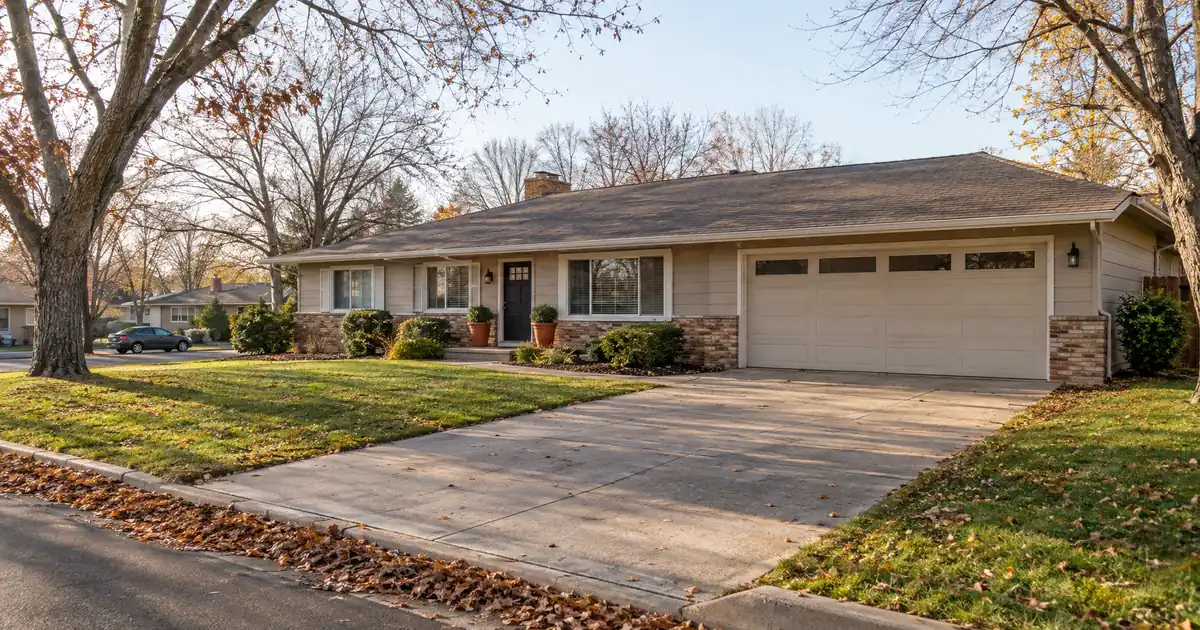
The Quick Read: Yes. A tenant-occupied package is the kind of collateral a portfolio DSCR loan is built for, because qualification rests on the pooled rent from the properties, and signed leases support that rent. The catch is that the rent credited is usually the lower of the in-place lease and the appraiser’s market rent, and every property is still valued on its own.
- Most 30-year portfolio programs in the wholesale network take 2 to 20 properties under one note, typically up to 80% LTV on a purchase or rate-and-term refinance, subject to lender guidelines.
- Coverage is tested on the pool, so stronger properties can offset weaker ones.
- Each property needs a lease or an appraiser-supported market rent.
- Cash-out on a portfolio loan stays at or below 75% of pooled value.
- Owner-occupied property, mobile homes, co-ops, mixed-use and commercial property are not eligible in the pool.
Lendmire is a DSCR-focused mortgage broker. It arranges these loans through select lenders in its wholesale network across 41 markets, including Washington, D.C. Lenders review and approve each file. Nothing here is a commitment to lend.
What “Portfolio” Means Here
A portfolio DSCR loan here means one note secured by several non-owner-occupied rentals, qualified on blended rent against blended debt. That is different from three other things people call by the same name: separate DSCR loans on each property, a loan a lender keeps on its own books, and a single-property loan on one rental.
Portfolio describes how many properties secure the loan, while DSCR describes how the loan is qualified. They are not opposites. You can have a DSCR loan on one property, and you can have a blanket loan on a package.
Across the network, two structures cover most tenant-occupied packages:
| Feature | 30-year portfolio DSCR loan | Rental portfolio term loan |
|---|---|---|
| Properties | 2 to 20 under one note | 5 or more properties or units |
| Loan size | Up to $5,000,000 (larger on review) | Up to $50,000,000 (larger on review) |
| Max leverage | Up to 80% purchase / rate-term | Up to 75% of value |
| Term | 30-year, interest-only available | 3, 5, 7 or 10-year fixed, balloon |
| Recourse | Guarantee typical | Recourse or non-recourse |
| Property types | SFR, 2-4 unit, condo, townhome | Adds small multifamily |
Loan floors differ too: roughly $300,000 for the first and $500,000 for the second. These are program ceilings and floors, not quotes. For the full picture of how DSCR loans work, see the complete DSCR loans guide.
Why Tenants in Place Help the File
The loan is reviewed primarily on property-level rental income covering the payment, subject to lender guidelines. A leased rental hands the lender evidence of that income. A vacant one asks the lender to rely on an opinion alone.
Every property in the pool still needs a lease or an appraiser-supported market rent. So a package with current leases tends to underwrite with fewer open questions than one full of expired or missing leases.
The coverage test is simple. Total rent used for lender review divided by total monthly obligation: principal, interest, taxes, insurance and any association dues. One strong property can carry a weaker one in that blend. Many select programs start at 1.00 on the pool. Stronger ratios open better pricing and leverage. A separate select-lender path takes coverage below 1.00, with leverage and terms adjusted.
One warning. Clearing 1.00 is not the same as positive cash flow. Repairs, vacancy, management, utilities and capital spending sit outside the calculation.
Which Rent Counts: The Lease or the Appraisal?
Usually the lower of the two. This is where tenant-occupied files surprise investors.
Each property gets its own appraisal and its own rent opinion. For a single-family rental, that opinion sits on a rent schedule. The Freddie Mac copy of the form says the lender uses it to get market rent from the appraiser, with adjustments only where comparables differ significantly from the subject. The Fannie Mae version, Form 1007, ends with a reconciliation of monthly market rent. It is a market opinion, not a copy of your lease. For two- to four-unit buildings, the appraisal report is Form 1025, per Fannie Mae’s appraisal forms page.
Those are appraisal forms. They tell you where the rent evidence lives. They do not set DSCR guidelines, which come from the program.
In practice, across the wholesale network:
- Lease below market: the lease usually counts. Rent used for lender review drops.
- Lease above market: market rent usually caps it. The extra adds nothing to the ratio.
- Month-to-month or expired lease: market rent usually governs, with the lease as support.
- Vacant unit: treatment varies by lender. Some credit market rent, some a reduced figure, some nothing.
Picture an investor with a four-property package. Three leases sit at or just under market. The fourth tenant pays well above what comps support. That fourth lease will not lift the ratio. The pool is tested on the lower figure, so the investor should plan on that number, not the rent roll total.
Where the Pool Gets Tested
The pool is tested twice: on coverage and on leverage.
Coverage is the blended test above. Leverage is measured against the sum of appraised values. Loan size is set against that aggregate, up to the structure’s ceiling. A portfolio purchase or rate-and-term refinance runs up to 80% on the 30-year structure and up to 75% on the term loan.
Cash-out is tighter. It never goes above 75% of pooled value on a standard rental. Inside the first six months of ownership, leverage is limited to 90% of total cost, then 100% from six to twelve months. A rate-and-term refinance carries no cost restriction.
A larger down payment lowers the payment and can lift coverage. It does not erase leverage caps, credit floors, reserve rules or property eligibility. The strongest files clear both tests: enough equity and enough rent.
Credit is reviewed too. The pool typically wants a 640 floor, with 680 or 720 on some structures. Some structures require a special-purpose entity, usually an LLC, subject to lender program eligibility. Recourse loans carry a personal guarantee. Non-recourse structures exist on the term loan, with the real estate as the main recourse and carve-outs for fraud and bankruptcy.
Reserves vary by lender, leverage and loan size. About six months of PITIA is common, and loans above $1,500,000 typically step up to about nine. On the term loan, reserves are held for taxes, insurance and capital expenditures.
What Documents Move a Leased Package
Documents decide how clean the review feels. For a tenant-occupied package, the lender will want:
- Signed leases for each unit
- A rent roll that reconciles to those leases
- Proof of rent payment or payment history
- Insurance and tax figures for each property
- Entity documents
- A package spreadsheet listing every property, rent and lease end date
The failure mode here is a rent roll that does not match the leases. A unit shows one rent on the roll and another on the lease. The underwriter has to choose, and the lower figure usually wins. Reconcile the roll to the leases before the file goes in. Then compare lease rents to likely market rents. If a lease runs well above market, assume the appraisal will cap it.
Appraisal access is the other friction point. Each property is valued separately, and tenants have to let the appraiser in. Coordinate scheduling through the seller or property manager early.
| Occupancy status | What the lender looks at | Gather |
|---|---|---|
| Leased | Lease vs. market rent | Signed lease, payment history |
| Month-to-month | Market rent, lease as support | Expired lease, payment history |
| Below market | Lease rent | Lease, renewal terms |
| Vacant | Market rent or reduced credit | Listing history, appraisal |
Operator note: on packages with mixed occupancy, the file reads best when each property has its own one-line explanation. Leased, month-to-month, vacant, why. Underwriters spend less time guessing when the file answers the question before it is asked.
Blanket Versus Separate Loans
A blanket structure gives you one closing, one servicer and one payment. It also ties the properties together.
| Factor | One portfolio note | Separate loans |
|---|---|---|
| Closings | One | One per property |
| Coverage test | Pooled | Each property alone |
| Weak property | Can be offset by strong ones | Must stand on its own |
| Default exposure | Cross-collateralized | Contained per loan |
| Selling one property | Release terms apply | Pay off that loan |
Pooling can let a weaker-coverage property join a package it could not carry alone. A rental below 1.00 inside the pool is a pooled-coverage fact, not a separate program. Underwriting tests the pooled coverage, the leverage and the terms, subject to underwriting. Leverage caps and credit floors still apply.
The tradeoff is cross-collateralization. Vacancy in one unit lowers the blended ratio for the whole package. A sale of one property goes through the loan documents’ release terms. Partial releases, substitutions and the sale of one property out of the pool follow those documents and the lender’s release terms, and the release price runs above the property’s allocated balance. The remaining portfolio must still cover its debt service. Read those terms before signing, not after.
On the term loan, prepayment runs on yield maintenance. Assumption terms exist too: a one-time purchaser assumption on loans above $5,000,000, subject to underwriting and an assumption fee, and on an exception basis below that.
Lendmire’s piece How to Buy a Tenant-Occupied Rental With a DSCR Portfolio Loan covers the purchase side in more detail.
Edge Cases That Trip Files
Rent-controlled or stabilized units. The legal registered rent can control instead of a market opinion. Form 1025 even asks whether a property is subject to rent control, per Fannie Mae’s form.
Short-term rentals. The monthly rent schedule is built from comparable monthly leases. Nightly rate times thirty is not a substitute. STR files run on a separate path: purchase up to 75% LTV, refinance around 70%, cash-out 70%, with a 640+ score and about 12 months of hosting history. Short-term rental rules can vary by city, county, HOA and property type, so investors should confirm local rules before relying on projected rental income. Terms depend on the lender’s guidelines, the property type, the leverage, and a full review of the credit profile.
Mixed property types. Single-family and two- to four-unit rent evidence come on different appraisal forms. Condos, townhomes, SFRs and small multifamily can sit together on the term loan. Mixing rules vary by structure.
Ineligible collateral. Owner-occupied property, mobile homes, co-ops, mixed-use and commercial property are not eligible in the pool. Manufactured homes, log homes and barndominiums are not offered in the network’s DSCR programs at all.
Multi-market packages. The term loan allows properties in several markets or states under one loan, through multi-market cross-collateralization. A few places sit outside the portfolio footprint, so confirm eligibility early.
The Investor Decision
Decide on three questions.
1. Does the pooled rent clear the pooled obligation using the lower-of figures? Rebuild the rent roll on that basis, not the lease total.
2. Does the package fit one structure? Two to twenty properties with SFR, 2-4 unit, condo or townhome collateral points to the 30-year structure. Five or more rentals with a larger balance or small multifamily points to the term loan.
3. Can you live with the linkage? One note means one default exposure and release mechanics on every sale.
An investor with $1.2 million of equity-light, mixed-occupancy rentals might find separate loans cleaner. Another with a seller’s package of five leased rentals at similar rents may find one note cleaner. It is a genuine toss-up on some packages. The pooled test favors the blend. The release terms favor separation.
Tax treatment varies; consult a qualified professional.
Key Terms Defined
Portfolio (blanket) DSCR loan: One note secured by several non-owner-occupied rentals and qualified on pooled rent.
Pooled coverage: Total rent used for lender review divided by total monthly obligation across every property in the package.
Market rent: The appraiser’s opinion of what a property would rent for, built from comparable rentals.
Cross-collateralization: Each property in the pool secures the whole loan, not just its share.
Release price: The amount that must be paid down to remove one property from the pool.
Seasoning: The ownership period that limits cash-out proceeds and leverage after a purchase.
Frequently Asked Questions
Do tenants have to be in place for a portfolio DSCR loan?
No. Every property needs a lease or an appraiser-supported market rent, so vacant units can sit in the pool. Treatment of vacancy varies by lender, and a vacant unit usually leans on market rent alone. Current leases tend to make the file cleaner.
Will my above-market leases raise my coverage ratio?
Usually not. Programs typically credit the lower of the in-place lease and the appraiser’s market rent, so rent above market is capped. Below-market leases pull the credited rent down to the lease.
Does one weak property sink the whole package?
Not automatically. Coverage is measured on the pool, so stronger properties can offset weaker ones. The pooled coverage, leverage and terms are what underwriting tests, subject to underwriting.
Can I pull cash out of a tenant-occupied portfolio?
Yes, on seasoned properties, up to 75% of pooled value on standard rentals and never above the structure’s own ceiling. Inside the first six months, cash-out is capped by the seasoning rule.
Can I sell one property later?
Usually through release terms in the loan documents. The release price runs above the property’s allocated balance, and the remaining portfolio must still cover its debt service. Read those terms before closing.
If you are buying or refinancing a rental property and want to see how the numbers work, Lendmire can help you compare DSCR loan options based on the property income, credit profile, leverage, and investor goals. Reach the team at 828-256-2183 or request a quote.
About Lendmire
Lendmire, NMLS# 2371349, is a mortgage brokerage focused on investor financing, arranging DSCR loans in 40 states plus Washington, D.C. — 41 markets total. Qualification is based on the property’s income rather than personal income documentation, subject to lender guidelines, making it a fit for LLC-held rentals and scaling portfolios. Scotsman Guide named Lendmire a Top Mortgage Workplace in both 2025 and 2026.
Get Started
Ready to find the right loan for you?
In about 30 seconds you can review financing options available for your investment property. No commitment required.
Informational only. Not a Loan Estimate, approval, or commitment to lend. Program availability and eligibility are subject to lender guidelines, credit approval, property review, and underwriting.
References
1. Freddie Mac Form 1000 / Fannie Mae Form 1007
This article is part of Lendmire’s DSCR loan program — full qualification details, guidelines, and scenarios live on the program page.
Related reading: Landlord at Five Doors vs Operator at Twenty on a Portfolio DSCR Loan · Recourse vs Non-Recourse DSCR Portfolio Loan for a Rental Owner · How to Refinance a Rental That Doesn’t Qualify for a DSCR Loan
Brandon Miller
Founder & CEO, Mortgage Loan Originator, Lendmire LLC
- Mortgage Loan Originator · NMLS# 1129696 · Verify on NMLS Consumer Access
- North Carolina Real Estate Broker · License# 343312 · Verify on NCREC
- North Carolina Insurance Producer · License# 19053198 · Property, Casualty, Life, Health · Verify on NAIC SBS
- Lendmire LLC · Firm NMLS# 2371349 · Verify firm licensure
Legal disclosures. Lendmire (NMLS# 2371349) is a state-licensed mortgage brokerage that arranges financing through wholesale lender relationships. Lendmire is not a direct lender, depository institution, or registered financial advisor. The discussion above is general informational content about real estate financing — it is not financial, legal, or tax advice, and readers should consult licensed professionals for guidance on their individual circumstances. Loan inquiries are subject to lender underwriting; this article does not represent a commitment to lend. Loan terms, rates, and qualification standards vary by borrower, property, and state, and are subject to change at any time. Equal Housing Opportunity. NMLS Consumer Access: nmlsconsumeraccess.org.