
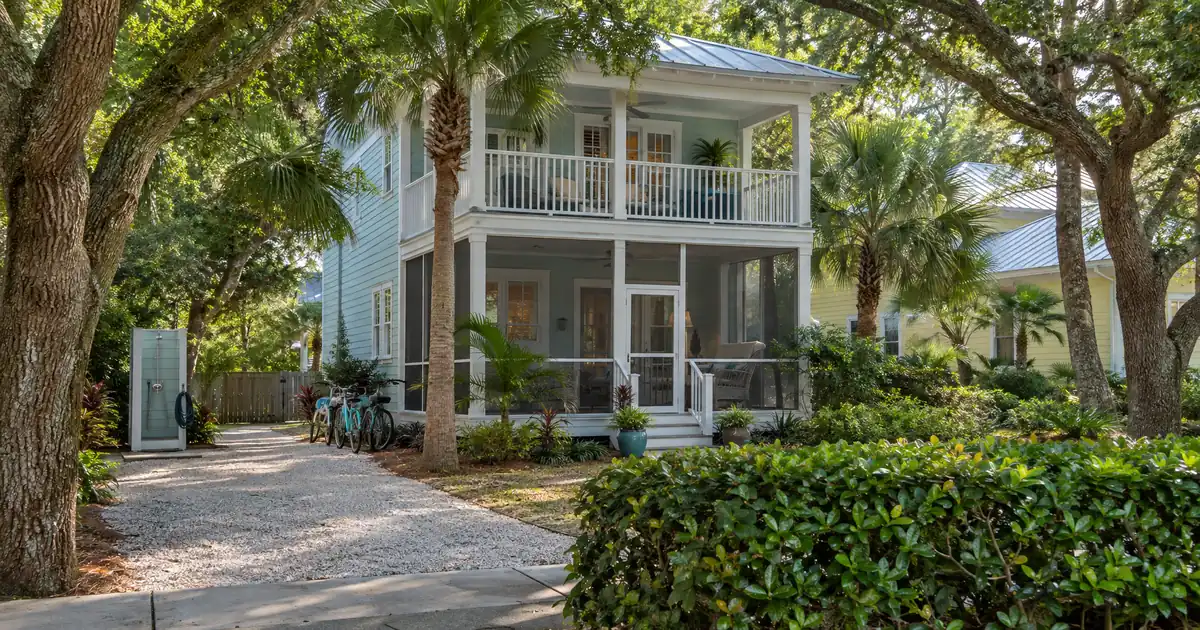
The Quick Read: Financing a first short-sale Airbnb with a DSCR loan means running two separate approvals at once: the seller’s lender must accept less than it is owed, and your DSCR lender must approve a loan that qualifies primarily on property-level rental income covering the payment, subject to lender guidelines. Your job is to line the two up so your loan file is still valid when the seller’s answer arrives.
- On a short-term-rental purchase, leverage tops out at 75% LTV (25% down) on the strongest files.
- Expect a 640+ credit score and a coverage floor of 1.00 on a purchase.
- Programs typically want about 12 months of host experience, and a first-timer should ask about this before offering.
- The seller’s lender controls the timeline and can counter, reject, or favor a higher bid.
- Clearing 1.00 does not mean the property cash flows, because repairs, vacancy, and management sit outside the formula.
Key Terms Defined
Short sale: a sale for less than the mortgage balance, which happens only if the seller’s lender agrees.
DSCR (debt service coverage ratio): the property’s monthly income divided by its monthly housing obligation. A result of 1.00 means income equals the obligation.
PITIA: principal, interest, taxes, insurance, and any association dues. This is the obligation in the denominator.
LTV (loan-to-value): the loan amount as a percentage of the property’s value or price. A 75% LTV means you bring 25% of the price. Final terms depend on lender guidelines, property type, leverage, and the borrower’s complete credit picture.
STR income projection: a market-data estimate of what a short-term rental should earn. Lenders use it when the property has no operating history.
Reserves: liquid funds you must show after closing, commonly counted in months of PITIA.
Short-Term Rental Calculator
Run the STR numbers in your market
Rate source: Freddie Mac 30-yr average via FRED® — Federal Reserve Bank of St. Louis · effective Oct 15, 2026
Prefilled with starting assumptions — enter your nightly rate, occupancy, taxes, and insurance for a more accurate picture.
Short-term rental income is documented with a 12-month history or a market data report. Program parameters update from Lendmire’s centralized guideline source.
As of Oct 15, 2026 · General Freddie Mac market benchmark, not a Lendmire loan offer. Nightly rate, occupancy, taxes, and insurance are editable estimates. Qualifying income for short-term rentals varies by program — some use appraisal market rent, others use documented STR history or projections — and is confirmed in underwriting. Not a Loan Estimate, approval, or commitment to lend. Program availability and eligibility are subject to lender guidelines, credit approval, property review, and underwriting.
Which Kind of Short Sale This Covers
This article covers buying a property that is being sold as a short sale. It does not cover borrowers who completed their own short sale years ago.
If a past short sale sits on your credit history, that is a different question. DSCR files still get a credit review, and waiting periods and score expectations vary by program. Raise it with your broker before you shop, because it shapes which lenders in the network fit.
Who Really Approves a Short Sale
Your DSCR lender does not approve the short sale. The seller’s lender does.
The CFPB describes a short sale as a sale for less than the mortgage balance that happens only if the lender or servicer agrees. NAR says the same and adds that the seller’s lender usually loses less than it would in a foreclosure. That is why servicers entertain these deals at all.
The practical result is that you are a participant in someone else’s approval process. Zillow notes that the purchase agreement should carry a short-sale contingency, because without lender approval the sale cannot proceed. Your accepted offer is only the start.
How Underwriting Treats a First Airbnb, Step by Step
DSCR underwriting for a short-term rental asks one core question: does the property’s income cover its full monthly obligation? Across the wholesale network, the steps look like this.
1. Credit and eligibility screen. Short-term-rental files typically want a 640+ score. Stronger scores widen your options.
2. Property eligibility. Manufactured homes, log homes, and barndominiums are not offered in these programs. A short sale on one of those property types is not a DSCR deal.
3. Income evidence. Lenders usually accept one of three routes: a market-data projection from a short-term-rental analytics provider, 12 months of actual hosting history on the property, or the appraiser’s long-term market-rent schedule. Those schedules are Form 1007 for single-family homes and Form 1025 for 2-4 units.
4. The coverage test. Lenders divide the income figure by the PITIA. Some lenders adjust a projection downward before testing it, and treatment varies by program.
5. Leverage and reserves. A short-term-rental purchase goes up to 75% LTV. Reserves commonly run around 6 months of PITIA, though they vary by lender, leverage, loan size, and transaction type.
6. Appraisal and insurance. The property must be appraisable and insurable in its as-is condition.
A short sale rarely has usable operating history, so a first-time buyer usually relies on the projection or the appraiser’s schedule. Programs typically expect about 12 months of landlord or host experience, and many first-timers lack it. Lendmire’s piece How to Finance a First Airbnb With No Rental History walks through how that gap changes leverage and pricing. For the full framework, see the complete DSCR loans guide.
Why Short-Sale Timing and Loan Timing Collide
The seller’s lender sets the pace, and your loan file has to survive it. A DSCR file has components with their own shelf lives: the appraisal, credit documents, and the loan commitment. If the seller’s servicer takes a long time to respond, some of those can go stale.
Zillow notes that servicer review can run long, and that every lienholder must agree if there is more than one lien. Your broker should sequence the file so it is ready to finish when the approval letter lands, not before and not long after.
| Stage | Who controls it | What to watch |
|---|---|---|
| Offer and proof of funds | You and the seller’s agent | Pre-approval should name STR use |
| Servicer review | Seller’s lender | Counters, rejections, multiple liens |
| Approval letter | Seller’s lender | Net proceeds, expiration, closing deadline |
| DSCR underwriting | Your lender | Appraisal, income evidence, insurance |
| Closing | Title company and both lenders | Liens cleared, deadline met |
The approval letter matters most. It sets the price the servicer will accept and the window you must close in. If the servicer counters at a higher price, your loan amount and your coverage ratio both change.
A Worked Example in Coverage Ratios
These are modeled assumptions, not market data. Imagine a first short-sale Airbnb purchase financed at 75% LTV on a short-term-rental purchase, tested against the 1.00 floor that select programs use. These specifics are subject to lender guidelines and a full review of property, leverage, and credit.
| Scenario | Modeled coverage | What it means |
|---|---|---|
| Projection supports the accepted price | About 1.25x | Clears the floor with cushion |
| Servicer counters higher | About 1.05x | Clears barely, little room for cost changes |
| Lender trims the projection | About 0.95x | Below 1.00, so a restructure is needed |
In the third row, you have a few options. A larger down payment lowers the loan and can lift the ratio. A separate path through select lenders in the network takes coverage below 1.00, with leverage and terms adjusted. Or you can walk away. Which one fits depends on lender guidelines, credit approval, and property review.
Notice what the table leaves out. Coverage compares rent to PITIA only, so a ratio above 1.00 is not positive cash flow. Furnishing, repairs on an as-is house, vacancy, utilities, and management all sit outside it. BiggerPockets cautions that short-term-rental income is less predictable than long-term rent because of seasonality and cancellations, so run your own cash-flow check alongside the lender’s math.
A bigger down payment helps coverage, but it never erases leverage caps, credit floors, reserve rules, or property eligibility. The strongest files clear both tests: enough equity and enough rental coverage.
Where the Rule Breaks
The general rule is that a property with strong projected income gets financed. These edge cases are where that fails.
Condition. Short sales are sold as-is, and many carry deferred maintenance. An Airbnb must be furnishable, insurable, and appraisable. A house needing major repairs can fail appraisal conditions, which may push you toward cash or a different loan type first.
Multiple liens. Each lienholder must agree to the deal, and that stretches the review.
Arm’s-length requirement. HowStuffWorks explains that short sales to relatives or friends are not approved, because the price must reflect fair market value.
Rental legality. The property must be allowed to operate as a short-term rental. Short-term rental rules can vary by city, county, HOA, and property type, so investors should confirm local rules before relying on projected rental income. Treat this as a yes-or-no gate before you write an offer.
Single-strategy risk. A BiggerPockets Rookie episode warns about buying a property that only works as one strategy and then accepting a prepayment penalty that locks you in. If the Airbnb underperforms and long-term rent does not cover the payment at the price you paid, you have no clean exit.
Reprice or rejection. The servicer can counter, reject, or favor a higher bid, even after accepting yours. Keep a backup property in mind.
DSCR vs. conventional financing
There are two common ways to finance an investment property, and they qualify you differently — here’s how investors weigh them.
Why investors choose it
- Qualifies on the property’s rental income — no personal tax returns, W-2s, or pay stubs needed to document income.
- No personal debt-to-income ceiling to clear, so existing mortgages and obligations don’t cap your borrowing the same way.
- Can be closed in an LLC, keeping the property inside a business entity.
- Built for scaling — not held to the limit on number of financed properties that conventional financing applies.
- Underwriting centers on the deal: generally qualifies when the rent covers the payment, a 1.00x coverage ratio being a common baseline (confirmed in underwriting).
- Designed specifically for investment property, including long-term and, where the program allows, short-term rentals.
Where it’s strong
- Often the lowest ongoing financing cost for a buyer who fully qualifies on personal income — a fit for a first property or a cost-first purchase.
Trade-offs for investors
- Requires full personal income documentation and must fit within a debt-to-income limit — salary, existing debts, and other mortgages all count.
- Typically held in your personal name rather than a business entity.
- Caps how many financed properties you can carry, which can become a ceiling as a portfolio grows.
- Evaluates you as a borrower as much as the property, which usually means more paperwork.
How investors usually choose: a first or single property often optimizes for the lowest financing cost; portfolio builders often optimize for leverage, vesting in an LLC, and scaling past conventional caps. The right answer depends on your goals, the property, and current guidelines — both paths run through select lenders in Lendmire’s wholesale network, with eligibility and terms confirmed in underwriting.
Is a Short Sale the Right First Airbnb?
Your first short-term rental already carries unproven income, a furnishing budget, and a local permit question. A short sale adds repair risk and a third party who controls your schedule. The discount is not guaranteed either, since HowStuffWorks describes short-sale pricing as only slightly below fair market value.
This purchase tends to fit when three things are true:
- You have the reserves, with roughly 6 months of PITIA commonly expected as a starting point.
- The property is turnkey enough to appraise and insure as it stands.
- The deal still covers 1.00 even if the servicer counters higher.
If those are not true, a conventional listing or a different property may serve a first Airbnb better. Some borrowers with strong business cash flow but thin tax-return income look at financing a first short-term rental on business bank statements instead.
Questions to Ask Before You Write the Offer
Ask these before the offer goes to the servicer.
- Does this program accept a market projection for a first-time host, or does it want 12 months of history?
- Does it adjust projected income before testing coverage?
- What leverage applies to my score? On a short-term-rental purchase, the ceiling is 75% LTV.
- How long does the appraisal stay valid, and what happens if the approval letter arrives late?
- Is the property type eligible?
- What reserves does this lender want for my loan size and leverage?
- Does the loan carry a prepayment penalty, and what does it limit if I switch strategies? Terms depend on the lender’s guidelines, the property type, the leverage, and a full review of the credit profile.
Your offer should include a pre-approval letter that reflects short-term-rental use. Zillow advises offers from buyers who show pre-approval or proof of funds, since sellers’ servicers weigh seriousness. Tax treatment can depend on how the funds are used and how the property is held; investors should keep clear records and speak with a qualified tax professional before relying on any deduction.
Next Steps
Start by testing the deal on paper: price, projected income, and coverage at a few price points, including a counter. Then line up your pre-approval, appraisal plan, and reserves before you offer. If you are buying or refinancing a rental property and want to see how the numbers work, Lendmire can help you compare DSCR loan options based on the property income, credit profile, leverage, and investor goals, through select lenders in a wholesale network covering 41 markets, including Washington, D.C. You can reach the team at 828-256-2183.
Frequently Asked Questions
Can the DSCR lender approve the short sale for me?
No. The seller’s lender or servicer decides whether to accept less than it is owed. Your lender approves your loan separately, and both must line up for the sale to close.
Do I need hosting history to buy my first short-sale Airbnb?
Programs typically expect about 12 months of landlord or host experience, and projections stand in for property history. A first-timer should ask the lender in advance how a lack of experience changes leverage and terms. Eligibility depends on lender guidelines.
What leverage can I expect on a short-term-rental purchase?
Up to 75% LTV on the strongest files, which means about 25% down. On a short-term-rental refinance the ceiling is around 70%, and a cash-out on short-term-rental collateral is 70%. A 640+ score is the typical minimum. The exact numbers vary by lender and program and follow a full review of property, leverage, and credit.
What if the coverage ratio comes in below 1.00?
For short-term-rental purchases, 1.00 is the floor on select programs. A separate path exists through select lenders in the network that takes coverage below 1.00 with leverage and terms adjusted. A larger down payment may also help, subject to lender guidelines.
Can I buy a short sale from a family member to get a discount?
Generally no. Short sales are meant to be arm’s-length transactions at fair market value, so sales to relatives or friends are not approved.
About Lendmire
Lendmire — NMLS# 2371349 — is a DSCR and non-QM mortgage brokerage with investor loan programs in 41 markets, including Washington, D.C. DSCR eligibility is commonly reviewed by the lender around property-level rent rather than personal income documentation, subject to lender guidelines, and the brokerage helps arrange financing for LLC-owned portfolios beyond conventional financed-property limits. Recognized by Scotsman Guide as a Top Mortgage Workplace in 2025 and 2026.
Get Started
Ready to find the right loan for you?
In about 30 seconds you can review financing options available for your investment property. No commitment required.
Informational only. Not a Loan Estimate, approval, or commitment to lend. Program availability and eligibility are subject to lender guidelines, credit approval, property review, and underwriting.
References
1. CFPB: What is a short sale?
2. NAR: Short Sales & Foreclosures
3. Zillow Learn: What Is a Short Sale?
4. BiggerPockets: The Ultimate Guide to Short-Term Rental Properties
5. HowStuffWorks: How Short Sales Work
6. BiggerPockets Rookie Podcast, Episode 759
This article is part of Lendmire’s short-term rental loan program — full qualification details, guidelines, and scenarios live on the program page.
Related reading: How to Document Legal STR Use for Your First DSCR Loan · How to Switch a Vacation Home Turned Airbnb to a DSCR Loan · How to Finance a Rural Resort Unit as an Airbnb With a DSCR Loan
Brandon Miller
Founder & CEO, Mortgage Loan Originator, Lendmire LLC
- Mortgage Loan Originator · NMLS# 1129696 · Verify on NMLS Consumer Access
- North Carolina Real Estate Broker · License# 343312 · Verify on NCREC
- North Carolina Insurance Producer · License# 19053198 · Property, Casualty, Life, Health · Verify on NAIC SBS
- Lendmire LLC · Firm NMLS# 2371349 · Verify firm licensure
Important disclosures. Lendmire (NMLS# 2371349) is a licensed mortgage brokerage. Lendmire is not a direct lender, depository institution, or financial advisor. All loan inquiries are subject to lender underwriting; this article does not constitute a commitment to lend. Rates, terms, and program guidelines are subject to change without notice and vary by borrower profile, property type, and state. Information in this article is general in nature and is not financial, legal, or tax advice. Equal Housing Opportunity. NMLS Consumer Access: nmlsconsumeraccess.org.