
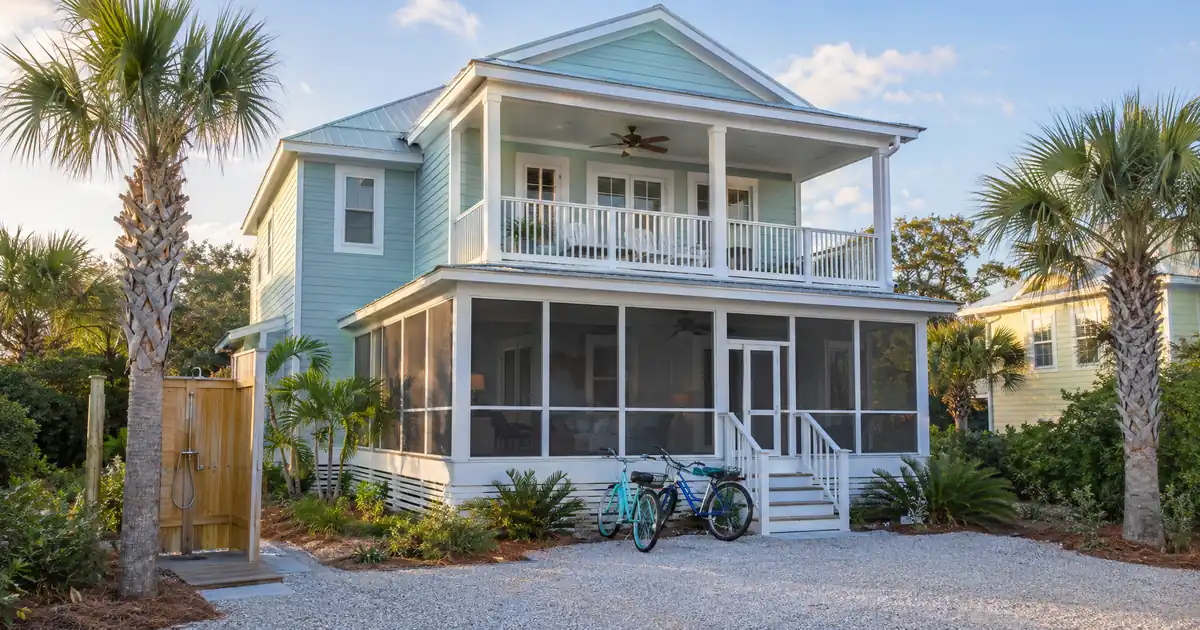
First-Time Rental Owner Get A Short-Term Rental — The Quick Read: Mostly yes, but not always through the short-term rental income path itself. A true first-time investor can usually get standard DSCR financing on a short-term rental property, qualified off the appraiser’s long-term rent estimate. The short-term-rental-specific underwriting path, the one that uses actual nightly income, typically wants an investor who has already owned income property before. That distinction — not the DSCR loan category itself — is where most first-timers get tripped up.
DSCR stands for debt service coverage ratio. It’s the property’s monthly rental income divided by the full monthly housing payment. That payment includes principal, interest, taxes, insurance, and any HOA dues. If the rent covers the payment, the loan is reviewed mainly on that basis — property-level rental income covering the payment, subject to lender guidelines. It’s not reviewed based on your traditional personal-income documentation or your resume as a landlord. That’s the whole appeal of a DSCR loan. The complete DSCR loans guide covers the mechanics in full.
Short-Term Rental Calculator
Run the STR numbers in your market
Rate source: Freddie Mac 30-yr average via FRED® — Federal Reserve Bank of St. Louis · effective Sep 17, 2026
Prefilled with local estimates — enter your nightly rate, occupancy, taxes, and insurance for a more accurate picture.
Short-term rental income is documented with a 12-month history or a market data report. Program parameters update from Lendmire’s centralized guideline source.
As of Sep 17, 2026 · General Freddie Mac market benchmark, not a Lendmire loan offer. Nightly rate, occupancy, taxes, and insurance are editable estimates. Qualifying income for short-term rentals varies by program — some use appraisal market rent, others use documented STR history or projections — and is confirmed in underwriting. Not a Loan Estimate, approval, or commitment to lend. Program availability and eligibility are subject to lender guidelines, credit approval, property review, and underwriting.
Can a First-Time Investor Qualify for DSCR at All?
Yes, without question, for the standard version of this loan. Nothing in a typical DSCR file asks how many rental properties you’ve owned before. The underwriter looks at the property’s income and the payment it needs to cover — that’s the whole exercise. Whether it’s a first purchase or a fifteenth, the math either clears the bar or it doesn’t.
Where this gets more specific is short-term rentals. A property that runs as a nightly rental instead of a long-term lease produces a different, less predictable income pattern. Some lenders in the wholesale network Lendmire works with are comfortable underwriting that income only from investors who’ve already proven they can run an income property. Others will still finance the deal, just using a more conservative income source. Both paths exist. The trick is knowing which one applies to your file before you make an offer.
What Makes Short-Term Rental Income Different?
Nightly rental income is naturally more volatile than a signed twelve-month lease, and lenders price that volatility into how they document income. A long-term tenant signs a lease and pays the same amount every month. A short-term rental might book solid in July and sit half-empty in February. Because of that swing, lenders documenting short-term rental income want either a real operating track record or a conservative, appraisal-based estimate — not a screenshot of a listing’s best month.
Lendmire places files with several programs. If you’re refinancing a property already used as a short-term rental, you can typically qualify using twelve months of actual operating history. If you’re buying a property with no operating history yet, you typically qualify a different way. The appraiser does a short-term rental market analysis instead. Lenders usually calculate this at roughly 80% of the projected gross income. This built-in haircut protects against an overly optimistic projection. This appraisal-based approach makes a purchase possible even without a track record on that specific property.
Why the STR-Specific Path Usually Requires Experience
This is the part most first-timers don’t see coming. In most short-term rental DSCR programs Lendmire’s network works with, that income path is reserved for investors who’ve owned an income-producing property for at least twelve of the last thirty-six months. It’s not about age or credit — it’s a program design choice meant to separate someone who understands operating a rental from someone buying their very first property and hoping the Airbnb numbers work out.
That single overlay is the real answer to the title question. A genuine first-time buyer, with zero prior rental ownership, generally isn’t going to walk into the short-term-rental-specific underwriting path on day one. That doesn’t mean the property is unfinanceable. It means the loan gets built a different way.
What Can a First-Time Buyer Actually Do Instead?
The most common route: buy using standard DSCR, qualified off the appraiser’s long-term market rent, not the projected nightly income. The appraisal tool lenders lean on for this is Fannie Mae’s Single-Family Comparable Rent Schedule, Form 1007, which estimates what the property would rent for on a standard annual lease. DSCR lenders borrow this form as a conservative fallback even though the loan itself isn’t sold to Fannie Mae. It produces a lower number than a strong Airbnb projection almost every time, but it’s a real, documented figure a first-time file can use without any operating history at all.
Once you close, operate the property, and build an actual booking history, you’re no longer a first-time investor by the time you refinance. At that point, the twelve-of-thirty-six-month experience threshold is often already met. This opens up the short-term-rental-specific income path — the one built on real occupancy data instead of a conservative rent schedule. Lendmire’s guide to first-time short-term rental financing walks through that sequencing in more depth.
Key Terms Defined
DSCR (debt service coverage ratio): the property’s monthly rental income divided by its full monthly payment — principal, interest, taxes, insurance, and HOA dues combined.
Business-purpose loan: a loan made for an investment or rental property rather than a home you live in, which is why it’s underwritten differently than a mortgage on your own residence.
Seasoning: the amount of time a lender wants an investor to have owned or operated a property (or the amount of time since a life event, like a late payment) before certain program features apply.
No-ratio loan: a DSCR program that doesn’t calculate a coverage ratio from rent at all — qualification runs on the deal’s overall structure instead of a specific income-to-payment comparison.
Reserves: cash left over after closing, usually measured in months of housing payment, that the lender wants to see sitting in the bank as a cushion.
How the Numbers Actually Work
Across the wholesale network Lendmire places files through, short-term rental DSCR loans typically run to $2,000,000, with coverage of 1.00 or better on most files. Credit typically starts at a 660 floor for these loans, and lenders generally want six months of PITIA reserves on the subject property — bumped to twelve months for first-time investors specifically, which is a real overlay worth planning around even outside the STR-experience question.
On the standard long-term-rent path — the one available to true first-timers buying a short-term rental — leverage generally follows a size-based ladder. On loan amounts up to $1,000,000, purchase leverage typically reaches 80% with credit around 660 or better. Between $1,000,000 and $1,500,000, leverage steps down to roughly 75% with credit generally around 700-plus. From $1,500,000 to $3,000,000, purchase leverage stays near 75% with stronger credit expectations, and cash-out on that tier is typically capped closer to 60% for short-term-rental collateral, compared with a 75% ceiling more common on standard long-term rental collateral in the same range. Above $3,000,000, most programs step down further and stop offering cash-out altogether, with anything above $4,000,000 reviewed case by case before submission — never assume a flat percentage applies at that size.
Lendmire has worked with many of these files. In our experience, the coverage ratio drives most leverage decisions on a standard DSCR file. The borrower’s landlord history matters less. But for a short-term rental, underwriters usually check the income source first — before looking at the ratio. A first-time buyer whose file relies on the appraisal-based long-term rent number tends to move through review more predictably. This is compared to someone relying on a strong but undocumented nightly-rate projection.
What About No-Ratio or Sub-1.00 Options?
Coverage below 1.00 is a real path through select lenders in the network, generally up to $2,000,000, but leverage and terms adjust to offset the weaker ratio, subject to underwriting. It’s not a workaround for a property that clearly doesn’t cash flow — it’s a tool for a strong file with a slightly thin number.
No-ratio financing is also available through select wholesale programs to $2,000,000, generally built around a seven-year clean housing history and a strict on-time-payment record, subject to underwriting. It skips the rent-to-payment math entirely rather than lowering the bar — useful for an investor whose overall credit and reserve profile is strong even if a specific property’s projected income is hard to pin down. Neither of these paths is a shortcut around documentation; both still go through full underwriting review.
The Legal Backbone: Why Property Income Can Qualify You
DSCR loans are for investment properties where you don’t live. They’re business-purpose loans, not owner-occupied mortgages. So lenders review them differently. Why? Federal consumer-lending rules exempt loans for buying or keeping a rental property from the personal ability-to-repay rules that apply to home loans. This is under Regulation Z. Because of this exemption, a lender can qualify you based on what the property earns. They don’t need your traditional personal-income documents.
There’s one hard edge to this exemption. If you’re considering ever staying at your own short-term rental, know this: if you plan to personally occupy the property for more than 14 days a year, it stops qualifying as a non-owner-occupied business-purpose loan. This is according to Regulation Z’s business-purpose commentary. Keep personal use light if you want the property to stay in DSCR territory.
DSCR vs. conventional financing
Two common ways to finance an investment property in this market. They qualify you differently — here’s how investors weigh them.
Why investors choose it
- Qualifies on the property’s rental income — no personal tax returns, W-2s, or pay stubs needed to document income.
- No personal debt-to-income ceiling to clear, so existing mortgages and obligations don’t cap your borrowing the same way.
- Can be closed in an LLC, keeping the property inside a business entity.
- Built for scaling — not held to the limit on number of financed properties that conventional financing applies.
- Underwriting centers on the deal: generally qualifies when the rent covers the payment, a 1.00x coverage ratio being a common baseline (confirmed in underwriting).
- Designed specifically for investment property, including long-term and, where the program allows, short-term rentals.
Where it’s strong
- Often the lowest ongoing financing cost for a buyer who fully qualifies on personal income — a fit for a first property or a cost-first purchase.
Trade-offs for investors
- Requires full personal income documentation and must fit within a debt-to-income limit — salary, existing debts, and other mortgages all count.
- Typically held in your personal name rather than a business entity.
- Caps how many financed properties you can carry, which can become a ceiling as a portfolio grows.
- Evaluates you as a borrower as much as the property, which usually means more paperwork.
How investors usually choose: a first or single property often optimizes for the lowest financing cost; portfolio builders often optimize for leverage, vesting in an LLC, and scaling past conventional caps. The right answer depends on your goals, the property, and current guidelines — both paths run through select lenders in Lendmire’s wholesale network, with eligibility and terms confirmed in underwriting.
Short-term rental rules can vary by city, county, HOA, and property type, so investors should confirm local rules before relying on projected rental income. A property can meet every DSCR guideline and still be blocked from operating as a nightly rental by an HOA covenant or a local permit cap — that’s a property-level question separate from the loan itself.
Common Mistakes First-Timers Make
The biggest one: assuming the listing agent’s or seller’s Airbnb income screenshot is what a lender will use. It isn’t. Underwriters lean on the appraisal or a documented operating history, not a marketing number.
The second: not budgeting for the twelve-month reserve requirement that often applies specifically to first-time investors. That reserve cushion sits on top of the down payment, not instead of it, and it can catch a buyer off guard late in the process.
The third: assuming a no-ratio or sub-1.00 program is a way to skip documentation altogether. It isn’t — it’s a different qualification structure with its own underwriting standards, not a lower bar overall.
Tax treatment can depend on how the funds are used and how the property is held; investors should keep clear records and speak with a qualified tax professional before relying on any deduction.
Frequently Asked Questions
Can a first-time buyer get a DSCR loan on a short-term rental with zero rental history?
Usually yes, but the loan typically gets qualified off the appraiser’s long-term market rent rather than the projected nightly income. The short-term-rental-specific income path, which uses actual booking data, is generally reserved for investors who’ve already owned income property for twelve of the last thirty-six months.
Does a first-time investor pay a higher down payment for a short-term rental?
Down payment tracks the leverage ladder for the loan size and coverage ratio, not specifically whether you’re a first-time buyer. What does change for first-timers on many files is the reserve requirement — often twelve months of PITIA instead of six.
What if my Airbnb projection is much higher than the appraiser’s long-term rent estimate?
On a purchase with no operating history, most programs still start from the appraisal’s rent conclusion rather than a market-data projection. Once you’ve operated the property and built real income history, a refinance can typically be built around that documented performance instead.
Can I use a no-ratio loan to buy my first short-term rental?
It’s a real option through select wholesale programs to $2,000,000, but it doesn’t lower documentation standards — it changes how the deal is structured, generally requiring a clean multi-year housing payment history, subject to underwriting.
Is a short-term rental automatically eligible just because the city allows it?
No. City zoning is only one layer — HOA rules, permit caps, and licensing requirements can independently block short-term rental use even where the city technically allows it. Confirm permission at the specific property before relying on projected rental income.
If you’re buying or refinancing a rental property and want to see how the numbers work, Lendmire can help you compare DSCR loan options based on the property’s income, your credit profile, available leverage, and your goals as an investor. Reach the team at 828-256-2183 or start a quote to see which path fits your file.
Investors focused on short-term rentals can review DSCR loans for Airbnb and short-term rentals.
For current guidelines and terms, see Lendmire’s super jumbo DSCR loan programs page.
Self-employed borrowers can compare both super jumbo programs on Lendmire’s self-employed mortgages page.
About Lendmire
A non-QM mortgage broker (NMLS# 2371349), Lendmire arranges DSCR financing for real estate investors in 40 markets — 39 states plus Washington, D.C. Because deals are underwritten primarily on property cash flow rather than personal income documentation, the structure suits self-employed buyers and entity-owned portfolios. Lendmire places loans through wholesale investor lenders; it is not a direct lender. Scotsman Guide named Lendmire a Top Mortgage Workplace in both 2025 and 2026.
Get Started
Ready to find the right loan for you?
In about 30 seconds you can review financing options available for your home or investment property. No commitment required.
Informational only. Not a Loan Estimate, approval, or commitment to lend. Program availability and eligibility are subject to lender guidelines, credit approval, property review, and underwriting.
References
1. Fannie Mae — Single-Family Comparable Rent Schedule (Form 1007)
2. Consumer Financial Protection Bureau — Regulation Z
3. CFPB Regulation Z Business-Purpose Exemption Commentary (Doss Law summary)
This article is part of Lendmire’s super jumbo DSCR loan program — full qualification details, guidelines, and scenarios live on the program page.
Related reading: What Properties Qualify For A First Time Investor DSCR Loan? · First Time Investor Guide To Short Term Rentals · Steps To Buying Your First Rental Property With A DSCR Loan
Brandon Miller
Founder & CEO, Mortgage Loan Originator, Lendmire LLC
- Mortgage Loan Originator · NMLS# 1129696 · Verify on NMLS Consumer Access
- North Carolina Real Estate Broker · License# 343312 · Verify on NCREC
- North Carolina Insurance Producer · License# 19053198 · Property, Casualty, Life, Health · Verify on NAIC SBS
- Lendmire LLC · Firm NMLS# 2371349 · Verify firm licensure
Legal disclosures. Lendmire (NMLS# 2371349) is a state-licensed mortgage brokerage that arranges financing through wholesale lender relationships. Lendmire is not a direct lender, depository institution, or registered financial advisor. The discussion above is general informational content about real estate financing — it is not financial, legal, or tax advice, and readers should consult licensed professionals for guidance on their individual circumstances. Loan inquiries are subject to lender underwriting; this article does not represent a commitment to lend. Loan terms, rates, and qualification standards vary by borrower, property, and state, and are subject to change at any time. Equal Housing Opportunity. NMLS Consumer Access: nmlsconsumeraccess.org.