
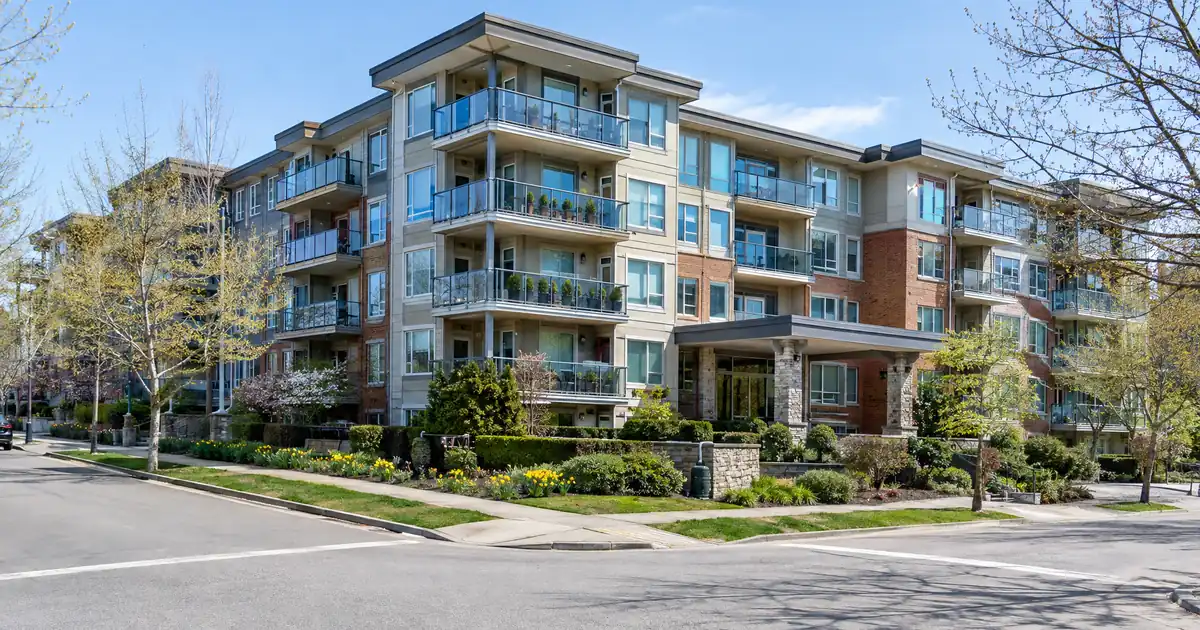
The Quick Read: Sometimes. Two separate approvals decide it: the HOA’s governing documents must permit your stay length, and a lender must accept both the building and your borrower profile. An HOA that bans or caps rentals at your stay length is a hard stop that no loan can fix, so check the documents before you spend money on anything else.
- The HOA’s declaration controls whether you can host. The lender’s approval never overrides it.
- A rental cap and a minimum-stay rule are different restrictions with different consequences.
- On short-term rental files, select programs typically allow up to 75% LTV on a purchase, with a 640 minimum score and a 1.00 coverage floor, subject to lender guidelines.
- HOA dues count against your coverage ratio, so they matter twice.
- “First-time” means three different things to lenders. Know which one you are.
Two Gates, Not One
The lender decides whether the loan works. The HOA and the city decide whether the use is legal. Passing one gate does nothing for the other. A clean loan file does not protect income that an HOA has the right to shut off.
| Gate | Who decides | What they check |
|---|---|---|
| Use permission | HOA, then city | CC&Rs, rules, stay-length limits, permits |
| Building review | Lender | Investor concentration, dues, litigation, reserves |
| Borrower review | Lender | Credit, hosting history, coverage ratio |
HOA restrictions live in the condo’s declaration and CC&Rs, which are private contracts. AirROI’s glossary on HOA restrictions points out that a valid city permit does not override an HOA prohibition. Both layers must say yes. Short-term rental rules can vary by city, county, HOA, and property type, so investors should confirm local rules before relying on projected rental income.
What Does “HOA Cap” Actually Mean?
“Cap” is loose shorthand for several different rules, and only some of them ban short-term rentals. Read the exact clause before you assume anything.
| Restriction | How it works | STR possible? | Financing effect |
|---|---|---|---|
| Percentage rental cap | Limits share of units rented | Maybe, if stay length is allowed and a slot is open | Full cap can mean waitlist |
| Minimum lease term (30, 90, 180 days) | Sets shortest allowed stay | Usually no | Hard stop for Airbnb-style stays |
| Outright STR ban | Prohibits transient rentals | No | Hard stop |
| Owner-occupancy-first rule | Requires living there before renting | Delayed | Conflicts with investor-only loans |
An HOA-resource guide on rental restrictions notes that minimum lease terms are how many associations effectively exclude Airbnb-style stays. So a building can have no cap at all and still block you. It can also have a cap and say nothing about stay length.
Say a building caps rentals at a set share of units and the cap is already full. You may face a waitlist. Ask the manager in writing how the waitlist works, because a waitlist spot is not a rental right. A BiggerPockets forum thread on HOA and condo rental caps shows investors discussing caps and warning that low-priced, restricted condos can be hard to finance. That is anecdotal, but it matches what lenders do when a building’s rental rules leave the income uncertain.
How Does a Lender Treat a First-Time STR Buyer?
It depends on which “first-time” you are. Across the wholesale network, the three groups get different treatment.
- First-time homebuyer: DSCR loans are business-purpose loans for non-owner-occupied investment property. If you plan to live in the unit, DSCR is generally not the tool.
- First-time investor: Long-term rental files are often easier to place than short-term rental files, subject to lender guidelines.
- First-time STR operator: Short-term rental programs usually expect about 12 months of landlord or host experience. That is the main hurdle for a buyer with no hosting record.
The program figures for a short-term rental on a purchase run like this on most files: up to 75% LTV, a 640 minimum credit score, and a 1.00 coverage floor. A refinance of a short-term rental sits around 70% LTV, with a 1.00 coverage floor as well. Cash-out on short-term rental collateral also tops out at 70%. Loan sizes run up to $3,000,000 on standard programs. Reserves vary by lender, leverage, and loan size, commonly around six months of PITIA (principal, interest, taxes, insurance, and association dues).
Notice the tension. Many first-time buyers have no host history, yet the program expects some. In practice, files differ in how they treat that gap, and some lenders in the network weigh it against stronger credit, lower leverage, or more reserves. Your broker’s job is to find the lender whose overlay fits your profile. Lendmire’s piece How to Meet DSCR Condo Airbnb HOA Document Requirements for First-Time STR Buyers covers the paperwork side.
How Is Income Counted With No History?
On a purchase, income is usually supported by a projection. On a refinance, lenders want actual history. A projection can come from an appraiser’s short-term rental analysis, from a market-data report of the AirDNA type, or from both. Documented actuals, such as 12 months of platform statements, bank statements, or a management statement, usually carry more weight than a projection for the same revenue.
One form name causes confusion. Fannie Mae publishes Form 1007 (a comparable rent schedule) and Form 1025 (a small residential income property appraisal), listed on its Selling & Servicing Guide forms page. DSCR appraisals borrow these forms. But Form 1007 reflects long-term market rent. It does not capture Airbnb income, which needs a separate short-term rental analysis. These agency forms are borrowed formats only. They do not set DSCR program rules.
Lenders often haircut projections, since a forecast is not a lease. If you can get a seller’s platform history or management statements, ask for them early. They can lift the ratio.
Condo Hurdles That Are Not About the HOA’s Rental Rules
Even when the HOA permits your stay length, the lender reviews the building itself. DSCR is not an agency product, so the agency label “non-warrantable” is not a verdict here. Lenders in the network set their own condo rules. Still, some things stop a file.
- Investor concentration. A building full of rentals may still work for DSCR, depending on the lender.
- Litigation and weak reserves. Active litigation or thin association reserves can stop a file.
- Mandatory rental pools or operator-controlled occupancy. If you do not control listing, renting, and managing your own unit, many lenders decline. An optional management program mainly needs documentation.
- Hotel-style buildings. Condo-hotels are a separate, narrower category. Heavy short-term activity can pull a building toward hotel-style underwriting even if it is otherwise standard.
Ask about project status before you pay for an appraisal. A building the lender will not take wastes your money. For the overall frame, see Lendmire’s complete DSCR loans guide.
Worked Example: Dues Versus Coverage
HOA dues sit inside the payment, so every increase cuts your coverage ratio. Take a condo whose income, with no dues counted, clears roughly 1.25x. Now add the association dues to the monthly obligation. The ratio can slide toward 1.10x or lower, even though rent never changed.
A BiggerPockets post on selling or renting a condo describes one owner’s dues climbing over five years until they took a large bite of gross rent. That is a single anecdote, not market data. The lesson holds anyway: dues rise, and each increase shaves coverage.
Two cautions. First, DSCR compares rent to PITIA only. Clearing 1.00 does not mean positive cash flow, because repairs, vacancy, management, utilities, and capex sit outside the calculation. Second, a short-term rental swings by season. A condo that clears 1.20x on a good trailing average can feel very different in a slow month. Model the slow season yourself before you commit.
Some files fall below 1.00 on the numbers. Coverage below 1.00 is available through select lenders in the network, with leverage and terms adjusted. A separate path, no-ratio, is available only through select lenders, generally for borrowers who already own a primary residence.
The Right Order of Operations
Check the HOA first and the lender second. Never reverse them. Each step has a stop sign.
1. Pull the governing documents. Request the CC&Rs, bylaws, rules, and every amendment. Search for words like transient, short-term, hotel, commercial use, and vacation rental. An original document may allow rentals while a later amendment bans them. Stop if the documents bar your stay length.
2. Read recent board minutes. Look for proposed changes. Stop if a ban or longer minimum is being drafted.
3. Check the city layer. City rules often cover stays of 30 days or less without naming Airbnb, so they are easy to miss.
4. Ask the lender about the building. Get project status before the appraisal. Stop if the building falls into a rental-pool or litigation category.
5. Choose your income route. Projection on a purchase, or documented history if the seller has it.
6. Run the coverage ratio with dues included. Stop if the number only works on a best-case projection.
7. Check for fines or liens. Unpaid HOA fines can become liens that block a sale or refinance.
If the HOA Says No or the Cap Is Full
You have four exits, and walking away is a legitimate one.
- Different building. Often the cleanest fix.
- Waitlist. Only if the HOA confirms in writing how it works and the numbers hold without the income.
- A longer stay. If the HOA allows 30-day or longer leases, a mid-term or long-term rental may fit. Some programs can underwrite on long-term rent. Confirm that with your broker before you assume it.
- Walk. If the deal only works as a nightly rental, no loan solves that.
Do not rely on changing the rules after you buy. GoverningDocs’ guide to the CC&R amendment process explains that a rental-term amendment binds consenting owners and later buyers, and it cites Florida condo statutes with grandfathering for existing owners. Amending usually takes a supermajority of owners, so one buyer will not move the vote. Treat rule changes as a long shot, not a plan.
What Can Go Wrong After Closing
The biggest risk is not the loan. It is the clause. Financing approval does not protect income if a later amendment or enforcement action removes your rights. In most states, an HOA can add restrictions after you buy. Florida and California have grandfathering laws for existing owners, but that varies, and California’s rules show how much state law can differ. Most states offer no default protection.
Also know where the rule sits. The CC&Rs are the hardest to change. Board rules can often be amended without an owner vote, so a favorable rule is weaker protection than a favorable CC&R. Fines can pile up too, and a lien blocks your exit. One investor in a BiggerPockets piece on markets to think twice about says they avoid HOAs for exactly this reason. That is an opinion, though a sensible one: the safest condo is in a community that already allows and hosts many short-term rentals.
A practitioner note from the broker’s chair. Files that stall on condos rarely stall on credit. They stall because the HOA will not confirm in writing what the documents say, or because the building has a litigation or reserve problem nobody asked about early. Ask early, get it in writing, and the loan side tends to be the easier half.
Pre-Offer Questions for the HOA Manager
- Do the CC&Rs permit stays shorter than 30 days? What is the minimum stay?
- Is there a rental cap? Is it full? How does the waitlist work?
- Has any amendment been proposed or passed on rentals?
- Is the association in litigation? How are reserves funded?
- Are there fines outstanding on this unit?
- Is there a mandatory rental pool or operator?
- What are current dues, and has a special assessment been discussed?
Tax treatment can depend on how the funds are used and how the property is held; investors should keep clear records and speak with a qualified tax professional before relying on any deduction.
Key Terms Defined
- CC&Rs: The covenants, conditions, and restrictions recorded against the condo. They set what owners may and may not do.
- DSCR: The debt service coverage ratio, meaning the property’s income divided by its full monthly obligation.
- PITIA: Principal, interest, taxes, insurance, and association dues, the full monthly housing payment.
- Warrantable condo: A building that meets agency project standards. DSCR lenders set their own rules, so the label is not decisive.
- Rental cap: A limit on the share of units that can be rented at once.
Frequently Asked Questions
Can I get a loan before I confirm the HOA rules?
You can pre-qualify, but do not go under contract without the documents. The loan can be perfect and the deal still fail if the HOA bars your stay length. Review the CC&Rs first, then finalize the lender’s building review.
Does a first-time buyer need hosting history?
Short-term rental programs usually expect about 12 months of host experience. A first-time STR operator without it has fewer options, and some select lenders in the network weigh the gap against credit, leverage, and reserves. A long-term rental purchase may be a simpler first step, subject to lender guidelines.
Do HOA dues count against me?
Yes. Dues are part of the monthly obligation in the coverage calculation, so higher dues lower the ratio. Ask for current dues and any planned increase before you run the numbers.
Can the HOA change the rules after I buy?
In most states, yes. Florida and California have grandfathering protections for existing owners, but they are narrow. Rules set by the board alone can change faster than CC&Rs.
What if the HOA will not confirm STR use in writing?
Treat that as a warning. Without written confirmation, you are relying on an assumption. Consider another building, or confirm with your own attorney before you commit.
If you are buying or refinancing a rental property and want to see how the numbers work, Lendmire can help you compare DSCR loan options based on the property income, credit profile, leverage, and investor goals.
About Lendmire
Lendmire (NMLS# 2371349), a non-QM mortgage broker serving investors in 41 markets including Washington, D.C., helps structure DSCR scenarios commonly evaluated around a property’s rental income rather than personal income paperwork, subject to lender guidelines. A Scotsman Guide Top Mortgage Workplace in 2025 and 2026, Lendmire places loans through wholesale investor lenders and is not a direct lender.
Get Started
Ready to find the right loan for you?
In about 30 seconds you can review financing options available for your investment property. No commitment required.
Informational only. Not a Loan Estimate, approval, or commitment to lend. Program availability and eligibility are subject to lender guidelines, credit approval, property review, and underwriting.
References
2. AffordableHOA: HOA Rental Restrictions
3. BiggerPockets Forum: HOA and Condo Rental Cap
4. Fannie Mae Selling & Servicing Guide Forms
5. BiggerPockets post on selling or renting a condo
6. GoverningDocs: CC&R Amendment Process
7. BiggerPockets: markets to think twice about
This article is part of Lendmire’s short-term rental loan program — full qualification details, guidelines, and scenarios live on the program page.
Related reading: Can a First-Time STR Buyer Get a DSCR Loan on a Low-Value Cabin? · Should a Full-Time Airbnb Stay on a Second-Home Mortgage or Go DSCR? · Can You Get a DSCR Loan for an Airbnb in Illinois?
Brandon Miller
Founder & CEO, Mortgage Loan Originator, Lendmire LLC
- Mortgage Loan Originator · NMLS# 1129696 · Verify on NMLS Consumer Access
- North Carolina Real Estate Broker · License# 343312 · Verify on NCREC
- North Carolina Insurance Producer · License# 19053198 · Property, Casualty, Life, Health · Verify on NAIC SBS
- Lendmire LLC · Firm NMLS# 2371349 · Verify firm licensure
Important disclosures. Lendmire (NMLS# 2371349) is a licensed mortgage brokerage. Lendmire is not a direct lender, depository institution, or financial advisor. All loan inquiries are subject to lender underwriting; this article does not constitute a commitment to lend. Rates, terms, and program guidelines are subject to change without notice and vary by borrower profile, property type, and state. Information in this article is general in nature and is not financial, legal, or tax advice. Equal Housing Opportunity. NMLS Consumer Access: nmlsconsumeraccess.org.