
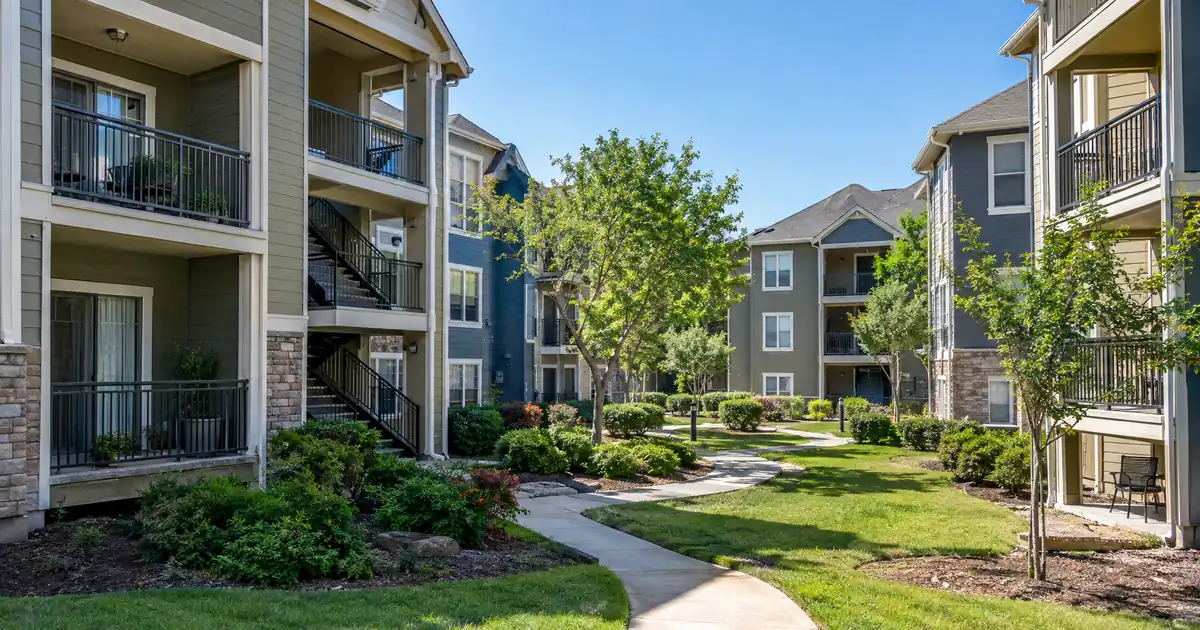
The Quick Read: Only when the building fits a structure built for five or more units: a five-unit building cannot ride inside the standard 30-year portfolio loan for one-to-four-unit rentals, so it either enters a term-loan pool built for larger collateral or gets financed on its own note, and in both cases lender review decides.
- The 30-year portfolio loan in Lendmire’s wholesale network covers single-family, 2-4 unit, condo and townhome collateral. Five-plus unit buildings are not offered there.
- A five-unit building generally belongs in the rental portfolio term loan, which is built for five or more properties or units and carries a balloon.
- Blended coverage can let a strong group of rentals carry a weak building. A standalone file gets no such help.
- Clearing 1.00x on coverage is not the same as positive cash flow.
Three Meanings of “Qualify Alone”
Investors use “alone” loosely, and the answer changes with each meaning. Before planning around a five-unit building, sort your question into one of these three.
DSCR Calculator
Run the numbers in your market
Rate source: Freddie Mac 30-yr average via FRED® — Federal Reserve Bank of St. Louis · effective Oct 15, 2026
Prefilled with starting assumptions — enter your own rent or nightly figures, taxes, insurance, and HOA for a more accurate picture.
Program parameters update from Lendmire’s centralized guideline source. Taxes and insurance are editable estimates.
As of Oct 15, 2026 · General Freddie Mac market benchmark, not a Lendmire loan offer. Rent, nightly rate, occupancy, taxes, and insurance are editable estimates. Short-term rental figures are estimates only and vary significantly by season, property type, management approach, and local short-term-rental rules — confirm local regulations before relying on them. Qualifying income for short-term rentals varies by program — some use appraisal market rent, others use documented STR history or projections — and is confirmed in underwriting. Not a Loan Estimate, approval, or commitment to lend. Program availability and eligibility are subject to lender guidelines, credit approval, property review, and underwriting.
| Meaning | The question | What decides it |
|---|---|---|
| Tested alone | Does the building clear coverage by itself? | Rent roll, operating history, formula |
| Financed alone | Does it get its own note? | Structure, lender review, program fit |
| Eligible to join | Can it sit in the pool at all? | Property type and the pool’s loan structure |
The first and third are often confused. A building can clear coverage easily and still be ineligible for a given pool. It can also be eligible for a pool and be a weak performer inside it. Treat eligibility and performance as two separate gates. The building has to pass both.
Why the Fifth Unit Changes the Structure
Across the wholesale network, the line between a small rental and a larger one sits at the fifth unit. Most programs we place files with treat one-to-four unit buildings as residential investment property. At five units, the loan moves into a different lane, with different paperwork, a different appraisal and often a different coverage formula.
The 30-year portfolio loan in the network covers two to twenty properties. Its eligible collateral is single-family, 2-4 unit, condo and townhome property. A five-unit building is not offered inside it. That surprises landlords who already hold a pool of duplexes and fourplexes and assume the next building just joins.
The rental portfolio term loan is the structure that does accept five or more properties or units. It is a fixed-term loan of 3, 5, 7 or 10 years with a balloon at maturity, with leverage that tops out at about 75% on investment property. Recourse and non-recourse versions both exist. A single five-unit building meets the “five or more units” wording on its face. Whether a lone five-unit file is accepted is still a program-by-program call, so confirm with the broker before you plan around it.
Business-purpose investor loans are reviewed differently from a standard owner-occupied mortgage, and that review is the reason the unit count matters so much here.
Where Does the Five-Unit Line Come From?
The dividing line is a common industry definition, not a Lendmire rule. The CFPB’s Regulation C defines a multifamily dwelling as one that contains five or more individual dwelling units. That is a reporting definition, not an underwriting rule. Lenders tend to mirror it when they sort loans into residential or commercial treatment.
The same body of interpretations answers a common edge case. Five separate houses are not a five-unit building. Cornell Law School’s Legal Information Institute publishes the official commentary, which says a loan secured by five or more separate single-unit dwellings in different locations is not secured by a multifamily dwelling.
That matters for pooling. A landlord who bundles five houses under one blanket has a five-property pool, not one five-unit building. The two files carry different appraisals, different documents and different risk.
How a Mixed Pool Is Actually Tested
Pooled coverage is the pool’s total rent divided by the pool’s total monthly obligation (principal, interest, taxes, insurance and any HOA dues). One ratio covers the whole group. That is the key difference from a per-property test.
The formula looks simple, but the blending can hide a weak property. The next two illustrations use modeled assumptions, not market data. Each assumes five properties with equal monthly obligations, so the blended ratio is the plain average of the five.
| Scenario | Four 1-4 unit rentals | Five-unit building | Blended pool |
|---|---|---|---|
| Building is weak | 1.25x each | 0.85x | about 1.17x |
| Building is strong | 1.05x each | 1.40x | about 1.12x |
In the first row, the pool clears 1.00x comfortably even though the building would fail on its own. The four steady rentals carry it. In the second row, the building lifts a thin group of rentals. Neither outcome tells you the building qualifies alone, because the standalone test ignores the rest of the pool.
Some commentary on blended math says a pool can qualify even when one or two properties would not qualify by themselves. That tracks with how pooled coverage works, but it only helps once the building is eligible for the pool structure in the first place.
Lenders also review every property for entity documents, rent support and insurance. A gap on one door can hold up the whole pool.
The Method-Mismatch Trap
The bigger trap is comparing two different formulas as if they were one. On one-to-four unit rentals, coverage usually divides gross rent by the full monthly obligation. At five or more units, some programs shift to net operating income divided by debt service. That means operating costs come off the rent before the test.
Put those two together in one pool and the ratios stop being comparable. A building that looks like 1.30x on gross rent might land closer to 1.10x on a net basis. The fix is to put every property on the same footing before you judge the pool.
1. Ask which formula the program uses for the five-unit building.
2. Restate the building’s coverage on that basis.
3. Compare it to the other rentals only after both are on the same footing.
Run both numbers early. A strong gross figure can flatter a building that is thin on a net basis, and you want to find that out before the appraisal, not after.
Keep It In, Pull It Out, or Finance Separately
The right choice depends on what you want from the building and what you plan to do next. A pool works as an average. A separate note works as a firewall.
| Choice | Helps when | Costs you |
|---|---|---|
| Keep in the pool | The building is weaker than the group | Cross-collateral and cross-default exposure |
| Pull out, own note | The building is strong and stabilized | It stands on its own coverage |
| Separate commercial-style loan | The building is mixed-use or needs a different structure | Different documents and review |
Three tradeoffs deserve a closer look.
Cross-collateral risk. In a pooled structure, every property secures the entire debt. Even separate loans can be linked by cross-default language or a shared guaranty. A problem at one building can reach the others.
Exits. Selling one property out of a pool runs through release terms, and the release price runs above that property’s allocated balance. The term loan also carries prepayment by yield maintenance, so an early sale or refinance costs more than on a typical 30-year loan.
Balloon risk. The term loan balances out at maturity, so you need a refinance or sale plan at 3 to 10 years. The 30-year amortizing structure for one-to-four unit pools has no such cliff.
If your portfolio is mostly one-to-four unit rentals and you want to add one building, the cleaner choice is often to leave the existing 30-year pool alone and finance the five-unit building on its own. That flips if the building is thin, since pooling would use the stronger rentals to carry it. In that case the term-loan pool may be the only way it clears coverage at all, with the balloon as the price. For landlords already past ten doors, Lendmire’s article Can a Five-Unit Building Qualify for a DSCR Blanket Loan With 10+ Doors? covers that larger pooling picture.
Eligibility Checks for the Five-Unit Asset
These are the points that decide whether the building gets in the door.
- Mixed-use. In the network pool, mixed-use, commercial, co-op and owner-occupied property are not eligible. A five-unit building with a storefront will likely fail eligibility.
- Stabilization. DSCR files for buildings of this size generally fit stabilized, leased property. Heavy vacancy or a major rehab usually calls for a different product.
- Documents. Expect a rent roll, sample leases and an operating statement covering the trailing period, on top of the entity documents every pool needs.
- Appraisal. An income-approach report is typical on a five-unit building. A simple residential comparable-sales report is not enough. The 1007 rent schedule and 1025 small residential income forms apply to the 2-4 unit side of the pool.
- Whole building. The loan has to secure the whole building. Dwellings inside a building, when the loan does not cover the whole building, are not treated as multifamily under the same CFPB commentary.
- Property types outside the network. Manufactured homes, log homes and barndominiums are not offered in these DSCR programs, in a pool or alone.
A related note on people, not property. Credit and cash still count. Most programs want a score around 660, with a floor near 620 in parts of the network and 700+ unlocking the strongest leverage. Reserves commonly run around six months of PITIA and step up for larger balances. These ranges vary by lender, leverage and loan size, and every file is reviewed individually, subject to lender guidelines.
If the loan is made to an entity, that structure is available subject to program terms, and the entity documents become part of the file.
What Practitioners See on These Files
Deals with an odd building in a pool tend to follow a pattern. The landlord brings a clean group of one-to-four unit rentals and one building that was bought separately, often at a different time, with an uneven rent roll. The group clears coverage easily. The building drives the questions. Files go smoothly when the rent roll is clean and the operating history is documented before the file is submitted, because those two items are what the building is judged on.
DSCR vs. conventional financing
There are two common ways to finance an investment property, and they qualify you differently — here’s how investors weigh them.
Why investors choose it
- Qualifies on the property’s rental income — no personal tax returns, W-2s, or pay stubs needed to document income.
- No personal debt-to-income ceiling to clear, so existing mortgages and obligations don’t cap your borrowing the same way.
- Can be closed in an LLC, keeping the property inside a business entity.
- Built for scaling — not held to the limit on number of financed properties that conventional financing applies.
- Underwriting centers on the deal: generally qualifies when the rent covers the payment, a 1.00x coverage ratio being a common baseline (confirmed in underwriting).
- Designed specifically for investment property, including long-term and, where the program allows, short-term rentals.
Where it’s strong
- Often the lowest ongoing financing cost for a buyer who fully qualifies on personal income — a fit for a first property or a cost-first purchase.
Trade-offs for investors
- Requires full personal income documentation and must fit within a debt-to-income limit — salary, existing debts, and other mortgages all count.
- Typically held in your personal name rather than a business entity.
- Caps how many financed properties you can carry, which can become a ceiling as a portfolio grows.
- Evaluates you as a borrower as much as the property, which usually means more paperwork.
How investors usually choose: a first or single property often optimizes for the lowest financing cost; portfolio builders often optimize for leverage, vesting in an LLC, and scaling past conventional caps. The right answer depends on your goals, the property, and current guidelines — both paths run through select lenders in Lendmire’s wholesale network, with eligibility and terms confirmed in underwriting.
What to Ask Before You Plan Around It
Use this list with your broker before you commit to a pool structure.
1. Which structure does a five-unit building fit, and is a single-building file accepted?
2. Is coverage tested per property or on the pool as a whole?
3. Does the program use gross rent or net operating income for the building?
4. Which property types are ineligible, and does my building have any commercial space?
5. What are the release terms if I sell one building later?
6. What is the balloon date, and what is my refinance plan?
7. What leverage, credit and reserve levels apply to this loan size?
One more caution on coverage. DSCR compares rent to the monthly obligation only. Clearing 1.00x does not mean the building cash flows. Repairs, vacancy, management, utilities and capital costs sit outside the calculation. Also, 1.00x is where many select programs start. A separate select-lender path goes below 1.00x, with leverage and terms adjusted. A five-unit building is not a good place to chase that path unless the rent roll is strong.
Tax treatment varies; consult a qualified professional.
For the broader mechanics behind every structure here, see Lendmire’s complete DSCR loans guide.
Key Terms Defined
Pooled coverage: The pool’s total rent divided by the pool’s total monthly obligation, producing one blended ratio.
Standalone coverage: A building’s rent, or net operating income, tested against its own debt service with no help from other properties.
Cross-collateralization: A structure where every property in the pool secures the whole debt, not just its own share.
Cross-default: A clause that lets trouble on one loan trigger default on linked loans.
Balloon: A lump sum owed at the end of a fixed term, such as the 3 to 10 years on the term loan, that must be refinanced or paid off.
Release price: The amount required to free one property from a pool when you sell it, usually above its allocated balance.
Frequently Asked Questions
Can a five-unit building get its own loan if my other rentals are already in a pool?
Often yes, but through a different structure. The 30-year portfolio loan does not take five-plus unit buildings, so the building usually needs its own note or a term-loan structure built for larger collateral. Whether a single building is accepted is a program decision, and the broker can confirm it before you commit.
Does a strong pool rescue a weak five-unit building?
It can, in a pooled structure where coverage is blended. Four rentals at healthy coverage can offset one building that would miss 1.00x on its own. The tradeoff is that the building then shares cross-collateral and cross-default risk with the rest of the pool, so a weak building can pull on strong ones.
Will a weak five-unit building hurt the rest of my pool?
Yes, in two ways. It lowers the blended ratio, and in a cross-collateralized structure a problem there can reach every other property. If the building is thin, running the numbers with and without it shows how much cushion the other rentals lose.
Can I remove the building from the pool later?
Usually through a release, though it costs you. Release terms apply, and the release price runs above that property’s allocated balance. The term loan also carries yield-maintenance prepayment, so planning the exit before you sign is wise.
Does my personal income matter on a pool like this?
Less than on a conventional loan, but not zero. Qualification runs primarily on property-level rental income covering the payment, subject to lender guidelines. Credit score, reserves and, on larger buildings, prior landlord experience still shape leverage and eligibility.
Next Step
If you are buying or refinancing a rental property and want to see how the numbers work, Lendmire can help you compare DSCR loan options based on the property income, credit profile, leverage and investor goals. As a mortgage broker, Lendmire arranges these loans through select lenders in its wholesale network across 41 markets, including Washington, D.C., and you can reach the team at 828-256-2183.
About Lendmire
Lendmire is a non-QM mortgage brokerage (NMLS# 2371349) arranging DSCR investor loans in 41 markets, including Washington, D.C., through wholesale and investor-lending channels. DSCR loans are evaluated by the lender on rental income rather than personal income, subject to lender guidelines — a fit for LLC-owned portfolios, self-employed investors, and operators scaling beyond conventional loan caps. Recognized as a Scotsman Guide Top Mortgage Workplace in 2025 and 2026.
Get Started
Ready to find the right loan for you?
In about 30 seconds you can review financing options available for your investment property. No commitment required.
Informational only. Not a Loan Estimate, approval, or commitment to lend. Program availability and eligibility are subject to lender guidelines, credit approval, property review, and underwriting.
References
1. CFPB Regulation C, section 1003.2
2. Cornell Law School Legal Information Institute, Regulation C Supplement I
3. CFPB Regulation C, comment 2
This article is part of Lendmire’s DSCR loan program — full qualification details, guidelines, and scenarios live on the program page.
Related reading: Can a 5-Unit Building Qualify for a DSCR Loan? · How to Qualify for a Super Jumbo DSCR Loan With High Debt-to-Income · How to Time a Lease Renewal Before a DSCR Refinance
Brandon Miller
Founder & CEO, Mortgage Loan Originator, Lendmire LLC
- Mortgage Loan Originator · NMLS# 1129696 · Verify on NMLS Consumer Access
- North Carolina Real Estate Broker · License# 343312 · Verify on NCREC
- North Carolina Insurance Producer · License# 19053198 · Property, Casualty, Life, Health · Verify on NAIC SBS
- Lendmire LLC · Firm NMLS# 2371349 · Verify firm licensure
Important disclosures. Lendmire (NMLS# 2371349) is a licensed mortgage brokerage. Lendmire is not a direct lender, depository institution, or financial advisor. All loan inquiries are subject to lender underwriting; this article does not constitute a commitment to lend. Rates, terms, and program guidelines are subject to change without notice and vary by borrower profile, property type, and state. Information in this article is general in nature and is not financial, legal, or tax advice. Equal Housing Opportunity. NMLS Consumer Access: nmlsconsumeraccess.org.