
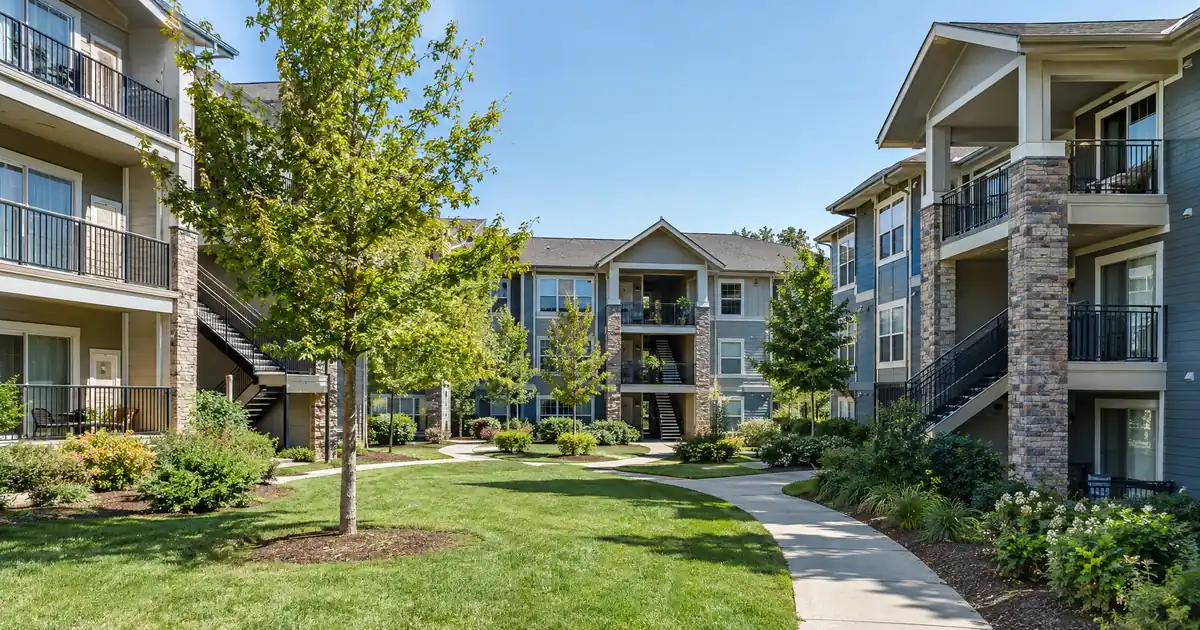
The Quick Read: Only when the building goes into a rental portfolio term loan. That structure counts rental properties or units, so five doors can clear its five-unit floor, though each lender sets its own minimums. The 30-year portfolio DSCR loan counts properties and takes no building of five or more units.
- A five-unit building is one property with five doors. The loan structure decides which number it counts as.
- The standard single-property DSCR loan is built for one to four units. A five-unit building sits in commercial multifamily territory.
- Reaching 10+ doors usually means the building plus other rentals under one note, such as five houses or a mix of duplexes and homes.
- The pool is tested together: all the rent against all the debt service. Weak doors can ride along with strong ones.
- Every file is reviewed individually, subject to lender guidelines. Nothing here is a commitment to lend.
Doors, Units, and Properties: How the Count Works
The count depends on which word the program uses. A door is one rentable unit. A property is one parcel with one or more doors. A five-unit building is five doors but one property. Programs count one or the other, and that single choice often decides the whole question.
DSCR means debt service coverage ratio. It compares a rental’s income to its monthly obligation. A blanket loan is one note secured by several rentals. You will also hear it called a portfolio DSCR loan or a cross-collateralized loan. All three names describe the same thing.
Here is how common compositions line up. The doors and properties columns are simple arithmetic.
| Composition | Properties | Doors | Fit |
|---|---|---|---|
| One five-unit building | 1 | 5 | Term loan only; not the 30-year |
| Five-unit plus five houses | 6 | 10 | Term loan |
| Five-unit plus three duplexes | 4 | 11 | Term loan |
| Ten single-family rentals | 10 | 10 | Either structure |
The first row is the one that surprises people. One building can meet a five-unit count, but it can never meet a two-property minimum. The sections below explain why.
Why Five Units Changes the Category
Five units is where residential financing ends and commercial multifamily begins. LoopNet’s CRE explainer puts the line there. It says buildings with five or more units are commercial multifamily. It also says underwriting on them leans on property income, coverage, net operating income and rent-roll quality.
Net operating income, or NOI, is rent minus operating costs, before debt service. That matters here. On a one-to-four unit rental, coverage is usually gross rent against the full payment. The payment means principal, interest, taxes, insurance and any HOA dues, which lenders call PITIA. On a five-plus unit building, the formula can shift toward NOI. The building’s contribution to your pool can shrink even though the rent roll looks the same.
Across our wholesale network, the standard single-property DSCR product is built for one to four units. Reaching a five-to-ten unit building takes a specialty tier, and those differ by lender. Some lenders extend to roughly eight to ten units, and others stop at four. Many investors learn this only after they have a contract on a building.
Two more things shape the file. Stabilized, leased buildings fit best, and heavy vacancy or a major rehab usually points toward other financing. And a lender will expect a fuller package than it would for a duplex, starting with the rent roll.
Which Blanket Structure Takes a Five-Unit Building?
The rental portfolio term loan does. The 30-year portfolio DSCR loan does not. Our network carries both, and they work differently.
| Feature | 30-year portfolio DSCR loan | Rental portfolio term loan |
|---|---|---|
| What it counts | 2 to 20 properties | 5+ properties or units |
| Loan size (typical) | $300,000 to $5,000,000 | $500,000 to $50,000,000 |
| Leverage ceiling | Up to 80% | Up to 75% |
| Terms | 30-year, fixed or adjustable | 3, 5, 7 or 10-year fixed, balloon |
| Property types | SFR, 2-4 unit, condo, townhome | Adds small multifamily |
| Five-unit building | Not eligible | Eligible, per lender terms |
The 30-year structure is the friendlier loan for a house-and-duplex portfolio. It amortizes over 30 years, and an interest-only period is available. But it stops at four units per property. A five-unit building has to go elsewhere.
The term loan is built for bigger pools. Leverage tops out at 75% of value, below the 30-year loan’s 80%. Fixed terms run three to ten years and end in a balloon. A balloon means a large unpaid balance comes due at maturity. You need a refinance or sale plan from day one.
Both leverage figures are program ceilings, subject to lender guidelines, credit approval and property review. They are not quotes. Individual lenders also set their own minimums, so the five-unit floor on paper may be higher at a specific lender.
So Is 10+ Doors a Requirement?
No program in our network sets ten as a magic number. The term loan’s floor is five properties or units. Ten doors is simply what you get when a five-unit building joins five other rentals.
Lenders may like a bigger pool because it spreads risk across more tenants. But doors alone don’t qualify you. The pool still has to clear coverage and leverage tests, and the loan still has to meet the structure’s minimum size.
The building’s weight in the pool matters more than the door count. A five-unit building holding most of the pool’s rent makes the file a commercial multifamily deal with a few houses attached. A lender will underwrite it that way.
How Pooled Coverage Works With a Five-Unit Building
Pooled coverage adds up the rent from every property, then divides by the pool’s total payment. Strong properties can offset weak ones. The 30-year portfolio loan tests the pool at a 1.00 floor, and the same pooled logic runs through the term loan, subject to lender guidelines.
Two formulas can sit inside one pool:
- Houses, condos and one-to-four unit rentals: monthly rent (a lease, or an appraiser-supported market rent) divided by PITIA.
- The five-unit building: NOI divided by debt service. That is the commercial way to run the test, and the exact formula depends on the lender.
Each property still needs a lease or an appraiser-supported market rent. A building that can’t show a rent roll or market rent has no income to contribute.
Pooled coverage rewards mixed quality. It also exposes you to your weakest large asset.
A Worked Example: The Pool Passes, One Asset Doesn’t
Run the numbers on a modeled pool: one five-unit building plus five single-family rentals. These are assumptions for illustration, not market data.
- Five houses, tested together: roughly 1.30x coverage.
- Five-unit building on NOI, tested alone: roughly 0.95x.
- Pool combined, with the building weighted by its larger balance: roughly 1.15x.
The building fails on its own, yet the pool clears 1.00. A rental below 1.00 coverage can sit in the pool when the others carry it. Underwriting tests the pooled coverage, the leverage and the terms.
Now change one assumption. Say the lender runs the whole pool on NOI instead of gross rent. The houses’ coverage slips because operating costs come out, and the pool may land closer to 1.08x. Whether that clears depends on the lender’s minimum.
That is the practical risk. A pool can look fine on gross rent and thin on NOI. Ask which basis the lender uses before you pick a structure.
Clearing the coverage test is also not the same as positive cash flow. The calculation compares rent to the payment only. Repairs, vacancy, management, utilities and capital spending sit outside it. A five-unit building has plenty of each.
What Lenders Look For
Qualification runs primarily on property-level rental income covering the payment, subject to lender guidelines. Your personal income is not the main event. These items usually matter most:
- Credit: a floor around 640 on the portfolio programs, with 680 or 720 on some structures.
- Entity: a special-purpose entity, typically an LLC, is required on some structures, per lender program requirements. Recourse loans carry a personal guarantee.
- Rent support: a lease or appraiser-supported market rent on every door.
- Rent roll: the first document a lender wants on the five-unit building.
- Reserves: on the term loan, reserves are held for taxes, insurance and capital expenditures.
- Property types: owner-occupied property, co-ops, mixed-use property and commercial property are ineligible in the pool.
Manufactured and mobile homes are not reviewable on these programs.
Cash-out on a pool never exceeds 75% of the pooled value. It also never exceeds the structure’s own ceiling. Within the first six months of ownership, the amount is capped by the seasoning rule.
Steps From Pre-Screen to Closing
1. Count the doors. Write down every property, its unit count, its occupancy and its ownership entity.
2. Sort the assets. One-to-four unit rentals go in one column and the five-plus unit building in another. Owner-occupied, mixed-use and commercial property drop out.
3. Pick the structure. If the building is in the pool, the term loan is the path. If every asset is one to four units, compare both.
4. Assemble the package. Leases, rent roll, insurance, a schedule of existing debt, and entity documents.
5. Test the pool. Run coverage on both gross rent and NOI. Pressure-test the weakest large asset.
6. Appraisals and underwriting. The lender values each property and re-tests the pool on its own formula.
7. Close through the entity. Title, vesting and guarantee terms follow the loan documents.
Release, Cross-Default and Exit Planning
Every property in the pool secures the whole debt. That is cross-collateralization. A default on the note can threaten the entire pool, which is cross-default. This is the price of simplicity.
The practical consequences show up when you want out of one building.
- Partial release: a release clause lets you sell one property out of the pool. Terms follow the loan documents. The release price runs above the property’s allocated balance, so selling one asset costs more than its slice of the debt.
- Re-testing: the remaining portfolio must still cover its debt service after a sale or release.
- Balloon: on the term loan, plan the exit before you sign.
- Prepayment: yield maintenance applies on the term loan. It is a prepayment charge that compensates the lender for lost interest. Read the schedule before signing.
- Recourse: non-recourse versions of the term loan exist, with carve-outs for fraud and bankruptcy. A recourse loan carries a personal guarantee.
In practice, pools with one oversized asset are the ones that cause friction. A building worth a third of the pool is hard to sell without distorting the rest. If you may sell the building within a few years, model the release price first.
Do You Actually Need a Blanket?
Not every five-unit investor does. A blanket loan trades flexibility for convenience, and the trade doesn’t always pay off.
| Your situation | Likely better fit |
|---|---|
| One five-unit building, nothing else | Single-asset commercial financing |
| Building plus 4+ other rentals | Rental portfolio term loan |
| Only 1-4 unit rentals, 2-20 of them | 30-year portfolio DSCR loan |
| Plan to sell assets one at a time | Separate loans |
| Mixed-use or owner-occupied pieces | Separate financing for those pieces |
A blanket fits when you plan to hold the whole pool. It also helps when one weak door benefits from stronger neighbors. It fits poorly when you expect to sell piecemeal or when one asset is far larger than the rest.
A single five-unit building by itself doesn’t need a blanket at all. It needs commercial multifamily financing. Agency rulebooks draw the same line. Freddie Mac’s multifamily primer runs multifamily for five or more units and single-family for one to four. Fannie Mae’s financed-property rule counts a multi-unit property as one property. DSCR loans are not agency products, so those rules don’t set our terms. They do show why a five-unit building is one property with five doors.
Common Mistakes (and Ineligible Assets)
Counting doors when the program counts properties. This is the biggest one. Five doors in one building is one property on the 30-year structure.
Ignoring the formula shift. Some investors run the whole pool on gross rent and later find the lender uses NOI on the large building.
Putting a half-vacant building in the pool. Heavy vacancy or rehab usually points to other financing. A blanket loan wants stabilized assets.
Adding assets that can’t be in the pool. Owner-occupied property, mixed-use buildings and commercial property are ineligible. A ground-floor shop under apartments makes a building mixed-use.
Forgetting the exit. A balloon and a release price are easy to ignore on day one and hard to ignore at maturity.
Treating coverage as profit. Clearing the number says the rent covers the payment. It says nothing about what is left after real operating costs.
Four-unit and smaller assets in the pool get the standard property-type treatment. Everything at five units and up is handled inside the term loan only.
Key Terms Defined
- Blanket loan: one loan note secured by several rental properties.
- Pooled coverage: total rent or NOI divided by the total debt service of every property in the loan.
- Cross-collateralization: every property secures the entire debt, not just its own share.
- Release clause: the loan term that lets you sell one property out of the pool by paying its release price.
- Allocated balance: the share of the loan assigned to one property.
- NOI (net operating income): rental income minus operating costs, before debt service.
- Balloon: a large balance due in one payment at the end of the term.
- Non-recourse: a loan that looks to the real estate, with personal liability limited to carve-outs such as fraud and bankruptcy.
Frequently Asked Questions
Does a five-unit building count as one property or five doors?
It is one property with five doors. The 30-year portfolio loan counts properties and takes no building of five or more units. The rental portfolio term loan counts properties or units, so the building can count toward its five-unit floor, subject to lender minimums.
Can a five-unit building and ten single-family homes go into one DSCR blanket loan?
Yes, in principle, under the rental portfolio term loan. The pool must meet the loan-size minimum, the leverage ceiling and the pooled coverage test, subject to lender guidelines. The homes alone could sit in the 30-year structure, but the building could not.
Will one weak building sink the pool?
Not necessarily. Pooled coverage lets stronger doors offset a weaker one. A lender still looks at leverage, terms and the weak asset’s size. A building that dominates the pool’s balance pulls the combined ratio toward its own.
Do I need an LLC?
Some structures require a special-purpose entity, typically an LLC, per lender program requirements. Others may allow different ownership. Recourse versions carry a personal guarantee. Ask which entity structure the lender requires before you title anything.
What if I want to sell just one building later?
A release clause allows it, on the loan documents’ terms. The release price runs above the property’s allocated balance, and the remaining pool must still cover its debt service. Model this before you sign, especially on the term loan.
Next Step
If you are buying or refinancing a rental property and want to see how the numbers work, Lendmire can help you compare DSCR loan options based on the property income, credit profile, leverage and investor goals. As a broker with DSCR programs across 41 markets, including Washington, D.C., it arranges these loans through select lenders in its wholesale network. You can reach the team at 828-256-2183. For the full picture of how these programs work, start with the complete DSCR loans guide.
If you own a five-unit building today, pick the structure first and the lender second, because the structure decides whether the building counts at all.
About Lendmire
Lendmire (NMLS# 2371349) is a mortgage brokerage built around DSCR investor lending, with programs available in 41 markets, including Washington, D.C. DSCR lenders commonly evaluate rental-income coverage instead of personal income paperwork — a practical fit for LLC-owned and multi-property investors. Terms vary by lender, property, leverage, and program. Scotsman Guide named Lendmire a Top Mortgage Workplace in both 2025 and 2026.
Get Started
Ready to find the right loan for you?
In about 30 seconds you can review financing options available for your investment property. No commitment required.
Informational only. Not a Loan Estimate, approval, or commitment to lend. Program availability and eligibility are subject to lender guidelines, credit approval, property review, and underwriting.
References
1. LoopNet: What Is a Multifamily Home?
2. Freddie Mac Multifamily: A Closer Look Primer
3. Fannie Mae Selling Guide B2-2-03: Multiple Financed Properties, Same Borrower
This article is part of Lendmire’s DSCR loan program — full qualification details, guidelines, and scenarios live on the program page.
Related reading: Can an Investor With 10+ Doors in LLCs Get a DSCR Portfolio Loan? · Does a Blanket DSCR Loan Make Sense for 10 or More LLC Rentals? · How a Blanket DSCR Loan Ends by Refinance, Sale or Payoff
Brandon Miller
Founder & CEO, Mortgage Loan Originator, Lendmire LLC
- Mortgage Loan Originator · NMLS# 1129696 · Verify on NMLS Consumer Access
- North Carolina Real Estate Broker · License# 343312 · Verify on NCREC
- North Carolina Insurance Producer · License# 19053198 · Property, Casualty, Life, Health · Verify on NAIC SBS
- Lendmire LLC · Firm NMLS# 2371349 · Verify firm licensure
Required disclosures. Lendmire (NMLS# 2371349) operates as a licensed mortgage broker, not a direct lender or depository. The discussion in this article is general in nature and should not be relied upon as financial, legal, or tax advice — every investment scenario is unique and should be reviewed by a qualified professional. Any loan inquiry is subject to lender underwriting, and this article is not a commitment to lend or a guarantee of approval. Mortgage rates, loan terms, and program guidelines vary by borrower, property, and state, and may change without notice. Equal Housing Opportunity. Verify licensure at NMLS Consumer Access.