
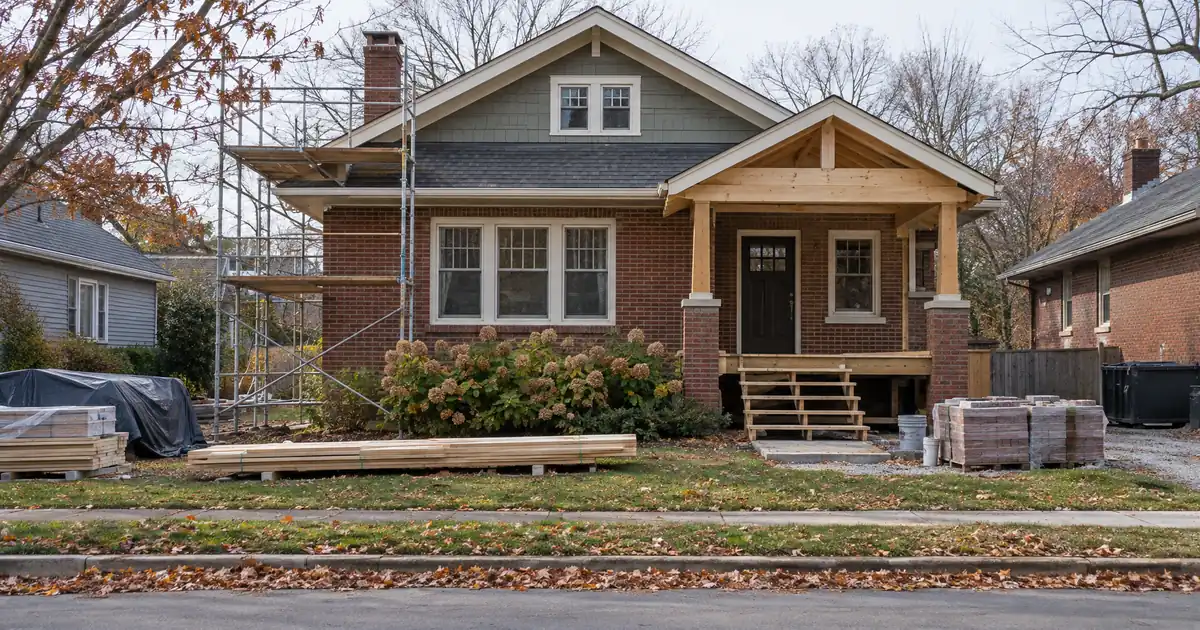
The Quick Read: Choose interest-only when the finished rental needs a lighter payment to clear the coverage test or to carry the months while rents settle. Choose amortizing when the deal already clears comfortably and you plan to hold. Interest-only changes the payment, not the credit, leverage, or reserve rules around it.
- Interest-only helps the coverage ratio only where the program tests the interest-only payment. Some programs test a fully amortizing payment instead.
- Amortizing pays down principal every month. Interest-only leaves the balance flat during the interest-only period.
- On a standard rental, a cash-out refinance tops out around 75% LTV, and about 6 months of seasoning is the common expectation.
- Interest-only periods and 40-year terms come through select lenders in the network, so confirm availability before you commit to a rehab plan.
- Clearing the coverage test is not the same as positive cash flow. These specifics are subject to lender guidelines and a full review of property, leverage, and credit.
The Honest Answer
Interest-only is for the investor with a real but thin coverage number after a large cash-out, or one whose rents are still ramping. That investor also needs a written plan for the day the payment steps up. Amortizing is for the investor who wants equity built by the note itself and a payment that never changes shape.
Neither is the smarter loan in the abstract. They are two payment schedules on the same collateral. The right one depends on how the lender tests the ratio and on what you plan to do in year five.
Side-by-Side
| Factor | Interest-only | Fully amortizing |
|---|---|---|
| Review basis | Rent vs. monthly obligation; docs on the property | Same |
| Payment the ratio tests | Varies; some test IO, some test amortized | Full principal-and-interest payment |
| Property types and vesting | 1-4 unit rentals; LLC subject to program terms | Same |
| Principal paydown | None during the IO period | Every month |
| Payment over the hold | Steps up when the IO period ends | Stays on one schedule |
| Availability and reserves | Select lenders; reserves commonly about 6 months | Standard structure; reserves vary by file |
The interest-only column reflects published industry norms. Lendmire’s wholesale network places both structures, and specifics vary by lender, leverage, and loan size.
Both structures are for non-owner-occupied rentals. Manufactured homes (single- and double-wide), log homes, and barndominiums are not offered in the network’s DSCR programs. Neither structure changes that.
What the Coverage Test Actually Measures
DSCR in a rental loan is rent used for lender review divided by the monthly housing obligation: principal, interest, taxes, insurance, and any association dues (together, PITIA). That differs from the commercial version, which divides net operating income by total debt service. On a rental file, rent comes from the lease or from the appraiser’s market-rent schedule (Form 1007 for a single-family home, Form 1025 for a small income property).
Here is the fork that matters. Under an interest-only structure, a program may test the interest-only payment, which leaves principal out of the denominator and lifts the ratio. Another program may let you pay interest-only but test coverage on a fully amortizing payment. In that case your cash flow improves but your ratio does not.
Ask the lender which payment goes into the number. Do it before the rehab starts, not after the appraisal comes back.
DSCR loans are designed for non-owner-occupied investment properties. Because they are business-purpose investor loans, they are reviewed differently from a standard owner-occupied mortgage, as the federal consumer-finance regulator’s Truth in Lending guide describes. The exemption turns on the purpose of the loan, not the label. Compliance Alliance notes that owner-occupied rentals follow different unit-count rules.
Key Terms Defined
Seasoning is the waiting period a lender wants between buying or rehabbing a property and refinancing it. For cash-out, about 6 months is the common expectation.
Interest-only period is the stretch where you pay interest plus taxes, insurance, and dues, but no principal.
Amortization is repaying principal and interest in scheduled payments until the balance reaches zero.
Payoff-only refinance replaces the bridge loan without pulling extra cash. Cash-out pulls more than the payoff.
When Interest-Only Is the Better Fit
Interest-only earns its place in a few specific situations.
A thin ratio after a large cash-out. A bigger pull means a bigger balance and a smaller coverage number. If the program tests the interest-only payment, removing principal from the denominator can move a marginal file over the line. 1.00 is where many select programs start. A separate select-lender path takes coverage below 1.00, with leverage and terms adjusted. Interest-only is one lever. It does not lower the credit, leverage, or reserve requirements. Terms depend on the lender’s guidelines, the property type, the leverage, and a full review of the credit profile.
A stabilization window. Right after a rehab, the unit may sit empty for a stretch or lease at an introductory rent. A lighter payment gives you room while that settles. (Vacancy, repairs, and management all sit outside the DSCR calculation, so this room is real money.)
A short, planned hold. If you plan to sell or refinance again before the reset, you may never pay the higher schedule. The plan has to be concrete, though. A hope that rents will rise is not a plan.
A scaling strategy. Investors recycling cash into the next rehab sometimes want the freest monthly carry on the finished property. That trade is honest if you accept that the balance does not fall.
Not every file can use it. Interest-only periods come through select lenders, and loans above $2,500,000 are generally held to 30-year fixed structures. Stacking an interest-only period on an ARM adds a second source of payment change. Weigh that before you accept it.
When Amortizing Is the Better Fit
Amortizing is the better answer more often than investors expect.
The deal already clears. If rent covers the full amortizing payment with room to spare, interest-only buys you a bit of monthly cash and costs you principal paydown. Often that is not worth the added complexity.
A long hold. Over a long hold, principal paydown is equity you did not need appreciation to earn. It also makes the next refinance easier, because the balance is smaller against the value.
No exit plan. The OCC’s consumer guidance on interest-only mortgages says interest-only periods typically run 3 to 10 years. When one ends, the payment rises even if nothing else changes, because the full balance must now be repaid over what remains of the term. It is consumer guidance, not DSCR-specific, but the mechanics carry over. That is payment shock. A 10-year interest-only period on a 30-year term means repaying the balance over just 20 years. The payment lands above a standard 30-year amortizing payment.
A file that depends on cash-out. Reserves, closing costs, and the bridge payoff all come out of the proceeds. Reserves are commonly about 6 months of PITIA, and they can step up on larger loans. Keep the plan simple when the margins are tight.
Predictability. One schedule, no reset, nothing to refinance out of. Skip the cleverness.
One Rehab, Two Structures
Here is a modeled example. These are assumptions, not market data. Picture a finished duplex refinanced as a cash-out at 75% LTV on the new appraisal. The exact numbers vary by lender and program and follow a full review of property, leverage, and credit.
Assume rent covers the interest-only obligation at about 1.15x. On a fully amortizing schedule, the same rent covers the obligation at about 0.98x.
- Program tests the interest-only payment: the file clears a 1.00 floor.
- Program tests an amortizing payment: the file sits below 1.00. A select-lender path exists for coverage below 1.00, with leverage and terms adjusted, but the file will be reviewed on those adjusted terms.
- At the reset: the same rent over a higher schedule could drop coverage toward 0.9x. Only a rent increase, a pay-down, or a refinance fixes it.
Appraisal matters just as much. The new lender sizes the loan on its own appraisal, not on your after-repair estimate. A lower value at 75% LTV means a smaller loan. That leaves more of your cash in the deal and may leave the bridge loan harder to pay off. Run that case before you start, because rehab overruns hit the same spot. Final terms depend on the lender’s guidelines, the property type, and the borrower’s complete credit picture.
Which Option Fits Which Plan
| Hold plan | Leaning | Why |
|---|---|---|
| Sell within a few years | Interest-only | Reset may never arrive |
| Refinance again soon | Interest-only | Early re-refinance may erase some benefit; check terms |
| Long-term hold | Amortizing | Principal paydown builds equity |
| Thin coverage, strong exit | Interest-only | Only if the program tests the IO payment |
| Strong coverage, no exit | Amortizing | Simple and stable |
Questions to Ask Before the Bridge Loan Closes
Pick the permanent structure before you borrow for the rehab. A bridge loan that matures before the refinance is available can force a bad exit. These are the questions to put to any lender:
1. Is coverage tested on the interest-only payment or on an amortizing payment?
2. How long is the interest-only period, and how does the balance repay after it?
3. Is there a balloon at maturity?
4. What seasoning applies to a cash-out?
5. What reserves will the file need, and do they come from the proceeds?
6. Does the loan carry a prepayment term that affects an early second refinance?
For the payment-structure tradeoff on a different loan type, see Lendmire’s article Interest-Only vs Fully Amortizing Jumbo Loan for a Home Buyer.
A Balanced Verdict
Choose interest-only when three things are true. The program tests the interest-only payment, the thin ratio is the real obstacle, and you have a dated plan to sell, refinance, or raise rent before the reset. Choose amortizing in almost every other case. It builds equity, removes the reset, and keeps the file easy to explain.
Credit still matters either way. A 620 floor exists in parts of the network, and most programs want around 660. A 700-plus score tends to unlock the strongest leverage tiers. A larger down payment can lift the ratio, but it never erases leverage caps, credit floors, or reserve rules. The strongest files have enough equity and enough rental coverage. The complete DSCR loans guide walks through those tests in full.
This article is educational, not legal or tax advice. Tax treatment can depend on how the funds are used and how the property is held; investors should keep clear records and speak with a qualified tax professional before relying on any deduction. For questions about your own file, consult a qualified attorney or CPA.
Frequently Asked Questions
Does interest-only lower the DSCR I need?
No. It can change the payment that goes into the ratio, but the floor, credit, leverage, and reserve requirements stay the same. Any benefit depends on whether the program tests the interest-only payment. Leverage, reserves, and pricing vary by lender and program; the final terms follow the full file review.
Can I do a cash-out refinance right after the rehab?
Usually only after seasoning, which is commonly about 6 months for a cash-out. Cash-out tops out around 75% LTV on a standard rental, based on the new appraisal. A payoff-only refinance may carry different terms, with a ceiling of 85% LTV on select programs.
What happens when the interest-only period ends?
The balance starts to amortize over the remaining term, so the payment steps up. Check whether the note amortizes or has a balloon at maturity. The step-up is significant, so model your coverage at the reset before you sign.
Does a DSCR refinance fund the rehab itself?
Typically not. Short-term bridge or hard money financing usually handles the rehab. The DSCR loan replaces it once the property is finished, leased, and seasoned.
Does passing the coverage test mean the property makes money?
No. The ratio compares rent to PITIA only. Repairs, vacancy, management, utilities, and capex sit outside it, so run your own cash-flow numbers too.
Next Step
If you are buying or refinancing a rental property and want to see how the numbers work, Lendmire can help you compare DSCR loan options based on the property income, credit profile, leverage, and investor goals. Lendmire is a mortgage broker arranging DSCR financing through select lenders in its wholesale network across 41 markets, including Washington, D.C.
About Lendmire
Lendmire (NMLS# 2371349) is a mortgage brokerage built around DSCR investor lending, with programs available in 41 markets, including Washington, D.C. DSCR lenders commonly evaluate rental-income coverage instead of personal income paperwork — a practical fit for LLC-owned and multi-property investors. Terms vary by lender, property, leverage, and program. Scotsman Guide named Lendmire a Top Mortgage Workplace in both 2025 and 2026.
Get Started
Ready to find the right loan for you?
In about 30 seconds you can review financing options available for your investment property. No commitment required.
Informational only. Not a Loan Estimate, approval, or commitment to lend. Program availability and eligibility are subject to lender guidelines, credit approval, property review, and underwriting.
References
1. CFPB Truth in Lending guide
2. Compliance Alliance: Regulation Z and investment properties
3. OCC consumer publication on interest-only mortgages
This article is part of Lendmire’s DSCR loan program — full qualification details, guidelines, and scenarios live on the program page.
Related reading: Portfolio DSCR Loan vs. a DSCR Loan on Every Rental · Five-Year vs Ten-Year DSCR Portfolio Term Loan at Maturity · How a DSCR Lender Reads a Stabilizing BRRRR Rehab Batch
Brandon Miller
Founder & CEO, Mortgage Loan Originator, Lendmire LLC
- Mortgage Loan Originator · NMLS# 1129696 · Verify on NMLS Consumer Access
- North Carolina Real Estate Broker · License# 343312 · Verify on NCREC
- North Carolina Insurance Producer · License# 19053198 · Property, Casualty, Life, Health · Verify on NAIC SBS
- Lendmire LLC · Firm NMLS# 2371349 · Verify firm licensure
Legal disclosures. Lendmire (NMLS# 2371349) is a state-licensed mortgage brokerage that arranges financing through wholesale lender relationships. Lendmire is not a direct lender, depository institution, or registered financial advisor. The discussion above is general informational content about real estate financing — it is not financial, legal, or tax advice, and readers should consult licensed professionals for guidance on their individual circumstances. Loan inquiries are subject to lender underwriting; this article does not represent a commitment to lend. Loan terms, rates, and qualification standards vary by borrower, property, and state, and are subject to change at any time. Equal Housing Opportunity. NMLS Consumer Access: nmlsconsumeraccess.org.