
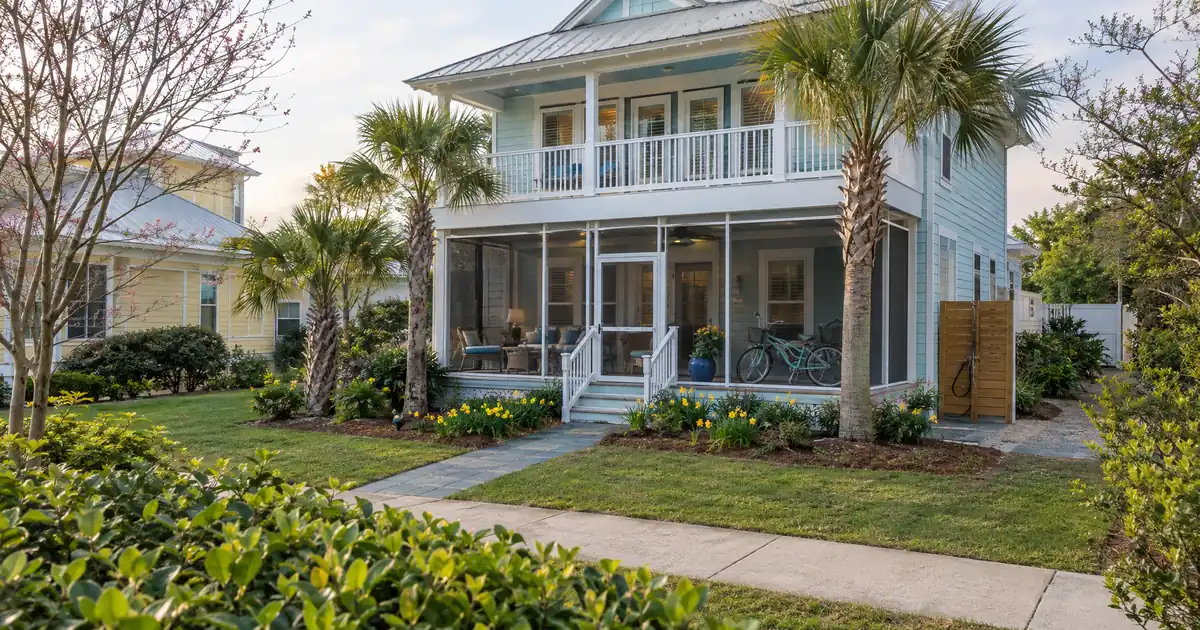
The Quick Read: Usually yes, because most DSCR programs do not require a lease to be a year old. Once a former Airbnb is leased long-term, the lender generally underwrites it as a long-term rental. The clock that matters most is how long you have held title, and across our wholesale network that is commonly about six months, subject to lender guidelines.
- The one-year worry mostly comes from conventional cash-out rules, not DSCR programs.
- Ownership seasoning, lease evidence, and hosting history are three separate clocks.
- A signed lease plus the appraiser’s market rent carries the income side of a converted file.
- Standard-rental cash-out tops out around 75% LTV; short-term-rental cash-out tops out at 70%.
- Clearing 1.00 coverage does not mean the property makes money after repairs, vacancy, and management. Each figure is subject to lender guidelines and a complete review of property type, leverage, and credit.
You stopped hosting, signed a tenant, and now you want the equity out. Fair question. The answer depends on which clock a lender is actually reading.
DSCR Cash-Out Calculator
Run the cash-out numbers in your market
Rate source: Freddie Mac 30-yr average via FRED® — Federal Reserve Bank of St. Louis · effective Oct 15, 2026
Prefilled with starting assumptions — enter your property’s value, balance, taxes, and insurance for a more accurate picture.
Program parameters update from Lendmire’s centralized guideline source. Taxes and insurance are editable estimates.
As of Oct 15, 2026 · General Freddie Mac market benchmark, not a Lendmire loan offer. Property value, balance, taxes, and insurance are editable estimates. Maximum loan-to-value varies by lender, program, property type, and seasoning. Not a Loan Estimate, approval, or commitment to lend. Program availability and eligibility are subject to lender guidelines, credit approval, property review, and underwriting.
Which Clock Is the Lender Reading?
Three different clocks get mixed together, and mixing them is why people assume a year is required. Each one answers a different question.
Title seasoning is the time you have owned the property. Lenders usually count it from the recorded deed date, not from the day rehab finished or a tenant signed. Across the programs we place files with, about six months is the common expectation for a cash-out.
Lease history is how long the current tenant has been in place. We do not see a DSCR program that demands a 12-month-old lease. The lender wants the in-place lease and the appraiser’s rent opinion. A brand-new lease is usually acceptable.
Hosting history is how long you operated as a short-term rental. About 12 months of it is expected only when the property is still being run as a short-term rental. Once the unit is leased long-term, that requirement generally falls away.
Where does the 12-month figure come from? Conventional (agency) cash-out. Fannie Mae’s guide asks for at least six months on title before a conventional cash-out, and trade coverage of the 2023 changes reports that the first mortgage being paid off must be at least 12 months old. That is an agency rule. DSCR loans are business-purpose investor loans, and agency seasoning does not govern them.
What Happens to the Airbnb Income?
Once the property is converted and leased, the file is underwritten on long-term terms. Past Airbnb income is not counted. That is our position from placing these files, and it is a good thing for most owners, not a penalty.
Here is why. Short-term income is volatile, so lenders treat it cautiously. A signed lease is simple evidence. Fannie Mae’s June update to appraisers explains that Form 1007 is the appraiser’s estimate of monthly market rent on a single-family investment property. Two to four units use Form 1025 with a unit-by-unit rent schedule, and HUD’s guidance on rent schedules describes the same pairing.
The income figure is often the lower of the lease and the appraiser’s market rent. That is common practice, not a universal rule, and it varies by lender.
Nightly rate times 30 is not market rent. HousingWire reports that Fannie Mae policy leaders say Form 1007 is not designed to support short-term-rental income, and using it that way can produce artificially low DSCR figures. So a former Airbnb with a long-term lease is a cleaner file than one still taking bookings on a thin record.
The tradeoff is real. If your Airbnb earned more than long-term rent would, that extra income stops counting the day you convert.
What Does the Cash-Out Test Actually Check?
DSCR is the debt service coverage ratio. It compares the rent to the full monthly obligation: principal, interest, taxes, insurance, and association dues, together called PITIA. Divide the rent by that obligation and you have the coverage number.
On a cash-out, that test runs on the new, larger obligation. Pulling equity raises the loan, which raises the payment, which lowers coverage. Many owners miss this. The old payment looked easy; the new one may not.
Most cash-out files are tested on three things at once:
- Leverage. Standard rentals top out around 75% LTV on a cash-out across most of the network. LTV, or loan-to-value, is the loan balance divided by the appraised value. A former Airbnb with a signed long-term lease is generally treated as a standard rental. A property still operating as a short-term rental tops out at 70% on a cash-out.
- Coverage. 1.00 is where many select programs start, and it is a floor for those programs, not the standard. Stronger ratios open better pricing and leverage. A separate select-lender path takes coverage below 1.00, with leverage and terms adjusted.
- Credit and reserves. A 620 floor exists in parts of the network, most programs want around 660, and 700+ unlocks the strongest leverage tiers. Reserves, the liquid cash a lender wants left over after closing, commonly run around 6 months of PITIA but vary by lender, leverage, and loan size.
Clearing 1.00 is not the same as positive cash flow. Repairs, vacancy, management, utilities, and capital expenses sit outside the calculation. A file can pass and still be a thin investment.
Decision Table: Where Do You Stand?
Match your situation to the likely path. These are typical patterns, not guarantees, and each lender sets its own wording.
| Your situation | Likely path | Income basis |
|---|---|---|
| Owned 6+ months, new lease signed | Cash-out on long-term terms | Lease and appraiser rent |
| Owned under 6 months | Wait, or sized on cost basis | Lease and appraiser rent |
| Still hosting on Airbnb | Short-term terms apply | Hosting history, or fallback rent |
| Lease is below market or related-party | Smaller loan or fix the lease | Lower-of lease and market rent |
| Payoff only, no cash taken | Often reviewed as rate-and-term | Lease and appraiser rent |
Worked Scenarios
Run these as coverage and leverage pictures. No dollar figures, because every file differs.
Fresh lease, owned well past six months. Say you stopped hosting last month and signed a one-year lease. You have held title for roughly a year. Title seasoning is satisfied. The lender orders an appraisal for value and market rent. If the rent covers the new, larger obligation at around 1.20x, the file looks healthy at up to 75% LTV, subject to credit, reserves, and lender review.
Owned three months, lease signed. Title seasoning is the problem here, not the lease. Inside the window, lenders often size the loan on the lower of cost basis or appraised value, which can shrink the cash you pull. Waiting a few more months generally lets the loan size on appraised value. That is the “smaller cash-out now versus bigger cash-out later” tradeoff.
Converted, but the long-term rent is thin. Suppose long-term rent lands near 0.95x on the new payment. You have options a lender would review: a smaller cash-out, a sub-1.00 path through select lenders in the network with leverage and terms adjusted, an interest-only period through select lenders, or keeping the short-term-rental structure with its 12-month history requirement. None of this is assured. It all depends on credit approval, property review, and lender guidelines.
Bought with hard money or a bridge loan. A lien on the property generally means it is not treated as cash. Delayed financing, the exception for all-cash buyers, usually does not fit. A payoff-only refinance is easier than a cash-out here.
Wait or Go Now?
Go now if you have held title past the usual six-month mark, the lease is signed, and the rent covers the larger payment with room to spare. Waiting buys you nothing on lease age, since lenders rarely want a year of lease history.
Wait if title seasoning is short, because the loan may size on cost instead of value. Wait, too, if the coverage number only works at a leverage you cannot reach.
There is a cost on the far side. Many DSCR loans carry prepayment penalties that lock you in for a few years. A cash-out you do too early, followed by a second refinance, can be expensive. Think about the second move before making the first.
This one is a genuine toss-up for owners at four or five months: a smaller cash-out now helps a project, while the wait yields more cash. Price both before choosing.
Documents to Gather
A converted file stalls on paperwork more often than on math. Build the folder before you apply.
| Document | What it proves | Common pitfall |
|---|---|---|
| Signed lease | Tenant, term, rent | Missing signatures |
| Deposit and first month’s rent | Tenant actually paid | Cash with no record |
| Platform statements | Date hosting stopped | Listing still active |
| Landlord insurance policy | Coverage matches use | Policy still says short-term |
| Entity papers, if an LLC holds title | Who owns the property | Title in a different name |
If an LLC holds title, that works subject to lender program eligibility. Short-term rental rules can vary by city, county, HOA, and property type, so investors should confirm local rules before relying on projected rental income. Deactivate old listings and permits you no longer need, since a lingering listing can make a lender question the classification.
A below-market lease to a friend or relative will usually be read at the lower number, and a related-party lease draws extra questions. Keep rent payments flowing through a clear account, not mixed with personal deposits.
Key Terms Defined
Seasoning is the waiting period between two events, usually buying a property and refinancing it.
Cash-out refinance is a new loan larger than the old one, with the difference paid to you.
Form 1007 is the appraiser’s single-family rent schedule estimating market rent; Form 1025 is the version for two to four units.
Delayed financing is a cost-based cash-out exception for buyers who paid all cash and refinance soon after purchase.
Prepayment penalty is a fee for paying a loan off early, usually within the first few years.
Frequently Asked Questions
Do I need a 12-month lease before a DSCR cash-out?
No, not on most programs we place files with. The in-place lease and the appraiser’s market rent are the income evidence.
Does my old Airbnb income still count after I convert?
Generally not. Once the property is leased long-term, it is underwritten as a long-term rental on the lease and market rent. If you want short-term income counted, the property typically needs to keep operating as a short-term rental, with about 12 months of hosting history and a 70% cash-out ceiling.
When does the seasoning clock start?
Typically at the recorded deed date, not when you finish rehab or sign a tenant.
Will a cash-out refinance always put money in my pocket?
No. A refinance that only pays off the old loan and costs is usually reviewed as rate-and-term, which returns no cash and often carries lighter seasoning.
Is passing 1.00 coverage the same as making money?
No. The ratio compares rent to the housing payment only. Repairs, vacancy, management, and utilities sit outside it, so run your own cash-flow numbers too.
Tax treatment can depend on how the funds are used and how the property is held; investors should keep clear records and speak with a qualified tax professional before relying on any deduction.
For the full picture of how these loans work, see Lendmire’s complete DSCR loans guide. For the opposite scenario, Lendmire’s piece Can You Cash-Out Refinance an Airbnb Before Twelve Months? covers properties still operating as short-term rentals.
If you are buying or refinancing a rental property and want to see how the numbers work, Lendmire can help you compare DSCR loan options based on the property income, credit profile, leverage, and investor goals. Qualification is subject to lender guidelines and is not a commitment to lend.
Investors focused on short-term rentals can review DSCR loans for Airbnb and short-term rentals.
For how equity extraction works on an investment property, see Lendmire’s guide to cash-out refinance on an investment property.
About Lendmire
Lendmire, NMLS# 2371349, is a mortgage brokerage focused on investor financing, arranging DSCR loans in 40 states plus Washington, D.C. — 41 markets total. Qualification is based on the property’s income rather than personal income documentation, subject to lender guidelines, making it a fit for LLC-held rentals and scaling portfolios. Scotsman Guide named Lendmire a Top Mortgage Workplace in both 2025 and 2026.
Get Started
Ready to find the right loan for you?
In about 30 seconds you can review financing options available for your investment property. No commitment required.
Informational only. Not a Loan Estimate, approval, or commitment to lend. Program availability and eligibility are subject to lender guidelines, credit approval, property review, and underwriting.
References
1. Fannie Mae Selling Guide B2-1.3-03: Cash Out Refinance Transactions
2. Fannie Mae Appraiser Update, June 2024
3. HousingWire: Short-term rentals are breaking the appraisal playbook
This article is part of Lendmire’s investment property cash-out refinance program — full qualification details, guidelines, and scenarios live on the program page.
Related reading: Can You Stay in Your Own Airbnb If It Has a DSCR Loan? · Do You Need a Lease for a Short-Term Rental DSCR Loan? · How to Qualify for a Lower-Payment DSCR Refinance for a Converted Airbnb
Brandon Miller
Founder & CEO, Mortgage Loan Originator, Lendmire LLC
- Mortgage Loan Originator · NMLS# 1129696 · Verify on NMLS Consumer Access
- North Carolina Real Estate Broker · License# 343312 · Verify on NCREC
- North Carolina Insurance Producer · License# 19053198 · Property, Casualty, Life, Health · Verify on NAIC SBS
- Lendmire LLC · Firm NMLS# 2371349 · Verify firm licensure
Legal disclosures. Lendmire (NMLS# 2371349) is a state-licensed mortgage brokerage that arranges financing through wholesale lender relationships. Lendmire is not a direct lender, depository institution, or registered financial advisor. The discussion above is general informational content about real estate financing — it is not financial, legal, or tax advice, and readers should consult licensed professionals for guidance on their individual circumstances. Loan inquiries are subject to lender underwriting; this article does not represent a commitment to lend. Loan terms, rates, and qualification standards vary by borrower, property, and state, and are subject to change at any time. Equal Housing Opportunity. NMLS Consumer Access: nmlsconsumeraccess.org.