
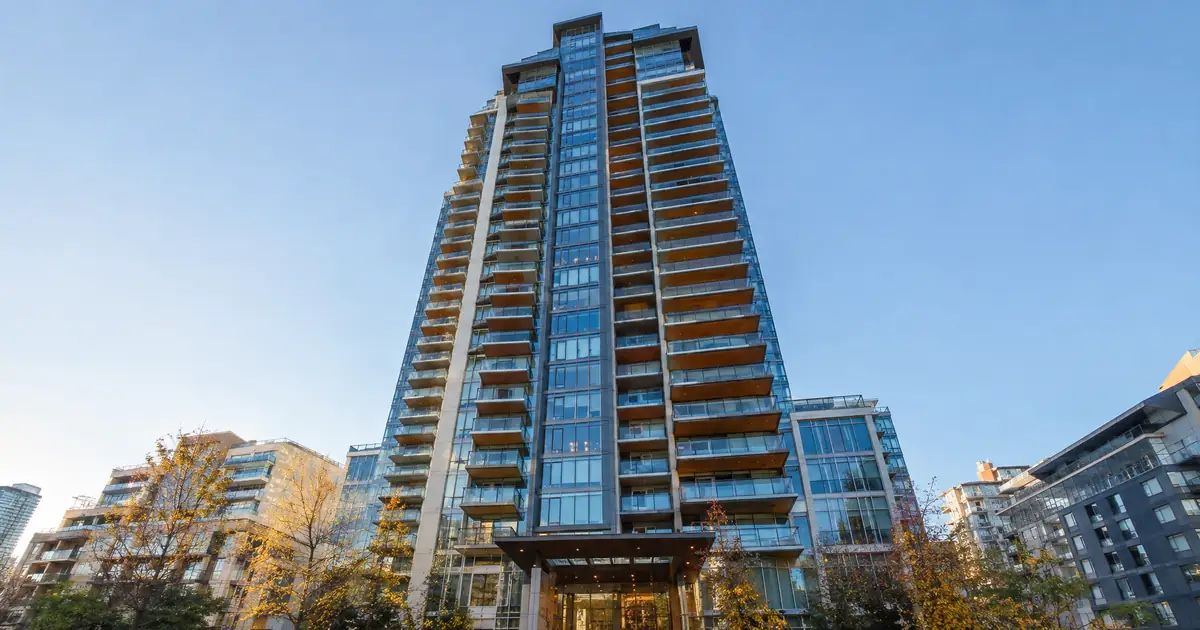
The Quick Read: Usually not, while the developer still controls the owners’ association or the tower is unfinished. Loan size is rarely the problem; the building is. Most programs we place files with want a completed project, a certificate of occupancy, and owners running the board. Once turnover happens, a founder can look like any other qualified high-balance investor.
- Loan size is not the blocker. The standard program tops out at $3,000,000, and the portfolio ladder carries qualified investors to $10,000,000, subject to underwriting.
- Developer control is the blocker. Unfinished phases, developer-appointed boards, and unsold inventory draw project-level scrutiny, and some lenders decline them outright.
- Your traditional personal-income documentation is not the test. The loan is reviewed primarily on property-level rental income covering the payment, subject to lender guidelines. Credit, reserves and liquidity still matter.
- Timing decides the plan. Close before turnover and you may need cash. Wait for turnover and the financing path opens.
“Founder” can mean two people. One is a business owner or high-net-worth buyer picking up a unit in a new tower. The other is an early buyer in a building where the developer still runs the association. Both hit the same gate, and this article walks through it.
DSCR Calculator
Run the numbers in your market
Rate source: Freddie Mac 30-yr average via FRED® — Federal Reserve Bank of St. Louis · effective Oct 15, 2026
Prefilled with starting assumptions — enter your own rent or nightly figures, taxes, insurance, and HOA for a more accurate picture.
Program parameters update from Lendmire’s centralized guideline source. Taxes and insurance are editable estimates.
As of Oct 15, 2026 · General Freddie Mac market benchmark, not a Lendmire loan offer. Rent, nightly rate, occupancy, taxes, and insurance are editable estimates. Short-term rental figures are estimates only and vary significantly by season, property type, management approach, and local short-term-rental rules — confirm local regulations before relying on them. Qualifying income for short-term rentals varies by program — some use appraisal market rent, others use documented STR history or projections — and is confirmed in underwriting. Not a Loan Estimate, approval, or commitment to lend. Program availability and eligibility are subject to lender guidelines, credit approval, property review, and underwriting.
Key Terms Defined
Super jumbo: An informal label for very large loans. No law defines it; each lender sets its own tier.
DSCR (debt service coverage ratio): Monthly rent divided by the full monthly obligation: principal, interest, taxes, insurance and association dues. A 1.00 means rent just covers the payment.
Non-warrantable condo: A condo project that falls outside standard agency-style project rules. It is a financing label, not a defect.
Developer-controlled: The developer (the declarant) appoints the board, sets the budget, and holds a vote for every unsold unit.
Turnover: The point where unit owners elect a majority of the board and take over the association from the developer.
Condotel: A condo with hotel-style features, such as a rental pool. It is a separate and harder category.
Reserves: Liquid cash a lender wants you to hold after closing, counted in months of payments.
Why Is Loan Size Not the Real Problem?
Super jumbo has no legal definition. Lenders set the tier themselves, and the loan stays a non-agency, business-purpose product. That cuts both ways. Agency project rules do not bind these lenders, but each lender writes its own project rules instead.
The agencies still supply the vocabulary. Fannie Mae’s Selling Guide treats a project as new when the owners’ association is still under developer control, construction is unfinished, or phasing remains. Those same traits are what DSCR lenders mean when they call a tower non-warrantable.
DSCR is also now a mainstream product. Scotsman Guide reports DSCR volume grew more than 50% year over year in 2024 and became the largest share of non-QM production. Big balances are not exotic. A developer-controlled tower still is.
Here is the size ladder for a DSCR of 1.00 or higher, all subject to underwriting and through select wholesale programs. The bands are loan amounts, not purchase prices:
| Loan size | Purchase leverage |
|---|---|
| $150K–$1M | 80% |
| $1M–$1.5M | 75% |
| $1.5M–$2M | 75% |
| $2M–$3M | 75% |
| $3M–$4M | 65% |
| $4M–$6M | 60% on review |
| $6M–$10M | 60% on review |
The program credit floor is 660 on loans to $3,000,000 and 700 above $3,000,000. The top leverage in each band needs more than the floor. The 80% cell up to $1,000,000 needs 660 or better. The 75% cells need 700 or better from $1,000,000 to $1,500,000, and 720 or better from $1,500,000 to $3,000,000. Above $3,000,000 the top cells need 700 or better. A lower score drops you to a lower leverage cell in the same band.
Above $2,000,000 you need two appraisals. Reserves are typically six months on the subject property, twelve for first-time investors. Above $3,000,000 there is no cash-out, and above $4,000,000 every request is reviewed case by case before submission.
What Does Developer Control Do to a File?
It stacks risk on top of risk. Super jumbo files already carry the lowest leverage and the tightest credit and reserve rules. A developer-controlled tower adds unsold inventory, a budget the developer wrote, and phases that may not exist yet. Lenders layer those overlays.
Across our wholesale network, tolerance varies. A few lenders will look at a developer-controlled project with reduced leverage or caps. Many decline it outright. The strictest want a finished building, a certificate of occupancy, and an owner-run association before they will even open the file.
The condo questionnaire is where this shows up. Non-QM versions typically ask whether the developer has handed over control and, if not, when. They ask whether the developer is renting units, who pays assessments on unsold units, and how much of the project has sold and closed. Investor concentration and single-entity ownership get their own sections. GoverningDocs lists developer control, high delinquency and investor concentration among the typical non-warrantable triggers, and notes that a building can be reclassified once the failing item is cured.
| Issue | Typical lender reaction |
|---|---|
| Investor concentration | Allowed by many DSCR programs, with limits |
| Unsold-unit concentration | Reduced leverage or caps on some programs |
| Developer still in control | Declined by many; a few allow with overlays |
| Construction unfinished, no certificate of occupancy | Declined by nearly all |
A phased tower with later phases or annexation rights also stumbles on the “is the project 100% complete” question. Plain and simple: no completion, no loan.
When Does Turnover Actually Happen?
Later than most buyers assume. The declarant appoints the board and controls the budget. Timing comes from the building’s declaration plus state law, so no single percentage applies everywhere.
In Colorado’s version of the uniform act, turnover is tied to 75% of units conveyed. Staged owner board seats at 25% and 50% sold are part of that framework. Florida sequences turnover by vote under Fla. Stat. §718.301. Turnover means owners elect a majority of the board. Filling the first minority seats does not count.
So “developer control ends at 50% sold” is a myth. Statutory triggers vary by state and document, and the wait can run years. The most useful single fact to request from the developer’s sales office is the expected turnover date, in writing.
Why a Founder’s Income Isn’t the Issue (and What Is)
Your traditional personal-income documentation and employment history are not the test. Title can sit in an LLC, subject to program eligibility, with no layered entities.
What does matter is liquidity. The credit floor is 660 on loans to $3,000,000 and 700 above $3,000,000. Expect six months of reserves on the subject property. Cash-out proceeds never satisfy reserves. Above $3,000,000, the super jumbo overlay also wants a clean housing history, 48-month event seasoning, and citizen or permanent-resident borrowers.
For a founder, source of funds is the quiet requirement. Money from a company sale or an operating account needs a clean paper trail. Business funds and personal funds should be separated before you go under contract, not after.
What Does the Loan Size Do Inside a Restricted Building?
The condo-type ceilings can bind before the super jumbo ladder does. Across our network, non-warrantable condos run to 75% leverage and $1,500,000. Condotels run to 75% on a purchase and 65% on a refinance, also capped at $1,500,000, with $250,000 cash in hand. Leverage, reserves, and pricing vary by lender and program; the final terms follow the full file review.
So a $3,000,000 unit in a non-warrantable tower may not fit the non-warrantable condo box at all, regardless of how strong the rent is. The ladder tells you what the loan size allows. The property type tells you what the building allows. The lower number wins. Both are subject to underwriting.
A Worked Scenario (Ratios and Percentages Only)
Picture a founder looking at a luxury unit in a completed tower, priced at $2,400,000. The founder wants 75% leverage on a purchase. Whether that loan size triggers a second appraisal, and whether the top leverage cell calls for stronger credit, depends on the lender’s guidelines. Terms vary by lender guidelines, property type, leverage, credit profile, and full file review.
Assume the appraiser’s rent schedule supports coverage of roughly 1.10x on the full obligation, dues included. Now assume the developer’s early budget understated dues by a meaningful margin. After turnover, the real budget lands. Coverage slides toward the 0.90s.
That is where the program choices matter. Coverage from 0.75 to 0.99 is a real path through select programs to $2,000,000 at reduced leverage, but LTV and terms adjust, subject to underwriting. Interest-only for 120 months, to 75% leverage with coverage of 0.75 or better, can help the ratio. It does not fix a bad budget. Exact terms depend on the lender’s guidelines, property type, leverage, and a full review of the borrower’s file.
A short-term-rental plan changes this less than people hope. Short-term-rental files need coverage of 1.00 or higher, stop at $2,000,000, and count income at 80% of gross. Municipal permission is documented per property and is never assumed. Short-term rental rules can vary by city, county, HOA, and property type, so investors should confirm local rules before relying on projected rental income.
DSCR vs. conventional financing
There are two common ways to finance an investment property, and they qualify you differently — here’s how investors weigh them.
Why investors choose it
- Qualifies on the property’s rental income — no personal tax returns, W-2s, or pay stubs needed to document income.
- No personal debt-to-income ceiling to clear, so existing mortgages and obligations don’t cap your borrowing the same way.
- Can be closed in an LLC, keeping the property inside a business entity.
- Built for scaling — not held to the limit on number of financed properties that conventional financing applies.
- Underwriting centers on the deal: generally qualifies when the rent covers the payment, a 1.00x coverage ratio being a common baseline (confirmed in underwriting).
- Designed specifically for investment property, including long-term and, where the program allows, short-term rentals.
Where it’s strong
- Often the lowest ongoing financing cost for a buyer who fully qualifies on personal income — a fit for a first property or a cost-first purchase.
Trade-offs for investors
- Requires full personal income documentation and must fit within a debt-to-income limit — salary, existing debts, and other mortgages all count.
- Typically held in your personal name rather than a business entity.
- Caps how many financed properties you can carry, which can become a ceiling as a portfolio grows.
- Evaluates you as a borrower as much as the property, which usually means more paperwork.
How investors usually choose: a first or single property often optimizes for the lowest financing cost; portfolio builders often optimize for leverage, vesting in an LLC, and scaling past conventional caps. The right answer depends on your goals, the property, and current guidelines — both paths run through select lenders in Lendmire’s wholesale network, with eligibility and terms confirmed in underwriting.
Buy Before Turnover or Wait?
Presale contracts often close before turnover. Without a financing path on closing day, a founder can face a cash close or a lost deposit. That is the real exposure. Work through it in this order:
1. Is the tower complete with a certificate of occupancy? If no, most programs stop here. Plan on cash or wait.
2. Has the developer turned the board over to owners? If yes, the file reads like any new-ish condo.
3. If not, does a lender in the network accept developer control? A few will, with lower leverage or caps. Most will not.
4. Is a refinance after turnover the plan? Treat it as a plan only if you can fund the purchase without it. A refinance is not a guaranteed exit.
If the tower fails review, you have alternatives. Wait for turnover and completion, then buy. Use a bank-statement or full-documentation non-QM loan, which still reviews the project but is reviewed on your income. Use a portfolio bank jumbo underwritten on personal income, which has its own project rules. Or pay cash and refinance after turnover.
Due-Diligence Checklist Before You Sign
Ask the developer’s sales office for these before going under contract:
- The expected turnover date, in writing.
- How many units the developer or sponsor still holds.
- The current budget and how reserves are funded.
- Whether any phases remain unbuilt.
- Whether any rental pool or hotel program is attached.
- Rental restrictions in the governing documents.
- Any open construction or defect claims.
- A completed condo questionnaire.
When Is DSCR the Wrong Tool?
If you plan to live in the unit, skip DSCR. These are business-purpose investor loans for non-owner-occupied property. Skip it, too, when rent is thin against the dues, when the governing documents ban or limit rentals, or when the building is a condotel and you cannot meet that category’s tighter terms.
For deeper reading, Lendmire’s piece on funding a $3 million unit in a developer-heavy tower covers the size question. The complete DSCR loans guide covers the basics.
Frequently Asked Questions
Can I buy the unit in an LLC?
Yes, subject to program eligibility. Entity vesting is welcome on these loans, though layered entities are not. Personal credit and reserves still matter.
Do I need traditional personal-income documentation or a job?
Not for the rent-based test. Credit, liquidity and reserves are still reviewed, and a clean source-of-funds trail helps.
Does non-warrantable mean denial?
No. Many programs finance non-warrantable condos at reduced leverage, to 75% and $1,500,000 in our network. Developer control is among the harder items, though, and some programs decline it.
Can I refinance after turnover?
Often, yes, once the building is complete and owner-controlled. Treat it as a bonus, not the plan. Cash-out above $3,000,000 is not available.
What if rent is only estimated?
That is normal in a new tower. A purchase relies on the appraiser’s rent analysis, and a short-term rental uses the appraisal’s analysis at 80% of gross. A conservative estimate protects you if dues land higher than expected.
If You’re Weighing a Tower Purchase
If you are buying or refinancing a high-balance rental property and want to see how the numbers work, Lendmire can help you compare super jumbo DSCR loan options based on the property income, the loan balance, credit profile, leverage, and investor goals. Lendmire is a broker arranging business-purpose financing through select lenders in its wholesale network across 41 markets, including Washington, D.C. Nothing here is a commitment to lend, and every file is underwritten individually. Tax treatment varies; consult a qualified professional.
Lendmire’s self-employed mortgages page presents both super jumbo programs, bank statement and DSCR, side by side.
About Lendmire
Lendmire (NMLS# 2371349), a non-QM mortgage broker serving investors in 41 markets including Washington, D.C., helps structure DSCR scenarios commonly evaluated around a property’s rental income rather than personal income paperwork, subject to lender guidelines. A Scotsman Guide Top Mortgage Workplace in 2025 and 2026, Lendmire places loans through wholesale investor lenders and is not a direct lender.
Get Started
Ready to find the right loan for you?
In about 30 seconds you can review financing options available for your investment property. No commitment required.
Informational only. Not a Loan Estimate, approval, or commitment to lend. Program availability and eligibility are subject to lender guidelines, credit approval, property review, and underwriting.
References
1. Fannie Mae Selling Guide B4-2.1-01
2. Scotsman Guide – DSCR lending is surging
This article is part of Lendmire’s super jumbo DSCR loan program — full qualification details, guidelines, and scenarios live on the program page.
Related reading: How to Document a Super Jumbo DSCR Loan as a Founder After a Company Sale · How a Super Jumbo DSCR Loan Works From Application to Closing · How to Use Cross-Collateral to Qualify for a Super Jumbo DSCR Loan
Brandon Miller
Founder & CEO, Mortgage Loan Originator, Lendmire LLC
- Mortgage Loan Originator · NMLS# 1129696 · Verify on NMLS Consumer Access
- North Carolina Real Estate Broker · License# 343312 · Verify on NCREC
- North Carolina Insurance Producer · License# 19053198 · Property, Casualty, Life, Health · Verify on NAIC SBS
- Lendmire LLC · Firm NMLS# 2371349 · Verify firm licensure
Disclosures. The information presented in this article is general market commentary, not financial, legal, or tax advice. Lendmire is a mortgage brokerage (NMLS# 2371349) — not a direct lender or depository institution — and loan placement is subject to lender underwriting. Nothing in this content represents a commitment to lend. Loan terms, pricing, and program availability vary based on borrower qualifications, property characteristics, and state of subject property, and are subject to change at any time. Lendmire complies with Equal Housing Opportunity requirements. Consumer access: nmlsconsumeraccess.org.